
Intro
Sleep training is a broad term for behavioral approaches that help a child fall asleep with less outside help and, over time, resettle more independently after normal night wakings. In pediatric practice, it is usually discussed as part of a larger sleep plan rather than as a single fixed technique.
For many families, the topic is emotionally loaded. Parents may be exhausted, children may be overtired or highly resistant, and everyone may feel they are getting mixed advice. A compassionate approach starts with realistic expectations, attention to age and development, and a willingness to adjust the plan if it is causing more distress than benefit.
Highlights
Sleep training refers to behavioral methods, not a diagnosis and not one single method.
Most approaches aim to reduce sleep associations that require ongoing caregiver help at bedtime or after night waking.
Evidence suggests short-term improvements in sleep are common, but no method is right for every child or every family.
A calm routine, consistent timing, and age-appropriate expectations often matter as much as the method itself.
What sleep training means
In clinical terms, sleep training usually means a structured behavioral intervention that changes how a child falls asleep and how parents respond to waking. The underlying idea is that sleep is a learned behavior as well as a biologic rhythm. If a child routinely falls asleep only when rocked, fed, held, or re-settled in a very specific way, those cues can become part of the child’s sleep association.
That does not mean the child is being difficult on purpose. It means the child has learned a predictable pattern. Sleep training tries to shift that pattern toward skills such as self-soothing, settling in the crib or bed, and returning to sleep with less help. In practice, this is usually discussed alongside bedtime routines for children explained in everyday terms: consistent cues, predictable timing, and a calmer handoff from wakefulness to sleep.
It is also important to distinguish sleep training from sleep hygiene. Sleep hygiene refers to the general conditions that support sleep, such as routine, light exposure, and limiting stimulating activities. Sleep training is more targeted and more deliberate. A family may improve sleep with routine changes alone, or they may need a more structured plan if bedtime resistance and night waking are persistent.
Common approaches and how they differ
There is no universal protocol. The main behavioral methods differ in how much direct comfort the caregiver provides and how quickly that support is reduced. The best-known approaches include:
- Unmodified extinction: placing the child down awake and not returning until a planned time, unless there is a safety concern.
- Graduated extinction: checking on the child at increasing intervals while keeping interactions brief and boring.
- Bedtime fading: temporarily moving bedtime later to match the child’s natural sleepiness, then shifting it earlier once sleep becomes more consolidated.
- Parental presence fading: gradually reducing the adult’s role by moving from active soothing to quiet presence and then to distance.
- Scheduled checks or responsive settling: using timed reassurance rather than continuous intervention.
These methods are not interchangeable for every family. A child with intense separation distress may do better with gradual fading than with abrupt changes. A family with limited bandwidth may prefer a simpler, more consistent plan. The right choice often depends on the child’s age, temperament, feeding pattern, and the caregivers’ ability to stay consistent across several nights.
It can help to think of sleep training as a negotiation between biology and behavior. The method should be structured enough to be effective, but flexible enough to remain humane.
What the evidence does and does not show
Evidence from pediatric trials and reviews generally shows that behavioral sleep interventions can shorten sleep-onset latency, reduce night waking, and improve caregiver sleep in the short term. Families often notice the biggest changes within days to a few weeks, especially when bedtime routines and nighttime responses are consistent.
Longer follow-up data are reassuring. Available studies have not shown clear adverse effects on child emotional development, attachment, or stress regulation in the populations studied, though the evidence base is not perfect. Many studies are relatively small, and they often involve infants or toddlers rather than older children. That means the conclusions are useful, but not absolute.
It is also worth being precise about what sleep training can and cannot do. It is not a cure for every sleep problem. If a child snores loudly, gasps, has reflux symptoms, wakes in pain, or has major daytime sleepiness, the issue may not be behavioral alone. In those cases, further assessment matters more than a stricter routine. A respectful evidence-based approach recognizes both the benefits of behavioral treatment and its limits.
Preparing the environment before you begin
Good preparation often determines whether sleep training feels manageable or miserable. Start by reviewing the child’s overall schedule. Guidance on child sleep needs by age helps set realistic targets for bedtime, naps, and night waking. A child who is under-tired may resist sleep; a child who is overtired may become more activated and harder to settle.
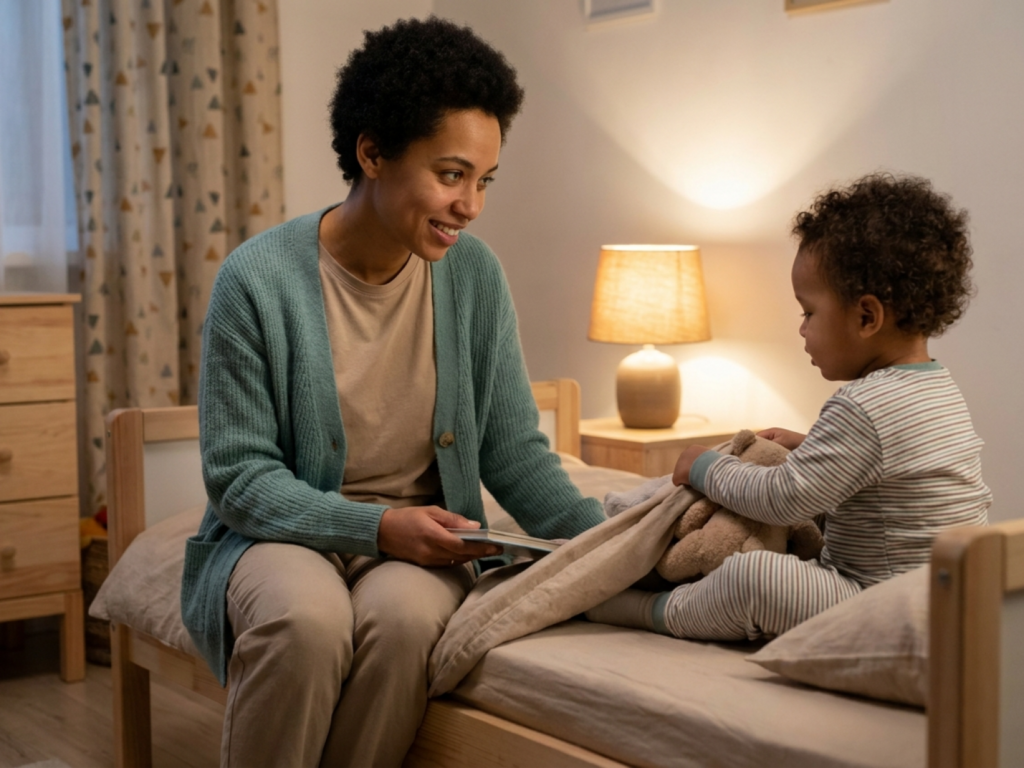
Next, build a predictable evening pattern. A calming sequence can include dinner, bath or wash-up, pajamas, a brief story, lights dimmed, and then bed at roughly the same time each night. The details matter less than the consistency. Families often do best when they also reduce screen exposure in the hour before bed, keep the room dark and quiet, and avoid stimulating play close to sleep.
Feeding and medical factors should be considered before any plan begins. If an infant still needs night feeds for growth or if a child has eczema, nasal congestion, pain, or gastrointestinal symptoms, those issues can interfere with sleep and should be discussed with a clinician. A plan based only on behavior may fail if the child is uncomfortable or developmentally not ready for the expected level of independence.
When sleep training may need delay or medical review
There are situations in which more sleep training is not the next step. Very young infants may not yet have the neurologic maturity for formal behavioral methods, and some children still need feeding support or closer monitoring. If caregivers are unsure whether the child is developmentally ready, professional advice is safer than guessing.
Medical review is especially important if sleep problems come with snoring, breathing pauses, gasping, recurrent vomiting, poor weight gain, excessive daytime sleepiness, marked irritability, or signs of pain. These features can point to sleep-disordered breathing, feeding problems, or another medical issue that deserves assessment. Sleep training should never be used to dismiss symptoms that may reflect illness.
Family context also matters. If parents are severely sleep-deprived, overwhelmed, postpartum, or managing other stressors, a demanding plan may be unrealistic. In that setting, a gentler strategy or outside support may be more appropriate. The question is not whether the family is trying hard enough; it is whether the approach is medically and emotionally feasible right now. Sometimes the best intervention is a pause, a reassessment, and a discussion with the child’s pediatrician.
Keeping the process humane and sustainable
The most effective sleep plans are usually the ones caregivers can actually repeat. Consistency matters more than perfection. If one adult rocks to sleep, another offers repeated snacks, and a third tries a strict check-in schedule, the child receives mixed signals. Coordinating adults before bedtime can prevent accidental sabotage of the plan.
Track what is happening for several nights. A simple sleep diary can note bedtime, time to fall asleep, night waking frequency, feedings, and early rising. This helps families see whether the pattern is improving or whether the method is causing escalating distress. It also provides useful data if a pediatrician or sleep specialist needs to review the case.
For older toddlers and preschoolers, a more developmental lens is often needed. The patterns discussed in preschool sleep 3 to 5 years explained may include bedtime negotiation, imaginative fears, and early waking rather than infant-style night feeding. In that age group, the goal is often not perfect silence but predictable boundaries and a clear sleep routine. If a formal plan is making things worse, the question raised in when to stop sleep training and build sleep habits becomes important: sometimes the family has moved beyond intensive training and needs a long-term habit plan instead.
Sleep should feel supported, not punitive. A child who is learning to sleep independently still needs reassurance, warmth, and developmentally appropriate limits.
When to get medical advice
- Seek prompt medical review if your child snores, gasps, or has pauses in breathing during sleep.
- Do not rely on sleep training alone if there is poor weight gain, recurrent vomiting, pain, or persistent daytime sleepiness.
- Pause and ask a clinician for advice if your child is very young or you are unsure whether the approach matches their developmental stage.
- Get help if sleep loss is making caregiving unsafe or if family stress is escalating quickly.
Tools & Assistance
- Pediatrician or family doctor
- Child sleep diary
- Bedtime routine chart
- NHS sleep guidance for parents
FAQ
What is the main goal of sleep training?
The main goal is to help a child fall asleep and return to sleep with less external help, using a structured and age-appropriate behavioral plan.
Is sleep training the same as ignoring a child?
No. Some methods use limited checking or gradual fading, and the right approach should still be responsive to safety, age, and medical needs.
How long does it take to see results?
Some families notice change within a few nights, while others need several weeks. Consistency and the child’s temperament strongly affect the timeline.
Can sleep training harm attachment?
The available research has not shown clear harm in the populations studied, but the evidence is not limitless. If you have concerns, discuss them with a pediatrician.
Sources
- PubMed — Sleep Training
- PubMed Central — Infant sleep training: rest easy?
- NHS — Sleep and young children
Disclaimer
This article is for general information only and does not replace advice from a pediatrician or other qualified clinician. If your child has medical concerns, severe sleep problems, or breathing symptoms during sleep, seek professional evaluation.
















Please log in to leave a comment.