
Intro
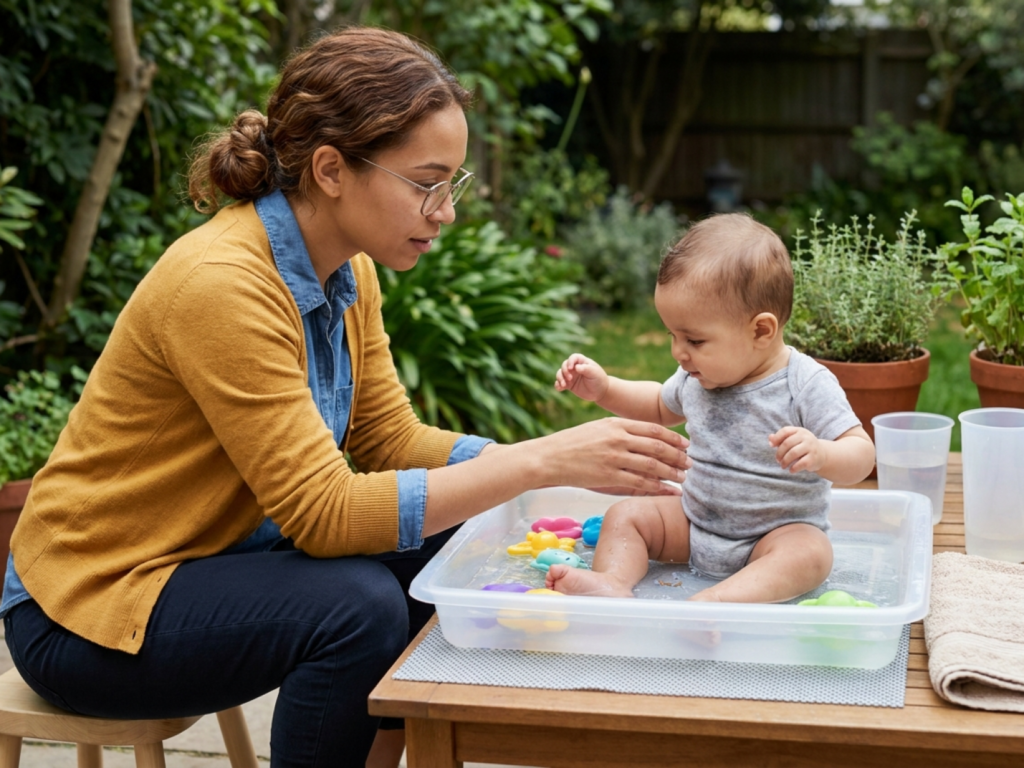
Water play can offer babies a calm, engaging way to explore temperature, movement, sound, texture, and cause and effect. A small amount of water in a carefully prepared setting is often enough; the value comes from the baby's active noticing and your responsive presence, not from elaborate equipment.
Every baby has an individual sensory profile. Some enjoy splashing immediately, while others need time to watch, touch a damp cloth, or explore from your lap. Following cues and maintaining constant close supervision helps make water exploration enjoyable and developmentally appropriate.
Highlights
Water provides changing sensory input through its movement, sound, temperature, and resistance to the hands and feet.
Simple shared water play can support early motor practice, attention, and caregiver-baby communication.
Constant adult supervision is essential because infants can drown quickly and silently in very small amounts of water.
A baby's comfort cues should guide the pace, duration, and complexity of each activity.
Why Water Is a Rich Sensory Medium
Water is unusually responsive to a baby’s actions. A hand moving through it produces resistance, ripples, sound, droplets, and visible motion at the same time. This gives infants repeated opportunities to notice a basic cause-and-effect relationship: a reach, kick, squeeze, or splash changes what they see and hear. University-based educational guidance on water play describes hands-on water activities as a useful context for sensory awareness, motor experience, and early scientific learning.
The tactile input is variable rather than fixed. Water can feel still or moving, warm or cool within a safe range, shallow or deeper around the fingers. For a baby who is awake and regulated, these differences may invite attention to the skin, hands, feet, and body position. Movement against water also provides gentle proprioceptive input, meaning sensory information from muscles and joints that contributes to body awareness.
Water play is social as well as sensory. When a caregiver notices a splash and says, “You moved the water,” the baby receives language paired with an immediate experience. Waiting for the baby’s gaze, vocalization, or next movement creates early conversational turn-taking. The goal is not to teach concepts on command. It is to offer a predictable experience, observe closely, and respond to what the baby communicates.
Starting With Your Baby's Readiness and Cues
Developmental readiness matters more than a particular calendar age. Newborns and young infants may experience water primarily through bathing, a warm damp washcloth, or a few drops slowly poured over a hand. Babies who can sit with stable support may enjoy reaching into a shallow basin while held securely or positioned beside it. More mobile infants may be interested in filling, emptying, floating, and splashing, but their increasing mobility also increases safety demands.
Use the baby’s state as your guide. A calm, alert baby who looks toward the water, reaches, relaxes their hands, or returns for more is generally communicating interest. Turning away repeatedly, stiffening, crying, closing the hands tightly, arching, shivering, rubbing the face, or becoming unusually quiet can signal discomfort, fatigue, cold, or sensory overload. Pause promptly rather than trying to persuade the baby to continue.
Keep sessions brief enough to end while the baby is still comfortable. A few attentive minutes may be more meaningful than prolonged play. Avoid adding multiple new elements at once, such as water, loud music, brightly colored toys, and unfamiliar textures. Introduce one change, observe the response, and return to a familiar activity when needed. This responsive approach respects infant sensory processing during play and allows the baby to build confidence gradually.
Simple Activities That Support Exploration
Water play does not require specialty toys. Choose clean, sturdy objects too large to be swallowed and free of sharp edges. Avoid water beads and other small expandable components: if swallowed, these products can expand and may create a serious intestinal obstruction in toddlers. Keep the activity simple enough that you can keep one hand available for the baby whenever support is needed.
- Place a small amount of water in a shallow tray and let the baby pat the surface while you describe the sound and movement.
- Offer a clean damp cloth for supervised squeezing, stroking, and transfer between hands.
- Float one large, age-appropriate object and let the baby watch it move when the water is gently disturbed.
- For a baby sitting securely with direct adult support, use two large cups to slowly pour water from one container into another.
- During bath time, let the baby kick or sweep their hands through water while you pause for their response.
Use uncomplicated language: “wet hand,” “splash,” “in,” “out,” “warm,” or “you found it.” Naming the baby’s actions supports early language reciprocity without interrupting exploration. You can also imitate their rhythm, such as making one gentle splash after they make one. Repetition is valuable because babies learn through familiar patterns.
Creating a Safer Water Play Environment
Water safety is not an add-on to sensory play; it is the central condition that makes play possible. An infant can drown rapidly and quietly in a small amount of water. An attentive adult must remain within arm’s reach and provide continuous, direct supervision for the entire activity. Do not rely on bath seats, inflatable supports, older siblings, or another child to supervise. Do not step away for a towel, answer a door, use a phone, or leave the baby briefly to manage another task.
Prepare before bringing the baby to the water. Gather towels, clean clothing, and play materials first. Empty containers immediately when play ends, and never leave standing water accessible. Outdoor play research also emphasizes practical environmental precautions including non-skid surfaces, effective drainage, shade, and avoidance of standing water. Indoors, use a stable surface and clean up spills as they happen to reduce slipping risk for the caregiver and other children.
Check water temperature with your wrist or elbow before contact. It should feel comfortably warm, never hot, and the baby should not be left in water long enough to become chilled. Keep electrical appliances and cords well away. Use fresh, clean water and clean containers after use, particularly if toys have been mouthed. Water play should be postponed when the setting cannot provide direct supervision, stable positioning, and prompt cleanup.
Supporting Sensory Differences Without Pressure
A strong preference or dislike is useful information, not a behavior problem. Some babies seek more movement and happily splash; others may find droplets on the face, unexpected sounds, or cool water aversive. Sensory responses can also change with sleep, hunger, teething discomfort, illness, and the overall stimulation of the day. A baby’s reaction in one session does not define a permanent preference.
For a hesitant baby, reduce intensity. Begin with watching you pour water, touching a dry cup, or placing one finger on a damp cloth. Let the baby remain in a secure position on your lap if that helps them feel organized. Avoid forced hand-over-hand contact, surprise splashing, or repeatedly placing water on the face. Predictable narration can help: “I am going to pour water into the cup,” followed by a pause so the baby can look or reach.
For a baby who seeks vigorous splashing, maintain the same supervision standard and create clear physical boundaries. A shallow, stable container and a non-slip area can allow active movement while limiting the amount of water. End play gently by drying hands, offering a familiar transition, and observing whether the baby settles. Consult the child’s pediatrician or another qualified clinician if sensory responses consistently interfere with bathing, feeding, sleep, daily care, or participation in ordinary play, especially when accompanied by developmental regression in babies or other concerns.
Making Water Play Part of Responsive Caregiving
Water exploration can fit naturally into routines rather than becoming another task to complete. Bathing, washing hands, rinsing a washcloth, or observing rain from a covered porch can all become brief sensory experiences. The caregiver’s role is to make the experience emotionally safe: stay present, notice the baby’s signals, and avoid treating performance as the outcome. Shared attention often matters more than the material itself.
Try a simple observation pattern. First, notice what the baby is doing: looking, reaching, kicking, withdrawing, vocalizing, or pausing. Next, put a few words to it: “The water moved when you kicked.” Then wait. This pause gives the baby room to process and respond. It also prevents adults from filling the experience with too much stimulation. In group settings, each infant needs direct supervision and an individualized level of support; one activity should not be expected to suit every child in the same way.
Documenting a few observations can be useful for caregivers who share care. Note what conditions helped: warm water, quiet room, brief session, familiar cup, lap support, or outdoor shade. These details can guide developmentally appropriate sensory activities over time. When there are questions about motor skills, sensory differences, prematurity, or medical needs, individualized developmental guidance from the pediatric care team, early intervention service, or pediatric occupational therapist can help tailor play safely.
Water Safety Essentials
- Stay within arm's reach and maintain direct visual attention at every moment of water play.
- Never leave a baby alone in a bath, basin, tray, bucket, or near any standing water.
- Use shallow amounts of water, stable containers, and non-slip surfaces; empty water immediately after use.
- Keep hot water, electrical items, cords, small objects, and expandable sensory materials away from the play area.
- Stop play if the baby becomes distressed, shivers, appears unwell, or shows signs of sensory overload.
Tools & Assistance
- A shallow, stable basin or tray used only with direct supervision
- Large clean cups and floating objects that cannot be swallowed
- Non-slip mat and absorbent towels
- Pediatrician, early intervention provider, or pediatric occupational therapist for individualized concerns
FAQ
How much water is appropriate for baby water play?
Use only the minimum shallow amount needed for the activity. Regardless of depth, an adult must stay within arm's reach and supervise continuously.
Can water play help a baby with sensory development?
Water can offer tactile, visual, auditory, and movement-related input. Its benefit comes from safe, repeated, responsive exploration rather than from a specific product or milestone.
What should I do if my baby dislikes splashing?
Reduce the intensity and start with observation, a damp cloth, or touching a dry cup. Do not force contact; pause or stop when the baby shows distress.
Are water beads appropriate for infant sensory play?
No. Water beads and similar expandable items can be dangerous if swallowed and are not appropriate for infant play.
Sources
- PubMed Central — Effective Nature-Based Outdoor Play and Learning: A Review of Research and Practice
- University of Northern Iowa ScholarWorks — Water Play
- Georgia Department of Early Care and Learning — Water Play - Activity
Disclaimer
This article is for general educational purposes and does not replace medical advice. Consult a pediatrician or qualified healthcare professional for concerns about your baby's development, sensory responses, or safety needs.














Please log in to leave a comment.