
Intro
Sensory play is one of the gentlest ways babies learn about their bodies, their caregivers, and the world around them. A crinkly cloth, warm bath water, a familiar voice, or a slow game of peekaboo can all become meaningful input for the developing nervous system.
Because every baby has a unique temperament and developmental pace, sensory play works best when it is responsive rather than intensive. The goal is not to stimulate constantly, but to offer safe, warm, repeated experiences while watching how your baby responds.
Highlights
Sensory play supports early learning by combining touch, movement, sight, sound, smell, and sometimes taste in safe, everyday moments.
Babies benefit most from responsive play: caregivers observe cues, slow down when needed, and repeat enjoyable experiences.
Movement-based play contributes to vestibular input for balance and proprioception for body awareness, both important for motor planning.
Simple household objects and caregiving routines can provide rich sensory learning without expensive toys.
Medical guidance is important if a baby shows persistent feeding difficulty, loss of skills, marked sensory distress, or concerns about hearing, vision, tone, or movement.
Sensory development in babies and why play matters
Sensory development in babies refers to the way the brain receives, organizes, and responds to information from the body and the environment. This includes the familiar senses of touch, vision, hearing, smell, and taste, as well as proprioception, which helps a baby sense body position, and vestibular input, which helps with balance and movement. In infancy, these systems are not separate classroom subjects; they work together during feeding, cuddling, diaper changes, floor time, bathing, and play.
Play is especially powerful because it pairs sensory input with emotional safety. When a caregiver smiles, pauses, imitates a sound, or gently changes the activity in response to the baby’s cues, the baby is not only receiving stimulation. The baby is also learning anticipation, attention, turn-taking, and trust. A rattle that sounds when kicked, a scarf that appears and disappears, or a parent’s voice moving from one side of the body to the other can help the infant link sensation with cause and effect.
How play supports baby development is closely tied to repetition. Babies do not need a constant stream of novel activities. They learn through repeated, predictable experiences that are just varied enough to remain interesting. A newborn may focus on a caregiver’s face and voice; an older infant may reach, mouth, bang, roll, or crawl toward the same object. These repeated sensorimotor loops support attention, early problem-solving, and motor planning.
The main sensory systems involved in play
Touch is often the first sensory channel caregivers think about. Skin-to-skin holding, massage-like strokes, textured fabrics, bath water, and safe mouthing all provide tactile information. Tactile play can be calming or alerting depending on the baby, the pressure used, and the context. Many babies prefer firm, predictable touch over light tickling, which can feel disorganizing for some infants.
Vision and hearing also develop through everyday interaction. Babies watch faces, track slow-moving objects, and learn to associate voices with comfort. High-contrast images may attract younger infants, while older babies often enjoy watching rolling balls, bubbles, or objects hidden partly under a cloth. Auditory play may include singing, soft rhythmic sounds, rattles, and conversational pauses that invite cooing or babbling.
Proprioception for body awareness comes from muscles and joints. It is activated when a baby pushes against the floor during supervised tummy time while awake, kicks against a caregiver’s hands, reaches for a toy, or later pulls to stand. Vestibular input for balance comes from changes in head position and movement, such as being carried, rocked gently, rolling, or changing positions during floor play. Both systems contribute to posture, coordination, and a baby’s growing ability to plan movement.
Smell and taste are also part of sensory learning, especially around feeding. Babies recognize familiar caregiver scents and feeding routines. As solids are introduced according to pediatric guidance, safe exposure to different smells, temperatures, and textures may support feeding skills. However, taste-based play should always be developmentally appropriate and supervised, with choking hazards avoided and allergy guidance discussed with a healthcare professional when relevant.
Simple baby activities by age
Simple baby activities by age are best used flexibly, especially for babies born preterm or those with medical complexity. Corrected age may matter for developmental expectations, and individual readiness is more useful than a calendar alone. The following examples are general ideas, not milestones that every baby must meet at the same time.
- Newborn to 3 months: Offer face-to-face time, gentle singing, skin-to-skin contact, and short supervised tummy time while awake. Let the baby look at your face or a high-contrast object. Keep sessions brief and stop if the baby shows stress cues.
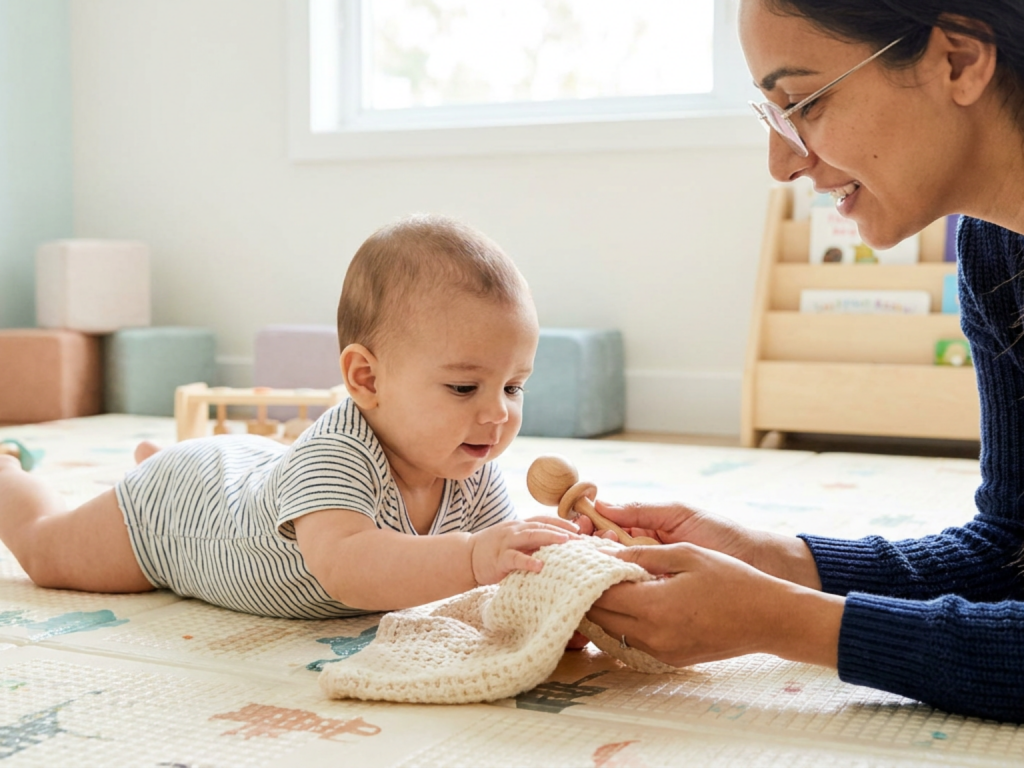
- 3 to 6 months: Place safe toys within reach during floor time. Try soft rattles, textured cloths, mirror play with supervision, and gentle side-lying play. Encourage reaching, bringing hands together, and exploring objects with the mouth when items are clean, large enough, and safe.
- 6 to 9 months: Use containers, soft blocks, crinkly fabric, and simple cause-and-effect toys. Let the baby bang, shake, transfer objects between hands, and explore safe food textures during meals as appropriate. Peekaboo and hiding a toy partly under a cloth can support attention and early memory.
- 9 to 12 months and beyond: Offer crawling opportunities, push-and-pull toys used safely, nesting cups, water play under close supervision, and songs with gestures. Babies may enjoy imitating claps, taps, and simple sounds while practicing balance and coordination.
These activities do not require a special sensory bin or a large toy collection. A spoon, washcloth, cardboard tube that is too large to fit in the mouth, or plastic container can be fascinating when used safely and with an engaged caregiver nearby.
Creating a sensory-friendly play space at home
Daily activities for baby development often happen in ordinary places: a blanket on the floor, a kitchen corner while a caregiver prepares food, a bath, or a changing mat. A sensory-friendly space is safe, uncluttered, and matched to the baby’s current abilities. For young infants, this may mean a firm floor surface, a few simple objects, and a caregiver nearby. For mobile babies, it means removing choking hazards, cords, unstable furniture, small objects, hot liquids, and anything that can tip or break.
Try to think in terms of sensory balance. If the room is visually busy, choose quieter toys. If a baby has been in a noisy environment, use slower movement and a calm voice. If the baby seems sleepy or dysregulated, a familiar song, dimmer lighting, and gentle pressure from being held may be more supportive than a new activity. Sensory-rich does not mean sensory-overloaded.
Rotating a small number of safe objects can keep play fresh without overwhelming the baby. For example, you might offer one soft fabric, one smooth ring, and one sound-making toy. Watch which object your baby notices, how long attention lasts, and whether the baby turns away, stiffens, fusses, or seeks more. This observation is the heart of responsive caregiving for sensory growth.
Screen-based stimulation is not a substitute for sensory play with people and real objects. Babies learn most from three-dimensional exploration and social interaction: seeing your face, hearing your pauses, feeling gravity during movement, and adjusting their posture to reach or roll. If you have concerns about safe movement opportunities for babies because of prematurity, low muscle tone, medical equipment, reflux, or other health issues, ask your child’s healthcare team for individualized guidance.
Reading cues: comfort, curiosity, and overstimulation
Babies communicate through body language long before they can use words. Signs of curiosity may include brightening, stilling to listen, turning toward a sound, relaxed hands, reaching, kicking, cooing, or repeating an action. A baby who is enjoying play may look away briefly and then return, which can be a healthy way to regulate attention.
Overstimulation signs in babies can include turning the head away repeatedly, hiccupping, yawning, sneezing, finger splaying, arching, stiffening, frantic movements, crying, changes in color, or difficulty settling. These signs do not necessarily mean something is wrong; they often mean the baby needs a break, a slower pace, or less input. A supportive response might be to pause, hold the baby close, reduce noise, dim bright light, or return to a familiar rhythm.
Some babies are sensory seekers and seem to enjoy movement, firm pressure, or busy exploration. Others are more sensitive and need gradual introductions to new textures, sounds, or positions. Both patterns can fall within normal variation. What matters is whether the baby can recover with caregiver support and whether feeding, sleep, movement, and interaction are progressing in a healthy overall pattern.
If sensory responses are intense, persistent, or interfering with feeding, sleep, bonding, or motor development, it is reasonable to seek professional advice. A pediatrician may check hearing, vision, growth, neurologic tone, reflux, allergies, or other medical contributors. Occupational therapists, physical therapists, and speech-language pathologists can also support families when sensory processing, motor skills, or feeding are concerns.
Safety and medical caution during sensory play
Sensory play should always be supervised, especially when babies mouth objects or play near water. Avoid small items, button batteries, magnets, beads, coins, hard foods, popped balloons, and any object that can break into pieces. Water play can be valuable, but a baby should never be left unattended in or near water, even for a moment. Food-based play should be aligned with safe feeding readiness, choking prevention, and allergy advice from a healthcare professional.
Be cautious with strong smells, essential oils, powders, and messy materials that may irritate the skin, eyes, or airways. Babies with eczema, food allergy risk, chronic lung disease, prematurity, or complex medical histories may need more specific guidance. Avoid placing substances on the skin or in the bath that have not been recommended for infant use.
Movement play should be gentle and developmentally appropriate. Never shake a baby. Avoid vigorous bouncing, sudden drops, or positions that compromise breathing or head and neck support. During tummy time, the baby should be awake and supervised. For sleep, follow safe sleep practices rather than using sensory props, positioners, loose blankets, or toys in the sleep space.
Developmental regression in babies, such as loss of previously acquired social, feeding, movement, or communication skills, should be discussed promptly with a healthcare professional. Likewise, seek evaluation if you notice persistent asymmetry, very floppy or very stiff tone, poor visual tracking, lack of response to sound, repeated choking or coughing with feeds, or unusual episodes that concern you. Sensory play is supportive, but it is not a diagnostic test or a treatment plan.
Making sensory play part of family life
The most sustainable sensory play is woven into routines you already have. During diaper changes, pause for eye contact, name body parts, or offer a soft cloth to hold. During feeding, notice smells, warmth, pacing, and satiety cues. During walks, describe light, wind, sounds, and movement. During bath time, let the baby feel water with hands and feet while you maintain safe support.
Caregivers sometimes worry they are not doing enough. In reality, a baby’s nervous system is shaped by many small moments of attuned care. You do not need to create a perfect developmental schedule. Short, responsive interactions repeated throughout the day are more valuable than long sessions that leave either the baby or caregiver exhausted.
It is also healthy for play to reflect your family’s culture, language, routines, and resources. Songs, rhythms, household objects, outdoor spaces, and caregiving traditions can all provide meaningful sensory learning. The key is safety, emotional connection, and close observation. When play feels like a conversation rather than a performance, babies have room to explore, pause, recover, and try again.
If you feel uncertain, ask for support. Pediatric clinicians, early intervention services, lactation professionals, feeding specialists, and developmental therapists can help adapt activities to your baby’s medical history and temperament. Sensory development through play is not about pushing a baby faster; it is about offering safe opportunities for the brain and body to learn together.
When to get professional advice
- Seek urgent help for breathing difficulty, blue color, seizure-like episodes, or sudden marked lethargy.
- Discuss persistent feeding distress, choking, coughing with feeds, or poor weight gain with a clinician.
- Ask for evaluation if your baby does not respond to sound, avoids visual engagement consistently, or loses previously acquired skills.
- Avoid small objects, magnets, button batteries, loose sleep items, and unsupervised water play.
- Consult a healthcare professional before using strong scents, essential oils, powders, or food-based sensory activities for babies with medical or allergy concerns.
Tools & Assistance
- Keep a simple note of which sensory activities calm, alert, or distress your baby.
- Use routine care moments such as diaper changes, feeding, bathing, and walks for short sensory interactions.
- Ask your pediatrician about hearing, vision, feeding, tone, or motor concerns if play responses seem unusual or persistent.
- Contact early intervention or child development services if you need individualized developmental support.
- Choose a small set of safe, washable objects with different textures, weights, and sounds.
FAQ
Does my baby need special sensory toys?
No. Safe household objects, caregiver voices, floor time, songs, bath routines, and outdoor observations can provide rich sensory learning. Safety and responsive interaction matter more than expensive toys.
How long should sensory play last?
Follow your baby’s cues. Newborns may manage only a minute or two, while older infants may engage longer. Stop or slow down if you see stress cues such as turning away, stiffening, crying, or frantic movements.
Is messy play necessary for development?
Messy play can be useful, but it is not required. Babies can explore texture through fabrics, water, safe teethers, floor surfaces, and age-appropriate foods. Avoid materials that pose choking, allergy, skin, or airway risks.
What if my baby dislikes tummy time?
Many babies need gradual practice. Try very short supervised sessions while awake, chest-to-chest positioning, or placing an interesting object near eye level. If distress is intense or persistent, ask a healthcare professional for guidance.
Can too much sensory stimulation be harmful?
Constant intense stimulation can overwhelm some babies. Balance active play with quiet recovery, sleep, feeding, and calm connection. Watch for overstimulation signs and adapt the environment.
Sources
- ZERO TO THREE — Sensory Experience and Development in Babies
- Michigan State University Extension — Cognitive development and sensory play
- Community Playthings — Sensory play
Disclaimer
This article is for general educational purposes and does not replace medical assessment, diagnosis, or treatment. Consult a qualified healthcare professional for concerns about your baby’s development, feeding, movement, hearing, vision, or sensory responses.














Please log in to leave a comment.