
Intro
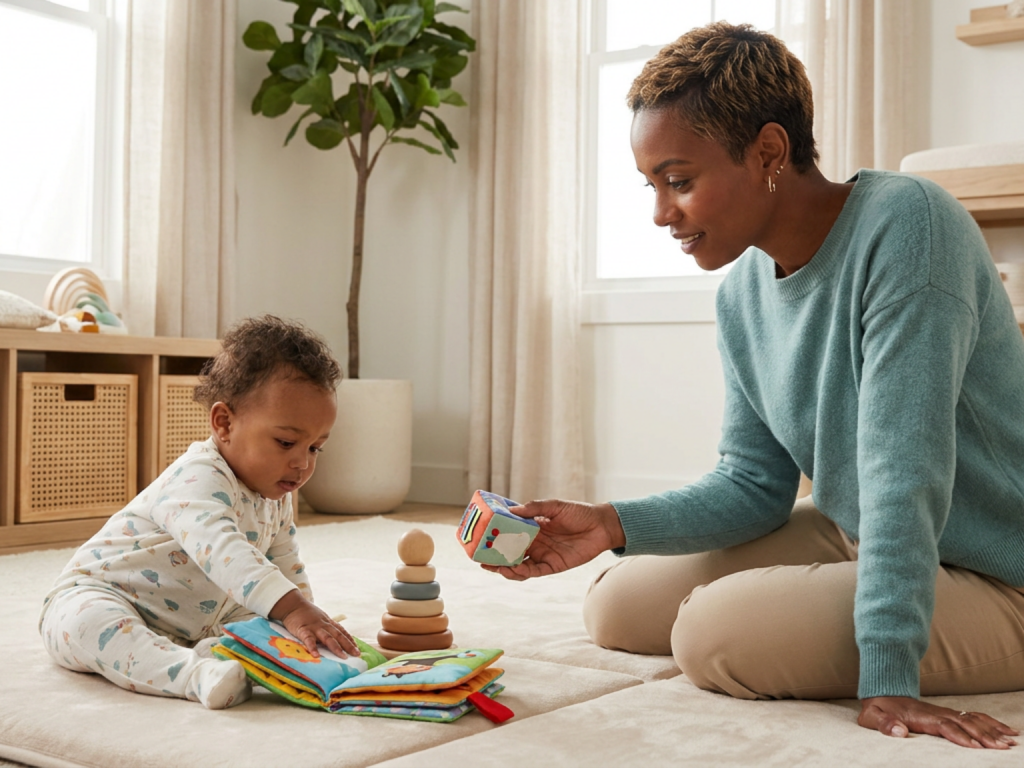
Babies learn through repeated, loving interactions: a face leaning close, a song during a diaper change, a toy partly hidden under a cloth, or a few minutes of supervised floor time. Simple activities can support sensory processing, motor control, early communication, social connection, and curiosity without turning family life into a therapy program.
Every baby develops at a slightly different pace, and medical factors such as prematurity, visual or hearing differences, reflux, hypotonia, congenital conditions, or a recent illness may change what feels comfortable. Use your baby’s cues, consider corrected age for preterm infants, and ask your pediatrician, health visitor, or pediatric therapist if you are unsure whether an activity is safe or appropriate.
Highlights
The best baby activities are simple, responsive, and repeated often in short bursts rather than forced into long sessions.
Age ranges are guides, not deadlines; babies vary widely in motor, sensory, and communication development.
Floor time, talking, singing, reading, texture play, and object-hiding games can all build early skills when matched to a baby’s stage.
Safety matters: babies need close supervision, safe sleep practices, age-appropriate objects, and breaks when they show stress cues.
How to choose activities without pressure
Baby play is not a test of parenting or a race toward milestones. It is a relationship-based way to offer the nervous system manageable input: visual contrast, sound, touch, movement, rhythm, and emotional connection. A medically literate way to think about play is to ask which developmental domain it gently invites: gross motor control, fine motor exploration, receptive and expressive language, social reciprocity, sensory integration, or early problem-solving.
Start with responsive caregiving for babies. Watch for approach cues such as bright eyes, relaxed hands, cooing, reaching, kicking, or turning toward you. Pause or simplify when you see stress cues such as yawning, hiccupping, finger splaying, arching, gaze aversion, color change, frantic movements, or crying. Overstimulation signs in babies can appear quickly, especially in the newborn period or after a busy day.
Short, frequent moments are usually better than long sessions. A few minutes of tummy time while awake, a song during dressing, or a naming game while looking out the window can be enough. Daily activities for baby development are often embedded in ordinary care: feeding, burping, diapering, bathing, dressing, stroller walks, and settling for sleep. If your baby was born preterm, use corrected age when choosing expectations, and ask your clinician if there are medical restrictions on positioning or movement.
Birth to 3 months: connection, regulation, and early body awareness
In the first months, the most useful activities are calm, close, and sensory-light. Newborns are building state regulation, visual focus, head and neck control, and early social engagement. They do not need many toys; they need safe arms, predictable voices, and brief chances to move against gravity.
- Face-to-face time: Hold your baby close, about the distance from breast or bottle to your face. Speak slowly, copy coos, and pause so your baby can respond with eye contact, mouth movements, or small sounds.
- Supervised tummy time while awake: Place your baby on your chest, across your lap, or on a firm floor surface for short periods. This supports cervical extensor strength, shoulder stability, and later rolling. Stop if your baby becomes distressed and try again later.
- High-contrast looking: Show a simple black-and-white pattern or your face. Move slowly from side to side to invite visual tracking, but avoid rapid stimulation.
- Gentle sound games: Sing one familiar song, hum, or use a soft rattle briefly on one side and then the other. This encourages auditory attention without overwhelming the baby.
- Routine care developmental moments: During diaper changes, narrate what you are doing: “I’m lifting your feet,” “Here is the clean diaper,” “Now we are all done.” Predictable language helps early receptive communication and regulation.
Newborn head and neck support remains essential. Avoid propping a young infant in sitting devices for play if they cannot maintain alignment. Babies should always sleep on their backs on a safe sleep surface, even if tummy time is part of awake play.
3 to 6 months: reaching, rolling preparation, and social games
Between 3 and 6 months, many babies become more visually alert, bring hands to midline, bat at toys, laugh, and begin rolling. Activities can now invite symmetrical movement, reaching, and turn-taking. Keep objects large enough that they cannot be swallowed, and inspect them for loose parts.
- Toy reach on both sides: Place a soft toy slightly to the left, then slightly to the right, at chest level during floor time. This encourages weight shifting, hand-eye coordination, and trunk activation.
- Side-lying play: With supervision, position your baby on one side with a small rolled towel behind the back if needed. Offer a toy near the hands. This can help babies who dislike tummy time and supports midline hand use.
- Mirror play: Use an unbreakable baby-safe mirror during tummy time. Babies often lift their head longer when looking at a face-like reflection.
- Peek-a-boo beginnings: Cover your face briefly with your hands, then uncover it with a warm expression. At this age, the goal is social anticipation, not full object permanence.
- Reading and naming: Choose sturdy books with simple images. Name one object at a time: “ball,” “dog,” “spoon.” Repetition supports early language mapping.
If your baby is starting to roll, update the environment. Avoid leaving the baby unattended on beds, sofas, or changing tables. Rolling and swaddle safety also matters: once signs of rolling appear, swaddling with arms restricted is generally no longer considered safe, and families should discuss sleep transitions with their healthcare professional if unsure.
6 to 9 months: sitting, object permanence, and early problem-solving
From 6 to 9 months, babies often sit with improving control, transfer objects between hands, explore by mouthing, and become fascinated by cause and effect. Their play can include more texture, hiding, banging, and turn-taking. Because mouthing is normal oral-sensory exploration, choking prevention becomes central.
- Hide-and-find toys: Partly cover a favorite toy with a small cloth and let your baby pull it free. This supports object permanence, visual attention, and problem-solving.
- Container play: Put large blocks or soft toys into a bowl, then take them out. At first, your baby may only watch or mouth the objects; later, they may imitate.
- Texture exploration: Offer safe household textures such as a clean washcloth, silicone teether, soft fabric book, or crinkly baby toy. Describe the sensation: “smooth,” “bumpy,” “soft.”
- Sound and rhythm: Let your baby bang two safe objects together or pat a tray while you copy the rhythm. This builds bilateral coordination and social reciprocity.
- Supported sitting play: Sit on the floor with your legs forming a safe boundary, and place toys at midline. Avoid pushing a baby into sitting if they slump heavily or seem uncomfortable.
Many babies at this stage enjoy bubbles, songs with gestures, and simple turn-taking: you roll a soft ball, then wait. Waiting is powerful because it gives the baby time to initiate. If your baby has feeding or swallowing concerns, avoid food-based sensory play unless a clinician has advised it is safe.
9 to 12 months: crawling, cruising, gestures, and imitation
By 9 to 12 months, babies may crawl, pull to stand, cruise along furniture, clap, wave, point, or imitate familiar actions. This is a good time for safe movement opportunities for babies. The environment often matters more than the toy: a clear floor, stable furniture, and a few interesting objects can invite exploration.
- Simple obstacle course: Place pillows or a low cushion on the floor for your baby to crawl around or over while you stay close. Keep it low, soft, and uncluttered.
- Ball rolling: Sit facing your baby and roll a soft ball slowly. This supports visual tracking, anticipation, bilateral hand use, and reciprocal play.
- Stack and knock down: Build a small tower of soft blocks and let your baby knock it over. Later, invite them to place one block on another.
- Gesture songs: Use songs with clapping, waving, or “so big” arms. Pair words and gestures consistently to support receptive language and imitation.
- Choice-making: Hold up two toys and ask, “Do you want the cup or the ball?” Accept reaching, looking, vocalizing, or pointing as communication.
Mobility changes safety quickly. Anchor unstable furniture, remove small objects from the floor, secure cords, and supervise around stairs, pets, and older children’s toys. Bare feet on a safe indoor surface can help sensory feedback and balance. Shoes are mainly for protection outdoors, unless a healthcare professional recommends otherwise for a specific reason.
12 to 18 months: early toddler play with baby-level support
After the first birthday, many children are walking or preparing to walk, using more gestures, understanding simple routines, and experimenting with words. They are still babies in many emotional and regulatory ways, so activities should remain short, concrete, and closely supervised.
- Push, pull, and carry: Offer a sturdy push toy, a small basket of soft items, or a lightweight container to move across the room. This supports balance, motor planning, and proprioceptive input.
- Everyday pretend play: Give a clean spoon and bowl, toy phone, or doll blanket. Model one action: stir, feed, cover, wave. Pretend play begins as imitation before it becomes elaborate imagination.
- Sorting by function: Put socks in one basket and blocks in another, or place toy animals in a box. Do not expect accuracy; the value is listening, matching, and participation.
- Outdoor sensory walks: In a safe park or yard, name what you see and hear: leaves, birds, cars, wind. Let your child stop, squat, point, and investigate under close supervision.
- Simple cleanup rituals: Sing the same short cleanup song and put two toys away together. This supports sequencing and cooperation without expecting adult-level compliance.
Age-appropriate infant routines help babies and young toddlers predict what comes next. Activity transitions for babies can be smoother when you use the same phrase, song, or visual cue before changing from play to diapering, meals, bath, or sleep. If transitions are consistently extreme or your child loses skills they previously had, discuss it with a pediatric clinician.
Adapting activities for temperament, medical needs, and busy days
Some babies crave movement and novelty; others need slower pacing and more body contact. Neither pattern is “bad.” Adapt the sensory load by changing one variable at a time: sound level, lighting, number of toys, position, duration, or proximity to the caregiver. A baby who fusses on the floor may tolerate tummy time on your chest. A baby who startles at rattles may prefer your voice. A baby who becomes frustrated by reaching may need the toy closer.
Engaging baby during routine care is often the most realistic strategy on exhausting days. During a diaper change, offer a clean teether to hold. During dressing, name body parts. During feeding, pause for eye contact if the baby is calm and feeding safely. During bath time, pour water slowly over hands or feet while describing warm, splash, and wet. These micro-activities count.
For babies with known medical or developmental concerns, individualized guidance is important. A pediatric physical therapist may modify tummy time or positioning for torticollis, hypotonia, or motor delay. An occupational therapist may help with sensory processing or feeding-related play. An audiologist or speech-language pathologist may be involved if hearing, swallowing, or communication concerns are present. Seek advice promptly if you notice persistent asymmetry, poor visual engagement, feeding difficulty, loss of skills, unusual stiffness or floppiness, or concerns about hearing.
Safety and medical cautions
- Use baby activities only during awake, supervised time; follow safe sleep practices for every sleep.
- Avoid small objects, loose parts, button batteries, magnets, plastic bags, and long cords because they can cause choking, injury, or strangulation.
- Do not force positions such as sitting, standing, or tummy time if your baby is distressed, medically fragile, or unable to maintain safe alignment.
- Ask a healthcare professional before adapting activities for prematurity, seizures, cardiac or respiratory disease, feeding/swallowing problems, or recent surgery.
- Seek pediatric advice if your baby loses skills, shows persistent asymmetry, has poor feeding, seems unusually floppy or stiff, or does not respond to sound or faces.
Tools & Assistance
- Keep a small basket of age-appropriate toys in the room where routine care happens most often.
- Use a simple daily rhythm: short floor time, talking during care, reading, outdoor observation, and calm wind-down.
- Ask your pediatrician about developmental screening and whether corrected age should guide expectations.
- Consult pediatric physical, occupational, speech-language, feeding, vision, or hearing specialists when concerns are specific or persistent.
FAQ
How long should baby activities last?
Often just 2 to 10 minutes is enough, depending on age, temperament, and state regulation. Stop earlier if your baby shows stress cues.
What if my baby hates tummy time?
Try shorter sessions on your chest, across your lap, or with a rolled towel under the chest while awake and supervised. If distress is intense or persistent, ask your pediatrician or a pediatric physical therapist.
Do babies need special developmental toys?
Usually no. Faces, voices, books, safe household objects, soft blocks, containers, balls, and supervised floor space can provide rich learning.
Should I compare my baby with age charts?
Age charts are helpful guides, not strict deadlines. If your baby was premature, medically complex, or you notice missed or lost skills, discuss developmental screening with a healthcare professional.
Sources
- ZERO TO THREE — Play Activities for Birth to 12 Months
- First 5 California — Baby's First Year: Developmental Activities
- Taking Cara Babies — Activities for Babies (0-18 Months)
Disclaimer
This article is for general educational purposes and does not diagnose, treat, or replace individualized medical advice. Consult your child’s healthcare professional about developmental, feeding, movement, or safety concerns.
















Please log in to leave a comment.