
Intro
Overstimulation happens when a baby’s developing nervous system receives more sensory input than it can comfortably process. Light, sound, movement, touch, hunger, fatigue, and social interaction all compete for the infant brain’s attention. What feels like an ordinary grocery trip, family visit, or evening routine to an adult may be neurologically demanding for a newborn or young infant.
If your baby becomes fussy, turns away, stiffens, cries, or seems unable to settle after a busy period, it does not mean you have done anything wrong. Babies are still building sensory regulation, circadian rhythm, and self-soothing capacity. The goal is not to eliminate normal stimulation, which supports development, but to notice your baby’s threshold and help them return to a calmer physiologic state.
Highlights
Overstimulation is often a mismatch between sensory input and a baby’s current ability to organize it, especially when fatigue or hunger lowers tolerance.
Reducing noise, light, handling, and social interaction can help many babies settle, particularly after busy environments or long periods of wakefulness.
A predictable low-stimulation routine supports nervous system regulation without requiring rigid schedules.
Caregiver regulation matters too: a calm, rested adult is often better able to read infant cues and respond safely.
Persistent inconsolable crying, poor feeding, fever, lethargy, or breathing concerns should be discussed promptly with a healthcare professional.
What overstimulation means for babies
In adults, overstimulation is often described as feeling overwhelmed by too much sensory, emotional, or cognitive input. In babies, the same concept applies, but the signs are more behavioral because infants cannot explain what they feel. Their autonomic nervous system is still maturing, and they rely heavily on co-regulation: a caregiver’s touch, voice, rhythm, and environment help their body shift from arousal toward calm.
Sensory input includes auditory stimulation such as conversation, television, music, siblings, and traffic; visual stimulation such as bright lights, screens, colorful toys, and rapid movement; tactile stimulation such as frequent passing from person to person; vestibular input from bouncing or rocking; and internal sensations such as hunger, gas, reflux-like discomfort, or tiredness. A baby may tolerate one type of input well but struggle when several occur at once.
Research on sensory processing and daily-life overstimulation suggests that coping is often most effective when it combines several approaches: reducing avoidable triggers, approaching necessary situations with preparation, and using acceptance-based regulation strategies. For infant care, that translates into lowering the sensory load where possible, planning around sleep and feeding needs, and responding compassionately when a baby’s nervous system has reached its limit.
Recognize early signs before distress peaks
Many babies show subtle cues before full crying begins. Learning these cues can make it easier to intervene early, when a short pause or quieter environment may be enough. Early signs may include looking away, closing the eyes, yawning, hiccupping, sneezing, finger splaying, arching, facial grimacing, becoming unusually still, or pushing away from stimulation. Some babies become frantic and disorganized; others shut down and appear withdrawn.
Overstimulation crying may sound intense, high-effort, or difficult to soothe, especially if the baby is also overtired. Crying and sensory dysregulation often escalate when well-meaning adults keep adding strategies: more bouncing, more toys, louder shushing, another feeding attempt, or more people taking turns. Sometimes the most helpful response is to subtract stimulation rather than add new stimulation.
It can help to ask: What has my baby taken in during the last hour? Have they been passed around? Was the room noisy? Are they due for sleep? Are they hungry, too warm, too cold, or uncomfortable? This gentle review can guide your next step without blaming yourself or your baby.
Create a low-stimulation settling space
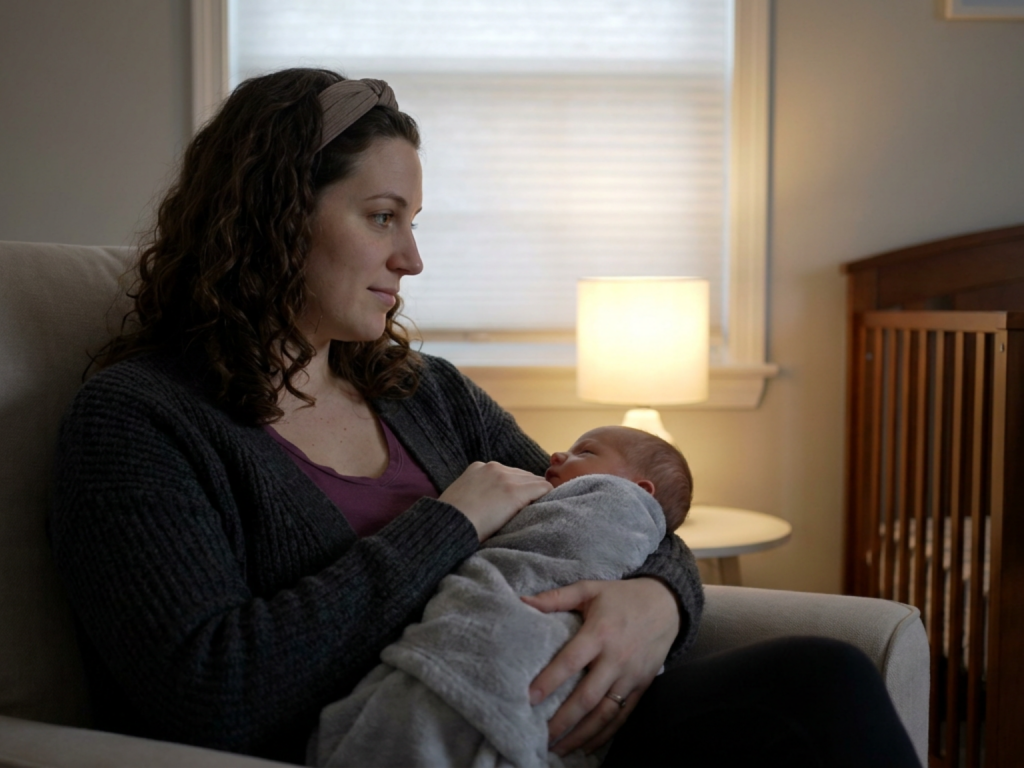
A low-stimulation settling space is a simple, predictable environment designed to reduce sensory input. It does not need to be a special room or expensive nursery setup. The essentials are dimmer light, lower noise, fewer people, minimal visual clutter, and a safe place to hold or place the baby.
- Lower the lights or move away from direct bright light.
- Turn off television, loud music, and unnecessary background audio.
- Ask visitors to pause handling or speak softly.
- Use one calm voice rather than several adults talking at once.
- Reduce toy rotation; one simple object or no toy may be better during recovery.
- Keep the temperature comfortable and check clothing layers.
If you are away from home, step into a quiet hallway, parked car with safe temperature and ventilation, feeding room, shaded outdoor area, or calm corner. Quiet breaks after busy environments can prevent overstimulation from building into a long evening of fussiness.
For sleep, always follow safe sleep guidance: place babies on their backs, on a firm, flat sleep surface, without loose blankets, pillows, or soft objects. If you use holding, rocking, or feeding to calm your baby, transfer them to a baby safe sleep space when they are ready to sleep and you are not actively supervising awake soothing.
Use calming input, not more stimulation
When a baby is overwhelmed, calming strategies work best when they are rhythmic, predictable, and not too intense. The aim is to provide organized sensory input that helps the nervous system downshift. Safe calming techniques for babies may include holding the baby close, slow rocking, gentle swaying, soft repetitive shushing, offering a pacifier if appropriate, or using a calm feeding posture when hunger cues are present.
Some babies respond to swaddling in the newborn period, but it must be done safely: hips should have room to flex, the baby should not overheat, and swaddling should stop when the baby shows signs of rolling. If swaddling is not appropriate or your baby dislikes it, a sleep sack or simply holding with steady support may be enough.
Try changing only one variable at a time. For example, dim the lights and hold still for two minutes before adding movement. If you bounce, keep it gentle and never shake a baby. If you use white noise, keep the volume low and the device away from the baby’s head. If feeding seems to calm the baby but is being used very frequently, consider whether the baby is truly hungry or seeking regulation; a clinician or lactation professional can help if feeding patterns are confusing.
For the caregiver, slow breathing can be useful. Inhale gently, lengthen the exhale, and soften your shoulders while holding the baby securely. Babies do not need perfect calm from adults, but your steadier rhythm can become part of their regulation.
Protect sleep and predictable rhythms
Fatigue lowers sensory tolerance. A baby who coped well with a short morning outing may unravel in the evening after missed naps, cluster feeding, visitors, and household noise. Newborns and young infants often have short wake windows, and many show tired signs only briefly before becoming overtired. A low-stimulation evening routine can help signal that the day is winding down.
A routine does not have to be strict. It might include a feed, diaper change, dim lights, a brief cuddle, a quiet song, and placement in a safe sleep space. Repetition helps because predictability reduces the amount of new information the baby must process. For some families, the most effective change is simply making the last hour before bedtime calmer: fewer visitors, no television in the room, reduced phone brightness, and quieter transitions.
Sleep also matters for caregivers. Caregiver stress during infant crying is real and can become intense. If you feel your frustration rising, place the baby safely on their back in a crib or bassinet and step away for a few minutes. Take slow breaths, drink water, call another adult, or contact a support line if needed. Returning regulated is safer than pushing through exhaustion while distressed.
Manage visitors, outings, and technology
Family visits, celebrations, appointments, and errands are part of life, and babies do not need to be kept in silence. The practical goal is pacing. Before a busy event, try to protect a feeding and rest period. During the event, watch for turning away, glassy eyes, stiffening, or fussiness. Afterward, plan decompression time instead of immediately adding another activity.
It is appropriate to advocate for your baby’s sensory needs. You might say, “They need a quiet break now,” or “Please keep the lights low while I settle them.” Healthcare-affiliated guidance on overstimulation commonly recommends leaving the triggering environment when possible, finding a quieter space, reducing technology use, and using relaxation practices. These steps are simple, but they can be powerful.
Screens deserve special attention. Babies are sensitive to rapidly changing light, sound, and motion. Even when a baby is not directly watching, background television or phone videos can increase the room’s sensory load. Consider keeping feeding and settling areas screen-light-minimal, especially in the evening. Adults can still use technology, but headphones, low brightness, and distance from the baby may reduce unnecessary input.
When to seek medical guidance
Overstimulation is common, but not every episode of crying, arching, poor sleep, or irritability is purely sensory. Babies may cry because of hunger, feeding difficulty, gastroesophageal reflux symptoms, cow’s milk protein intolerance, infection, injury, constipation, hair tourniquet, temperature discomfort, or other medical concerns. You do not need to diagnose the cause at home.
Contact your baby’s healthcare professional if crying is persistent, worsening, or very different from your baby’s usual pattern; if feeding is poor; if wet diapers decrease; if vomiting is forceful or green; if there is fever in a young infant; or if your baby seems lethargic, floppy, difficult to wake, or has breathing difficulty. A pediatrician review for persistent crying can help distinguish normal developmental fussiness, overstimulation, colic, feeding issues, and medical red flags.
If you ever feel you might shake, hit, or handle your baby roughly, put the baby down in a safe crib or bassinet and get immediate help from another adult, emergency services, or a crisis support line. This is a safety step, not a failure.
Get urgent advice if these occur
- Fever in a newborn or young infant, or any fever with a baby who looks unwell.
- Breathing difficulty, bluish color, limpness, seizure-like activity, or extreme lethargy.
- Poor feeding, signs of dehydration, markedly fewer wet diapers, or persistent vomiting.
- Crying after a fall, injury, or possible accidental harm.
- A caregiver feels at risk of shaking or roughly handling the baby.
Tools & Assistance
- A quiet dim room or calm corner for sensory breaks.
- A simple feeding, diaper, and sleep cue log to identify patterns.
- A safe crib or bassinet for brief caregiver reset breaks.
- A pediatrician, health visitor, nurse line, or lactation consultant for persistent concerns.
- Noise reduction strategies such as lowering background television, using soft voices, or stepping outside busy rooms.
FAQ
Can newborns really be overstimulated?
Yes. Newborns have immature sensory regulation and can become overwhelmed by ordinary input such as bright light, multiple voices, frequent handling, or long wake periods.
Should I avoid all stimulation if my baby is sensitive?
No. Babies need normal interaction, touch, voice, and visual engagement. The aim is balanced stimulation with quiet recovery periods, especially when your baby shows stress cues.
Is crying after visitors always overstimulation?
Not always. Visitors can contribute through noise and handling, but crying may also reflect hunger, fatigue, discomfort, illness, or feeding issues. Look at the full context and seek medical advice when concerned.
What is the fastest way to reduce overstimulation?
Remove or reduce the strongest inputs first: move to a quieter place, dim lights, limit handling, use one calm caregiver, and offer rhythmic soothing while checking basic needs.
When should I call a clinician?
Call if crying is persistent or unusual, your baby has fever or poor feeding, wet diapers decrease, vomiting is concerning, breathing changes occur, or your instincts tell you something is wrong.
Sources
- PubMed Central — Sensory processing sensitivity and overstimulation in daily life
- Providence — Overstimulation and anxiety: Causes and solutions
- Henry Ford Health — How To Identify And Manage Overstimulation
Disclaimer
This article is for general informational purposes only and is not a diagnosis or treatment plan. Contact a qualified healthcare professional for concerns about your baby’s crying, feeding, breathing, fever, or overall condition.















Please log in to leave a comment.