
Intro
The Ferber method is a structured approach to infant sleep training that aims to help a baby learn to fall asleep independently. It is often called graduated extinction because caregivers give the baby opportunities to settle, while returning at planned intervals to provide brief reassurance. For exhausted parents, the idea can feel both hopeful and emotionally difficult; both reactions are normal.
This article explains what the method is, how it is typically used, what the evidence suggests, and when extra caution is needed. It is not a one-size-fits-all prescription. A baby’s age, feeding pattern, growth, temperament, medical history, and family values all matter, and families should consult a pediatrician or qualified child health professional before starting any sleep-training plan.
Highlights
The Ferber method is a form of graduated extinction: parents check on the baby at increasing time intervals rather than responding immediately every time.
It is intended for bedtime problems and night wakings in babies who are developmentally ready and medically well, not for newborns or babies with unresolved feeding or health concerns.
The goal is not to ignore a baby’s needs, but to reduce sleep-onset associations that require caregiver intervention, such as rocking or feeding to sleep every time.
Consistency, a safe sleep environment, and a predictable bedtime routine are essential if families choose to use this method.
What is the Ferber method?
The Ferber method is a behavioral sleep-training technique developed to address common infant and toddler sleep difficulties, especially bedtime resistance and repeated night wakings. In clinical language, it is usually categorized as graduated extinction. Extinction in behavioral medicine means reducing reinforcement for a behavior; in this context, the behavior is crying or calling out that has become linked with a caregiver action needed to fall asleep. Graduated means the caregiver does not disappear completely, but returns at progressively longer intervals.
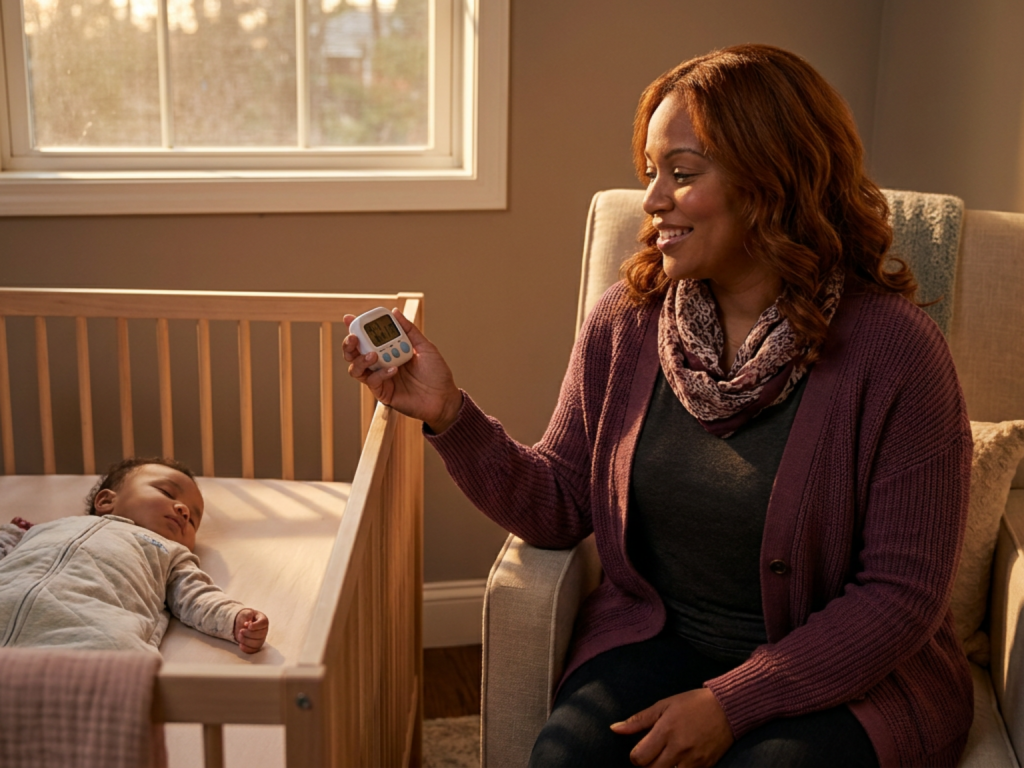
In practice, a caregiver completes a calm bedtime routine, places the baby in the crib while sleepy but still awake, leaves the room, and then waits for a set interval before briefly checking in if the baby cries. The check-in is meant to be reassuring but not highly stimulating. The caregiver may speak softly or gently pat the baby, but usually avoids picking the baby up, feeding, rocking, or restarting the bedtime routine unless there is a clear need.
The method is built around a key sleep physiology concept: babies, like adults, naturally have partial arousals between sleep cycles. If a baby has learned that sleep begins only while being fed, rocked, or held, they may need the same condition each time they wake. The Ferber method tries to help the baby practice falling asleep in the same place and condition in which they will later wake: on a safe sleep surface, without needing a caregiver to recreate the original sleep-onset association.
When is a baby ready?
Readiness is not determined by parental exhaustion alone, even though caregiver sleep deprivation can be intense and deserves support. Many clinicians suggest that formal sleep training is generally more appropriate after the early newborn period, often around 4 to 6 months of age, when circadian rhythm organization, longer sleep stretches, and self-soothing skill begin to mature. However, readiness varies.
Before starting, it is wise to discuss the plan with a pediatrician, especially if the baby was born prematurely, has poor weight gain, has reflux symptoms, has chronic lung or heart disease, has neurologic concerns, or still needs frequent night feeds for growth or medical reasons. Families should also seek guidance if crying is unusually high-pitched, persistent, or associated with fever, vomiting, breathing difficulty, reduced wet diapers, or lethargy.
Newborn sleep expectations are different from older infant sleep expectations. Young infants feed frequently, have immature circadian regulation, and rely heavily on caregiver co-regulation. For them, responsive feeding, safe sleep guidance, and gentle day-night cues are usually more appropriate than formal graduated extinction.
How timed check-ins usually work
A typical Ferber-style plan begins with a predictable bedtime routine. This might include feeding earlier in the routine, a diaper change, sleep clothing, a short book or song, dim lighting, and then the crib. The phrase drowsy but awake is commonly used: the baby is calm and ready for sleep, but not fully asleep when placed down.
After leaving the room, the caregiver waits for the first planned interval before checking in. For example, some families start with a few minutes, then lengthen the interval over the same evening and over subsequent nights. Exact schedules vary, and there is no medically magical interval that fits every baby. The important features are that the intervals are planned in advance, gradually extended, and applied consistently.
Check-ins should be brief and boring. A caregiver might say, “I love you, it is time to sleep,” then leave again. Bright lights, play, prolonged rocking, or repeated feeding can unintentionally restart the sleep-onset association the family is trying to change. If the baby is truly hungry, ill, soiled, or distressed in an atypical way, the caregiver should respond to that need rather than rigidly following a timer.
Many families find the first few nights emotionally hard. Crying may temporarily increase before it improves, a pattern sometimes called an extinction burst. Planning ahead helps: decide who will do check-ins, how intervals will be timed, what counts as a reason to pause, and how the adults will support one another.
What the evidence says
Behavioral treatments for bedtime problems and night wakings, including graduated extinction, have been studied in pediatric sleep medicine. The evidence base supports that these methods can reduce bedtime resistance and night waking frequency for many infants and young children. The main outcomes studied are usually sleep onset, number of night wakings, parental report of sleep quality, and family functioning.
The evidence does not mean that every crying episode is behavioral or that every family should use the same approach. Sleep is influenced by feeding adequacy, neurodevelopment, temperament, illness, environment, parental mental health, and family culture. Some parents feel comfortable with structured check-ins; others prefer more gradual parental presence methods or responsive settling approaches. A method that is effective on average may still be a poor match for a particular baby or parent.
Concerns about attachment are common. Secure attachment is built through patterns of sensitive caregiving across thousands of daily interactions: feeding, comfort, play, protection, and emotional repair. A carefully chosen sleep-training plan in a medically well, developmentally ready infant is not the same as neglect. Still, if a parent feels panicked, traumatized, or unable to carry out the plan safely, it is appropriate to stop and seek individualized support.
Safety, feeding, and the sleep environment
The Ferber method should never override safe sleep recommendations. Babies should be placed on their back for sleep, on a firm and flat infant mattress, in a crib, bassinet, or play yard that meets safety standards, without loose blankets, pillows, bumpers, or soft objects. Room-sharing without bed-sharing is often recommended during infancy because it allows proximity while reducing hazards associated with adult sleep surfaces.
Feeding also matters. Some babies still need night feeds, especially younger infants, babies with growth concerns, and babies with specific medical histories. Sleep training should not be used to force night weaning unless a clinician has confirmed that doing so is appropriate. If a baby is breastfed, bottle-fed, or mixed-fed, caregivers can ask their pediatrician or lactation professional how to separate feeding from sleep onset while still protecting adequate intake.
A practical approach is to move the final feed earlier in the bedtime routine so the baby does not fall asleep while feeding. Families who use bottles may also consider responsive bottle feeding principles: watching cues, avoiding pressure to finish a bottle, and keeping feeding calm. If feeding concerns are present, address them before assuming night waking is purely behavioral.
Common challenges and humane adaptations
One of the hardest parts of the Ferber method is tolerating crying while staying calm and observant. Crying is communication, but not all crying has the same meaning. A tired, frustrated protest cry is different from a cry associated with pain, illness, or respiratory distress. Parents do not need to become emotionally numb; they need a plan that helps them respond thoughtfully instead of reactively.
Some babies become more upset when a parent briefly enters and leaves. In that case, families may choose longer intervals, fewer check-ins, or a different method such as camping out, where a caregiver gradually moves farther from the crib over several nights. Other babies calm with a short verbal reassurance. Temperament matters.
Consistency is important, but rigidity is not. Travel, teething discomfort, vaccination reactions, fever, family stress, or major developmental transitions can disrupt sleep. It is reasonable to pause sleep training during illness or acute upheaval. After the disruption resolves, families can return to a predictable bedtime routine and decide whether to restart the plan.
How parents can prepare emotionally
Sleep training can stir up guilt, disagreement between partners, and anxiety about doing harm. Preparation reduces this burden. Before the first night, clarify the goal: for example, helping the baby fall asleep at bedtime without being rocked fully asleep. Choose a start date when the household can be consistent for several nights. Avoid beginning when visitors, travel, acute illness, or major schedule changes are expected.
It can help to write a simple plan: bedtime routine steps, first check-in interval, what the check-in will sound like, what signs mean the baby needs hands-on care, and when the family will stop for the night. If one caregiver finds the crying especially triggering, another trusted adult may handle check-ins while the first uses headphones, showers, or rests nearby.
Parents also need compassion for themselves. Needing sleep does not make someone selfish. Wanting to respond quickly to crying does not make someone weak. The best plan is one that protects the baby’s safety, supports the caregiver’s mental health, and fits the family’s values.
When to avoid or pause the method
- Do not use formal sleep training for a newborn without specific medical guidance.
- Pause and seek care if crying is accompanied by fever, breathing difficulty, repeated vomiting, lethargy, or signs of dehydration.
- Consult a clinician first if the baby has poor weight gain, prematurity, complex medical needs, or feeding concerns.
- Do not use the method to eliminate medically necessary night feeds.
- Stop and reassess if the plan causes severe parental distress, unsafe anger, or inability to respond appropriately.
Tools & Assistance
- Pediatrician visit to review growth, feeding, and medical readiness
- Simple sleep diary tracking bedtime, feeds, wakings, and check-in intervals
- Safe crib or bassinet setup following current infant sleep environment recommendations
- Written family plan for bedtime routine, timed check-ins, and stop criteria
- Lactation consultant or feeding specialist support if intake or night feeding is uncertain
FAQ
Is the Ferber method the same as letting a baby cry it out?
Not exactly. The Ferber method uses graduated extinction with timed check-ins, so caregivers return briefly at planned intervals. Some people still consider it a form of cry-it-out because crying may occur, but it is more structured than simply leaving indefinitely.
How long does the Ferber method take to work?
Some families see improvement within several nights, while others need longer or decide the method is not a good fit. Illness, feeding needs, inconsistent routines, and temperament can affect the timeline.
Can I feed my baby during the night while using this method?
Yes, if night feeds are still appropriate for the baby’s age, growth, and medical situation. A pediatrician can help distinguish necessary feeds from sleep-onset associations.
Will sleep training harm attachment?
Secure attachment depends on sensitive caregiving over time, not on one sleep strategy alone. However, families should choose an approach they can carry out safely and emotionally sustainably.
What if check-ins make my baby more upset?
That can happen. You may need to adjust the intervals, reduce stimulation during check-ins, pause for medical or feeding review, or consider a different sleep approach.
Sources
- Pediatrics — Behavioral treatment of bedtime problems and night wakings in infants and young children
- Sleep Foundation — The Ferber Method for Sleep Training
- Cleveland Clinic — What Is the Ferber Method of Sleep Training Your Baby?
Disclaimer
This article is for informational purposes only and does not replace medical advice. Consult a pediatrician or qualified healthcare professional before starting sleep training or changing night feeds.


















Please log in to leave a comment.