
Intro
Keeping a child safe in the car is one of those everyday responsibilities that can feel surprisingly complex. Seat labels, changing height and weight limits, family cars with different belt systems, winter coats, rideshares, and grandparents’ vehicles can all make the “right” choice feel less obvious.
The reassuring news is that child passenger safety is highly evidence-based: age-appropriate restraints, correct installation, and back-seat travel substantially reduce the risk of serious injury and death. This article explains the practical steps, the medical reasoning behind them, and the situations where it is wise to ask a certified technician or healthcare professional for help.
Highlights
Children should use the most protective restraint that fits their age, weight, height, developmental stage, and the car seat manufacturer’s limits.
Rear-facing travel protects the head, neck, and spine and should continue as long as the child remains within the seat’s rear-facing limits.
A booster seat is needed until the vehicle’s lap and shoulder belt fit correctly without it, not simply until a child reaches a certain age.
The back seat is the safest place for children, and children should avoid front passenger airbags whenever possible.
Why child car restraints matter medically
Motor vehicle crashes transfer energy to the body very quickly. In children, the head is proportionally larger, the cervical spine is more flexible, and the bony pelvis is still developing. These anatomical differences make children more vulnerable to head, spinal, abdominal, and thoracic injuries when a restraint is absent, poorly fitted, or used before the child is developmentally ready.
Proper restraints work by distributing crash forces across stronger parts of the body, limiting excessive motion, and preventing ejection. Evidence reviews consistently show that restrained children have lower injury severity and mortality than unrestrained children. The goal is not only to “keep the child in the seat,” but to position the restraint so that the child’s skeleton, soft tissues, and airway are protected as much as possible during rapid deceleration.
Caregivers sometimes feel guilty when they discover a past mistake, such as a loose harness or early booster transition. Try to treat that discovery as useful information rather than a failure. Car safety improves through repeated checks, practice, and asking for help when a seat or vehicle is confusing.
Rear-facing seats: the safest starting position
Infants and toddlers should ride rear-facing for as long as possible within the car seat’s stated height and weight limits. In a frontal crash, which is common and often severe, a rear-facing shell supports the child’s head, neck, and spine as one unit. This reduces the risk of high-force flexion and traction across the cervical spine.
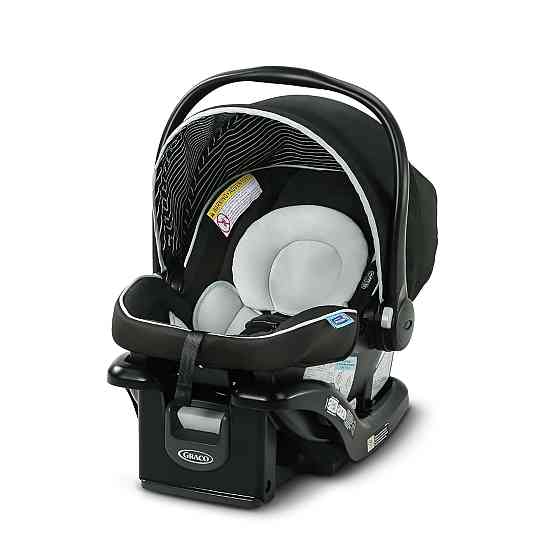
There are two broad rear-facing options. Infant-only seats are portable and often used from birth, but children outgrow them. Convertible or all-in-one seats can usually remain rear-facing for longer because they have higher limits. The safest choice is not based on age alone; it is the properly installed seat that fits the child and can be used correctly on every ride.
For newborns and young infants, recline angle matters because poor positioning can allow the head to fall forward, potentially narrowing the airway. Follow the seat’s angle indicator and the vehicle and car seat manuals. If a baby was premature, has low muscle tone, a craniofacial condition, respiratory disease, or has had surgery, caregivers should discuss travel positioning with the child’s clinician. Some infants with special medical needs may require additional evaluation before routine car travel.
Forward-facing seats and harness use
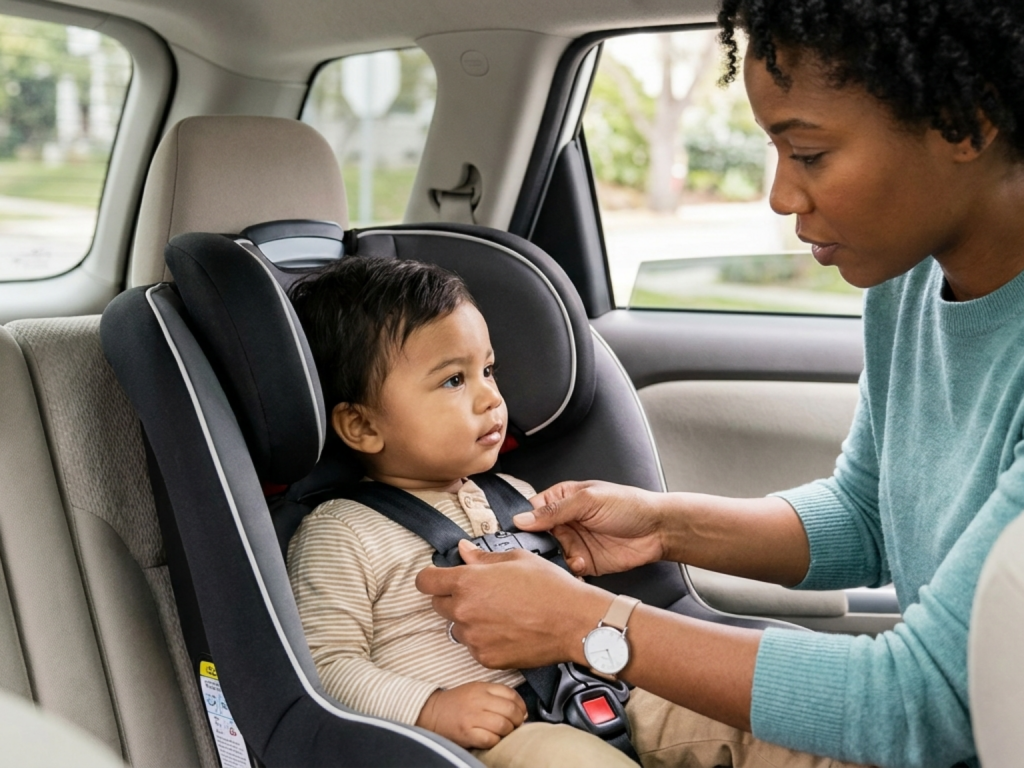
When a child has outgrown rear-facing limits, the next stage is a forward-facing seat with a five-point harness. The harness restrains the shoulders and hips and helps spread crash energy across the clavicles, sternum, pelvis, and thighs rather than concentrating force on the abdomen or neck.
Correct harness use is central. The harness should be snug enough that you cannot pinch excess webbing at the child’s shoulder, often called the pinch test. For forward-facing seats, harness straps are commonly positioned at or above the shoulders, but caregivers should confirm the exact rule in the seat manual. The chest clip should sit at armpit level, not on the belly or neck. A low chest clip can allow the upper body to move too far forward; a high clip can irritate or injure the neck.
Bulky coats, snowsuits, and thick costumes should not be placed under the harness because compressible material can flatten during a crash, leaving the harness dangerously loose. Instead, buckle the child in normal indoor-weight clothing and place a blanket or coat over the harness if needed. This is especially relevant in winter, when a seat that looked snug in the driveway may not restrain the child adequately in a collision.
Booster seats and the adult seat belt fit test
A booster seat is not a “less serious” restraint; it is a positioning device that helps the vehicle’s lap and shoulder belt fit a child’s smaller body. Without a booster, the lap belt may ride over the soft abdomen, increasing the risk of bowel, liver, spleen, pancreatic, or lumbar spine injury. The shoulder belt may cut across the neck or face, tempting a child to place it behind the back or under the arm, which removes important upper-body restraint.
Many children are not ready for a booster until they are at least 4 years old and at least 40 pounds, and even then they must be mature enough to sit upright for the entire ride. A child who leans, slouches, unbuckles, or sleeps folded out of position may be safer remaining in a harnessed seat that still fits.
A child can usually stop using a booster only when the adult seat belt fits correctly. A practical 5 step test asks whether the child can sit all the way back against the vehicle seat, bend knees comfortably at the seat edge, keep the lap belt low on the upper thighs, keep the shoulder belt across the middle of the chest and shoulder, and stay in that position for the whole trip. Many children need a booster until they are 8 to 12 years old, depending on stature and vehicle seat geometry.
The back seat, airbags, and seating position
The back seat is the safest seating location for children, and children should ride in the back seat at least through age 12. Front passenger airbags deploy with considerable force and are designed for adult body size and seating position. For a child, especially one in a rear-facing restraint, airbag deployment can cause catastrophic head, neck, or chest trauma.
If there is more than one child in the car, the safest arrangement depends on the vehicle, restraint types, and which installation positions allow a secure fit. The center rear seat can be protective if a car seat can be installed correctly there, but a side rear position with a correct installation is safer than a center position with an unstable or incompatible installation.
Never place a rear-facing car seat in front of an active passenger airbag. If an unusual circumstance requires a child to ride in the front seat, such as a vehicle with no rear seat, caregivers should consult the vehicle manual, car seat manual, and relevant safety guidance. The seat should generally be moved as far back as possible, and airbag status should be addressed according to the vehicle manufacturer’s instructions.
Installation checks that prevent common errors
Correct installation is often the hardest part of car safety. A seat may be installed with either the vehicle seat belt or the lower anchors, if permitted by the car seat and vehicle manuals. Using both at the same belt path is not automatically safer and should only be done if both manufacturers allow it. Once installed, the car seat should not move more than about one inch side-to-side or front-to-back when tested at the belt path.
Forward-facing seats should use the top tether when the vehicle has an approved tether anchor. The tether reduces forward head excursion during a crash, which is medically important because it may reduce the risk of head contact with the vehicle interior. Lower anchors also have weight limits, so caregivers need to check when to switch from lower anchors to seat-belt installation.
Read both manuals, because compatibility details vary. Watch for twisted straps, unlocked seat belts, incorrect recline, wrong belt path, aftermarket padding, and expired or recalled seats. Avoid products that did not come with the seat, such as strap covers, head supports, trays, or positioning inserts, unless the manufacturer specifically approves them. These products may alter crash performance.
A certified child passenger safety technician can be invaluable. Many families benefit from an in-person check because small corrections, such as tightening at the correct angle or changing seating positions, can make a major difference.
Special situations: illness, disability, rideshares, and after a crash
Some children need individualized planning. Children with casts, tracheostomies, neuromuscular disorders, behavioral conditions, seizure disorders, low tone, skeletal differences, or recent surgery may not fit safely in standard restraints. In these cases, caregivers should involve the child’s pediatrician, relevant specialists, rehabilitation team, or a hospital-based child passenger safety program. The aim is to protect the airway, surgical sites, fragile bones, implanted devices, and positioning needs without compromising crash protection.
In rideshares, taxis, carpools, and travel, the same safety principles apply. A short trip is still a crash-risk exposure. Portable seats, travel vests approved for vehicle use, or arranging a vehicle with appropriate restraints may help, but any device should be used according to its labeling. On school buses, safety depends on bus design, seat belts when available, and the child’s medical or developmental needs.
After a crash, follow the car seat manufacturer’s instructions and applicable safety guidance about whether the seat must be replaced. Visible damage is not required for a restraint to have reduced protective performance. Also seek medical advice after a significant collision, especially if the child has pain, vomiting, altered behavior, breathing difficulty, abdominal tenderness, neurologic symptoms, or was improperly restrained. Caregivers should know pediatric emergency warning signs, because children may initially appear well and later show concerning symptoms.
Safety warnings that deserve immediate attention
- Never put a rear-facing car seat in front of an active passenger airbag.
- Do not use a car seat that is expired, recalled, has unknown crash history, or is missing its label or manual.
- Seek urgent medical care after a crash if a child has breathing difficulty, persistent vomiting, severe pain, confusion, weakness, or abdominal tenderness.
- Do not buckle a child into a harness over a bulky winter coat or thick costume.
- Do not move a child to the next restraint stage just because of age if the current seat still fits and is being used correctly.
Tools & Assistance
- Schedule an in-person car seat inspection with a certified child passenger safety technician.
- Keep the car seat manual and vehicle manual accessible in the car or saved digitally.
- Register each car seat with the manufacturer to receive recall notices.
- Check harness fit and seat movement before long trips and after anyone else installs the seat.
- Ask a pediatrician or rehabilitation specialist about safe transport if a child has complex medical or developmental needs.
FAQ
When should my child turn forward-facing?
Turn forward-facing only after the child has reached the rear-facing height or weight limit of the seat. Many children can and should remain rear-facing beyond toddlerhood if the seat allows it.
Is a booster seat necessary if my child is tall for their age?
Possibly. Booster readiness depends on how the vehicle belt fits the child’s body in that specific seat, not age or height alone. Use the 5 step seat-belt fit test.
Can my child wear a winter coat in the car seat?
Bulky coats should not go under the harness. Buckle the child in thinner clothing, tighten the harness properly, and place a coat or blanket over the secured harness if needed.
Is the middle back seat always best?
The middle back seat can be very safe if the restraint installs correctly there. A correct installation in an approved side rear position is safer than a poor installation in the center.
Should a car seat be replaced after every crash?
Follow the car seat manufacturer’s instructions and current safety guidance. Some seats require replacement after any crash, while others may follow specific criteria.
Sources
- Eastern Association for the Surgery of Trauma — Child Passenger Safety: An Evidence-Based Review
- National Highway Traffic Safety Administration — Car Seat & Booster Seat Safety, Ratings, Guidelines
- Nationwide Children's Hospital — Child Passenger Safety: Car Seats and Booster Seats
Disclaimer
This article is for general educational purposes and is not a substitute for medical care, emergency evaluation, or individualized child passenger safety advice. Consult your child’s healthcare professional or a certified car seat technician for situation-specific guidance.















Please log in to leave a comment.