
Intro
Gentle sleep training is a family-centered way to help children fall asleep and stay asleep with less distress. Instead of relying on long separations or harsh responses, it uses predictable routines, calm repetition, and gradual changes in how much help a child receives at bedtime.
For many parents, the goal is not perfect silence or instant results. It is a safer, more sustainable bedtime pattern that supports the child’s sense of security while also improving sleep for the whole family. A medically informed approach recognizes that sleep problems can reflect habit, schedule mismatch, developmental stage, or a medical contributor, so the plan should stay flexible and compassionate.
Highlights
Gentle sleep training focuses on structure and reassurance, not punishment or fear.
The best plans usually combine consistent routines, low stimulation before bed, and calm follow-through.
Behavioral sleep methods can help children sleep better, and research reviews have not shown adverse effects in longer follow-up.
Progress is usually gradual, especially in toddlers and preschoolers.
Medical issues such as snoring, pain, or extreme restlessness should be assessed rather than managed only with behavior changes.
What gentle sleep training means
Gentle sleep training is an umbrella term for behavioral strategies that help a child learn healthier sleep patterns without making bedtime feel combative. In clinical language, these approaches aim to reduce sleep-onset associations that require repeated parental intervention. In everyday terms, the child learns that sleep happens in a calm, repeatable pattern rather than through a cycle of negotiation, prolonged reassurance, or accidental reinforcement of wakefulness.
This does not mean a parent becomes distant. Gentle methods usually keep the adult present in a structured way. The caregiver may stay nearby, use a predictable script, or guide the child back to bed in the same calm manner each time. For many families, the most helpful mindset is to think of sleep as a skill. The child is not being forced to comply; they are being supported while the body and brain learn a more efficient bedtime pattern. Building independent sleep skills can be gradual and emotionally complex, but it is often easier when expectations are clear and consistent.
What the evidence suggests
Research reviews of sleep training show that behavioral approaches can improve infant sleep problems, and one review reported no adverse effects at five-year follow-up. That finding is reassuring for families who worry that any limit-setting at bedtime must be harmful. The evidence also suggests that sleep change is usually a process rather than a single event. Families often notice the first improvement in bedtime resistance, then in sleep latency, and later in night waking.
At the same time, evidence does not mean there is one universal method. A strategy that works for one child may feel too abrupt or too slow for another. Age, temperament, developmental stage, and family stress all matter. The best-supported approaches are usually those that are consistent, predictable, and matched to the child’s needs. If the child has frequent snoring, breathing pauses, eczema itch, reflux symptoms, pain, or marked daytime sleepiness, a behavioral plan should not be the only intervention. In those situations, a pediatric clinician should help determine whether a medical issue is contributing to the sleep disturbance.
Core principles of a gentle approach
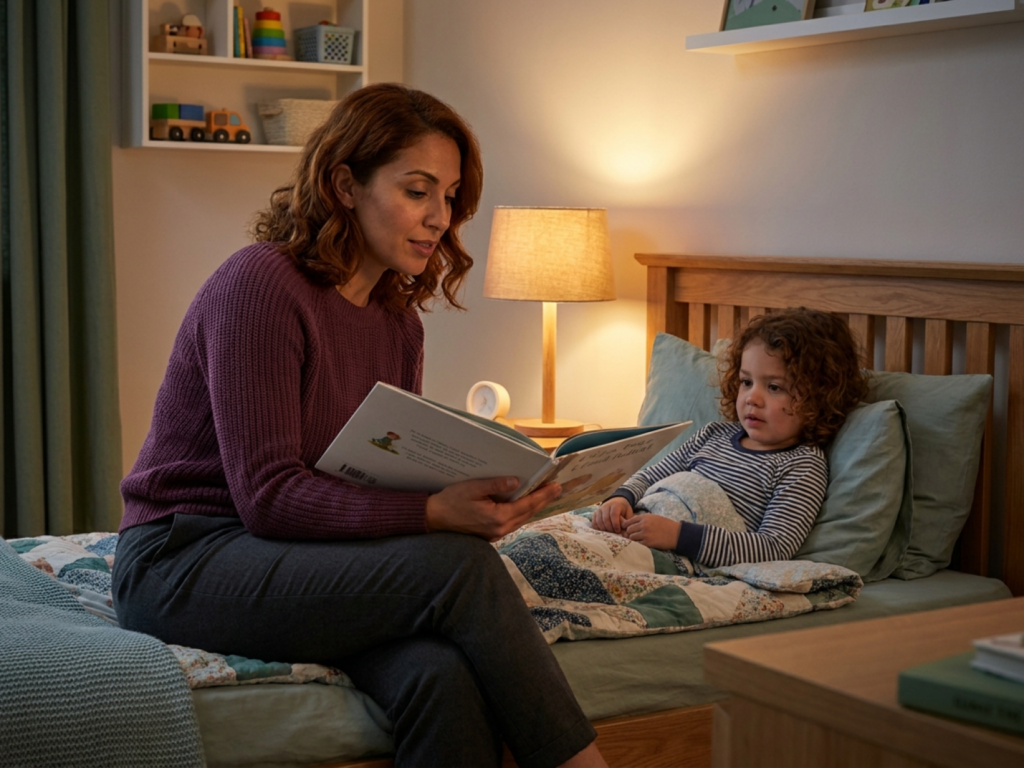
Most gentle plans rely on a few core principles. First, keep bedtime predictable. Consistent bedtime routines help cue the brain that sleep is approaching, and they work best when they are short, calming, and repeated in the same order each night. A simple sequence might include washing, pajamas, teeth, a story, and lights out. Second, reduce stimulation before bed. Screens are especially important to limit because bright light and exciting content can keep the nervous system alert.
Third, keep time at bedtime limited. Long talks, repeated requests, and drawn-out negotiations can accidentally reinforce wakefulness. Fourth, use the same calm response if the child gets up. The NHS guidance is very practical here: return the child to bed calmly and do it without turning the moment into a new event. Finally, give the plan enough time. One or two difficult nights do not mean it is failing. Children usually need repetition before the new pattern feels familiar and safe.
- Use the same sleep window most nights.
- Keep bedtime language simple and repetitive.
- Offer comfort without adding new stimulation.
- Separate bedtime from play, devices, and big emotions.
Gentle methods that fit different ages
For toddlers and preschoolers, the most effective starting points are often a screen-free bedtime routine and small schedule shifts. If bedtime has drifted late, moving it earlier by 10 to 15 minutes every few nights can be easier than making one large change. A gradual bedtime move also reduces the risk that the child becomes overtired, which can make sleep harder rather than easier. Some families also use parental presence fading, where the caregiver stays close at first and then slowly reduces involvement as the child becomes more secure at sleep onset.
For school-age children, resistance at bedtime may reflect autonomy seeking, anxiety, or a mismatch between the child’s sleep need and the family schedule. A gentle approach can still be firm. Offer limited choices, such as which book to read first, while keeping the overall routine fixed. If the child repeatedly asks for one more story, one more drink, or one more trip out of bed, plan your answer in advance so bedtime does not become a negotiation loop. The key is not perfect compliance. The key is enough structure that the child can predict what happens next.
Across ages, remember that the aim is not to make sleep happen by force. The aim is to make sleep more likely by reducing the need for fresh stimulation, repeated bargaining, or unpredictable reassurance. That is why independent sleep skills improve most when the adult response is calm, clear, and consistent.
Handling resistance and night waking
Resistance is common at the start of sleep training. Some children cry, stall, or test the boundary because the previous bedtime pattern is changing. This is not unusual, and it does not automatically mean the method is too strict. What usually helps is a low-stimulation response: brief reassurance, a calm return to bed, and no new reward for staying awake. The more dramatic the adult response, the more alert the child tends to become.
Night waking should be handled in a way that matches bedtime as closely as possible. If the child receives a very different response at 2 a.m. than at 8 p.m., the nighttime waking can become more rewarding than sleep itself. A short, boring, predictable response is usually kinder than repeated discussion. At the same time, parents should watch for clues that the waking is not simply behavioral. Fever, pain, rash itch, new snoring, breathing irregularity, or unusual restlessness deserves medical attention rather than a stricter sleep plan.
Adults also need a plan. Sleep deprivation can make even gentle interventions feel overwhelming. Taking turns between caregivers, preparing the room before bedtime, and agreeing on the exact words you will use can lower tension. When adults stay regulated, children usually find the transition much easier.
When to seek medical advice
Professional evaluation is important when sleep problems are severe, prolonged, or accompanied by other symptoms. Habitual loud snoring, breathing pauses, marked daytime sleepiness, persistent pain, developmental regression, extreme bedtime anxiety, or very restless sleep are all reasons to speak with a pediatric clinician. These signs can point to sleep-disordered breathing, iron-related restlessness, reflux, eczema itch, anxiety, or another contributor that a home behavioral plan cannot fix alone.
It is also reasonable to seek help if you have used a consistent gentle plan for several weeks and there is no meaningful progress. In that situation, the issue may be the timing of bedtime, the child’s developmental stage, a hidden medical factor, or simply a strategy that needs adjustment. A pediatrician, pediatric sleep specialist, or child health professional can help tailor the plan. Support is especially valuable when caregivers are exhausted, because caregiver sleep loss can reduce patience and consistency.
The most reassuring message is that a child does not need a perfect parent to learn healthier sleep habits. They need a repeatable routine, a calm adult response, and a willingness to adjust the plan when the child’s health suggests that something more than behavior is involved.
When gentle sleep training should pause and be reassessed
- Snoring, breathing pauses, or gasping during sleep.
- Pain, fever, itching, reflux, or other signs of discomfort.
- Sudden changes in sleep with daytime sleepiness or behavior change.
- Severe bedtime anxiety or distress that does not improve with a consistent plan.
- Family stress so high that the bedtime plan is no longer safe or sustainable.
Tools & Assistance
- A simple bedtime log for one to two weeks
- A fixed, screen-free bedtime routine
- A pediatrician or family doctor visit for persistent sleep problems
- A pediatric sleep specialist if snoring or breathing concerns are present
FAQ
Is gentle sleep training the same as cry-it-out?
No. Gentle sleep training usually relies on predictable routines, calm reassurance, and gradual change rather than leaving a child to cope alone.
How long does it take to work?
Many families see gradual changes over days to weeks, but the timeline depends on age, consistency, and whether a medical issue is affecting sleep.
Should I keep bedtime strict every night?
A mostly consistent bedtime is usually best. Small flexibility is fine, but frequent changes can confuse the sleep cue and make settling harder.
What if my child gets out of bed repeatedly?
Return them calmly and briefly each time, without adding excitement or negotiation. Consistency matters more than intensity.
When should I ask a doctor for help?
Ask for medical advice if there is snoring, breathing pauses, pain, persistent sleep loss, major daytime sleepiness, or no progress after a steady plan.
Sources
- PubMed Central — Sleep Training
- NHS — Sleep and young children
- Mayo Clinic — Child sleep: Put preschool bedtime problems to rest
Disclaimer
This article is for educational purposes only and does not replace individualized medical advice. If your child has persistent sleep problems, snoring, breathing pauses, pain, or developmental concerns, consult a pediatrician or sleep specialist.

















Please log in to leave a comment.