
Intro
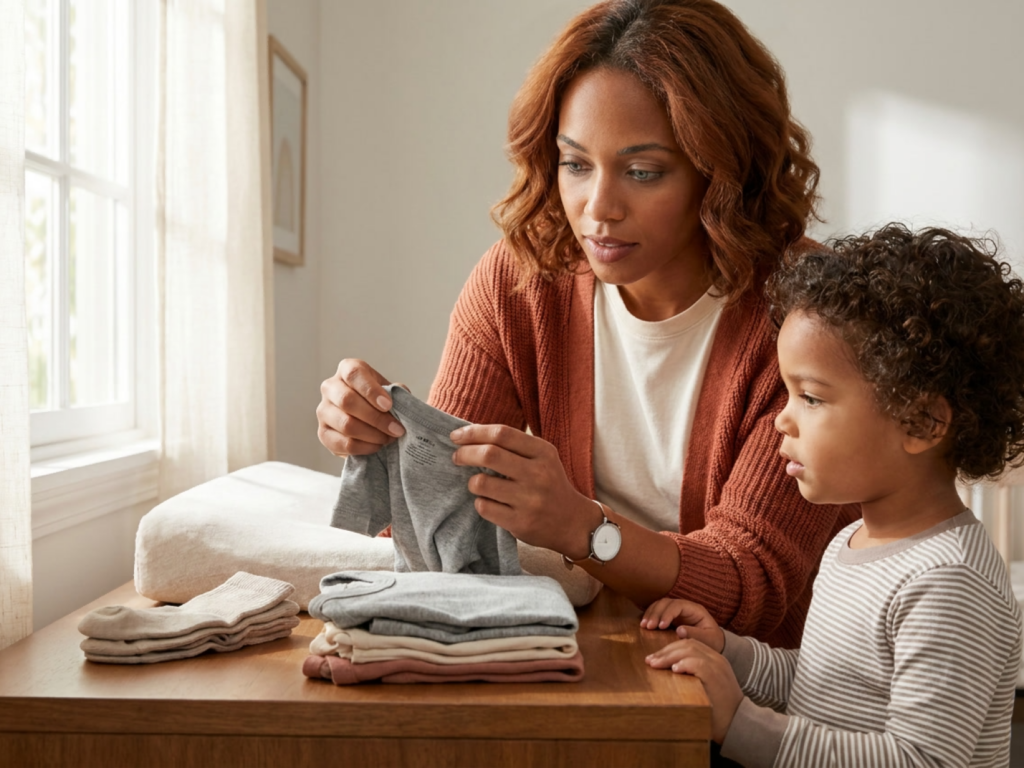
For some children, getting dressed is not a minor daily inconvenience. A clothing tag, raised seam, elastic waistband, or rough fabric may register as intensely irritating or even painful. The resulting distress can affect morning routines, school attendance, sleep, participation in activities, and a child’s sense of control.
Sensory-friendly clothing aims to reduce avoidable tactile input while preserving comfort, safety, temperature regulation, and independence. The most effective approach is individualized: observe what the child notices, make one change at a time, and involve the child in choosing and testing garments.
Highlights
Tags, seams, fabric texture, pressure, and temperature can all contribute to dressing-related distress.
Tagless designs, flat or seamless construction, soft breathable fabrics, and gentle elasticity may improve tolerance.
Turning garments inside out or modifying existing clothing can be practical, low-cost solutions.
A gradual, collaborative approach is usually more sustainable than forcing a child to tolerate uncomfortable clothing.
Persistent pain, rash, functional impairment, or major distress warrants assessment by an appropriate healthcare professional.
Why ordinary clothing can feel overwhelming
Children vary substantially in tactile processing. Some have an over-responsive touch system, meaning relatively low-intensity sensory input is experienced as disproportionately salient, irritating, or painful. A seam that another child barely notices may feel like persistent rubbing; a tag may feel sharp; snug sleeves may feel constricting. This response is real even when the skin looks normal.
Discomfort may also be amplified by fatigue, heat, illness, anxiety, transitions, or a busy morning. A child who tolerates a particular shirt at home may reject it before school because the overall sensory load is higher. Clothing distress is not necessarily oppositional behavior or a sign that a child is being difficult. It may be a communication of discomfort, loss of control, or anticipatory worry.
Different children object to different features. Some cannot tolerate compression or waistbands, while others seek close-fitting layers. Some are sensitive to inconsistent textures, such as a smooth body fabric combined with a scratchy decorative panel. Keeping a brief record of garments, locations of discomfort, time of day, weather, and the child’s response can reveal useful patterns without turning dressing into a clinical test.
Start with the garment features that matter most
Begin with the child’s most predictable triggers. If labels are the problem, choose tagless garments or remove labels carefully. A label should be clipped close to the stitching without leaving a sharp edge, and the area should be checked after washing. Some printed labels are better tolerated than woven labels, although any ink, adhesive, or raised print can still bother a particularly sensitive child.
Seams deserve equal attention. Look for flat seams, minimal internal stitching, seamless socks, and underwear without bulky gussets or prominent elastic. If a garment is otherwise acceptable, wearing it inside out can place the seam away from the skin; this is a practical adaptation, though it may not work with every design. Socks are often a high-impact starting point because toe seams are concentrated in a small area and may become irritating during movement.
Texture is highly individual, but many children prefer smooth, soft, breathable fabrics that do not trap excessive heat. Avoid scratchy embellishments, stiff appliques, rough lace, sequins, and fabrics that become abrasive after laundering. Gentle elasticity may be more acceptable than rigid pressure, but waistbands, cuffs, and armholes should never leave painful marks or restrict movement. The relevant goal is not a particular brand or fiber; it is the child’s observed comfort and functional tolerance.
Choose fit, closures, and layers for comfort
Tight fabrics can create continuous pressure and make dressing feel physically restrictive. Select a fit that allows normal movement without excessive looseness that could catch on equipment or create a safety risk. Check the neck opening, underarm area, waistband, and ankles because these are common pressure points. A child may tolerate a relaxed shirt but reject tight leggings, or accept loose trousers but dislike elastic at the waist.
Closures can affect both sensory comfort and independence. Soft pull-on garments, elastic waists, wide openings, and simple drawstrings may be easier than small buttons, stiff zippers, or hook-and-loop fasteners. However, some children dislike the sound, texture, or bulk of hook-and-loop material, so the child’s response should guide the choice. Adaptive design is useful when it reduces motor demands without adding a new tactile trigger.
Layering can provide options across changing temperatures. A breathable base layer may prevent direct contact with a rough school uniform or outer garment, while a removable overshirt gives the child control if they become warm. Avoid assuming that more layers are better: heat, perspiration, and trapped moisture can intensify tactile discomfort and may aggravate some skin conditions. For broader guidance about sensory-sensitive children’s clothing, consider evaluating the entire outfit rather than focusing on a single item.
Modify existing clothes before replacing them
Families do not need to replace an entire wardrobe to make progress. First, identify garments the child already accepts and compare their construction. This can reveal preferred necklines, fabrics, seam placement, waistband widths, and sleeve lengths. Use those features as a practical template when shopping or accepting hand-me-downs.
Simple modifications may include removing labels, covering an irritating seam with a soft fabric strip, replacing a rigid waistband, or changing a closure. A tailor or experienced alterations service may help when a garment is otherwise suitable. Any modification should remain secure, smooth, washable, and free of loose pieces that could create a choking or entanglement hazard, especially for younger children.
Laundering can change how fabric feels. Wash new garments before use, follow care instructions, and consider whether detergent fragrance, fabric conditioner, or residue contributes to discomfort. A child with eczema, contact dermatitis, or another skin condition may need individualized advice about detergents and fabrics. If clothing causes redness, swelling, broken skin, persistent itching, or pain that continues after the garment is removed, stop using that item and seek clinical guidance.
Make dressing collaborative and gradual
Children generally cope better when they have meaningful control. Offer two or three acceptable choices rather than presenting an entire wardrobe. Let the child touch or inspect a garment, choose when to try it, and decide which familiar item can be worn alongside it. A garment can first be worn for a few minutes during a calm activity at home, then for progressively longer periods if the child remains comfortable. There is no need to continue when distress escalates.
Use neutral, specific language: “The seam is rubbing your toe,” or “The waistband feels tight.” This validates the experience and helps the child develop interoceptive and communication skills. Avoid promising that a garment will not feel uncomfortable, because an unexpected sensation can reduce trust. Instead, agree on a plan for removing or changing it.
For school or childcare, share the child’s practical needs with staff. A spare tolerated outfit, permission to remove an outer layer, and advance notice of costume or uniform days can prevent avoidable crises. School policies may limit clothing choices, but accommodations can sometimes address seams, tags, temperature, changing routines, or access to a quiet space. The aim is participation with dignity, not perfect conformity to a standard outfit.
Balance sensory comfort with health and safety
Sensory preferences are important, but clothing still needs to support temperature regulation, mobility, hygiene, and safety. Avoid garments that are so loose they can catch in playground equipment, wheels, machinery, or vehicle restraints. Check that drawstrings are appropriate for the child’s age and setting, and follow sleepwear and fire-safety guidance. Shoes and socks should permit safe walking and activity even when a child strongly prefers minimal clothing.
Skin observations can help distinguish tactile intolerance from a dermatologic problem, although the two can coexist. Redness in pressure areas, scaling, fissures, hives, recurrent itching, or worsening eczema may indicate irritation, allergy, friction, moisture, or another condition requiring assessment. A child may describe all of these experiences as “the clothes hurt,” so listening carefully and examining the skin can be useful.
Seek professional help when dressing distress is persistent, causes substantial family conflict, prevents school or community participation, disrupts sleep, or is accompanied by pain or skin changes. An occupational therapist can assess sensory processing and functional dressing skills; a primary care clinician or dermatologist can evaluate pain and skin findings. Consultation does not require a diagnosis and should be directed toward the child’s specific needs.
When to seek professional advice
- Pain, rash, swelling, broken skin, or persistent itching occurs after wearing clothing.
- Dressing distress substantially interferes with school, sleep, hygiene, mobility, or family functioning.
- The child has recurrent skin inflammation or a known dermatologic condition that is worsening.
- A garment creates restricted movement, breathing discomfort, overheating, or a safety concern.
- The child’s response is severe, rapidly changing, or difficult to interpret.
Tools & Assistance
- Keep a short clothing comfort log noting fabric, seam location, fit, temperature, and the child’s response.
- Create a small rotation of tolerated outfits for mornings, school, sleep, and outdoor activities.
- Use a garment inspection routine to check tags, seams, elastic, rough decorations, and loose modifications.
- Ask an occupational therapist about sensory processing, dressing skills, and practical accommodations.
- Ask primary care or dermatology services to assess pain, rash, eczema, dermatitis, or suspected allergy.
FAQ
Should every child with clothing sensitivity wear only seamless clothing?
No. Seamless construction helps some children, but others tolerate flat seams or particular fabrics. The child’s observed response should guide choices rather than a universal clothing rule.
Is it acceptable for a child to wear clothes inside out?
It can be a reasonable comfort strategy when the internal seam is irritating. Check that the garment remains safe, comfortable, and acceptable for the setting.
How can a child try a new fabric without becoming distressed?
Introduce it during a calm period, allow the child to handle it first, pair it with familiar clothing, and stop if distress increases. Gradual exposure should be collaborative, not forced.
Could clothing sensitivity be caused by a skin condition?
Yes, irritation, eczema, dermatitis, friction, moisture, or allergy can contribute to discomfort. Skin findings or persistent pain should be assessed by a healthcare professional.
What should parents tell school staff?
Explain the specific triggers, tolerated alternatives, signs of escalating distress, and the agreed response. A spare outfit and advance notice of unusual clothing requirements may help.
Sources
- Humber NHS Foundation Trust — Helping Kids with Sensory Issues Get Dressed
- Understood — 6 sensory-friendly clothing solutions
- Little Sleepies — Dressing Kiddos with Sensory Sensitivities: Expert Tips from a Pediatric OT
Disclaimer
This article provides general educational information and is not a diagnosis or individualized medical advice. Consult a qualified healthcare professional for persistent pain, skin changes, significant functional impairment, or concerns about a child’s development or sensory processing.
















Please log in to leave a comment.