
Intro
Adaptive clothing can make everyday dressing safer, calmer, and more dignified for children who have mobility limitations, motor planning difficulties, sensory sensitivities, orthoses, medical devices, or fatigue. For many families, clothing is not a small detail; it affects school participation, toileting, therapy routines, skin comfort, and a child’s sense of autonomy.
This article is written for caregivers, clinicians, educators, and designers who want a medically informed overview without assuming that one garment or strategy fits every child. The best choices usually come from observing the child’s body mechanics, preferences, environment, and care plan, then matching clothing features to real daily tasks.
Highlights
Adaptive clothing aims to reduce barriers to dressing, toileting, positioning, and participation while preserving a child’s comfort and identity.
Helpful features may include side openings, magnetic or hook-and-loop closures, adjustable waistbands, flat seams, soft fabrics, and access points for feeding tubes, braces, or catheters.
The right garment depends on the child’s functional abilities, sensory profile, skin integrity, equipment, climate, school expectations, and caregiver workload.
Medical teams can help identify safety concerns such as pressure injury risk, choking hazards, device interference, or unsafe magnet exposure.
What adaptive clothing means for children
Adaptive clothing refers to garments designed or modified to make dressing, undressing, toileting, hygiene, and medical access easier. For children, this may include clothing for children who use wheelchairs, walkers, standers, ankle-foot orthoses, spinal braces, prostheses, casts, gastrostomy tubes, insulin pumps, ostomies, central lines, continence products, or ventilatory support. It may also support children with developmental coordination difficulties, cerebral palsy, spina bifida, muscular dystrophy, arthrogryposis, limb differences, autism, sensory processing differences, acquired brain injury, juvenile arthritis, or chronic pain.
The goal is not to make a child look medicalized. Good adaptive design blends function with ordinary childhood life: playground movement, classroom sitting, family outings, therapy appointments, naps, and messy meals. Research on clothing design for children with developmental disabilities emphasizes that accessible fasteners, adjustable closures, comfort-focused construction, and ease of donning can reduce dressing barriers and caregiver burden while supporting participation. Social research also shows that clothing is tied to identity, inclusion, and how children are perceived by peers and adults.
Adaptive clothing should be viewed as an accessibility tool, similar to environmental modifications or assistive technology. A shirt that opens fully at the shoulder may reduce painful range-of-motion demands. Trousers with a higher back rise may improve seated coverage for a wheelchair user. A onesie with back closure may prevent unsafe undressing for one child, while front-opening clothing may promote independence for another. The same feature can help or hinder depending on the child’s anatomy, cognition, goals, and context.
Common dressing barriers and how garments can respond
Dressing requires balance, postural control, joint mobility, bilateral hand use, sequencing, tactile tolerance, and enough endurance to complete several steps. Children with hypertonia may have increased resistance when sleeves are pulled over flexed elbows or hands. Children with hypotonia may need clothing that does not bunch under the body during supported sitting. Limited shoulder flexion, contractures, hemiparesis, tremor, dystonia, pain, or reduced grip strength can turn small buttons and tight cuffs into major barriers.
Useful design responses include wide neck openings, raglan or kimono-style sleeves, side or shoulder closures, larger zipper pulls, looped tabs, elastic panels, and garments that open flat. For lower limbs, pants with side openings, wider legs, adjustable hems, or reinforced seat areas may help children who wear braces, splints, or bulky continence products. For children who use wheelchairs, seated-fit clothing may prevent gaping, waistband pressure, and fabric pulling across the knees or pelvis.
Many children also experience sensory barriers. Scratchy labels, seams, tight elastic, stiff denim, heat retention, or fabric noise can trigger distress or refusal. Sensory-sensitive children’s clothing often uses soft breathable materials, tagless labels, flat seams, predictable stretch, and minimal hardware. For some children, compression-like snugness is calming; for others it is intolerable. Caregivers should treat the child’s response as meaningful data, not misbehavior.
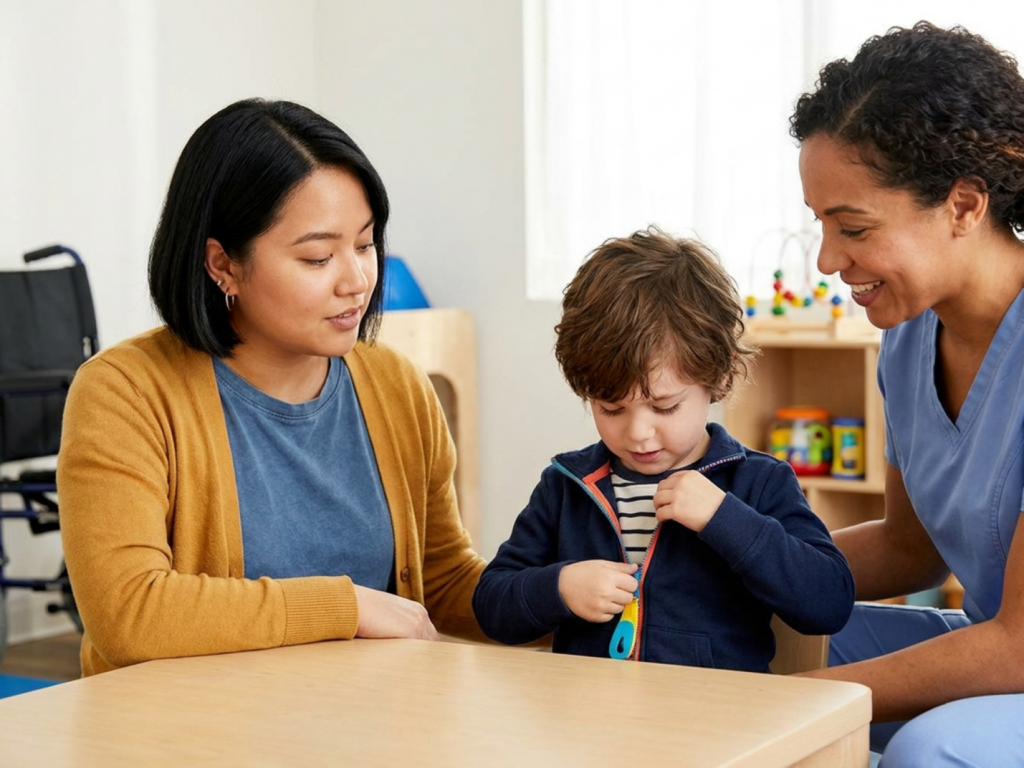
Motor learning matters too. Clothing can support self-feeding and dressing goals by reducing unnecessary complexity while keeping one achievable challenge at a time. For example, a child may practice pulling up an elastic waistband before progressing to snaps, or use a jacket with a large zipper loop while still needing help to start the zip. Occupational therapists can help grade tasks so independence grows without repeated failure.
Features to consider by garment type
Tops are often easier when they have generous necklines, shoulder snaps, front openings, wrap designs, or magnetic closures. However, magnets are not appropriate for every child or household, especially where implanted medical devices, programmable shunts, or accidental ingestion risks are concerns. Families should discuss magnet use with the relevant clinician and follow product safety instructions carefully.
Bottoms may need elastic or adjustable garments at the waist, higher back coverage, lower front rise, side seams that open, or room for orthoses and continence products. Jeans and school trousers can be difficult because stiff fabric and narrow openings may increase fatigue or pressure. Knit trousers, adapted chinos, leggings with reinforced knees, or seated-cut pants may better support mobility and comfort while still looking like typical school clothing.
Outerwear presents unique challenges because coats must fit over braces, splints, wheelchair harnesses, or seating systems without creating overheating or compression. Cape-style coats, back-opening jackets, side zips, and ponchos may be useful in some settings, but loose fabric must be assessed for entanglement with wheels, straps, playground equipment, or transport systems. In car seats and wheelchair transport, bulky coats can compromise harness fit, so families should follow transport safety guidance.
Sleepwear should be chosen with temperature regulation, skin integrity, continence care, and safety in mind. Back-zipping sleepers may help children who remove diapers or medical devices, but they must not restrict breathing, circulation, or access in emergencies. For children with eczema-prone skin, pressure areas, or altered sensation, breathable fabrics and fragrance-free laundry routines may reduce irritation. Any persistent rash, skin breakdown, swelling, or color change needs medical review.
School uniforms and activity clothing may require advocacy. Families can ask schools about reasonable adjustments such as elastic-waist uniform options, alternative shoes for orthoses, modified fasteners, or extra time for changing before physical education. Clothing should support participation, not become a barrier to attendance or social belonging.
Medical devices, orthoses, and skin protection
Children who use medical devices often need clothing that allows access without repeated full undressing. Openings for gastrostomy tubes, ostomy pouches, urinary catheters, insulin pumps, continuous glucose monitors, hearing devices, or central venous lines can reduce disruption and preserve privacy. Device access must be planned with the child’s medical team, particularly when infection control, line security, pressure, or emergency visibility is important.
Orthoses and positioning equipment change how fabric sits on the body. Ankle-foot orthoses may require wider socks, longer trouser openings, and shoes with sufficient depth. Spinal orthoses may require seamless base layers under the brace to reduce friction. Hip abduction braces, casts, or post-operative immobilizers may require snap-open legs or oversized garments, but fit should not create tripping hazards or interfere with transfers.
Skin surveillance is essential. Children with reduced sensation, limited mobility, edema, malnutrition, or prolonged sitting can be vulnerable to pressure injury. Warning signs include persistent redness, non-blanching discoloration, blistering, open areas, unusual warmth, swelling, or pain. Clothing seams, waistbands, rivets, zippers, and thick pockets can become pressure points, especially under braces or seating supports. Smooth base layers and careful garment checks after wear can help identify problems early.
Temperature regulation also deserves attention. Some children with neurologic conditions, autonomic dysfunction, or limited mobility may overheat or become cold more easily. Layering with breathable base layers for children can allow caregivers to respond to indoor and outdoor changes. A child who appears unusually drowsy, flushed, pale, clammy, or distressed in relation to heat or cold should be assessed promptly according to their care plan.
Supporting independence, dignity, and emotional well-being
Dressing is both a functional task and a social experience. Children often want clothes that look like what peers wear, reflect their interests, and avoid drawing unwanted attention. Adaptive features are most successful when they are discreet, durable, and available in age-appropriate styles. A child’s preference matters even when adults are focused on efficiency.
Choice can be therapeutic. Offering two comfortable options, using visual schedules, or laying clothing out in sequence can reduce cognitive load and support predictability. Some children benefit from dressing while seated, using a stable footrest, dressing the more affected limb first, or using adaptive tools such as dressing sticks, zipper pulls, or button hooks. Others need environmental changes, such as warmer rooms, reduced noise, extra time, or a consistent routine.
Caregivers should avoid framing clothing adaptations as a sign of failure. If a magnetic shirt allows a child to dress before school with less pain, that is a successful accommodation. If side-opening trousers reduce the number of transfers needed for toileting, that can protect both the child and caregiver from fatigue or injury. The measure of success is not whether clothing is conventional; it is whether the child is safer, more comfortable, and more able to participate.
Independence should be individualized. For one child, the goal may be choosing an outfit. For another, it may be inserting one arm into a sleeve, managing a waistband, or telling an adult when a seam hurts. Children with fluctuating conditions may need more help during pain flares, illness, or post-operative recovery. Flexibility prevents clothing routines from becoming a daily battleground.
Choosing, modifying, and reviewing clothing over time
A practical approach begins with observation. Notice which step of dressing is hardest: lifting arms, bending hips, standing balance, grasping fasteners, tolerating fabric, managing toileting, protecting devices, or staying warm. Then choose one or two clothing changes that address that barrier directly. Buying many items before testing fit can be expensive and frustrating, especially because children grow and medical needs change.
When shopping or modifying garments, check closure strength, washability, seam placement, stretch recovery, choking hazards, and whether the child can remove the item safely if needed. Magnetic fasteners, snaps, toggles, and decorative parts should be assessed for age, cognition, mouthing behavior, and household risks. Secondhand or altered clothing should be inspected for loose hardware, fraying elastic, sharp edges, and fabric wear.
Professional input can be valuable. Occupational therapists can analyze dressing mechanics and recommend adaptive strategies. Physiotherapists can advise on positioning, transfers, and orthosis interaction. Nurses may help with tube, catheter, continence, or skin care needs. Dermatologists can guide fabric and laundry choices for significant dermatitis. Orthotists, rehabilitation physicians, developmental pediatricians, surgeons, or other specialists may need to review garments that interact with braces, casts, wounds, or implanted devices.
Reassessment should be routine. A garment that worked six months ago may become too tight, rub over a new brace, interfere with a school toileting plan, or no longer match the child’s desire for privacy. Ask the child, when possible, what feels good, what hurts, and what helps them feel like themselves. Adaptive clothing is most powerful when it is treated not as a niche product, but as a normal part of accessible childhood.
Safety cautions
- Do not use magnetic closures near implanted or programmable medical devices unless the child’s clinician confirms safety.
- Seek medical advice for persistent redness, blistering, swelling, wounds, new pain, or skin color changes under clothing or braces.
- Avoid loose fabric that can catch in wheelchair wheels, mobility aids, playground equipment, or transport restraints.
- Small snaps, toggles, buttons, and detachable parts can be choking or ingestion hazards for some children.
- Clothing should not restrict breathing, circulation, device access, emergency care, or safe harness positioning.
Tools & Assistance
- Ask an occupational therapist to observe one real dressing routine and identify modifiable barriers.
- Create a small trial wardrobe before buying multiple adaptive garments in the same style.
- Keep a skin-check log when introducing braces, seated-fit clothing, or new seams and waistbands.
- Discuss school uniform adjustments with the school nurse, teacher, or disability support coordinator.
- Bring garments to orthotics, rehabilitation, or nursing appointments when fit around equipment is uncertain.
FAQ
Is adaptive clothing only for children who use wheelchairs?
No. It can help any child whose dressing, toileting, comfort, medical access, or mobility is affected by motor, sensory, developmental, orthopedic, or medical factors.
Are magnetic closures always safe?
No. Magnets may pose risks with some implanted devices and can be dangerous if swallowed. Ask the child’s clinician and follow product safety guidance.
How can I tell if clothing is causing skin problems?
Check for persistent redness, non-blanching marks, blisters, swelling, warmth, pain, or open areas, especially under seams, waistbands, braces, and seated pressure points.
Should children still practice dressing skills if they use adaptive clothing?
Often yes, but goals should be individualized. Adaptive features can reduce unnecessary barriers while therapists and caregivers support achievable independence.
What if school uniform rules conflict with adaptive needs?
Families can request reasonable adjustments, such as elastic waists, adapted shoes, alternative fasteners, or extra changing time, ideally supported by clinical documentation when needed.
Sources
- PubMed Central — Clothing design solutions for children with developmental disabilities: A systematic review
- Liverpool John Moores University Research Online — Childhood disability and clothing: (Un)dressing debates
- Brighton Center — Adaptive Clothing for Children with Disabilities
Disclaimer
This article is for general educational purposes and does not diagnose, treat, or replace individualized medical advice. Consult the child’s healthcare team before changing clothing around medical devices, braces, wounds, or safety-critical equipment.















Please log in to leave a comment.