
Intro
Hurricanes can make families feel powerless, especially when children are frightened, very young, medically complex, or dependent on routines and equipment. Preparation cannot eliminate every risk, but it can reduce avoidable danger, support continuity of care, and give children clear actions to follow.
Highlights
Create a family plan before a storm threatens your area, including evacuation routes, communication methods, and a reunification plan.
Pack water, food, medications, identification, comfort items, and supplies for each child’s developmental and medical needs.
Use calm, age-appropriate explanations and practice safety steps without exposing children to unnecessary frightening details.
Follow official evacuation and shelter instructions, and never delay leaving because a child is asleep, upset, or reluctant.
Begin with a family hurricane plan
Start planning well before a tropical storm or hurricane is forecast. Check how your community communicates warnings, including local emergency alerts, weather radio broadcasts, and official evacuation notices. Decide in advance whether your family would evacuate, shelter at home, or stay with relatives or friends outside the affected area. Do not assume that the safest option will be obvious once conditions deteriorate; traffic, flooding, power loss, and limited fuel can make late decisions much harder.
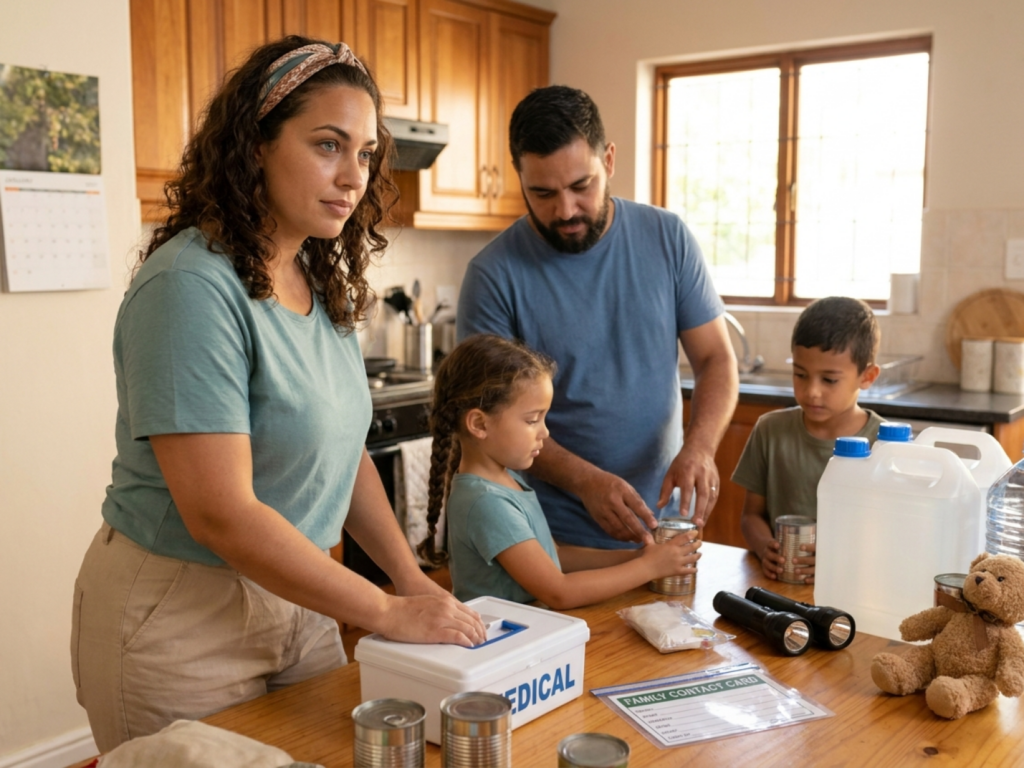
Write down at least two meeting places: one near home and another outside your neighborhood. Identify an out-of-area contact whom every adult can call or message if local networks are overloaded. Children should know the person’s name and how to reach them, but they should not be expected to manage family communication alone. Make a family emergency contact card with names, phone numbers, addresses, medical information, and any relevant custody or pickup instructions.
Review evacuation routes and identify accessible transportation if a child uses a wheelchair, stroller, oxygen equipment, or another assistive device. Ask schools, childcare programs, and extracurricular organizations about their emergency closure and reunification procedures. Confirm who is authorized to collect each child and how staff will verify identity. A written child school health plan can help ensure that medication, allergy, mobility, and communication needs are recognized during a disruption.
Keep copies of identification, insurance information, immunization records, prescriptions, clinician contact information, and legal documents in a waterproof container. Store secure digital copies when possible. Plan for pets as well as children, because many shelters have specific animal rules and may not accept pets without appropriate carriers or documentation.
Assemble supplies for children and caregivers
Prepare a portable emergency kit for several days, following local guidance about recommended quantities and duration. Include safe drinking water, shelf-stable foods, a manual can opener, infant formula if needed, feeding utensils, diapers, wipes, changing supplies, hygiene products, spare clothing, blankets, and sturdy shoes. Choose foods your child already tolerates and can safely eat; a stressful emergency is not an ideal time to introduce unfamiliar products.
Pack each child’s essential medications in their original labeled containers whenever possible. Include a current medication list with doses, schedules, prescribing clinicians, allergies, and pharmacy details. Ask the child’s healthcare professional or pharmacist ahead of time how to maintain the medication supply if evacuation lasts longer than expected or refrigeration is interrupted. Do not alter dosing or stop maintenance therapy without professional guidance. If a medication or medical device requires refrigeration, obtain a specific storage plan before hurricane season.
Children with complex medical needs may require more detailed preparation. List the equipment, supplies, batteries, charging cables, replacement parts, and trained caregivers necessary for routine care. Include instructions written in plain language for devices such as feeding pumps, glucose monitoring equipment, suction equipment, or mobility aids, as clinically appropriate. Contact the equipment supplier, home-care agency, and medical team to ask about emergency replacement procedures and power-outage support.
Include comfort and communication items: a familiar blanket, small toy, books, headphones, sensory supports, drawing materials, and a battery-powered device with downloaded content. Pack copies of behavioral, communication, allergy, seizure, asthma, or other action plans when relevant. Keep an adult’s kit separate enough that a child’s supplies can be located quickly without opening every container.
- Use waterproof bags or sealed containers for medications, documents, electronics, and clothing.
- Label children’s bags with their names and a caregiver’s phone number, while avoiding unnecessary public disclosure of medical details.
- Check expiration dates, battery charge, clothing sizes, and food tolerance at regular intervals.
Prepare the home and plan for evacuation or sheltering
Before hurricane season, inspect the home for hazards that could become worse in high winds or flooding. Follow official advice about securing windows, outdoor furniture, toys, grills, and other loose objects. Know how to turn off utilities if instructed by local authorities, but do not take risks in rising water or damaged structures. Keep children away from windows, glass doors, balconies, floodwater, generators, and storm-damaged areas.
Choose the safest area of the home for sheltering if officials advise staying indoors. It should be away from windows and skylights and should allow adults to supervise children and reach emergency supplies. Explain that the family may need to spend time in a smaller, darker, or noisier space. A flashlight, shoes, medications, water, and a charged phone should be accessible without requiring anyone to walk through hazardous areas.
If evacuation is ordered or clearly necessary, leave promptly using the designated route. Take the child’s medication and medical equipment with you rather than placing critical supplies in a vehicle that may be inaccessible later. Secure car seats correctly and follow age- and size-appropriate restraint guidance. Bring identification for each child and maintain direct supervision in crowded departure points, shelters, and rest areas.
Contact the destination or shelter before arrival when possible to ask about accessibility, refrigeration, power, sleeping arrangements, pet policies, and infection-control procedures. Shelters can be stressful for children because of unfamiliar people, noise, limited privacy, and disrupted routines. A predictable bedtime sequence, familiar food, headphones, and a clear explanation of what will happen next may reduce distress. Never use a generator, charcoal grill, or fuel-burning device indoors or in an enclosed space; carbon monoxide is an odorless, potentially fatal hazard.
Talk with children and practice without creating panic
Children take emotional cues from adults. Use a calm, truthful explanation that matches the child’s developmental level: a hurricane is a powerful storm, adults are making a plan, and the child’s job is to stay with a trusted caregiver and follow safety instructions. Avoid promises such as “nothing bad will happen.” Instead, offer realistic reassurance: “We are preparing, we will listen to emergency officials, and we will help you.” Limit repeated exposure to frightening television footage and adult conversations about worst-case scenarios.
Invite children to participate in manageable tasks. A preschool child might help place batteries in a labeled container or choose a comfort item. A school-age child might check a supply list, learn the family meeting place, or practice identifying a trusted adult. An adolescent can help charge devices, organize documents, or support a younger sibling, but should not be given responsibility that exceeds their maturity or safety skills.
Practice the actions children may need to perform: moving away from windows, putting on sturdy shoes, staying with the caregiver, responding to an evacuation instruction, and communicating their name and a caregiver’s phone number. Teaching kids emergency response works best through brief, repeated practice rather than a single frightening drill. Use play, drawing, stories, and role-play, and allow children to ask questions. Correct misconceptions gently and acknowledge fear without amplifying it.
Maintain routines wherever feasible. Regular meals, hydration, sleep cues, toileting opportunities, and familiar calming strategies can help regulate stress. Some children may become clingy, irritable, withdrawn, have sleep disruption, or show temporary regression after a disaster. Offer connection and predictable care. If distress is persistent, severe, or interferes with eating, sleeping, safety, or functioning, consult a pediatrician or qualified mental health professional.
Plan for infants, disabilities, and medical complexity
Infants and toddlers cannot reliably describe symptoms, hunger, pain, or fear, so caregivers need a more detailed observation plan. Pack sufficient diapers, wipes, formula or expressed milk supplies, feeding equipment, safe water, and clothing. Breastfeeding families should consider how evacuation, stress, privacy, and access to fluids may affect feeding, and should seek professional lactation or medical advice if difficulties arise. Keep infants away from smoke, contaminated water, floodwater, and extreme heat.
For a child with a disability, developmental difference, sensory sensitivity, or communication limitation, document preferred communication methods, triggers, calming strategies, mobility needs, and ways to recognize discomfort. Bring hearing or vision devices, communication boards, charging equipment, backup batteries, and repair contacts. If a child is prone to wandering, use the family’s established identification and supervision plan without relying on unapproved tracking or restraint methods.
Children with chronic diseases may need individualized planning for asthma, diabetes, epilepsy, severe allergies, adrenal insufficiency, bleeding disorders, immunosuppression, or other conditions. Ask the treating clinician what changes in environment, food, activity, temperature, or medication access could affect care. Ensure that caregivers understand the child’s written action plan and know when to seek urgent medical attention. A hurricane is not a reason to improvise treatment, share prescription medicine, or delay emergency evaluation for a concerning change in the child’s condition.
Before the storm, identify hospitals, urgent care services, pharmacies, dialysis or infusion services, and emergency transportation options along the evacuation route and near the destination. Confirm whether the child’s usual clinicians offer an after-hours contact pathway. If power-dependent equipment is essential, notify the electricity provider and local emergency management agency according to local procedures, while recognizing that registration does not guarantee uninterrupted power or rescue.
Protect children during and after the hurricane
During the storm, keep children indoors and supervised. Do not allow them to play in floodwater, drainage channels, storm surge, or areas with fallen wires and structural damage. Floodwater may contain sewage, chemicals, sharp debris, and infectious hazards. Treat all downed power lines as energized. Use flashlights rather than candles around children and combustible materials, and keep medications and cleaning products secured.
After the storm, wait for official instructions before leaving a shelter or returning home. Inspect the environment from an adult safety perspective before allowing children to enter. Watch for unstable ceilings, broken glass, mold, contaminated food or water, extreme heat, mosquitoes, displaced animals, and carbon monoxide exposure. Children should not help with debris removal, generator operation, chainsaws, or other hazardous cleanup tasks.
Continue routine hydration, nutrition, medication administration, and sleep support as much as conditions permit. Monitor for injury, breathing difficulty, fever, vomiting, diarrhea, dehydration, altered behavior, or worsening of a known medical condition. Seek urgent medical care for severe or rapidly worsening symptoms, suspected poisoning, serious injury, breathing problems, or any situation in which a child is not responding normally. Emergency services may be strained, so use official local guidance and do not delay when an emergency is apparent.
Recovery is both physical and emotional. Re-establish school, childcare, medical appointments, and medication supplies gradually. Give children opportunities to talk, draw, play, and regain a sense of control. Review what worked in the family plan without assigning blame, then replace used supplies and update information while the experience is fresh. Preparedness is an ongoing family skill, not a test that must be completed perfectly.
Critical safety reminders
- Follow official evacuation orders and do not wait for conditions to become dangerous.
- Never use generators, charcoal grills, or fuel-burning equipment inside a home, garage, tent, or other enclosed area.
- Keep children away from floodwater, downed power lines, damaged buildings, and cleanup equipment.
- Do not change a child’s medication plan or share prescription medicines without guidance from a healthcare professional.
- Seek urgent care for serious injury, breathing difficulty, suspected poisoning, altered responsiveness, or rapidly worsening illness.
Tools & Assistance
- Local emergency management alerts and evacuation maps
- A waterproof family contact card and document container
- A child-focused emergency kit with comfort, communication, and medical supplies
- A written medication list and condition-specific action plans
- The child’s healthcare team, pharmacy, school, and medical equipment suppliers
FAQ
How early should a family begin hurricane preparation?
Begin routine preparation before hurricane season, then review the plan whenever a storm may affect your area. Early preparation allows time to obtain medications, fuel, infant supplies, transportation, and accessible shelter.
What should children know about the evacuation plan?
Children should know which adults they stay with, where the family will meet, how to identify trusted caregivers, and that they must follow evacuation instructions. Keep explanations truthful, brief, and age appropriate.
How can I prepare medication for a child who needs daily treatment?
Keep medications in labeled containers, maintain a current list, and ask the prescribing clinician or pharmacist about extra supply, storage, refrigeration, and missed-dose procedures. Do not independently change dosing.
What if my child becomes very anxious after the hurricane?
Restore routines, provide reassurance and opportunities for play or conversation, and limit frightening media exposure. Contact a pediatrician or mental health professional if distress is severe, persistent, or disrupts daily functioning.
Sources
- Centers for Disease Control and Prevention — Preparing for Hurricanes or Other Tropical Storms
- Centers for Disease Control and Prevention — Ready Wrigley Prepares for Hurricanes
- Johns Hopkins Medicine — Preparing Kids and Families for a Hurricane
Disclaimer
This article provides general educational information and is not a substitute for individualized medical advice, diagnosis, or treatment. Consult your child’s healthcare professionals and follow local emergency instructions.















Please log in to leave a comment.