
Intro
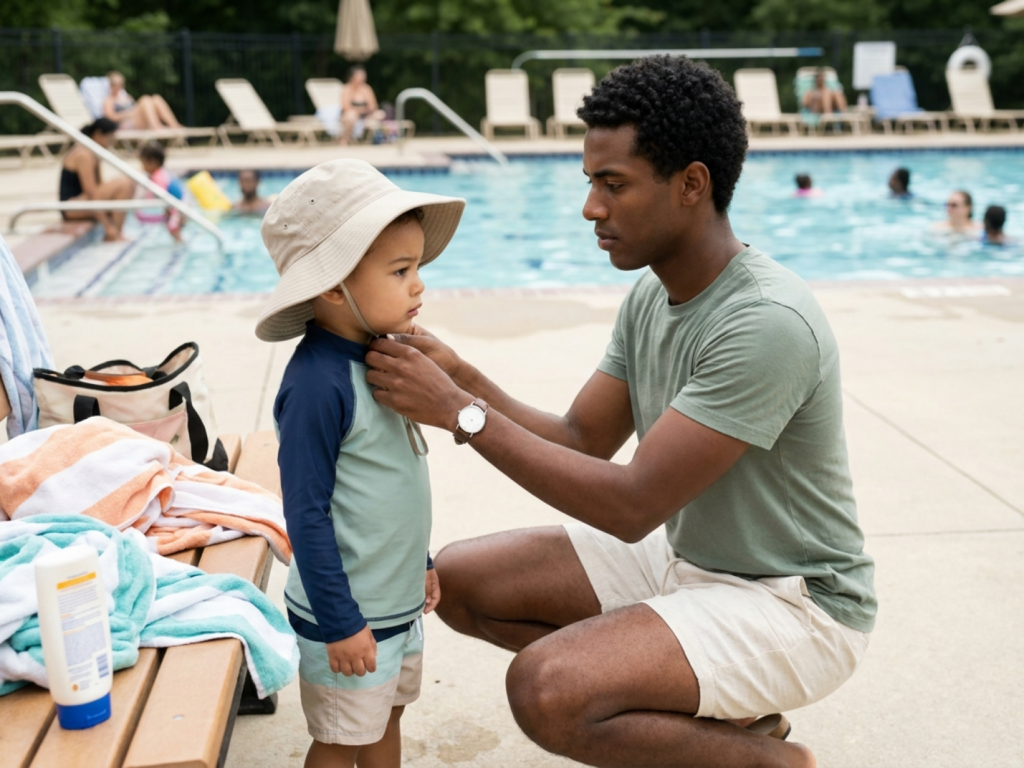
Choosing swimwear for a child is about much more than style. Families are trying to balance sun protection, comfort, movement, water safety, skin sensitivity, durability, and a child’s growing wish for independence. The good news is that thoughtfully selected swimwear and sun-protective garments can reduce ultraviolet exposure while still letting children play, swim, and feel like themselves.
This article explains how to assess UPF fabrics, coverage, fit, materials, and practical safety details. It is written for medically literate caregivers, while recognizing that every child’s skin, sensory needs, and health history are different.
Highlights
UPF-rated swimwear provides fabric-based ultraviolet protection and can reduce reliance on sunscreen for covered skin.
Coverage, fit, comfort, and water safety matter as much as the UPF number on the label.
Children with eczema, photosensitivity, scars, medication-related sun sensitivity, or prior severe sunburn may need individualized medical advice.
Sun-protective clothing works best as part of a broader plan that includes shade, timing, hats, sunglasses, hydration, and sunscreen on exposed skin.
Why sun-protective swimwear matters
Children’s skin is not simply a smaller version of adult skin. The epidermal barrier is still developing in younger children, and childhood ultraviolet radiation exposure contributes to cumulative lifetime photodamage. Sunburns in childhood are associated with later skin cancer risk, and intermittent intense exposure at pools, beaches, lakes, and water parks can be substantial. Water, sand, concrete, and light-colored surfaces can reflect ultraviolet radiation, increasing exposure even when the air temperature feels mild.
Sun-protective clothing helps address a common real-world problem: sunscreen is effective only when enough is applied, it covers all exposed areas, and it is reapplied after swimming, sweating, toweling, and time. In busy family settings, gaps are common. A long-sleeved rash guard or sunsuit provides continuous protection over the covered areas without needing reapplication.
This does not mean sunscreen becomes unnecessary. Fabric protects only the skin it covers. The face, ears, hands, lower legs, feet, and any gaps at the neck, waist, or wrists may still need broad-spectrum sunscreen, shade, or additional garments. For infants, toddlers, and children with medical conditions affecting the skin, a clinician’s advice is especially valuable.
Understanding UPF, SPF, and fabric protection
UPF stands for ultraviolet protection factor and is used for fabrics. SPF stands for sun protection factor and is used for sunscreens. UPF indicates how much ultraviolet radiation can pass through a textile. A UPF 50+ garment allows only a small fraction of UV radiation to reach the skin under the fabric; many brands describe UPF 50+ clothing as blocking more than 98% of UV rays. Some specialized children’s UV clothing is marketed with ratings such as UPF 50+ or UPF 80, but the key is that the garment has been designed and tested for sun protection rather than merely being dark or tightly woven by chance.
The label matters because ordinary clothing varies widely. Thin, loosely woven, stretched, wet, or worn-out fabric may allow more UV penetration. Swimwear also faces chlorinated water, salt water, sand, repeated washing, and friction. Look for a clear UPF rating on the garment or product information, ideally from a company that describes UV-protective swimwear as a core feature.
A practical rule is to prioritize built-in fabric protection for high-exposure areas: shoulders, upper back, chest, abdomen, and upper arms. These areas are commonly missed with sunscreen and receive direct sun when children bend, splash, or sit at the water’s edge. A high UPF rating is helpful, but it should be paired with adequate coverage and a secure fit.
Choosing coverage: rash guards, sunsuits, swim shirts, and bottoms
The best style depends on age, activity, water temperature, toileting needs, and the child’s tolerance for snug clothing. For babies and toddlers, one-piece sunsuits or long-sleeved zip suits can reduce gaps at the waist and simplify dressing. For preschool and school-age children, a two-piece combination of a UPF swim shirt and swim shorts or leggings may be easier for bathroom breaks and growth.
Consider these coverage options:
- Long-sleeved rash guards: protect shoulders, upper arms, chest, and back, and are useful for swimming, paddling, and beach play.
- High-neck swim tops: reduce exposure at the upper chest and back of the neck, where sunburn is common.
- Swim leggings or longer shorts: protect thighs and knees, especially for children who sit, crawl, surf, kneel, or play in shallow water.
- One-piece sunsuits: reduce garment ride-up and are often practical for younger children.
- Wide-brim or legionnaire-style hats: protect the scalp, ears, cheeks, and neck when the child is out of the water.
For children who strongly resist full coverage, start with the highest-yield areas: a UPF long-sleeved top and a hat during breaks from swimming. Letting the child choose from acceptable colors or prints can improve cooperation. A supportive approach usually works better than framing sun protection as a punishment or restriction.
Fit, comfort, and clothing materials
Sun-protective swimwear should fit close enough that it does not balloon in the water, but not so tight that it causes chafing, pressure marks, restricted shoulder movement, or abdominal discomfort. Children need to climb ladders, kick, reach, squat, and run safely. A garment that looks protective but limits movement can increase frustration and reduce supervision quality because caregivers spend more time adjusting it.
Assess the seams, zipper guards, waistband, leg openings, and neck opening. Flat seams may reduce friction. A covered zipper or zipper garage can reduce irritation under the chin. For children with sensitive skin, eczema, dermatographism, or sensory processing differences, scratchy labels, tight cuffs, and rough seams may be more important than the advertised technology. Families already thinking about clothing materials for daily wear can apply the same logic to swimwear: smooth fabric, minimal rubbing, and easy laundering are often more tolerable.
Eczema-prone skin clothing choices require extra care after swimming. Chlorine, salt, sand, sweat, and repeated wet-dry cycles can disrupt skin barrier function. Rinse the child with fresh water after swimming when possible, change out of wet garments promptly, and follow the child’s established skin-care plan. If swimwear repeatedly triggers dermatitis, hives, pain, or fissuring, discuss it with a pediatrician or dermatologist rather than repeatedly trying harsher detergents or medicated creams without guidance.
Safety details beyond sun protection
Sun-protective clothing should never create a false sense of safety around water. Drowning prevention still depends on active, close, undistracted supervision, appropriate barriers, and properly fitted flotation devices when indicated. Swim shirts, sunsuits, and wetsuit-style garments are not life jackets. Even if a garment feels buoyant, it is not a substitute for water safety for children.
Avoid long dangling ties, loose cords, or decorative pieces that could catch on pool equipment, playground structures, boat fittings, or slides. Check that skirts, oversized tops, or very loose shorts do not impede swimming or obscure a child’s body position in the water. Bright or high-contrast colors may make children easier to see in pools and natural water, though visibility varies with depth, surface reflection, and water color.
Thermal comfort also matters. A full-coverage dark garment can help prevent sunburn but may contribute to overheating during hot, windless periods on land. Conversely, wet clothing can chill a child when the air is cool or breezy. Watch for behavioral and physiologic clues: lethargy, irritability, shivering, gooseflesh, dizziness, headache, or unusual quietness. Move the child to shade, adjust layers, hydrate, and seek medical advice if concerning symptoms persist.
Building a practical sun-protection routine
A realistic routine is easier to maintain than a perfect plan. Before leaving home, dress the child in UPF swimwear, pack a dry change of clothes, add a hat and sunglasses if tolerated, and apply broad-spectrum sunscreen to exposed skin. Reapply sunscreen according to the product directions, especially after swimming, sweating, or toweling. Shade is still important, particularly during peak UV hours.
For school-age children, explain the reason in developmentally appropriate terms: ultraviolet light can burn skin even when it is cloudy, and clothing helps protect skin without needing to stop play as often. This respects autonomy while reinforcing the health goal. For adolescents, privacy, body image, and peer acceptance may strongly influence adherence. Offering several protective styles rather than one rigid option can reduce conflict.
Replace garments when they are stretched out, thinning, transparent when wet, fraying, or no longer fitting well. Follow washing instructions because fabric treatments and elasticity can degrade with heat, bleach, abrasion, and repeated exposure to pool chemicals. If a child has photosensitivity from a medical condition or medication, a history of severe blistering sunburn, immunosuppression, albinism, vitiligo, extensive scars, or a strong family history of skin cancer, ask a healthcare professional whether more intensive protection or dermatology review is appropriate.
Important cautions
- Sun-protective swimwear does not replace close, active adult supervision around water.
- Apply sunscreen to all exposed skin; UPF fabric protects only the covered areas.
- Seek medical advice for blistering sunburn, fever, dehydration symptoms, confusion, severe pain, or eye injury after sun exposure.
- Children with photosensitivity disorders, immunosuppression, extensive scarring, or medication-related sun sensitivity need individualized guidance.
- Remove or change wet garments if a child is shivering, overheated, developing skin irritation, or becoming unusually tired.
Tools & Assistance
- Check garment labels for a stated UPF rating, ideally UPF 50+ for high-exposure swimming.
- Use a pre-swim checklist: UPF clothing, hat, sunglasses if tolerated, sunscreen, water, shade plan, and towel.
- Ask a pediatrician or dermatologist for guidance if sun exposure causes unusual rashes, blistering, or recurrent dermatitis.
- Inspect swimwear after each season for thinning, loss of elasticity, rough seams, and transparency when wet.
FAQ
Is UPF 50+ swimwear better than sunscreen?
It is better thought of as complementary. UPF 50+ fabric provides consistent protection on covered skin, while sunscreen is still needed for exposed areas.
Can my child wear a regular T-shirt instead of a rash guard?
A regular T-shirt may offer some protection, but it can become heavy, loose, or less protective when wet. UPF-rated swimwear is designed for UV protection and water use.
What should I choose for a child with eczema?
Choose smooth, well-fitting garments with minimal friction, rinse after swimming, change out of wet clothing promptly, and follow the child’s clinician-approved skin-care plan.
Do darker colors protect better?
Color can influence UV transmission, but weave, fiber, stretch, wetness, and tested UPF rating are more reliable. A labeled UPF garment is easier to evaluate.
When should I replace sun-protective swimwear?
Replace it if it is too small, stretched, thinning, fraying, transparent when wet, or no longer stays comfortably in place during swimming.
Sources
- Uvea — Children's UV-protective clothing (UPF 50+ & 80)
- Uvea — Kids' Swimwear - UPF 50+ & Recycled
- Speedo — Kids Sun Safety Swimwear - Speedo
Disclaimer
This article is for general informational purposes and is not a substitute for medical advice. Consult a qualified healthcare professional for concerns about sunburn, skin disease, medication-related photosensitivity, or your child’s individual health needs.














Please log in to leave a comment.