
Intro
Toddler movement can look chaotic: climbing, spinning, dumping blocks, marching in circles, or insisting on repeating the same jump again and again. In developmental terms, this is rich sensory-motor learning. Through movement and creative play, toddlers practice gross motor coordination, fine motor control, spatial awareness, early executive functions, emotional regulation, and social communication.
This article offers practical, developmentally supportive ideas for children roughly 1 to 3 years old. It is not a test of what a toddler “should” perform on demand. Children develop at different rates, and medical, neurodevelopmental, sensory, musculoskeletal, and environmental factors can all affect play. If you have concerns about pain, asymmetry, loss of skills, frequent falls, delayed milestones, or unusual fatigue, consult your child’s healthcare professional.
Highlights
Movement is not separate from learning in toddlerhood; it is one of the main ways the brain integrates sensation, planning, balance, language, and social connection.
Creative play does not require expensive equipment. Music, containers, blocks, scarves, cardboard boxes, outdoor surfaces, and attentive adult interaction can be powerful tools.
Unstructured play supports executive functions such as working memory, impulse control, flexible thinking, and early problem-solving.
Safety matters, but toddlers also need manageable challenge: varied surfaces, climbing opportunities, and open-ended play help build confidence and body awareness.
Screens are not a substitute for physical and creative play, especially for children under 2, who learn best through direct interaction and hands-on exploration.
Why movement is essential toddler learning
For toddlers, movement is both exercise and neurodevelopmental practice. When a child squats to pick up a block, climbs onto a cushion, carries a toy across the room, or dances to a rhythm, multiple systems are working together: vestibular processing for balance, proprioception for body position, visual-motor integration, postural control, motor planning, and early attention regulation.
This is why movement play is closely connected to How toddlers learn through play. A toddler who repeatedly stacks containers is not only strengthening hand muscles and bilateral coordination; they are also testing gravity, size relationships, sequencing, frustration tolerance, and cause-and-effect reasoning. A child who runs down a small hill learns about speed, braking, risk estimation, and confidence.
Unstructured physical and imaginative play also supports executive function in toddler play. Executive functions include working memory, inhibitory control, and cognitive flexibility. These skills emerge gradually and are strongly influenced by responsive caregiving, sleep, stress, and repeated real-world practice. A toddler waiting for a turn to go down a slide, remembering where a hidden toy was placed, or changing a dance movement from “fast” to “slow” is practicing early self-regulation in an embodied way.
Gross motor play: climbing, carrying, dancing, and exploring
Gross motor play uses the large muscle groups of the trunk, legs, arms, and shoulders. Toddlers need many chances to walk, run, climb, push, pull, crawl, squat, throw, and balance. These activities help build strength, coordination, cardiovascular fitness, and confidence.
Practical ideas include:
- Dance with music: Offer scarves, ribbons, soft fabric, or lightweight shakers. Invite the child to move high, low, fast, slow, in circles, or across the room.
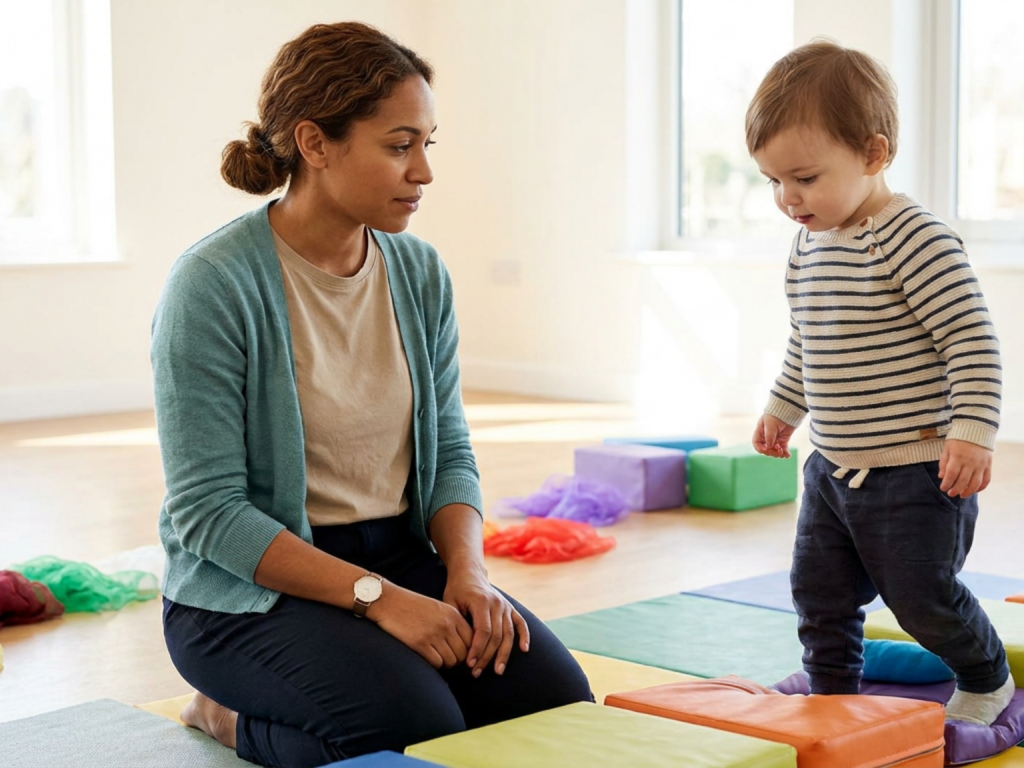
- Obstacle paths: Use cushions, taped floor lines, tunnels made from chairs, or stepping spots. Keep heights low and supervise closely.
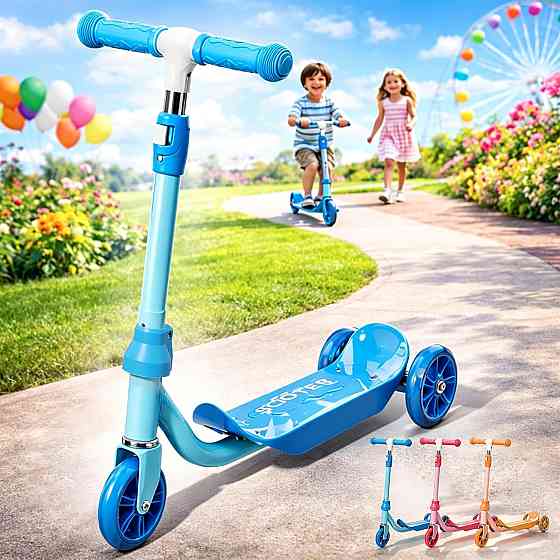
- Ride-on toys and balance bikes: These can support leg strength, balance reactions, and spatial judgment when used in safe areas with appropriate helmets when needed.
- Push and pull play: Toy carts, laundry baskets, or cardboard boxes can turn household items into strength-building activities.
- Outdoor surfaces: Grass, sand, small hills, rocks, and uneven ground provide sensory feedback and challenge balance in ways flat indoor floors cannot.
Outdoor play should be developmentally matched and supervised. A toddler learning to walk may benefit from soft grass and gentle slopes; a more confident 2- or 3-year-old may enjoy stepping stones, low logs, or playground structures designed for young children. The goal is not to eliminate every challenge, but to reduce serious hazards while allowing manageable risk.
Fine motor play: hands, fingers, and early problem-solving
Fine motor development involves the small muscles of the hands and fingers, but it also depends on shoulder stability, core posture, vision, sensory processing, and attention. Toddlers refine these skills through repeated, playful attempts rather than formal drills.
Good fine motor activities include stacking blocks, nesting containers, filling and emptying cups, turning board-book pages, placing large pegs, scribbling with chunky crayons, tearing paper, rolling play dough, and feeding dolls or stuffed animals with a spoon. These activities support hand-eye coordination, grasp patterns, bilateral hand use, and early planning.
Containers are especially useful because they invite experimentation. A toddler may try to put a large cup inside a small one, dump everything out, repeat the sequence, and then discover a successful order. This is play-based toddler learning activities in action: the child is testing hypotheses through sensory-motor experience.
Avoid turning fine motor play into performance pressure. If a child resists crayons but loves scooping water, start there. If they dislike sticky textures, offer dry materials such as blocks, fabric squares, or large puzzle pieces before gradually introducing messier sensory play. For children with known motor delays, prematurity history, hypotonia, hypermobility, visual impairment, or neurologic conditions, individualized guidance from a pediatric clinician, occupational therapist, or physical therapist may be helpful.
Creative dance as toddler communication
Creative dance can be especially powerful because toddlers often understand movement before they can fully explain ideas with words. Instead of teaching rigid choreography, adults can offer simple movement concepts and let the child interpret them. This supports expressive language, receptive language, imitation, joint attention, and emotional expression.
Helpful creative dance vocabulary includes:
- Place: “Move in your own spot” or “travel around the room.” This introduces self-space and shared general space.
- Energy: “Can your movement be sharp like a clap?” or “smooth like floating?”
- Level: “Move low like a bug, medium like a puppy, or high like a bird.”
- Pathway: “Can you make a straight path, a curvy path, or a zigzag path?”
These concepts can be linked to familiar objects and routines. A scarf can float smoothly; a toy car can travel in a straight line; a frog can jump low to high. Toddlers do not need to use the terms correctly for the play to be valuable. The shared language gives adults and children another channel for connection.
Creative movement also supports pretend play and emotional regulation. A child can stomp like an angry dinosaur, curl up like a sleepy cat, or stretch tall like a tree. Naming the movement and emotion gently can help the child integrate body sensations with affective states: “That was a big stomp. Your body looks frustrated.” This is not therapy by itself, but it is responsive caregiving that can support co-regulation.
Balancing structure and unstructured play
Toddlers benefit from both adult-supported and child-led play. Adult-supported play might involve setting up a safe obstacle course, offering a movement prompt, or modeling how to roll a ball. Child-led play allows the toddler to choose, repeat, modify, and abandon activities. Both modes matter.
Unstructured play is not the same as neglecting supervision. It means the adult provides a safe enough environment, observes the child’s interests, and intervenes when necessary for safety or connection. For example, if a toddler is repeatedly climbing onto a low step and jumping down, the adult can stay close, move hard objects away, and say, “You are practicing jumping. Bend knees, land on feet.”
Repetition is developmentally meaningful. Adults may feel bored after the tenth round of “again,” but repetition strengthens neural pathways and helps toddlers predict outcomes. A child who throws a soft ball into a basket 30 times is practicing motor calibration, attention, and persistence.
At the same time, toddlers need limits. Throwing soft balls into a basket may be acceptable; throwing wooden blocks at people is not. Supportive limits are brief, concrete, and paired with an alternative: “Blocks are for building. Balls are for throwing.” This approach respects the movement need while protecting safety.
Adapting play for temperament, sensory needs, and energy levels
Some toddlers seek intense movement: spinning, crashing into cushions, climbing everything, and running whenever space appears. Others are cautious, easily overwhelmed, or hesitant on uneven surfaces. Neither pattern automatically indicates a disorder. Temperament, sensory thresholds, prior experiences, sleep, hunger, and health all influence play.
For high-energy toddlers, build in frequent heavy-work activities such as pushing a laundry basket, carrying board books, crawling through tunnels, or marching while holding a stuffed animal. Use clear boundaries: where running is allowed, where climbing is allowed, and when the body needs to slow down.
For cautious toddlers, reduce the challenge without removing it entirely. Offer a hand for balance, start with low surfaces, let the child watch first, and celebrate attempts rather than outcomes. A cautious child may need many exposures before stepping onto sand, grass, or a small slope.
For sensory-sensitive toddlers, watch for cues such as covering ears, avoiding textures, freezing, crying, or escalating behavior. Offer choices: bare feet or shoes, dry rice or large blocks, music on or music off. If sensory responses significantly interfere with daily life, feeding, sleep, hygiene, or participation in play, discuss this with a pediatric healthcare professional.
Children with chronic medical conditions, cardiopulmonary limitations, neuromuscular disorders, joint instability, or post-surgical restrictions may need tailored activity guidance. In these situations, play remains important, but the safest type, intensity, and duration should be individualized.
Screens, safety, and everyday routines
For children under 2, current guidance cited in toddler play resources emphasizes avoiding screen time so that learning occurs through physical interaction, communication, and creative exploration. For older toddlers, families vary in their media use, but screens should not displace sleep, active play, caregiver interaction, outdoor time, or hands-on exploration.
Safety basics include close supervision near stairs, water, streets, pets, playground equipment, and small objects that could be choking hazards. Choose toys that match the child’s age and abilities. Ensure climbing furniture is stable or inaccessible, secure heavy furniture to walls when appropriate, and keep play areas free from sharp edges or cords.
Movement can be woven into ordinary routines. During dressing, ask the child to push an arm through a sleeve or stand like a flamingo for a moment. During cleanup, invite squatting, carrying, sorting, and reaching. During transitions, use animal walks, tiptoe steps, or “freeze and go” games. These brief moments accumulate into meaningful practice.
Caregivers do not need to be entertainers all day. A few minutes of attentive, responsive play can be more valuable than a long, overstimulating activity. Watch what your toddler is already trying to do, then gently expand it: add a second block, change the music tempo, move the basket farther away, or introduce a new pathway.
When to seek professional guidance
Developmental variability is normal, but some signs deserve timely discussion with a healthcare professional. Seek advice if your child loses previously acquired motor, language, or social skills; has persistent asymmetry; seems unusually stiff or floppy; frequently falls beyond what seems typical for age and context; avoids using one hand consistently before expected hand preference is established; has pain, swelling, limp, or refusal to bear weight; or becomes short of breath, pale, blue, or excessively fatigued with ordinary play.
It is also reasonable to ask for support if play feels persistently difficult. Some toddlers struggle to engage, imitate, tolerate sensory input, transition between activities, or recover from frustration. Early developmental surveillance and screening can help identify whether reassurance, monitoring, parent coaching, occupational therapy, physical therapy, speech-language evaluation, or other supports may be appropriate.
Parents and caregivers often worry that asking questions means something is “wrong.” In reality, early guidance can reduce stress and make daily play more enjoyable. Your observations are clinically important: what your child does at home, how they move when tired, what they avoid, and what brings them joy all help professionals understand the whole child.
Seek medical advice promptly if
- Your toddler loses previously acquired movement, language, play, or social skills.
- There is persistent limping, pain, swelling, refusal to bear weight, or one-sided weakness.
- Your child becomes blue, very pale, unusually breathless, or extremely fatigued during ordinary play.
- Falls are frequent, severe, or associated with loss of consciousness, vomiting, or concerning head injury signs.
- Sensory distress, feeding issues, motor delays, or behavior during play significantly interfere with daily life.
Tools & Assistance
- Create a safe low obstacle course with cushions, taped lines, tunnels, and soft landing spaces.
- Use music, scarves, containers, blocks, balls, and cardboard boxes for open-ended movement play.
- Rotate outdoor play surfaces such as grass, sand, gentle hills, and toddler-safe playground areas.
- Keep a brief note of movement concerns, fatigue patterns, falls, asymmetry, or regression to discuss with a clinician.
- Ask a pediatrician, physical therapist, occupational therapist, or early intervention service for individualized guidance when concerned.
FAQ
How much structured movement play does a toddler need?
Toddlers generally do best with many active opportunities spread through the day rather than one formal session. Mix child-led free play with short adult-supported games such as dancing, climbing, carrying, and ball play.
Is it normal for my toddler to repeat the same movement many times?
Yes, repetition is often how toddlers refine balance, coordination, prediction, and confidence. Intervene if the activity is unsafe, causes distress, or seems associated with loss of other skills or reduced social engagement.
What if my toddler dislikes messy sensory play?
Start with tolerated textures and offer choices. Dry materials, blocks, fabric, water play with tools, or container games can still support sensory-motor integration. Seek advice if sensory avoidance significantly affects daily routines.
Are screens okay if they show dancing or exercise videos?
For children under 2, guidance emphasizes avoiding screen time and prioritizing real movement, interaction, and hands-on play. Older toddlers still benefit most when active play and caregiver interaction are not displaced by screens.
When should I worry about clumsiness?
Some falls are expected in toddlerhood. Discuss concerns with a healthcare professional if falls are very frequent, worsening, associated with pain or asymmetry, or accompanied by regression, unusual fatigue, or developmental concerns.
Sources
- Raising Children Network — Play ideas for physical activity in toddlers
- Americans for the Arts — Concept-based Creative Dance for Babies & Toddlers
- Waldorf Education — The Essential Benefits of Play: A Research-Based Perspective
Disclaimer
This article is for general educational purposes and is not a diagnosis or treatment plan. Consult a qualified healthcare professional for concerns about your child’s development, movement, pain, regression, or safety.














Please log in to leave a comment.