
Intro
Toddler play can be joyful, repetitive, messy, and surprisingly intense. Simple sensory games at home give young children safe opportunities to explore texture, sound, smell, movement, temperature, color, and cause-and-effect while staying close to a trusted adult.
These activities are not meant to accelerate development or replace professional support. They are practical, low-pressure ways to support sensory-motor integration, attention, early language, fine motor control, emotional regulation, and connection during ordinary family routines.
Highlights
Sensory play helps toddlers explore the world through tactile, visual, auditory, olfactory, vestibular, and proprioceptive input in a safe, supervised way.
The best home games are simple, short, adaptable, and matched to the child’s developmental stage and sensory preferences.
Messy play is optional. Many sensory activities can be done in sealed bags, bins, bottles, or at the sink for easier cleanup.
Adult supervision is essential because toddlers mouth objects, spill materials, climb, and may become overwhelmed by intense sensory input.
Why sensory games matter in toddlerhood
Toddlers learn primarily through action. They squeeze, dump, mouth, climb, listen, smell, repeat, and watch what happens next. This is not random mischief; it is early experimentation. Sensory play for toddlers supports the brain’s ability to integrate information from multiple sensory systems, including touch, vision, hearing, smell, taste, balance, and body position. In clinical language, this is part of sensory-motor integration: the nervous system receives input, organizes it, and helps the child respond with movement, attention, communication, or emotional regulation.
A bowl of warm water, a sealed bag of paint, or a basket of safe household textures may look simple, but each can support neural connections. A toddler who pokes yogurt paint is learning about pressure and texture. A child who pours rice from one cup to another practices bilateral coordination, grading force, hand-eye coordination, and early problem-solving. A child who pauses to watch glitter settle in a calm-down bottle may be practicing co-regulation with an adult before independent self-soothing is realistic.
Play also strengthens language. When adults narrate without quizzing, toddlers hear words such as squishy, cold, sticky, loud, quiet, full, empty, more, stop, and again in a meaningful context. This supports receptive and expressive language skills. The goal is not a perfect lesson; it is shared attention, curiosity, and responsive caregiving. If your child only plays for three minutes, that can still be developmentally useful.
Setting up a safe sensory play space
A good sensory play space does not need to be elaborate. Choose a contained area such as a highchair tray, bath mat, kitchen floor, plastic storage bin, shallow baking tray, or towel-covered table. Keep the setup small at first, especially if your toddler is cautious or easily overstimulated. One texture and two tools are often enough.
Safety is the first intervention. Toddlers are still developing oral-motor boundaries and impulse control, so many will put materials in their mouths. Use taste-safe materials when appropriate, avoid small loose objects for children under 3 years or any child who mouths items, and supervise continuously. Water beads, dry beans, small buttons, marbles, and coins can be choking or aspiration hazards. Even food-based play can be unsafe if a child has allergies, swallowing difficulty, or a history of choking.
- Start with short sessions of 5 to 15 minutes and stop before fatigue or dysregulation escalates.
- Keep wipes, a towel, and a change of clothes nearby to reduce adult stress.
- Use nonslip mats for water play and clean spills immediately.
- Introduce new smells, textures, or sounds gradually, one sensory channel at a time.
- Watch for cues such as turning away, stiffening, gagging, crying, throwing materials, or frantic seeking of more input.
Some toddlers love messy input; others find it uncomfortable or threatening. Neither response is automatically abnormal. Offer tools such as spoons, scoops, brushes, or toy vehicles so a child can explore indirectly before touching with their hands.
Easy tactile games with everyday materials
Tactile play is often the easiest place to begin. A texture basket can be made with safe, large household items: a soft washcloth, silicone spatula, wooden spoon, crinkly paper, smooth ball, clean sponge, and a fabric square. Sit with your toddler and describe the sensations. You might say, “This sponge feels bumpy,” or “The spoon is smooth and hard.” Avoid forcing the child to touch. Let them observe, tap with one finger, or use a tool.
Sealed paint bags are a low-mess option. Put a small amount of washable paint or yogurt mixed with food coloring into a sturdy zip-top bag, remove extra air, seal it well, and tape it to a tray or window. Toddlers can press, smear, and mix colors without direct skin contact. This supports finger isolation, visual tracking, and cause-and-effect learning. Inspect the bag frequently and discard it if it leaks.
Yogurt paint can be useful for toddlers who still mouth materials, provided dairy is safe for that child. Place plain yogurt in small bowls and add a tiny amount of food coloring. Let the child paint on a highchair tray with fingers or a large brush. For a nonfood option, use washable finger paint with close supervision and follow product age guidance.
Oobleck, a non-Newtonian mixture of cornstarch and water, is another fascinating activity. It feels solid under pressure and runny when relaxed. Mix cornstarch with water slowly until it becomes thick but pourable. Because it is messy and can be slippery, use a shallow bin and supervise closely. For some toddlers, oobleck is intense; start with a spoon or toy animal before inviting hand contact.
Pouring, scooping, and sensory bins
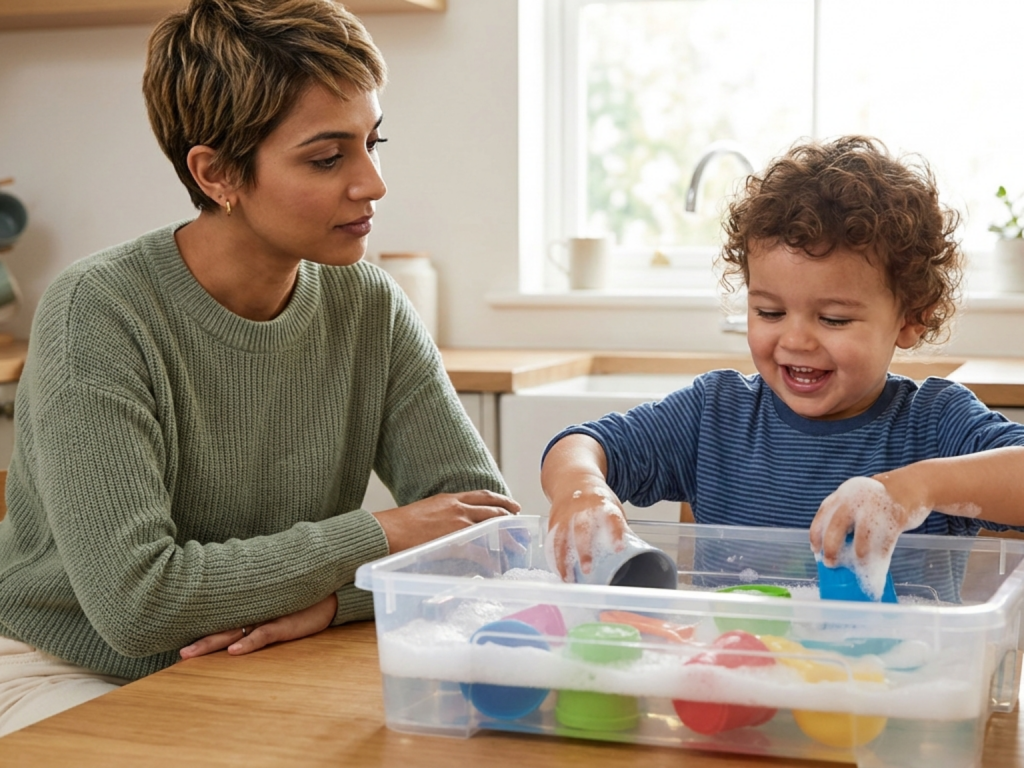
Sensory bins are excellent for open-ended toys for toddlers because they invite repetition without a single correct outcome. A basic bin can include dry oats, large pasta shapes if developmentally safe, shredded paper, bubble foam, dyed rice for older toddlers who do not mouth objects, or water with floating cups. Add scoops, measuring cups, funnels, ladles, or small containers. The toddler’s job is to explore; the adult’s job is to supervise and narrate.
Bubble foam is simple: whip bubble bath and water with a hand mixer until foamy, then place it in a bin with cups or bath toys. Check that the product is appropriate for the child’s skin and avoid it if eczema, contact dermatitis, or fragrance sensitivity is a concern. Rinse hands afterward. For a calmer version, use plain water, a sponge, and a cup at the sink.
Rice bins can be engaging, but they require careful risk assessment. Dyed rice is not appropriate for children who mouth objects or for unsupervised play. If used, keep the bin shallow, provide large tools, and clean thoroughly afterward to avoid attracting pests. Construction vehicles, large animal figures, or chunky blocks can create pretend play and emotional regulation opportunities as children make roads, hide objects, and “rescue” toys.
Pouring and scooping strengthen wrist control, grasp patterns, midline orientation, and early executive function in toddler play. Spilling is part of the learning. If mess is triggering for the adult, choose a bathtub, outdoor patio, or towel-lined floor. A relaxed caregiver often makes the activity more successful than a beautiful setup.
Movement games for body awareness and regulation
Not all sensory games happen at a table. Many toddlers need vestibular input from movement and proprioceptive input from muscles and joints. These systems contribute to posture, balance, motor planning, arousal regulation, and awareness of where the body is in space. Safe home movement games can be especially helpful before transitions, after long periods of sitting, or when a child seems restless.
Try an obstacle path with couch cushions on the floor, a tunnel made from a blanket over chairs, and a line of pillows to step over. Keep heights low and surfaces stable. Narrate action words: crawl, push, climb, under, over, slow, fast, stop. Cross-body movement, such as reaching the right hand to the left side for a toy, can support bilateral coordination and body mapping.
Heavy-work games offer proprioceptive input. Toddlers may push a laundry basket filled with soft towels, carry board books one at a time, pull a small wagon indoors, or help wipe a table. These are not chores in the adult sense; they are sensory-rich tasks that can organize the nervous system for some children. Keep loads light and avoid anything that strains the child.
For calming movement, try slow rocking in a caregiver’s lap, gentle blanket rides on a smooth floor with two adults if needed for safety, or animal walks such as bear crawl and duck walk. If a child becomes dizzy, pale, nauseated, unusually sleepy, or distressed, stop the activity. Children with known motor disorders, seizures, significant hypotonia, vestibular concerns, or recent injury should have individualized advice from a healthcare professional.
Sound, smell, and visual exploration without overload
Auditory, olfactory, and visual play can be powerful, so a little goes a long way. For sound play, fill sealed containers with safe materials such as dry pasta, rice, or large beads, then tape them securely. Shake softly, loudly, quickly, and slowly. Compare sounds using words like quiet, rattly, soft, and noisy. Stop if the child covers ears, cries, or becomes agitated. Some toddlers have auditory hypersensitivity and may need very gentle sound exposure.
For smell play, scented play dough can be made with familiar kitchen scents such as vanilla, cinnamon, or citrus zest if safe for the child. Use mild scents and avoid essential oils unless specifically cleared by a pediatric clinician, because concentrated oils can irritate skin, trigger respiratory symptoms, or be toxic if ingested. A smell-matching game can be as simple as sniffing a banana, mint leaf, or lemon with the adult modeling “I smell it” and then moving on.
Visual sensory activities include calm-down bottles, shadow play, and color sorting. A calm-down bottle can be made with water, clear glue or glycerin, glitter, and a tightly sealed bottle. The child watches the glitter swirl and settle while an adult breathes slowly nearby. This is not a punishment tool; it is a co-regulation aid. Always seal the lid securely and monitor for cracks.
Bubble wrap printing is another visual-tactile activity. Tape bubble wrap to a surface, add washable paint, and let the toddler press paper on top or roll a toy car across it. Because popped plastic can become a hazard, supervise closely and discard damaged pieces.
Adapting games to your toddler’s temperament and needs
Some toddlers are sensory seekers: they crash, climb, smear, spin, squeeze, and ask for “again” many times. Others are sensory cautious: they avoid sticky hands, loud sounds, bright motion, or unfamiliar smells. Many children shift depending on fatigue, hunger, illness, sleep quality, or environment. A supportive approach respects the child’s nervous system rather than treating refusal as misbehavior.
For sensory-seeking toddlers, build in safe intensity: pushing pillows, water pouring, large-muscle obstacle courses, or thick textures like play dough. For sensory-avoidant toddlers, offer distance and control: sealed bags, tools instead of fingers, dry textures before wet ones, and permission to stop. For toddlers with limited attention, rotate materials slowly rather than presenting many options at once.
Use guided play in toddler learning by following the child’s lead while adding gentle structure. If the child dumps water repeatedly, you might add two cups and say, “Full cup, empty cup.” If the child hides a toy in oats, you might ask, “Where did the bear go?” This keeps learning relational, not pressured.
If sensory responses interfere with daily life, feeding, sleep, hygiene, dressing, social participation, or safety, consider discussing it with a pediatrician. An occupational therapist may assess sensory processing, motor planning, fine motor skills, and adaptive function. A speech-language pathologist may help if sensory issues overlap with feeding, oral-motor concerns, or communication delays. Seek urgent care for choking, aspiration, allergic reaction, head injury, or sudden neurological symptoms.
Safety reminders
- Supervise sensory play continuously; toddlers can choke, slip, spill, or ingest materials quickly.
- Avoid small loose objects for children under 3 years or any child who mouths toys or materials.
- Do not use strong fragrances, essential oils, or allergenic foods without considering the child’s medical history.
- Stop an activity if your child shows distress, gagging, wheezing, rash, dizziness, unusual sleepiness, or unsafe behavior.
- Consult a pediatrician or relevant therapist if sensory reactions significantly disrupt feeding, sleep, hygiene, communication, or daily routines.
Tools & Assistance
- Create a small sensory kit with washable paint, large scoops, cups, towels, tape, and a shallow bin.
- Use a simple observation note: activity, child response, calming or overstimulating effect, and any safety concerns.
- Ask your pediatrician about developmental screening if play, language, motor skills, or sensory responses worry you.
- Consider an occupational therapy consultation for persistent sensory processing or motor planning concerns.
- Keep local poison control and emergency contact information easily accessible during messy or exploratory play.
FAQ
How long should sensory play last for a toddler?
Many toddlers do well with 5 to 15 minutes. End earlier if the child becomes distressed, unsafe, or overstimulated.
Is messy play necessary for development?
No. Children can get rich sensory input from sealed bags, water play, movement games, texture baskets, music, and everyday caregiving routines.
What if my toddler refuses to touch certain textures?
Offer tools, distance, and choice. Avoid forcing contact. If avoidance significantly affects eating, dressing, bathing, or play, discuss it with a healthcare professional.
Are food-based sensory activities always safer?
Not always. Food can still cause choking, allergic reactions, or problematic expectations around eating. Choose materials based on age, mouthing behavior, allergies, and supervision.
Can sensory games help with tantrums?
They may support regulation for some children, especially when used proactively. They are not a treatment for severe or persistent behavioral concerns, which should be discussed with a clinician.
Sources
- PopArt Kids — Sensory Activities for Toddlers: 15 Easy Ideas to Try at Home
- Inspire My Play — Sensory Play for Babies: 20+ Simple and Fun Ideas
- The Artful Parent — 7 Sensory Bins for Toddlers
Disclaimer
This article is for general educational purposes only and does not provide medical diagnosis or treatment. Consult a pediatrician or qualified healthcare professional for concerns about your child’s development, safety, feeding, allergies, or sensory responses.













Please log in to leave a comment.