
Intro
Toddlers learn by touching, testing, repeating, and watching trusted adults. What may look like messy play or stubborn persistence is often early cognitive work: a young child is forming hypotheses, practicing motor planning, building language, and learning how to tolerate frustration.
Problem-solving skills in toddlerhood are not about academic performance. They are about curiosity, flexible thinking, emotional regulation, and the ability to try a new strategy when the first attempt does not work. Families can support these skills through warm, everyday activities while staying attentive to developmental variation and consulting healthcare or early childhood professionals when concerns arise.
Highlights
Problem solving in toddlers grows through play, movement, language, and secure relationships rather than worksheets or pressure.
Simple challenges, such as puzzles, blocks, pretend play, and everyday routines, help toddlers practice planning, trial and error, and persistence.
Adult support works best when it is warm and structured: model calm problem solving, ask open-ended questions, and help the child regulate frustration.
Medical or developmental concerns deserve professional guidance, especially if a child loses skills, has persistent distress, or shows significant delays across several areas.
Why problem solving matters in toddler development
Problem solving is a broad developmental skill that includes noticing a goal, recognizing an obstacle, trying a strategy, evaluating the result, and adapting. In toddlerhood, this may look like fitting a shape into a sorter, figuring out how to reach a toy, choosing a spoon after failing with fingers, or negotiating a turn with another child. These small moments rely on cognitive development, sensory-motor integration, receptive and expressive language, memory, and emerging executive function.
Executive function refers to a set of neurocognitive processes that help a child pause, shift attention, remember a rule, and inhibit an impulsive response. In toddlers, these systems are immature; the prefrontal cortex and its connections are still developing rapidly. This is why a toddler may understand a simple request one minute and then be overwhelmed the next. The goal is not perfect self-control, but repeated experiences of supported effort.
Research in preschool children suggests that active, project-based learning can strengthen problem-solving skills. A study of project approach-based science education found statistically significant and lasting improvements in preschoolers’ problem-solving abilities, with a large effect size. While toddlers are younger than many children in preschool research, the principle is relevant: children learn deeply when they investigate real questions, manipulate materials, and return to a challenge over time.
The adult role: scaffold, do not solve everything
Scaffolding means offering just enough support for the child to keep trying without removing the challenge. A toddler who is struggling to stack blocks may need the adult to steady the base, name the problem, or demonstrate one attempt slowly. If the adult completes the tower immediately, the child loses the chance to plan, adjust, and experience mastery.
A helpful pattern is: observe, narrate, pause, then assist. For example: “You want the lid on. It is not turning. Let’s look at the bumps. What could we try?” This kind of language supports toddler emotional regulation because it slows the moment and gives words to the problem. It also avoids shame; the issue is the task, not the child.
Open-ended questions are more useful than rapid correction. Instead of “No, that piece goes here,” try “How come it is not fitting?” or “What do you notice about this side?” Questions beginning with “how” or “what” tend to invite exploration. Many toddlers cannot answer in full sentences, but they can point, gesture, imitate, or try again. The adult’s calm tone is often more important than the exact words.
Parents and caregivers can also model persistence. If a jar will not open, say aloud, “That did not work. I will try holding it another way.” Seeing an adult fail gently and try again teaches that mistakes are expected parts of learning, not signs of danger or inadequacy.
Everyday routines that build reasoning
The most effective toddler learning activities often happen inside normal routines. Mealtime, dressing, bath time, grocery shopping, and cleanup provide repeated opportunities for sequencing, classification, prediction, and decision-making. Because these activities are familiar, the toddler can focus on the problem rather than coping with a completely new environment.
- Mealtime: Offer a small choice, such as “Do you want the cup here or there?” Invite the child to match lids to containers, pass one napkin to each person, or notice why a spoon works better than a fork for yogurt.
- Dressing: Ask what comes first: socks or shoes. Let the child notice that a shoe will not fit if the tongue is folded in. This supports sequencing and body awareness.
- Cleanup: Sort blocks by size, put animals in one basket and vehicles in another, or ask, “Where could this puzzle piece wait so we can find it tomorrow?”
- Errands: At a supermarket, compare heavy and light items, count two apples, or ask where cold food belongs when you get home.
These activities should remain playful and brief. Toddlers have limited attentional capacity, and fatigue, hunger, illness, or overstimulation can reduce problem-solving ability. If a routine is becoming tense, it is reasonable to simplify the task and return to it later.
Play-based activities for planning and flexible thinking
Play is the toddler’s laboratory. Through play, children test cause and effect, spatial relationships, symbolic thinking, and social rules. The best materials are often simple: blocks, nesting cups, scarves, cardboard boxes, balls, spoons, safe containers, and chunky puzzles.
Try small challenges that are achievable but not automatic. Place puzzle pieces in two nearby locations so the child must remember where they are and plan a sequence. Offer a toddler two toys, then a third, and watch how they solve the carrying problem. Do they tuck one under an arm, put one down, ask for help, or make two trips? The purpose is not the “right” answer; it is the mental flexibility of trying.
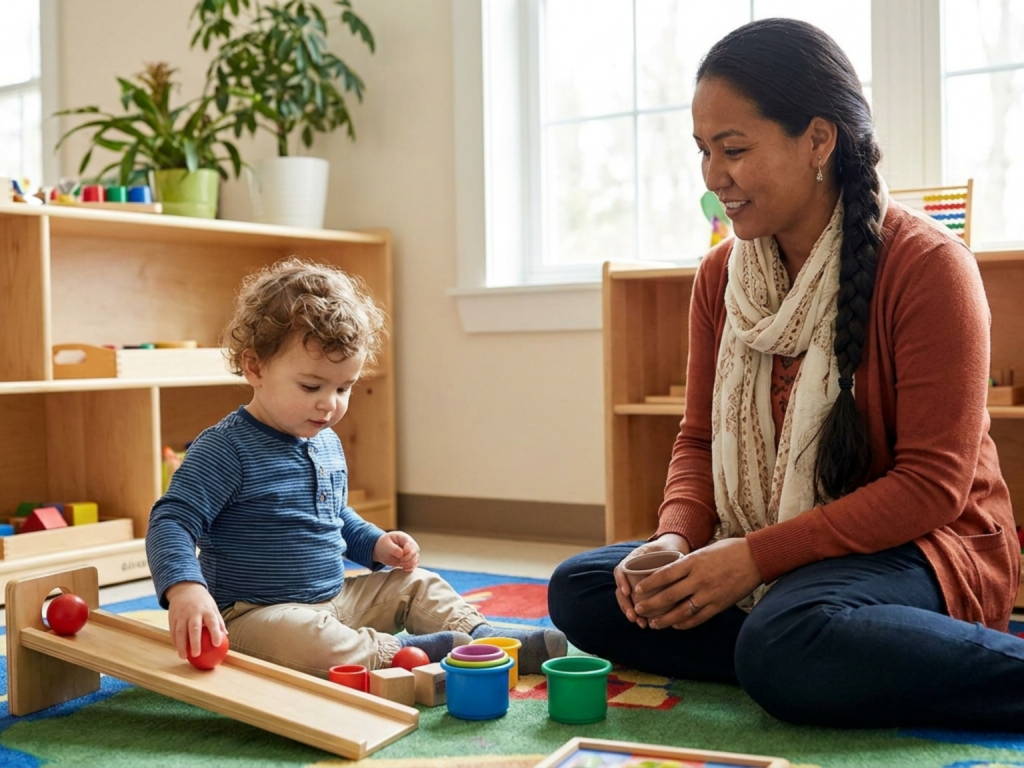
Cause-and-effect play is also powerful. A child may drop balls through tubes, pour water between cups, push cars down ramps, or test which objects float. Adults can add language: “The big ball got stuck. The small ball went through.” This builds early scientific reasoning without formal lessons.
Pretend play expands problem solving into the social and emotional realm. A stuffed animal that is “hungry” invites planning: What food does it need? Where is the bowl? What if the bowl is missing? Social stories and picture books can also help toddlers think through problems such as sharing, waiting, or saying goodbye. When reading, pause and ask, “What could the child do next?” Even if the toddler answers with one word, the exercise supports prediction and empathy.
Supporting frustration tolerance and communication
Problem solving almost always includes frustration. For toddlers, frustration can escalate quickly because language, impulse control, and emotional regulation are still developing. A child may cry, throw a piece, hit, run away, or repeatedly demand adult help. These reactions do not automatically mean the activity is inappropriate; they may mean the child needs co-regulation, a smaller step, or a pause.
Co-regulation for toddlers means the adult lends calm through voice, posture, facial expression, and predictable limits. A useful response might be: “You are upset. The block fell down. I will not let you throw it at me. We can try again or take a break.” This validates the emotion while maintaining safety.
Language can reduce distress when it is concrete and brief. Toddlers may respond to phrases such as “turn it,” “try smaller,” “look under,” “ask help,” or “one more try.” Visual cues, gestures, and demonstration often work better than long explanations. If a toddler is already dysregulated, problem-solving questions may be too demanding; first help the nervous system settle with comfort, space, or a predictable routine.
It is also helpful to praise the process rather than intelligence. Say, “You kept trying,” “You looked again,” or “You found another way.” Process-focused feedback encourages persistence. Avoid turning every activity into a test; pressure can reduce curiosity and increase avoidance.
Choosing activities for different developmental profiles
Toddlers develop at different rates, and age alone does not determine readiness. A 16-month-old may enjoy filling and dumping containers, while a 30-month-old may begin simple matching, pretend sequences, and multi-step cleanup. Children with motor delays, sensory processing differences, hearing or vision concerns, language delays, autism spectrum traits, prematurity history, or chronic medical conditions may need adaptations. These adaptations are not “lower expectations”; they are ways to make learning accessible.
For a child with fine-motor difficulty, choose larger knobs, thicker puzzle pieces, or containers that open easily. For a child who becomes overwhelmed by sound or touch, use fewer materials and a quieter space. For a child with limited expressive language, accept pointing, signing, picture choices, or placing an object in your hand as meaningful communication. If a child has visual impairment concerns, high-contrast materials and tactile cues may help, but professional guidance is important.
Developmental screening for cognitive delay or broader developmental concerns can be valuable when parents feel something is not progressing as expected. Screening is not a diagnosis; it is a structured way to decide whether further assessment or early intervention could help. Families should speak with a pediatrician, health visitor, developmental-behavioral pediatrician, speech-language pathologist, occupational therapist, or early intervention service when concerns persist.
Creating a home environment that invites problem solving
A problem-solving environment does not require expensive toys. It requires time, safety, and permission to explore. Rotate a small number of materials so the child is not overwhelmed. Store items where the toddler can see and request them. Provide safe opportunities for manageable difficulty: a slightly stuck zipper, a lid to match, a ramp to adjust, or a tower to rebuild.
Predictable routines help toddlers feel secure enough to take risks in learning. When the day has some rhythm, the child spends less cognitive energy guessing what will happen next. This can make exploration easier. Sleep, nutrition, pain, acute illness, and stress also affect learning capacity. A toddler who is tired or unwell may appear less capable, when the real issue is reduced physiologic reserve.
Balance independence with connection. Some toddlers need an adult nearby before they can persist; others need space before they will attempt a solution. Watch the child’s cues. If they look back at you, they may be seeking emotional reassurance rather than a completed answer. A nod, a calm phrase, or sitting close can be enough.
Finally, protect joy. The purpose of toddler learning activities is not acceleration but healthy development. Curiosity grows best when children feel safe, respected, and allowed to make small mistakes. A supportive adult relationship remains the most important learning tool.
When to seek professional guidance
- Seek prompt medical advice if a toddler loses previously acquired language, social, motor, or play skills.
- Discuss concerns if frustration regularly leads to unsafe aggression, self-injury, or prolonged inconsolable distress.
- Ask for developmental screening if problem-solving, communication, motor, or social skills seem significantly delayed across settings.
- Consult a clinician if hearing, vision, sleep, pain, seizures, feeding, or chronic illness may be affecting learning.
- Contact emergency services if there is immediate risk of serious harm to the child or others.
Tools & Assistance
- A small basket of rotating open-ended toys such as blocks, cups, balls, scarves, and chunky puzzles
- Daily open-ended questions using “what” and “how” during meals, dressing, cleanup, and errands
- A simple observation notebook to track new skills, frustrations, triggers, and successful supports
- Pediatrician or early intervention referral pathway for developmental screening when concerns persist
- Library picture books and social stories about sharing, waiting, trying again, and asking for help
FAQ
At what age do toddlers start solving problems?
Problem solving begins in infancy and becomes more visible in toddlerhood through actions such as reaching, trial and error, matching, stacking, pretending, and asking for help.
Should I let my toddler struggle with a task?
Brief, safe struggle can support learning, but it should not become overwhelming. Stay nearby, name the problem, offer small hints, and step in if the child becomes unsafe or highly distressed.
Are puzzles necessary for problem-solving skills?
No. Puzzles can help, but everyday routines, pretend play, sorting laundry, building with blocks, and figuring out how to carry objects also build problem-solving skills.
What if my toddler always asks me to do it?
Try doing the first step together, then pause. You might say, “I started it; now you try.” If this pattern is persistent across many skills, consider discussing it with a pediatric or early childhood professional.
Can screen-based learning teach problem solving?
Some high-quality media may introduce ideas, but toddlers learn best through hands-on play and responsive interaction with caregivers. Ask your pediatrician for age-appropriate guidance on screen use.
Sources
- Nature — The effect of project approach-based science education program on problem-solving skills of preschool children
- Lovevery — Problem-solving: Why is it important and how to practice it
- Rasmussen University — Problem Solving for Preschoolers: 9 Ways to Strengthen Their Skills
Disclaimer
This article is for informational purposes only and does not diagnose, treat, or replace individualized medical or developmental advice. Consult a qualified healthcare professional for concerns about your child’s development, behavior, or safety.


















Please log in to leave a comment.