
Intro
Infant sleep can become unsettled when teething, illness, and travel occur separately or at the same time. A baby who usually sleeps predictably may wake more often, nap irregularly, feed differently, or need more physical reassurance. These changes can be exhausting for caregivers and may be difficult to interpret, particularly because teething discomfort, viral illness, overtiredness, and travel-related disruption can overlap.
The most useful approach is to look at the whole clinical picture rather than attributing every difficult night to teething. Supportive care, a safe sleep environment, realistic expectations, and timely medical advice can help families respond without assuming a diagnosis or using unnecessary treatments.
Highlights
Objective research has not consistently shown that teething substantially reduces measured infant sleep, even though parents may perceive more disruption.
Illness can fragment sleep through fever, congestion, cough, pain, altered feeding, and difficulty breathing comfortably.
Travel introduces unfamiliar sleep spaces, schedule changes, light exposure, noise, and disrupted routines, but simple consistent habits can help.
A sudden or severe change in sleep should be assessed in context, especially when there are breathing problems, dehydration, persistent fever, or unusual lethargy.
Teething and the perception of poor sleep
Teething is a normal developmental process in which primary teeth move through the gingiva. Local inflammation may cause tender gums, increased chewing, drooling, irritability, and a temporary preference for softer or cooler foods. These sensations can make settling more difficult, particularly when a baby is tired and has fewer distractions at night. Some infants also seek additional holding or feeding because sucking and close contact are regulating.
However, teething is often credited with a wider range of symptoms than it can reasonably explain. A longitudinal study using objective sleep measurements found no significant difference in measured sleep on teething nights compared with nonteething nights, despite parents commonly perceiving sleep disruption. This distinction matters: caregiver observations are valuable, but a difficult night does not prove that tooth eruption is the cause.
Sleep may coincide with teething because both occur during a period of rapid developmental change. New motor skills, separation concerns, changing nap needs, minor viral exposures, and alterations in feeding can occur at the same time. Rather than asking whether every waking is caused by a tooth, consider whether there is localized gum discomfort and whether the baby is otherwise behaving, feeding, and breathing normally.
When illness disrupts infant sleep
Illness tends to affect sleep through physiological symptoms rather than through the timing of tooth eruption. Nasal congestion can make nasal breathing and feeding more difficult, especially for young infants who rely heavily on nasal airflow. Cough, sore throat, ear pain, gastrointestinal symptoms, fever, and generalized malaise may produce frequent partial arousals or complete wakings. A baby may sleep for shorter intervals, nap at unusual times, or become difficult to settle because discomfort increases when lying down.
Fever is a sign of an immune response, not a diagnosis by itself. Its significance depends on the baby’s age, temperature measurement, duration, associated symptoms, and general appearance. Illness can also change hydration status and feeding patterns. A baby who takes smaller feeds, vomits, has diarrhea, or produces fewer wet diapers may sleep differently because of discomfort or dehydration risk.
During an acute illness, it is reasonable to provide more comfort and allow some flexibility in the routine. Offer feeds according to the infant’s usual clinical guidance, monitor wet diapers and responsiveness, and keep the room comfortably ventilated without overheating the baby. Avoid placing pillows, loose bedding, or positioning devices in the sleep space to compensate for congestion. These items can increase suffocation risk and do not replace medical assessment.
Once symptoms improve, sleep may remain unsettled for several nights because the baby has developed a temporary pattern of extra contact, irregular naps, or frequent checking. A gradual return to familiar cues is usually more realistic than expecting an immediate reset.
How travel changes sleep biology and behavior
Travel can disturb sleep even when a baby is healthy. The infant’s circadian rhythm responds to light, darkness, feeding timing, activity, and social cues. Crossing time zones can shift the relationship between the baby’s internal clock and the local schedule. Travel within the same time zone may still cause disruption through early departures, prolonged car or airplane journeys, missed naps, unfamiliar sounds, and increased stimulation.
Sleep pressure also accumulates during travel. A baby who misses a nap may become overtired, with increased crying and difficulty settling rather than sleeping more deeply. Delayed feeds, changes in breast or bottle access, and irregular opportunities for movement can add to the problem. Some infants sleep more during transit because of motion and then wake repeatedly after arrival; others struggle to sleep at all in a bright, busy, or unfamiliar environment.
Families can reduce disruption by preserving a few stable anchors. Keep the familiar bedtime sequence, such as feeding, a brief wash, sleep clothing, a story or song, and settling in the same order. Use consistent verbal cues and, where appropriate, a familiar wearable sleep item that is safe for the baby’s developmental stage. After arrival, exposure to natural morning light and daytime activity can help establish local timing, while dimmer light and lower stimulation before bedtime support sleep onset.
Travel does not require perfection. The goal is to maintain safety and recognizable cues while accepting that naps and bedtimes may temporarily vary. A practical backup plan for difficult nights can reduce caregiver stress: identify where the baby will safely sleep, how feeds will be handled, and which calming routine can be repeated in a hotel or relative’s home.
Teething, illness, and travel at the same time
These factors can amplify one another. A baby with mildly tender gums may cope at home but become much harder to settle after a delayed journey. A viral infection acquired before departure may initially look like teething, then become more apparent when congestion or fever develops. Travel fatigue can also make normal fussiness seem more intense and can reduce caregiver capacity to observe subtle changes.
Use a symptom-based assessment. Gum chewing and drooling without systemic illness may fit ordinary teething, whereas persistent fever, marked lethargy, breathing difficulty, repeated vomiting, diarrhea, a widespread rash, or poor feeding requires a different level of attention. Teething should not be used as a default explanation for symptoms that are severe, prolonged, or inconsistent with localized oral discomfort.
Keep a brief record when the situation is unclear. Note temperature readings and method, feeding amounts or duration, wet diapers, vomiting or diarrhea, breathing effort, naps, nighttime wakings, and any medication already given. This information can help a clinician assess the baby and reduces the risk of duplicate or incorrectly timed treatments while the family is tired or away from home.
For gum comfort, caregivers can ask a healthcare professional about age-appropriate options. Cool, non-frozen teething items may be soothing for some babies, but products that can break, pose a choking risk, or contain potentially hazardous topical ingredients should be avoided unless specifically recommended by a qualified clinician. Do not use medication simply to force sleep, and do not exceed labeled or clinician-provided dosing instructions.
Safe sleep when the setting is unfamiliar
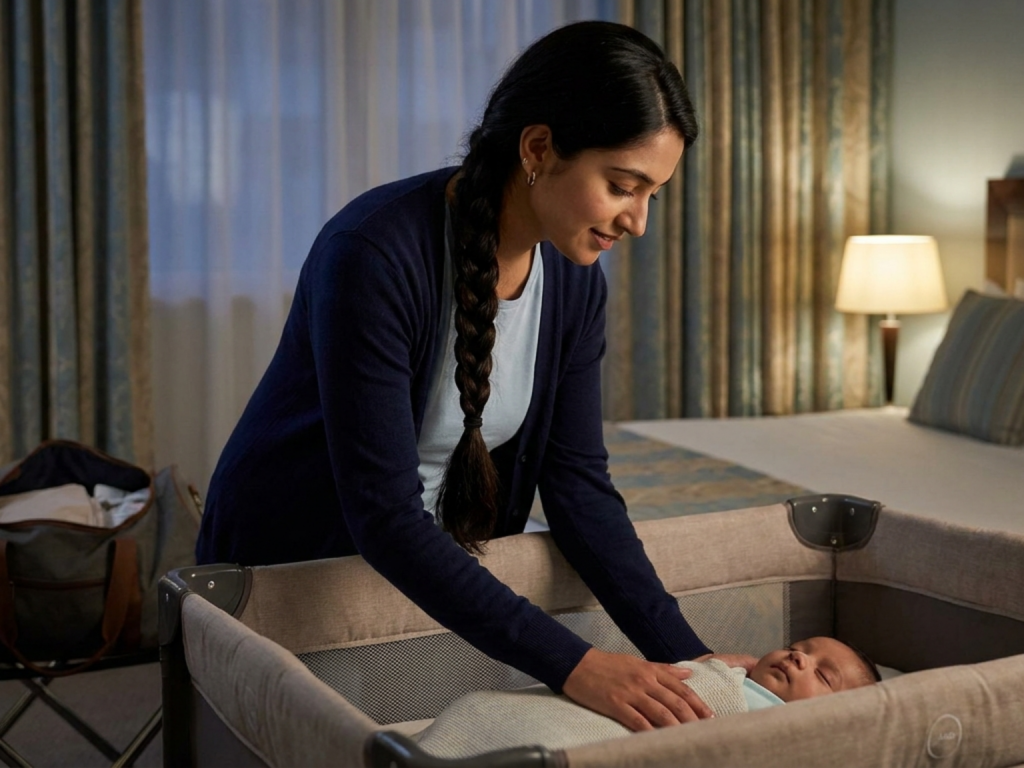
An unfamiliar room can create pressure to improvise. The safest arrangement remains a firm, flat, separate sleep surface designed for infants, with the baby placed on the back and the space kept clear of pillows, quilts, stuffed toys, and loose objects. A properly assembled travel crib, portable crib, or hotel-provided crib that meets current safety expectations is preferable to an adult bed, sofa, recliner, or improvised nest.
Inspect any borrowed or hotel equipment before use. Check that the sleep surface is firm and intact, the sides lock correctly, there are no gaps or damaged parts, and the mattress is the one intended for that product. Do not add an extra mattress, topper, padding, or positioner unless the manufacturer specifically permits it. Keep the crib away from cords, heaters, curtains, windows, and reachable small objects.
Car seats and other sitting devices are intended for travel and positioning, not routine sleep. If a baby falls asleep during transit, follow applicable safety guidance and move the baby to a firm, flat sleep surface when it is safe and practical to do so. Never leave a sleeping baby unattended in a vehicle or allow the car seat to become the overnight sleep arrangement.
Room-sharing without bed-sharing can make nighttime monitoring and feeding easier. Maintain a comfortable temperature and use a wearable blanket rather than loose coverings when suitable. Safety should remain consistent even when the baby is teething, sick, or unusually tired; discomfort does not make an unsafe sleep surface safer.
A realistic recovery plan after disruption
After returning home or recovering from illness, restore the most predictable parts of the day first. Anchor morning wake time and bedtime near the usual local schedule, provide age-appropriate daytime sleep opportunities, and repeat the familiar pre-sleep sequence. If a time-zone change occurred, shift timing gradually when practical rather than making large abrupt changes that create excessive overtiredness.
Respond to the baby’s current needs while preserving safe, sustainable habits. Extra reassurance, feeding, or contact may be appropriate during illness or travel, but caregivers can slowly reduce additional support as the infant feels better. Consistent responses are generally more useful than constantly changing strategies from one waking to the next.
Caregiver sleep is part of the plan. Share nighttime responsibilities when possible, simplify nonessential tasks, and seek help from trusted adults. Avoid driving when severely sleep deprived. If the baby’s sleep remains markedly different after the suspected trigger has resolved, or if the family cannot distinguish behavioral disruption from illness, consult a pediatric healthcare professional. A clinician can consider age, development, medical history, examination findings, and the complete symptom pattern.
When to seek medical advice
- Seek urgent care for significant breathing difficulty, blue or gray coloration, unresponsiveness, or a seizure.
- Contact a healthcare professional promptly for poor feeding, substantially fewer wet diapers, repeated vomiting, or signs of dehydration.
- Ask about any fever in a young infant, persistent fever, or fever accompanied by concerning changes in behavior.
- Do not assume severe pain, prolonged inconsolable crying, or marked lethargy is caused by teething.
- Obtain advice before giving medication, particularly to a young infant or a baby who is dehydrated or taking other medicines.
Tools & Assistance
- A simple temperature, feeding, wet-diaper, and symptom log
- A repeatable bedtime routine that works at home and away
- A properly assembled infant travel crib or portable sleep surface
- A written list of the baby’s healthcare contacts and current medicines
- A shared caregiver plan for overnight monitoring and recovery sleep
FAQ
Can teething cause a baby to wake more often?
Gum tenderness may contribute to unsettled behavior or additional waking, but objective research has not shown a consistent reduction in measured sleep during teething. Consider other explanations, including illness, developmental changes, and overtiredness.
How can I tell teething from illness?
Teething may involve chewing, drooling, and localized gum discomfort. Fever, breathing symptoms, repeated vomiting, diarrhea, poor feeding, unusual lethargy, or a significant change in appearance should not automatically be attributed to teething and warrant clinical advice.
Should my baby sleep in a car seat during travel?
Car seats are designed for transportation rather than routine sleep. Follow safety guidance during the journey and move the baby to a firm, flat, separate sleep surface when it is safe and practical.
What is the best way to handle jet lag in an infant?
Use local daytime light and activity, keep the bedtime routine familiar, and adjust timing gradually when possible. Expect temporary variability, and seek professional advice if feeding, hydration, or illness symptoms are also concerns.
Sources
- PubMed — Does Teething Disrupt Infant Sleep? A Longitudinal Auto-
- Bedtime Coach — Baby Sleep During Illness
- Overlake Medical Center — Safe Sleep While Traveling with Your Baby
Disclaimer
This article is for general educational purposes and does not diagnose illness or replace individualized medical advice. Consult a qualified healthcare professional for concerns about your baby’s symptoms, sleep, feeding, or safety.















Please log in to leave a comment.