
Intro
Travel with children can be joyful, stressful, and unpredictable, often all in the same hour. The right gear cannot remove every delay, spill, or overtired moment, but it can reduce preventable risks and help children stay safer, calmer, and more comfortable.
This guide explains travel gear through a child health and safety lens. It is written for readers who are comfortable with medical terminology, while keeping the practical goal simple: choose equipment that fits the child, the journey, and any individual health needs.
Highlights
The most important travel gear is safety-critical gear: correctly used car seats, boosters, restraints, and age-appropriate sleep spaces.
Comfort gear matters because dehydration, temperature stress, disrupted sleep, and sensory overload can quickly make travel harder for children.
Airport, car, train, and walking journeys each place different demands on strollers, carriers, bags, medications, and feeding supplies.
Children with chronic conditions, allergies, neurodevelopmental differences, or medical devices may need a written plan and clinician guidance before travel.
Start with the journey, not the product
Travel gear for children is easiest to choose when you begin with the itinerary rather than the shopping list. A two-hour car journey to relatives, a long-haul flight, and a city trip with public transport all require different equipment. The goal is not to own every travel product; it is to match gear to predictable needs: safe transport, sleep, feeding, hygiene, temperature regulation, medication access, and emotional regulation.
Age and developmental stage matter. Infants need head and airway support, safe sleep planning, diapering supplies, and reliable feeding access. Toddlers need containment, mobility support, snacks, spare clothing, and simple comfort objects. Older children may need autonomy: a small bag, water bottle, headphones, books, and a clear routine. Children with sensory processing differences, autism, attention difficulties, anxiety, mobility limitations, feeding disorders, or chronic illness may benefit from more deliberate preparation.
Before packing, consider duration, climate, transport mode, luggage restrictions, laundry access, medical care availability, and whether the child will need to be carried while bags are managed. A useful rule is to prioritize items that prevent injury or medical deterioration, then items that preserve sleep and hydration, then items that reduce inconvenience. This approach helps families avoid overpacking while still bringing the equipment that truly changes outcomes.
Car seats, boosters, and restraints are non-negotiable safety gear
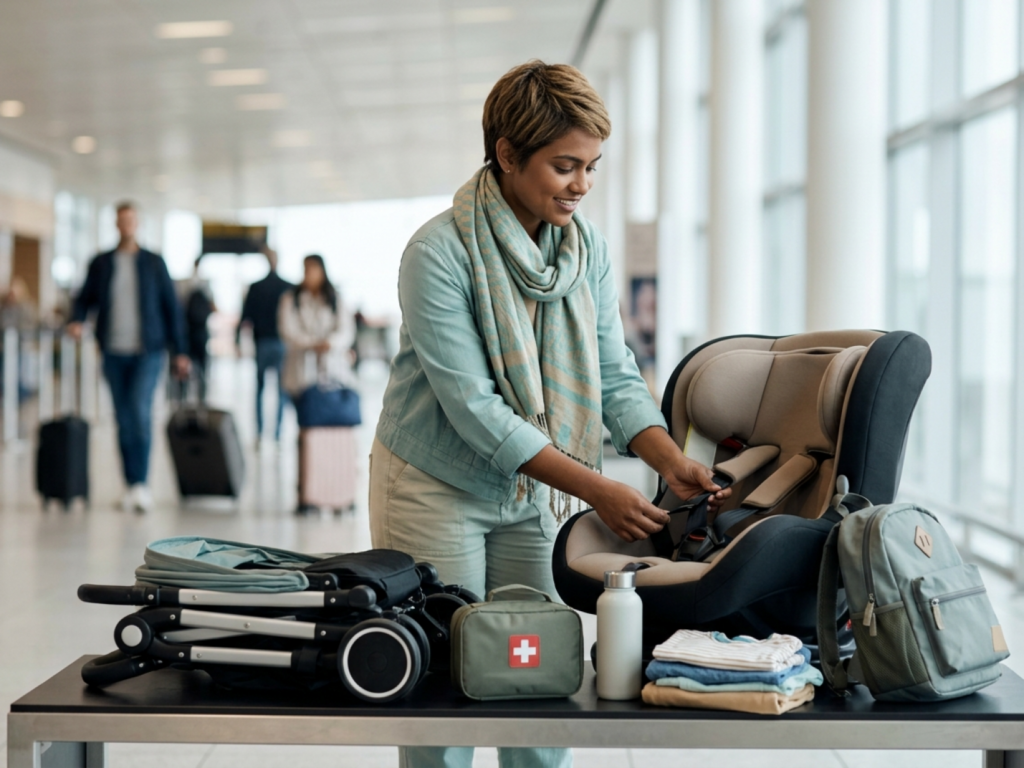
For road travel, a child restraint system is the central piece of gear. The correct option depends on the child’s age, height, weight, developmental maturity, and the seat manufacturer’s limits. Families should use the restraint according to both the vehicle manual and the car seat or booster manual. If there is uncertainty, a certified child passenger safety technician can check installation and fit.
Rear-facing seats generally provide strong protection for the head, neck, and spine of young children because crash forces are distributed across the back of the restraint. Forward-facing harness seats, belt-positioning boosters, and adult seat belts each become appropriate only when a child meets the relevant size and maturity criteria. Safe Kids Worldwide emphasizes correct car seat and booster use as a key part of child travel safety.
Common problems include loose installation, harness straps that are too loose, chest clips placed too low, bulky coats under harnesses, premature movement to a booster, and an adult belt that crosses the abdomen or neck incorrectly. Bulky winter clothing can compress in a crash, increasing slack; use thin layers and blankets over the harness instead. If traveling by taxi, rideshare, rental car, or family member’s vehicle, plan restraint use before arrival. Car safety for children is not only about owning the right product; it is about correct use every trip.
Strollers, carriers, and walking support
Strollers and carriers help families move safely through airports, stations, parking areas, and unfamiliar streets. The best choice depends on terrain, the child’s size, caregiver strength, storage space, and whether the child can walk reliably. A stroller may be ideal for naps and longer distances, while a carrier can be easier for stairs, crowded boarding areas, or places with limited accessibility.
For infants, any carrier should support the airway, head, hips, and spine appropriately. Caregivers should be able to see the baby’s face, keep the chin off the chest, and monitor breathing. Overheating is possible in carriers, particularly in warm climates or crowded spaces, so clothing layers should be adjusted. For toddlers and preschoolers, check weight limits, buckle security, brake function, wheel stability, and whether the child can climb out unexpectedly.
At airports, child equipment such as strollers and carriers may need screening. The Transportation Security Administration explains that children can be screened with modified procedures and that child-related items may go through X-ray screening when possible. Pack so that folding, unloading, and reassembling equipment can be done without losing essential items. A small pouch for passports, boarding passes, medications, and comfort objects prevents stressful rummaging while supervising a child.
Sleep gear, comfort objects, and circadian disruption
Sleep disruption is one of the most common reasons family travel becomes difficult. Gear cannot fully prevent jet lag, but it can support a predictable bedtime routine and reduce environmental stressors. Depending on the trip, useful items may include a familiar sleep sack, a lightweight blanket, a pacifier if already used, a small stuffed toy for children old enough to sleep safely with one, blackout window covers where appropriate, and a portable white-noise device used at a safe volume.
Safe sleep principles still apply while traveling. Infants should sleep on a firm, flat surface intended for infant sleep, without loose bedding, pillows, or soft items. Car seats, strollers, swings, and carriers are transport devices, not routine sleep spaces, especially for infants, because positioning can affect airway patency. If a child falls asleep in a transport device, supervise closely and move them to an appropriate sleep surface when feasible.
For time-zone travel, light exposure, meal timing, and a calm wind-down period can help the circadian rhythm adjust. Parents should be cautious with sedating medications for travel unless specifically advised by a clinician; paradoxical agitation, respiratory depression, and dosing errors are possible with some medicines. If a child has obstructive sleep apnea, significant prematurity history, neuromuscular disease, epilepsy, or complex medical needs, discuss travel sleep planning with a healthcare professional.
Clothing, temperature control, and skin protection
Clothing for children is travel gear because it affects thermoregulation, skin barrier function, mobility, and comfort. Layering is usually more useful than one bulky item. Children may move between hot pavements, cold aircraft cabins, air-conditioned cars, and windy outdoor areas within a single day. Thin, breathable layers allow rapid adjustment and reduce the risk of overheating or chilling.
Choose clothing that allows safe restraint use. Thick coats and padded snowsuits should not sit under car seat harnesses. Shoes should match the environment: supportive footwear for walking, easy-off shoes for security screening if needed, and water-safe options only when appropriate. For infants and toddlers, pack more changes than seems necessary, because spills, motion sickness, diaper leaks, and weather changes are common.
Skin protection is also part of travel preparation. Hats, shade, protective clothing, and age-appropriate sunscreen recommendations should be considered, especially for children with photosensitive conditions or eczema. Wet clothing can irritate skin and increase heat loss, so a dry bag for soiled items is helpful. For children with atopic dermatitis, contact dermatitis, or sensory aversion to seams and tags, familiar fabrics and backup garments can prevent avoidable distress.
Food, hydration, and feeding equipment
Children are more vulnerable than adults to dehydration during heat, illness, vomiting, diarrhea, or long journeys with limited fluid access. NHS travel guidance highlights preparation, comfort, and hydration as important parts of child travel safety. A spill-proof water bottle, oral rehydration solution when recommended for the situation, familiar snacks, and feeding supplies can reduce risk and distress.
For infants, feeding gear may include breast milk storage supplies, formula, bottles, sterilizing options, bibs, and burp cloths. Plan how water will be prepared safely and how feeding equipment will be cleaned. For flights, families should check current screening rules for formula, breast milk, toddler drinks, and related cooling supplies. Pack these items so they can be declared or inspected without unpacking the entire bag.
For children with food allergies, celiac disease, diabetes, metabolic disorders, or feeding tubes, travel food planning becomes medical risk management. Carry safe foods, labels, emergency medication if prescribed, and written instructions. Do not place essential nutrition or medication only in checked luggage. If traveling internationally, discuss documentation, storage temperatures, and time-zone effects on medication or feeding schedules with the child’s healthcare team.
Medication, first aid, and documentation
A child travel health kit should be individualized. Basic items may include adhesive bandages, a digital thermometer, hand hygiene supplies, any prescribed medications, copies of prescriptions, and condition-specific equipment such as spacers, glucose monitoring supplies, or allergy action materials. Medication should be stored in original labeled containers when possible, especially for air or international travel.
Avoid packing medications in a way that makes them inaccessible during delays. Carry-on access is particularly important for asthma inhalers, epinephrine auto-injectors, antiseizure medication, insulin, pancreatic enzymes, and other time-sensitive treatments. Temperature-sensitive medications require appropriate cooling methods and backup plans. Families should ask a pharmacist or clinician about storage limits rather than guessing.
Travel is not the time to trial new sedatives, anti-nausea medicines, supplements, or sleep aids without professional advice. Children’s dosing is weight-based for many medicines, and dosing mistakes can be clinically significant. If the child has a complex condition, consider a concise medical summary including diagnoses, baseline status, medications, allergies, devices, emergency contacts, and clinician information. This can be invaluable if urgent care is needed away from home.
Packing systems that reduce stress
Good organization is not superficial; it reduces cognitive load during moments when a child is crying, a gate changes, or a bathroom stop is urgent. Use small labeled pouches or clear bags for categories such as feeding, diapers, medications, spare clothes, entertainment, and documents. Keep the first 24 hours of essentials accessible in case checked luggage is delayed.
A practical packing structure includes one immediate-access bag for documents, medications, wipes, snacks, water, and comfort items; one child activity pouch; and one backup clothing and hygiene pouch. Older children can carry a small, well-fitted backpack, but it should not be overloaded. Heavy bags can contribute to shoulder, neck, or back discomfort, and tired children may abandon them at the worst moment.
Entertainment gear should be simple and low-risk: books, quiet toys, drawing materials, headphones with volume awareness, and downloaded content if screens are used. Avoid small choking hazards for younger children. For children who become overwhelmed, sensory supports such as ear defenders, sunglasses, chew-safe items, or a familiar weighted item may help, but weighted products should be used cautiously and should not impair breathing, mobility, or safe restraint use.
When to be extra cautious
- Seek professional advice before travel if a child has unstable asthma, cardiac disease, epilepsy, diabetes, severe allergy, recent surgery, or complex medical technology.
- Do not use car seats, strollers, carriers, or sleep products beyond their stated height, weight, age, or safety limits.
- Do not give sedating medication for travel unless a qualified healthcare professional has recommended it for that child.
- Keep essential medication, allergy treatment, and medical documents in carry-on or immediate-access luggage.
- Use urgent medical services if a child develops breathing difficulty, altered consciousness, severe dehydration, anaphylaxis signs, or a serious injury while traveling.
Tools & Assistance
- Ask a certified child passenger safety technician to check car seat or booster installation.
- Create a carry-on medical pouch with prescriptions, devices, emergency medications, and a brief health summary.
- Check current airport screening rules before traveling with strollers, carriers, breast milk, formula, or medical liquids.
- Discuss destination-specific health risks with a pediatrician or travel clinic before international travel.
- Use a packing checklist organized by safety, sleep, feeding, hygiene, clothing, and entertainment.
FAQ
Do I need to bring a car seat when traveling?
If the child will travel by car, taxi, rideshare, or rental vehicle, plan an appropriate restraint in advance. The correct choice depends on the child’s size and the vehicle.
Can a stroller go through airport security?
Child equipment such as strollers may need screening and may go through X-ray if it fits. Be prepared to fold or present items for inspection.
What should always stay in carry-on luggage?
Keep essential medications, medical devices, feeding necessities, documents, spare clothing, diapers or toileting supplies, snacks, and comfort items accessible.
Is travel sleep medication safe for children?
Do not use sedating medication solely for travel unless a healthcare professional recommends it for that child. Some medicines can cause serious adverse effects or paradoxical agitation.
How can I avoid overpacking?
Prioritize injury prevention, medical needs, hydration, feeding, sleep, and weather protection. Pack for likely scenarios rather than every possible inconvenience.
Sources
- Transportation Security Administration — Traveling with Children
- Safe Kids Worldwide — Safe Kids Travel Tips
- NHS — Children and travel
Disclaimer
This article is for general educational purposes and does not replace medical advice. Consult a qualified healthcare professional for guidance specific to your child’s health, medications, or travel risks.












Please log in to leave a comment.