
Intro
Preteens are often caught between childhood and adolescence: they still need adult structure, yet they are increasingly driven by peers, autonomy, competence, and identity exploration. Activities outside formal academics can be a powerful way to meet those developmental needs without turning every moment into a performance task.
Both team-based and independent activities can support emotional regulation, social learning, executive function, and physical health. The goal is not to fill every afternoon, but to help a preteen build a balanced life that includes belonging, self-direction, rest, and safe opportunities to try, fail, recover, and grow.
Highlights
Team activities can strengthen peer belonging, which is closely tied to mental wellbeing in late childhood and early adolescence.
Independent activities help preteens practice autonomy, risk assessment, responsibility, and creative problem-solving.
The healthiest activity plan usually includes a mix of structure and free time, not constant adult-directed enrichment.
Caregivers can reduce pressure by focusing on enjoyment, effort, safety, and connection rather than achievement alone.
Why activities matter in the preteen years
Preteens, commonly ages 9 to 12, are entering a developmental period marked by rapid neurobiological, social, and emotional change. Executive functions such as planning, inhibition, working memory, and cognitive flexibility are still maturing. At the same time, peer evaluation becomes more salient, and children begin to test independence from caregivers. Activities can become laboratories for these skills: a child learns to remember practice gear, negotiate rules, tolerate frustration, collaborate with others, or decide how to spend an unscheduled afternoon.
Research on organized youth activities suggests that adolescents report learning initiative, goal setting, problem-solving, teamwork, identity exploration, and social skills in these settings. These experiences are different from academic classes because the child often chooses the activity, experiences real consequences, and receives feedback from peers and mentors. For some children, structured activities also offer a protective routine during the middle school transition stress period, when academic expectations, social hierarchies, and body changes may all intensify.
Still, more activity is not automatically better. Overscheduling can reduce sleep, family connection, unstructured play, and recovery time. A medically thoughtful approach considers the whole child: baseline temperament, physical health, neurodevelopmental profile, sleep duration, nutrition, transportation demands, financial stress, and the child’s own sense of meaning. The aim is a sustainable rhythm that supports development rather than an overloaded calendar that increases distress.
Team activities: belonging, cooperation, and emotional resilience
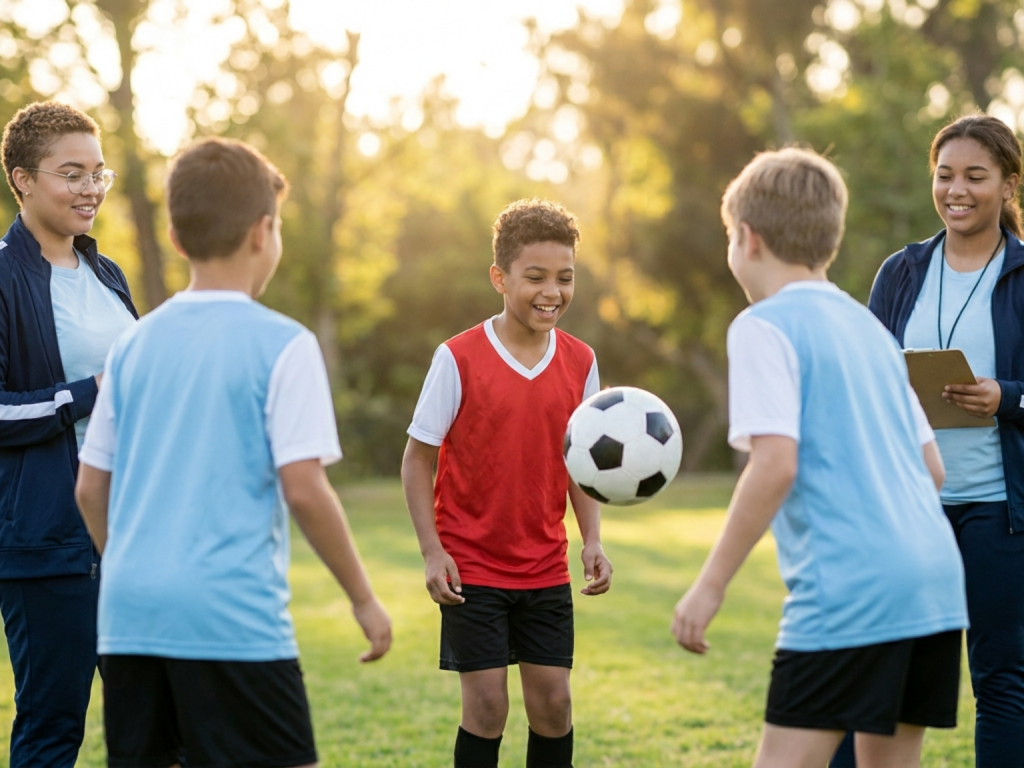
Team-based activities include sports, robotics teams, theater ensembles, choir, debate clubs, community service groups, scouting, and collaborative arts projects. Their shared feature is not competition; it is interdependence. A preteen must notice others, communicate, wait, lead, follow, and repair mistakes. These demands can support social cognition and emotional regulation in ways that solitary achievement tasks cannot fully replicate.
Findings highlighted by the University of British Columbia indicate that children who participate in team sports show better mental health outcomes than peers who do not participate in extracurricular activities, with peer belonging appearing to be a key mechanism. This does not mean every child needs competitive athletics. Rather, it points to the mental health value of being part of a group where a child is known, expected, and missed when absent.
Team activities may be especially helpful for children who are socially cautious but willing to engage around a shared interest. A child who struggles with small talk may find it easier to connect while passing a ball, building a robot, rehearsing a scene, or preparing a group presentation. The structure provides a script, while repeated contact builds familiarity. Over time, preteens can practice conflict resolution, perspective taking, and appropriate self-advocacy.
Caregivers can support healthy team participation by emphasizing process over outcome. Useful questions include: “What did you learn today?” “Who helped you?” “What felt hard?” and “What would you try differently next time?” These questions encourage reflection without turning the ride home into a performance review. If a coach or group leader uses humiliation, unsafe training practices, weight-shaming, or exclusionary discipline, caregivers should intervene and consider safer alternatives.
Independent activities: autonomy, competence, and room to roam
Independent activities include reading for pleasure, drawing, practicing an instrument by choice, biking in an agreed area, building models, coding, gardening, caring for a pet, shooting hoops alone, journaling, cooking simple foods, or imaginative outdoor play. These activities give preteens a chance to initiate action without constant adult direction. That matters because autonomy is not a luxury in development; it is a core psychological need.
Independent play and self-directed hobbies allow children to practice risk management at a tolerable level. A preteen deciding whether a tree branch is safe to climb, how to budget time for a craft project, or when to ask for help is using judgment, interoception, motor planning, and problem-solving. These small decisions build competence. They also teach that boredom is not an emergency; it can be the starting point for creativity.
Expert discussion from the Spark and Stitch Institute emphasizes that independent activities can support wellbeing by meeting needs for autonomy, competence, and relatedness. Even when an activity is solitary, relatedness may still be present: a child may later show a caregiver a drawing, trade bike route ideas with a friend, or contribute vegetables from a garden to a family meal. Independent does not mean emotionally isolated.
Safety remains essential. Independence should expand gradually, based on maturity, neighborhood context, health conditions, and local risks. Families can create clear boundaries: where the child may go, when to return, how to contact an adult, what to do if plans change, and how to handle unsafe situations. For children with medical conditions such as asthma, diabetes, seizure disorders, significant allergies, or mobility limitations, caregivers should discuss activity safety plans with appropriate healthcare professionals.
Matching activities to the child, not the other way around
A good activity fit respects the child’s temperament and developmental profile. Some preteens are sensation-seeking and thrive in vigorous team sports. Others prefer low-stimulation settings such as art, chess, animal care, swimming, archery, coding, or nature clubs. A child with anxiety may need gradual exposure to group participation, while a child with attention-deficit/hyperactivity traits may benefit from activities with movement, predictable routines, and immediate feedback. A child with learning differences may need adults who understand that school fatigue can make evening demands harder.
Caregivers can observe three signals of fit: anticipation, recovery, and growth. Anticipation asks whether the child usually looks forward to the activity, even if they sometimes feel nervous. Recovery asks whether the child returns tired but basically regulated, rather than consistently dysphoric, ashamed, or depleted. Growth asks whether the activity is helping the child develop skills, friendships, confidence, or joy over time.
It is also reasonable to consider family logistics. An activity that creates chronic caregiver stress, financial strain, sleep loss, or sibling resentment may not be sustainable, even if it looks impressive. Preteens benefit when adults model realistic boundaries. Saying, “We can choose one team activity and one independent hobby this season,” can be healthier than trying to replicate another family’s schedule.
For children facing Academic challenges preteens often experience, the activity plan may need extra care. Extracurriculars can be restorative, but they should not eliminate time for sleep, meals, homework support, or school collaboration. Preteen executive function skills are still developing, so a child may need checklists, visual calendars, and gentle reminders before they can manage equipment, deadlines, and transitions independently.
Balancing structure, free time, and screen-based activities
A balanced week usually includes school, sleep, family routines, physical movement, peer connection, independent downtime, and some unstructured play. The exact ratio differs by child. One preteen may feel grounded with three soccer practices; another may become irritable and exhausted with one weekly club if school demands are high. Watch for cumulative load rather than judging any single activity in isolation.
Screen-based activities deserve nuance. Digital tools can support creativity, coding, music production, language learning, and friendships. However, passive scrolling, late-night gaming, or conflict-heavy online spaces can displace sleep and in-person regulation. Preteen screen time boundaries work best when they are predictable, collaborative, and connected to values such as sleep, safety, respectful communication, and time for offline interests.
One practical framework is to divide activities into four categories:
- Belonging: team sports, clubs, ensembles, youth groups, or volunteering.
- Mastery: music, art, coding, athletics, crafts, cooking, or skill practice.
- Restoration: reading, nature time, quiet play, mindfulness, or low-pressure movement.
- Contribution: chores, pet care, helping siblings, community service, or family projects.
This framework prevents the calendar from becoming only achievement-oriented. It also supports independent learning skills in children by helping preteens notice what different activities do for their bodies and minds. Over time, they can learn to say, “I need movement,” “I need quiet,” or “I want to be with people,” which is a foundation for lifelong self-care.
Supporting motivation without pressure
Preteens are sensitive to adult expectations. Praise that focuses only on trophies, grades, rankings, weight, appearance, or being “the best” can create performance anxiety. Supportive feedback is more protective when it names effort, strategy, courage, teamwork, kindness, persistence, and problem-solving. This does not mean avoiding ambition; it means placing achievement inside a broader definition of wellbeing.
When motivation drops, curiosity is more useful than immediate correction. A child who wants to quit may be overwhelmed, bored, socially excluded, physically uncomfortable, embarrassed, or simply ready for a new interest. Families can agree on commitment windows, such as finishing a season or attending four trial sessions, while still taking distress seriously. If the environment is unsafe or emotionally harmful, leaving sooner may be appropriate.
Caregivers can also teach reflective decision-making. Ask the child to rate enjoyment, stress, friendship, learning, and energy cost on a simple scale. Then discuss patterns. This supports metacognition and helps the preteen differentiate temporary discomfort from a poor fit. It also respects preteen autonomy development, which becomes increasingly important as children approach adolescence.
For perfectionistic children, independent activities can be deliberately low-stakes. Drawing without showing anyone, shooting baskets without keeping score, or walking the dog without tracking steps can counter the belief that every effort must be evaluated. For socially isolated children, a gentle team context may provide repeated, structured opportunities for connection. The key is to use activities as developmental supports, not as evidence of a child’s worth.
When to seek professional guidance
Most activity-related stress improves with rest, schedule changes, supportive coaching, or better fit. However, some signs warrant consultation with a pediatrician, mental health professional, physical therapist, occupational therapist, school counselor, or other qualified clinician. Caregivers should seek guidance if a preteen has persistent sadness, irritability, panic symptoms, school refusal, social withdrawal, disordered eating behaviors, self-harm thoughts, recurrent injuries, unexplained fatigue, chest pain with exertion, syncope, or pain that changes gait or function.
Medical caution is especially important when increasing physical activity after illness, concussion, surgery, prolonged inactivity, or in the presence of chronic conditions. Return-to-play decisions after concussion, for example, should follow medical guidance because premature exertion can worsen symptoms or prolong recovery. Similarly, children with asthma may need an action plan for exercise-induced bronchoconstriction, and children with allergies may need emergency preparedness during outdoor or food-related activities.
Emotional safety also matters. Bullying, hazing, coercive coaching, sexual harassment, or discriminatory treatment should never be reframed as resilience training. Preteens may minimize these experiences because they fear losing the activity or disappointing adults. Regular, calm check-ins make disclosure easier: “Do you feel safe there?” “Do adults treat kids respectfully?” “Is anyone pressuring you to keep secrets?”
A healthcare or school professional can help families distinguish ordinary adjustment stress from concerns requiring intervention. The purpose is not to pathologize normal ups and downs, but to ensure that activities remain a source of growth, belonging, and healthy independence.
Safety and wellbeing cautions
- Seek urgent help if a preteen expresses self-harm thoughts, feels unsafe, or is being threatened or abused.
- Consult a clinician for chest pain with exertion, fainting, recurrent injuries, concussion symptoms, or persistent functional pain.
- Do not ignore sudden withdrawal, marked mood changes, disordered eating behaviors, or school refusal linked to activities.
- Avoid programs that use humiliation, unsafe training, weight-shaming, secrecy, or coercive discipline.
- For chronic medical conditions, ask the child’s healthcare team about activity-specific safety planning.
Tools & Assistance
- Create a weekly activity map that includes sleep, homework, movement, free time, and family routines.
- Use a simple enjoyment-stress-energy rating after activities to identify good and poor fits.
- Meet coaches or group leaders early to discuss safety, inclusion, communication, and expectations.
- Ask the pediatrician, school counselor, or mental health professional for guidance when symptoms or stress persist.
- Build gradual independence plans with clear boundaries, check-in times, and emergency steps.
FAQ
Are team activities better than independent activities for preteens?
They support different needs. Team activities can strengthen peer belonging and cooperation, while independent activities build autonomy, judgment, and self-directed competence. Many preteens benefit from both.
How many activities should a preteen have?
There is no universal number. A healthy schedule preserves adequate sleep, meals, school responsibilities, downtime, and family connection. If an activity causes chronic exhaustion or distress, reassessment is appropriate.
What if my child wants to quit an activity?
Start with curiosity. Explore whether the issue is boredom, anxiety, conflict, overload, pain, or poor fit. Commitment matters, but safety and wellbeing matter more.
Can independent activities be unsafe?
They can be if freedom exceeds the child’s maturity or the environment’s safety. Independence should expand gradually with clear boundaries, communication plans, and medical precautions when relevant.
Should activities continue during academic stress?
Often yes, if they restore mood and connection. However, the schedule may need adjustment to protect sleep, homework support, and school collaboration.
Sources
- University of British Columbia — Science says when kids participate in team-based extracurricular activities, they have better mental health
- Spark and Stitch Institute — Play Without Pressure and Room to Roam: Why Independent Activities Are Key to Wellbeing
- University of Illinois at Urbana-Champaign — What Adolescents Learn in Organized Youth Activities: A Survey of Their Experiences
Disclaimer
This article is for informational purposes only and does not diagnose, treat, or prescribe. Consult a qualified healthcare professional for concerns about a child’s physical health, mental health, safety, or activity participation.
















Please log in to leave a comment.