
Intro
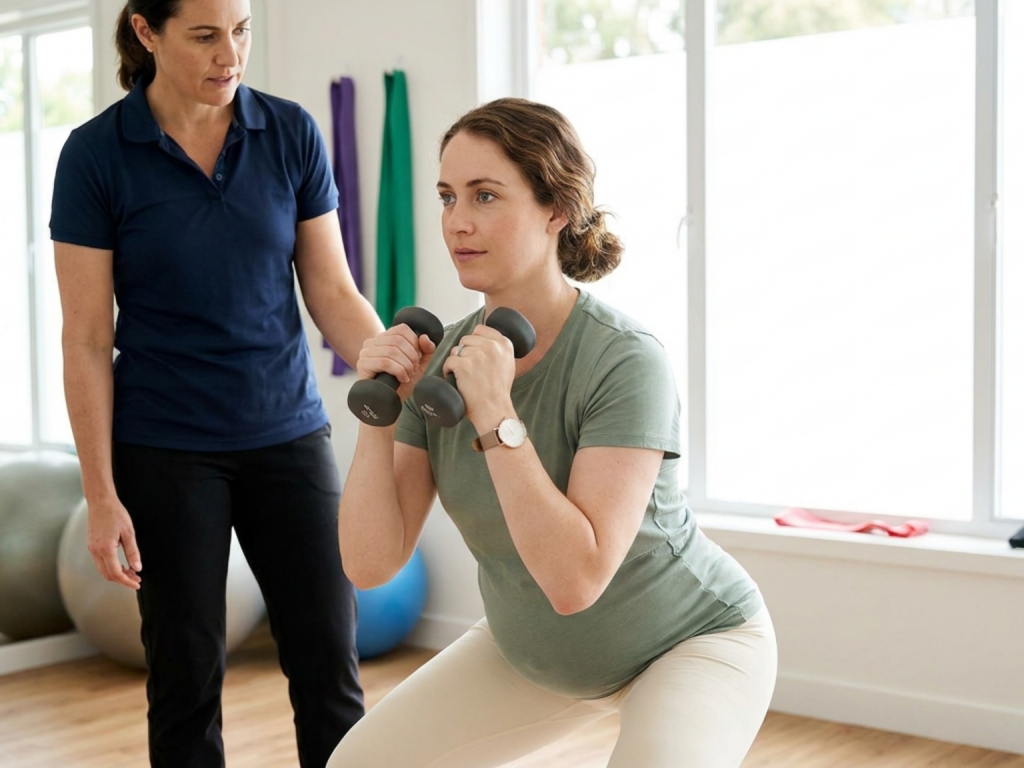
For many people, pregnancy raises a familiar but deeply personal question: can I keep lifting weights, and if so, how do I do it safely? In an uncomplicated pregnancy, strength training is often compatible with staying active, and for some people it is one of the most useful forms of exercise because it supports muscle function, posture, and day-to-day capacity.
This article focuses on evidence-based, pregnancy-aware strength work rather than performance goals. It is meant for medically literate readers who want a clear framework: what the evidence says, how to think about load and technique, which modifications are commonly used, and when to seek individualized advice from an obstetric clinician, midwife, or pelvic health physiotherapist.
Highlights
In an uncomplicated pregnancy, resistance exercise is generally considered safe and can be part of a balanced activity plan.
Strength training may help reduce excessive gestational weight gain and can improve low back or sciatic pain for some people.
How you lift matters: breathing, posture, load selection, and recovery are more important than chasing maximal weights.
Pregnancy usually calls for smart adaptation, not automatic avoidance, especially when exercise was already part of your routine.
Any bleeding, fluid leakage, chest pain, dizziness, or other warning symptom means you should stop and seek medical advice.
Why strength training can fit into pregnancy
Pregnancy changes blood volume, joint laxity, balance, and energy expenditure, so exercise that once felt routine may suddenly feel different. That does not mean all strength work is off-limits. Major guidelines note that resistance exercises have been extensively studied in pregnancy and, in uncomplicated cases, are considered safe and beneficial. The Australian evidence-based guideline is similarly clear that there is no evidence regular exercise during an uncomplicated pregnancy is detrimental to the woman or fetus.
That said, pregnancy-safe strength training is not a blanket recommendation for every situation. Medical review matters if you have a history of preterm birth, vaginal bleeding, placenta-related concerns, hypertension, severe anemia, significant pain, or any other obstetric issue that your clinician wants to monitor. The best approach is individualized: your previous training history, current symptoms, and pregnancy course all matter. For someone who has lifted consistently, pregnancy often means adjusting the session structure rather than stopping completely. For someone who is new to exercise, a slower start and closer supervision may be appropriate.
A useful mindset is function-first rather than performance-first. Strength training in pregnancy is about maintaining capacity for everyday tasks, supporting the musculoskeletal system, and staying active within the boundaries set by your own body and care team. In other words, this is not a test of toughness; it is a clinical and practical tool.
What the evidence suggests strength training may help with
Research syntheses suggest that strength training in pregnancy may support several outcomes that matter clinically and functionally. One recurring finding is improved health-related quality of life. Another is the possibility of less excessive gestational weight gain, which can be relevant for metabolic health and postpartum recovery. Studies also suggest a reduction in low back pain and sciatic pain in some participants, though the degree of benefit varies from person to person.
These benefits make sense biologically. Resistance exercise helps preserve lean mass, which can support posture and movement efficiency as the abdomen enlarges and the center of mass shifts forward. Better strength in the hips, upper back, and trunk may make everyday tasks feel more manageable, from climbing stairs to carrying groceries. Some people also notice mood benefits, likely because exercise can improve sleep regulation, perceived stress, and self-efficacy. While strength training is not a treatment for anxiety or depression, it can be part of a broader mental health strategy when your clinician agrees it is appropriate.
It is worth being precise about expectations. Strength training is not a guarantee against back pain, weight gain, or mood symptoms, and it does not replace obstetric care. But the evidence does support the idea that a thoughtfully designed resistance program can be one of the more efficient ways to remain active during pregnancy, especially when paired with walking, swimming, or other moderate aerobic activity.
How to lift safely: load, breathing, and progression
The safest lifting style in pregnancy is the one that keeps you in control. That usually means using loads you can move with excellent form, stopping a few repetitions before failure, and avoiding breath-holding under strain. The Valsalva maneuver, which involves forceful exhalation against a closed airway, increases intra-abdominal and intrathoracic pressure; in pregnancy, many clinicians prefer that you exhale through the effort instead. A simple cue is to breathe out during the hardest part of the lift and reset between repetitions.
Progression should be gradual. If you are already strength training, you may be able to continue similar patterns with lower loads, fewer sets, more rest, or a narrower exercise selection. If you are starting from scratch, begin with body-weight or light resistance and build slowly as tolerated. Many people do well with two to three nonconsecutive sessions per week, but there is no universal prescription; frequency should reflect your symptoms, recovery, and overall activity level.
Load selection is especially important when discussing heavy lifting in pregnancy. For some people, heavier-but-controlled training remains feasible, particularly if they have years of lifting experience and no obstetric contraindications. For others, the combination of fatigue, pelvic girdle discomfort, or balance changes makes lower loads a better choice. The key question is not whether a weight is impressive, but whether you can lift it without straining, compensating, or losing posture. If you are unsure, ask a clinician or a qualified prenatal exercise professional to review your program.
Practical exercise choices and common modifications
Many traditional strength exercises can be adapted well in pregnancy. Squats to a box or bench, sit-to-stands, supported hip hinges, step-ups, rows, wall or incline push-ups, cable or band work, and farmer-carry variations are all commonly used because they are easy to scale. These options are useful examples of safe pregnancy exercise modifications when a movement feels unstable, too compressed, or too demanding on the core or pelvic floor.
If you have pelvic girdle pain, pubic symphysis discomfort, or lower back symptoms, you may need pregnancy strength training modifications such as reducing depth, widening or narrowing stance, lowering load, switching from bilateral to unilateral work, or changing from standing to supported positions. In late pregnancy, some people prefer side-lying, seated, or incline options over prolonged supine work because flat-on-the-back positions can feel uncomfortable or provoke dizziness. That response is individual; some people tolerate it, others do not. Let symptoms guide the adjustment.
Core training deserves special care. Instead of aggressive abdominal bracing, emphasize coordinated trunk control, rib-pelvis positioning, and exhalation on effort. Gentle anti-rotation work, supported carries, and functional movements often feel more useful than high-pressure core drills. If you already have diastasis recti, pelvic floor symptoms, or a history of pelvic surgery, a pelvic health physiotherapist can help you tailor the exercise selection. The goal is not to avoid the core; it is to train it in a way that respects pregnancy-related biomechanics.
When to stop and get medical advice
Exercise should be paused if something feels wrong. The phrase warning signs during prenatal exercise usually includes vaginal bleeding, fluid leakage, regular painful contractions, chest pain, shortness of breath before exertion, dizziness, fainting, severe headache, new calf pain or swelling, or any sudden decrease in fetal movement if you are at a stage where you normally perceive movement. These symptoms do not automatically mean something serious, but they do require prompt medical review.
It is also sensible to stop and seek guidance if you develop persistent pelvic pain, new urinary leakage with exercise, worsening back pain, abdominal pain that feels unusual for you, or a sense that your lifting mechanics are suddenly breaking down. In the setting of pregnancy, a small change in symptoms can matter more than it would outside pregnancy.
If you have been told you are at higher obstetric risk, do not rely on generic internet advice. Ask your obstetric team what level of exertion is appropriate, whether specific movements should be avoided, and what symptom threshold should trigger a call. The safest plan is the one that is aligned with your actual pregnancy history, not just with a template workout.
Building a balanced weekly routine
For most pregnant exercisers, strength work is best viewed as one part of a broader movement plan. Guidelines recommend combining resistance exercise with aerobic activity, because the two modes support different aspects of fitness. Walking, stationary cycling, swimming, or water exercise can complement lifting by supporting cardiovascular conditioning without overloading the same tissues every day. On some weeks, especially when nausea, work demands, or fatigue are higher, a shorter strength session may be enough. On better weeks, you may be able to do a little more, provided symptoms stay stable.
A practical structure is to begin each session with a warm-up that raises body temperature gradually, then move into a few compound lifts, then finish with accessory work or mobility. Keep rest periods generous enough that you can breathe normally and retain form. Avoid stacking hard sessions back-to-back if recovery feels poor. Sleep, hydration, and adequate energy intake all influence how well you tolerate training, even though they are not part of the workout itself.
If you are unsure where to start, a prenatal-focused physiotherapist, certified exercise professional, or obstetric clinician can help you build a plan around your baseline fitness. The most sustainable program is usually the one you can repeat safely, adjust when needed, and continue without guilt. Pregnancy is not the time to prove resilience through maximal effort; it is the time to train intelligently for both current well-being and the physical demands ahead.
Stop exercise and contact a clinician urgently if you notice
- Vaginal bleeding or fluid leakage.
- Chest pain, fainting, or marked shortness of breath.
- Regular painful contractions, severe abdominal pain, or severe headache.
- New calf pain or swelling, or a sudden sense that something is not right.
- Decreased fetal movement if you are at a stage where you usually feel movement.
Tools & Assistance
- Your obstetrician, midwife, or family doctor for individualized exercise clearance.
- A pelvic health physiotherapist for core, pelvic floor, or pain-related modifications.
- A prenatal exercise specialist or qualified trainer experienced with pregnancy.
- Local maternity triage or urgent care if warning symptoms appear during or after exercise.
FAQ
Can I start strength training if I was not lifting before pregnancy?
Often yes, but it should be started gradually and discussed with your clinician first, especially if you have any pregnancy complications or chronic medical conditions.
Is it safe to keep lifting weights in the second and third trimesters?
For many people with uncomplicated pregnancies, yes, but the exercises, positions, breathing, and loads may need to change as symptoms and balance change.
Do I need to avoid abdominal exercises completely?
Not necessarily. Many core movements can be modified, but aggressive bracing, pain, doming, or pressure symptoms are reasons to adjust the exercise and seek advice.
How hard should a prenatal strength session feel?
Usually moderate and controlled rather than maximal. You should be able to breathe steadily, maintain form, and recover between sets without excessive strain.
Sources
- American College of Obstetricians and Gynecologists — Physical Activity and Exercise During Pregnancy and the Postpartum Period
- PubMed Central — Effects of strength training on quality of life in pregnant women
- Australian Government Department of Health and Aged Care — Evidence-based physical activity guidelines for pregnant women
Disclaimer
This article is for informational purposes only and does not replace care from your obstetric clinician, midwife, or physiotherapist. Seek personalized medical advice before starting or changing exercise during pregnancy, especially if you have symptoms or pregnancy complications.















Please log in to leave a comment.