
Intro
Pregnancy can change your relationship with exercise. A routine that once felt straightforward may suddenly come with new questions: Is this intensity safe? Should I stop lifting? Can twisting, jumping, or lying on my back harm the baby? For most healthy pregnant people, regular physical activity is not only safe but beneficial, and major medical organizations emphasize that it does not increase the risk of miscarriage, low birth weight, or early delivery in uncomplicated pregnancies.
Still, pregnancy is not a time for one-size-fits-all fitness advice. Your baseline fitness, obstetric history, symptoms, trimester, occupational demands, and any medical complications all matter. The safest approach is to discuss activity with your obstetrician, midwife, or qualified healthcare professional, then adjust movement as your body changes.
Highlights
For generally healthy pregnant people, moderate-intensity exercise is recommended and can support cardiovascular fitness, mood, sleep, and appropriate weight gain.
Good pregnancy workouts usually emphasize low-impact aerobic activity, controlled strength training, mobility, balance, breathing, and pelvic floor awareness.
Unsafe exercises include contact sports, activities with a high risk of falling, scuba diving, hot yoga or hot Pilates, and workouts performed despite warning symptoms.
Intensity should be guided by comfort, breathing, symptoms, and professional advice rather than by pre-pregnancy performance goals.
Why exercise is usually encouraged in pregnancy
In an uncomplicated pregnancy, physical activity is generally considered safe and beneficial. The American College of Obstetricians and Gynecologists, the CDC, and the NHS all support staying active when there is no medical or obstetric reason to avoid exercise. Moderate-intensity activity can help maintain cardiorespiratory fitness, reduce excessive gestational weight gain, improve musculoskeletal comfort, support mood and sleep, and may help with functional stamina for labor and postpartum recovery.
Moderate intensity means your heart rate and breathing increase, but you can still speak in short sentences. Many people use the “talk test” because pregnancy changes resting heart rate, blood volume, and perceived exertion, making rigid heart-rate targets less reliable. If you were active before pregnancy, you may often continue many parts of your routine with modifications. If you were sedentary, pregnancy can still be a reasonable time to begin gentle activity, but it is best to start gradually and get individualized clearance.
The goal is not athletic perfection. The goal is safe, sustainable movement that respects fatigue, nausea, pelvic pressure, round ligament discomfort, back pain, anemia, blood pressure issues, and other realities that may appear at different points in pregnancy.
How pregnancy changes the way you should exercise
Pregnancy produces physiologic changes that affect exercise tolerance and injury risk. Blood volume and cardiac output rise, oxygen consumption increases, and the respiratory system adapts to meet the needs of both parent and fetus. This can make workouts feel harder, especially in the first trimester with fatigue or nausea and later in pregnancy when the uterus elevates the diaphragm.
Hormonal changes, including increased relaxin, contribute to ligamentous laxity. This does not mean your joints are “unstable” in every movement, but it does mean aggressive stretching, ballistic mobility drills, or high-load end-range positions may be less predictable. The enlarging uterus also shifts your center of gravity, increasing the risk of falls during activities requiring rapid changes of direction, uneven terrain, or complex balance.
Thermoregulation is another key safety issue. Pregnant people should avoid overheating and dehydration, particularly in hot, humid environments. Adequate fluids, breathable clothing, rest breaks, and avoiding hot exercise settings are practical safety measures. As pregnancy progresses, many people also need to reduce impact, widen their stance, shorten range of motion, or switch from outdoor cycling or running to lower-risk options such as stationary cycling, swimming, or walking.
Safe and commonly recommended exercises
Many activities are appropriate for uncomplicated pregnancy, especially when performed at moderate intensity and modified as needed. The safest choices tend to be low-impact, controllable, and easy to stop if symptoms occur.
- Walking: Accessible, adjustable, and useful across all trimesters. Supportive shoes and even surfaces can reduce discomfort and fall risk.
- Swimming and water exercise: Buoyancy can reduce joint load and may feel particularly comfortable for back, hip, or pelvic pressure.
- Stationary cycling: Provides aerobic conditioning with less fall risk than road cycling. Seat and handlebar adjustments may be needed as the abdomen grows.
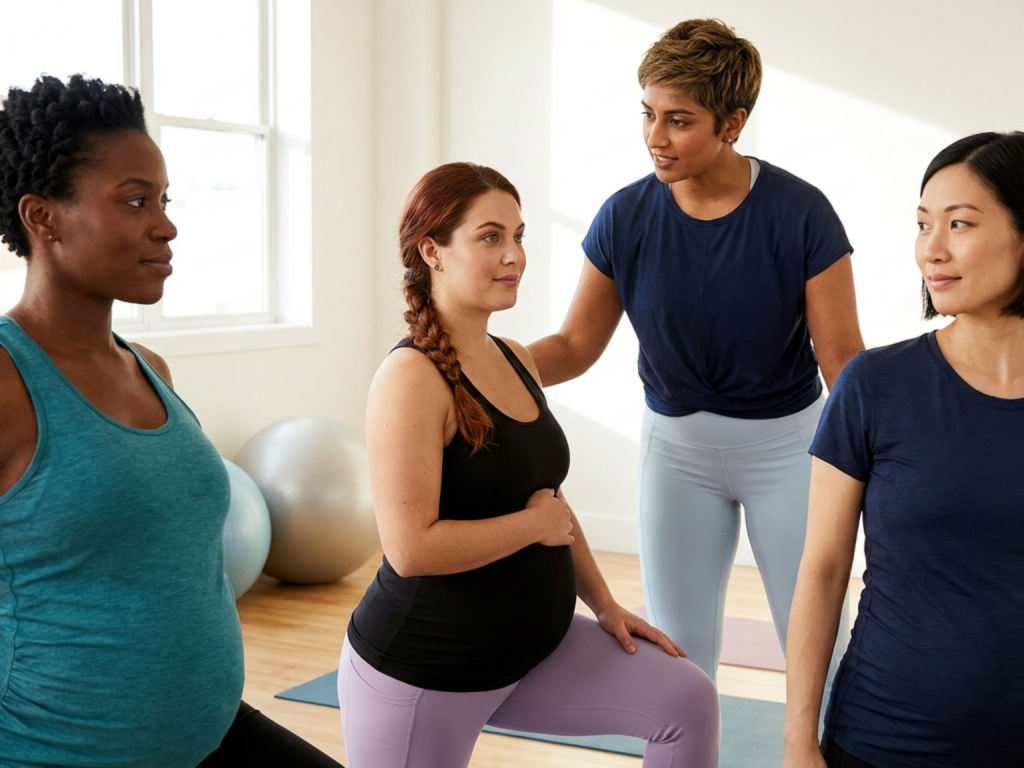
- Modified yoga or Pilates: These can support mobility, breathing, posture, and strength, but avoid overheated classes, prolonged supine positions later in pregnancy, deep closed twists, extreme stretching, and poses that challenge balance excessively.
- Strength training: Light to moderate resistance training can be safe when technique is controlled, breathing is steady, and loads are appropriate. Machines, bands, dumbbells, and bodyweight movements may all be useful.
- Pelvic floor exercises: Pelvic floor training may help support bladder control and pelvic function, though people with pelvic pain or pelvic floor overactivity may need specialist guidance rather than simply doing more contractions.
If you are new to exercise, a gradual progression is sensible: shorter sessions, lower intensity, and more recovery. If you already train regularly, the conversation is usually about modification rather than stopping everything.
Exercises and activities that are unsafe or usually avoided
Some activities carry risks that are not worth the potential benefit during pregnancy. ACOG specifically advises avoiding activities with a high risk of abdominal trauma, falling, overheating, or abnormal pressure exposures.
- Contact sports: Activities such as soccer, basketball, boxing, hockey, martial arts sparring, or rugby increase the risk of collision or abdominal impact.
- Sports with high fall risk: Downhill skiing, water skiing, surfing, horseback riding, gymnastics, mountain biking, and outdoor cycling on challenging terrain may become unsafe because balance and reaction time are affected by pregnancy-related changes.
- Scuba diving: Scuba diving is avoided because the fetus is not protected from decompression-related risks.
- Hot yoga and hot Pilates: Heated classes can raise the risk of overheating and dehydration. Choose non-heated, pregnancy-aware instruction instead.
- High-altitude exercise without acclimatization: Exercising at significant altitude may be inappropriate for some pregnant people, especially if they are not acclimated or have medical concerns.
- Workouts with deliberate breath-holding or maximal straining: Heavy lifts that require a prolonged Valsalva maneuver can create large pressure changes and may not be appropriate, especially for those with blood pressure, pelvic floor, or abdominal wall concerns.
“Unsafe” can also depend on execution. A squat may be safe for one person and aggravating for another if it causes pelvic pain, dizziness, leakage, coning of the abdominal wall, or uncontrolled pressure. A medically literate, symptom-guided approach is more useful than rigid fear-based rules.
Strength training, lifting, and core work
Strength training can be valuable in pregnancy because it supports posture, hip and back function, daily lifting mechanics, and general metabolic health. The priority is controlled movement, appropriate load, stable breathing, and recovery. Many people do well with exercises such as supported squats, hip hinges with lighter loads, rows, wall or incline push-ups, step-ups, band pulls, and carries using manageable weights.
As pregnancy progresses, consider reducing maximal loads, avoiding grinding repetitions, and choosing positions that do not create dizziness, pain, or excessive abdominal pressure. Instead of breath-holding, exhale through effort and keep the rib cage, abdomen, and pelvic floor coordinated. If you notice doming or coning along the midline of the abdomen, pelvic heaviness, urinary leakage, or worsening pain, the exercise may need modification.
Core training should shift away from high-pressure abdominal work such as repeated full sit-ups, aggressive crunches, or advanced planks held to fatigue. Better options often include breathing-based core engagement, side-lying work, bird-dog variations, pallof presses, modified dead bugs, and functional anti-rotation exercises, provided they feel comfortable. People with diastasis recti concerns, pelvic girdle pain, prior abdominal surgery, or pelvic floor symptoms may benefit from a pelvic health physiotherapist.
Supine exercise, twisting, jumping, and stretching
Many pregnant people hear broad rules such as “never lie on your back” or “never twist.” The reality is more nuanced. After the first trimester, prolonged flat supine positioning can compress major blood vessels in some people, potentially causing dizziness, nausea, shortness of breath, or reduced venous return. Brief position changes may be tolerated, but if you feel unwell on your back, roll to your side and choose incline or side-lying modifications.
Twisting is not automatically dangerous, but deep closed twists that compress the abdomen are generally avoided. Open thoracic rotations, gentle mobility work, and pregnancy-adapted yoga positions are often more appropriate. Jumping and high-impact exercise depend on the individual: some runners or athletes may continue modified impact activity for a time, while others develop pelvic floor symptoms, pelvic girdle pain, or discomfort early. Impact is not a moral achievement; switching to low-impact cardio is a smart adaptation, not a failure.
Stretching should feel controlled and mild. Because pregnancy can increase joint laxity, avoid forcing end ranges or using pregnancy as a time to chase flexibility. Stability, strength through comfortable range, and symptom-free mobility are more protective than deep passive stretching.
When to stop exercising and seek medical advice
Exercise should stop immediately if warning symptoms occur. These symptoms do not necessarily mean something dangerous has happened, but they do warrant caution and medical assessment. Stop and contact your maternity care team if you experience concerning pain, bleeding, fluid leakage, faintness, chest symptoms, or signs of preterm labor.
Some people need closer supervision or specific restrictions, including those with certain heart or lung diseases, cervical insufficiency, placenta-related concerns, preeclampsia, severe anemia, fetal growth restriction, multiple pregnancy with complications, or a history of preterm birth. This is why individualized medical guidance matters. A safe plan for one pregnancy may not be safe for another.
It is also reasonable to pause and reassess if exercise consistently worsens pelvic pain, causes significant contractions, triggers persistent shortness of breath before exertion, or leaves you unusually depleted. Pregnancy training should build capacity, not push through escalating warning signs.
Practical safety tips for each workout
A safe pregnancy workout starts before the first repetition. Choose a cool environment, hydrate, eat appropriately for your situation, wear supportive footwear, and avoid exercising to exhaustion. Warm up gradually and cool down rather than stopping abruptly after intense activity.
- Use the talk test to keep most activity at moderate intensity unless your clinician has advised otherwise.
- Prioritize consistency over intensity: shorter, regular sessions are often better tolerated than sporadic hard workouts.
- Modify early rather than waiting for pain: reduce range, load, speed, impact, or duration.
- Avoid overheating, especially in humid weather or poorly ventilated studios.
- Use stable surfaces and avoid complex balance challenges as your center of gravity changes.
- Work with instructors who understand prenatal modifications, particularly for yoga, Pilates, strength training, and high-intensity classes.
Your exercise plan can change week by week. Some days, movement may mean a swim or strength session; other days, it may mean gentle walking, pelvic floor relaxation, or rest. Listening to your body is not being overly cautious; it is an essential part of pregnancy-safe training.
Stop exercising and get medical advice if these occur
- Vaginal bleeding, fluid leakage, or regular painful contractions.
- Chest pain, fainting, severe dizziness, or shortness of breath before exertion.
- Calf pain or swelling, especially if one-sided.
- Severe headache, visual symptoms, or new significant swelling.
- Decreased fetal movement after the point when movement tracking is relevant.
- Persistent abdominal, pelvic, or back pain that does not settle with rest.
Tools & Assistance
- Ask your obstetrician or midwife for individualized exercise clearance and any restrictions.
- Consider a prenatal-certified fitness professional for technique modifications.
- See a pelvic health physiotherapist for pelvic pain, leakage, heaviness, or diastasis concerns.
- Use the talk test and a symptom log to monitor intensity and recovery.
- Choose cooler environments, hydration breaks, and stable surfaces for workouts.
FAQ
Can exercise cause miscarriage in early pregnancy?
In uncomplicated pregnancies, regular moderate exercise has not been shown to increase miscarriage risk. However, bleeding, pain, or high-risk medical conditions should be discussed promptly with a healthcare professional.
Is it safe to start exercising if I was inactive before pregnancy?
Often yes, but begin gradually with low-impact activity such as walking or swimming and ask your maternity care clinician for personalized guidance, especially if you have medical or obstetric risk factors.
Can I keep running while pregnant?
Some experienced runners continue with modifications, but running may need to be reduced or replaced if it causes pelvic pain, leakage, contractions, dizziness, or excessive fatigue. Fall risk, heat, and terrain also matter.
Are abdominal exercises forbidden during pregnancy?
Not all core work is forbidden. High-pressure exercises such as repeated full sit-ups or maximal planks may be poorly tolerated, while breathing-based, anti-rotation, and modified stability exercises may be appropriate.
How hard should pregnancy workouts feel?
For most people, moderate intensity is the safest default: breathing is increased, but you can still talk. Avoid exercising to exhaustion unless you have specific professional guidance.
Sources
- American College of Obstetricians and Gynecologists — Exercise During Pregnancy
- NHS — Exercise in pregnancy
- Centers for Disease Control and Prevention — Exercise During Pregnancy
Disclaimer
This article is for informational purposes only and is not a substitute for medical advice. Always consult your obstetrician, midwife, or healthcare professional about exercise safety in your specific pregnancy.
















Please log in to leave a comment.