
Intro
Exercise in pregnancy can feel reassuring for some people and intimidating for others. Your body is adapting continuously: plasma volume rises, cardiac output increases, joints become more mobile under hormonal influence, breathing mechanics shift, and your center of gravity changes. These are normal physiologic adaptations, but they also mean that exercise choices may need to evolve across the trimesters.
For many uncomplicated pregnancies, regular physical activity is not only safe but beneficial. Authoritative guidance from ACOG supports aiming for about 150 minutes of moderate-intensity aerobic activity each week, with individualized adjustments based on your obstetric history, baseline fitness, symptoms, and clinician recommendations. The safest plan is one that respects both evidence-based guidelines and the realities of your pregnancy day to day.
Highlights
Most people with uncomplicated pregnancies can continue or begin moderate exercise, but medical clearance is especially important if you have obstetric, cardiac, pulmonary, or other medical concerns.
A practical goal is about 150 minutes per week of moderate-intensity aerobic activity, often divided into shorter sessions that feel manageable.
Walking, swimming, water exercise, stationary cycling, modified yoga, modified Pilates, and light-to-moderate resistance training are commonly appropriate choices.
Avoid activities with high fall risk, abdominal trauma risk, overheating, scuba diving, and prolonged supine exercise after the first trimester.
Why exercise is often beneficial in pregnancy
Regular movement can support cardiovascular conditioning, musculoskeletal strength, glucose regulation, mood, sleep quality, and functional stamina for labor and postpartum recovery. Exercise may also help reduce common discomforts such as back tension, constipation, and deconditioning, although it is not a treatment plan for any specific condition unless recommended by a clinician.
Pregnancy is not the time for a rigid performance mindset. The goal is usually maintenance, comfort, and safe conditioning rather than maximal fitness gains. A person who was running, lifting, or doing structured training before conception may be able to continue with modifications, while someone who was previously sedentary may do best starting gradually with walking, water exercise, or short low-impact sessions.
If you are planning pregnancy or comparing your current activity level with your preconception routine, exercise before pregnancy and best workouts before trying to conceive can provide useful context for building a sustainable baseline.
Core safety guidelines before choosing exercises
For uncomplicated pregnancies, ACOG recommends at least 150 minutes of moderate-intensity aerobic activity per week. Moderate intensity generally means you are breathing more deeply and your heart rate is elevated, but you can still speak in full sentences. This is often called the talk test, and it can be more practical than relying only on heart-rate targets because pregnancy alters cardiovascular physiology.
Key safety principles include:
- Get individualized guidance. Ask your obstetric clinician, midwife, physiotherapist, or qualified prenatal exercise professional whether you have any condition that changes exercise recommendations.
- Warm up and cool down. Pregnancy circulation changes can make abrupt starts and stops uncomfortable, especially if you are prone to dizziness.
- Hydrate and avoid overheating. Exercise in a cool environment, wear breathable clothing, and avoid hot yoga, hot Pilates, saunas, and very humid high-heat settings.
- Modify for balance. As the uterus grows, your center of gravity shifts and fall risk increases. Choose stable surfaces and supported movements.
- Avoid breath-holding. During strength work, exhale with effort rather than using a Valsalva maneuver, which can increase intra-abdominal pressure.
- Respect fatigue and pelvic pressure. Shorter sessions may be safer and more effective than pushing through a long workout.
Exercise is only one part of pregnancy self-care. Energy intake, hydration, iron status, and overall nutrition also affect tolerance; calories needed during pregnancy by trimester and weight gain relationship is a helpful related topic to discuss with your care team.
Activities generally considered safer in pregnancy
Several forms of exercise are consistently recommended by pregnancy health organizations because they are low impact, adaptable, and relatively low risk when performed appropriately.
- Walking: Accessible, easy to scale, and useful across all trimesters. Incline, speed, and duration can be adjusted.
- Swimming and water exercise: Buoyancy reduces joint load and can feel especially supportive as pregnancy advances.
- Stationary cycling: Provides aerobic conditioning with less fall risk than outdoor cycling.
- Elliptical training: Low-impact and adjustable, with hand supports for stability.
- Modified prenatal yoga: Can support mobility, breathing, and relaxation when heat, deep twisting, extreme stretching, and prolonged supine poses are avoided.
- Modified Pilates: Helpful for controlled core and postural work when adapted for pregnancy and not performed in prolonged flat-on-back positions after the first trimester.
- Resistance training: Light-to-moderate strength work with good technique can support posture, hips, back, and daily function.
Strength training should emphasize controlled breathing, neutral alignment, and manageable loads. Pregnancy hormones such as relaxin influence ligamentous laxity, so aggressive stretching or end-range loading may increase discomfort or injury risk.
Exercises and conditions that usually require avoidance or modification
Some activities are discouraged because they increase the risk of falling, abdominal trauma, decompression illness, overheating, or reduced venous return. This does not mean you must be inactive; it means your exercise choices should be adapted to pregnancy physiology.
- Contact sports: Avoid sports with collision or abdominal impact risk, such as soccer, basketball, boxing, and hockey.
- High-fall-risk activities: Downhill skiing, gymnastics, horseback riding, outdoor cycling on unpredictable terrain, surfing, and similar activities are generally unsafe choices.
- Scuba diving: This is not recommended because of fetal risk related to decompression.
- Hot yoga and hot Pilates: These can increase overheating risk.
- Prolonged supine exercise after the first trimester: Lying flat on your back for long periods may compress the inferior vena cava in some people, potentially reducing venous return and causing dizziness or nausea.
- High-altitude exercise without acclimatization: Discuss this with your clinician, especially if you have anemia, hypertension, fetal growth concerns, or cardiopulmonary disease.
People with placenta previa after a certain gestational age, ruptured membranes, preterm labor, significant heart or lung disease, severe anemia, preeclampsia, certain cervical conditions, or growth restriction may need special restrictions. Do not self-diagnose these conditions; use them as reasons to seek individualized medical advice.
First trimester: best exercises and practical adjustments
The first trimester can be physically unpredictable. Some people feel capable of their usual routine, while others experience nausea, vomiting, breast tenderness, urinary frequency, dizziness, or profound fatigue. Exercise is not an endurance test; on difficult days, a 10-minute walk may be the right amount.
Good first-trimester options often include:
- Walking at a comfortable to brisk pace.
- Swimming or gentle water exercise.
- Stationary cycling or elliptical sessions.
- Modified yoga or Pilates, avoiding overheating and extreme ranges of motion.
- Light-to-moderate resistance training with controlled breathing.
If you were active before pregnancy, you may be able to continue many familiar activities if they are not high risk. If you are beginning exercise, start with short sessions, such as 10 to 15 minutes, and build gradually. Focus on consistency, hydration, and symptom awareness rather than intensity.
Core work can continue, but choose exercises that emphasize breathing, deep abdominal control, and pelvic-floor coordination rather than maximal abdominal bracing. If nausea is prominent, try exercising after a small snack and avoid overheated rooms.
Second trimester: best exercises as the body changes
Many people find the second trimester more comfortable, though the abdomen is growing and balance starts to shift. This is a good time to refine modifications before the third trimester. After the first trimester, avoid prolonged exercises lying flat on your back, particularly if you notice lightheadedness, nausea, shortness of breath, or a heavy sensation.
Best second-trimester exercises often include:
- Walking or treadmill walking: Use incline cautiously and hold rails only when needed for balance.
- Water workouts: Excellent for reducing pelvic and lumbar load.
- Stationary cycling: Adjust handlebar height to avoid abdominal compression.
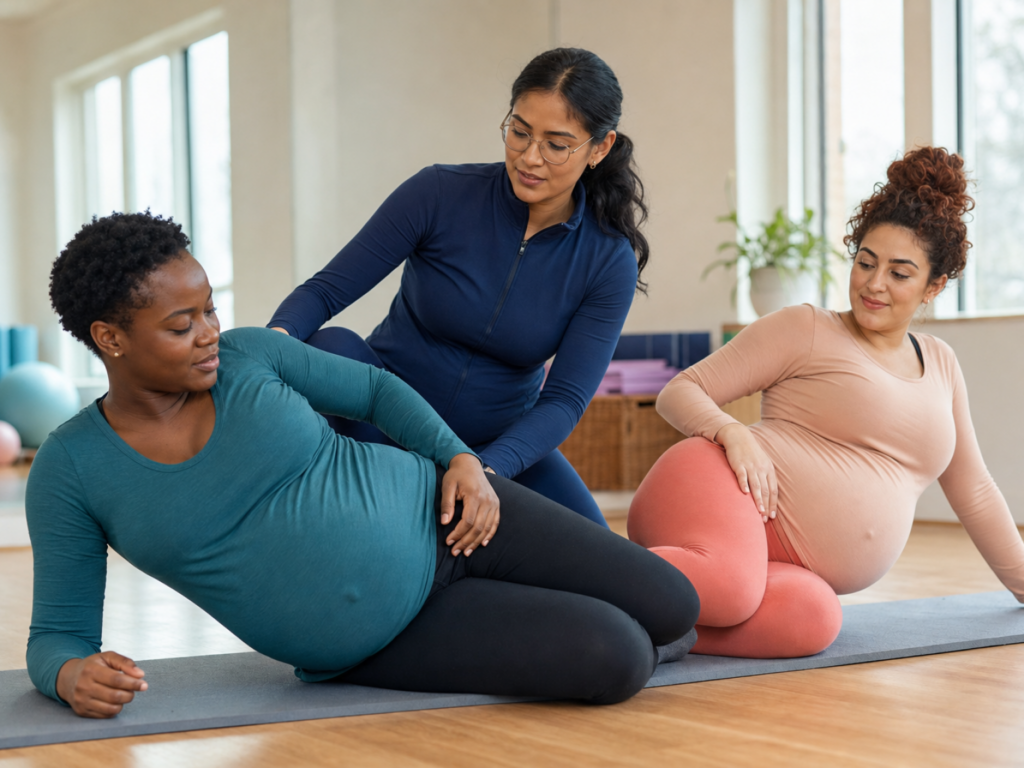
- Standing or side-lying strength work: Examples include supported squats, hip hinges with light weights, rows, wall push-ups, and side-lying leg work.
- Prenatal yoga: Prioritize supported poses, breathing, and mobility; avoid hot rooms, deep closed twists, and overstretching.
Pelvic-floor and deep-core coordination may be useful, especially when integrated with exhalation during effort. However, pelvic-floor training is not one-size-fits-all; people with pelvic pain, urinary symptoms, a history of pelvic floor hypertonicity, or painful intercourse should consider evaluation by a pelvic health physiotherapist.
Third trimester: best exercises for comfort, stamina, and safety
In the third trimester, exercise often becomes more about maintaining circulation, mobility, strength, and emotional well-being than completing long workouts. Shorter, more frequent sessions may be better tolerated. Around week 28 and beyond, many people notice sleep disruption, pelvic heaviness, Braxton Hicks contractions, reflux, or back discomfort; week 28 of pregnancy: third trimester changes sleep patterns and growing activity may help contextualize these shifts.
Third-trimester-friendly options include:
- Gentle walking: Break it into 5- to 15-minute sessions if needed.
- Swimming or water walking: Often one of the most comfortable choices late in pregnancy.
- Supported strength movements: Sit-to-stand practice, wall push-ups, supported lateral steps, and light rows can maintain functional strength.
- Mobility and breathing drills: Cat-cow, supported child’s pose variations, side-lying thoracic rotation, and diaphragmatic breathing may feel relieving if approved by your clinician.
- Birth-preparation movement: Gentle hip circles on a stability ball, supported squats, and upright positioning practice can be useful when comfortable and safe.
As you approach the final weeks, such as the period described in week 38 of pregnancy: final body growth fat accumulation and preparation for delivery, the best workout may be a slow walk, pool session, or restorative mobility routine. Stop if you feel dizzy, have painful contractions, notice vaginal bleeding, experience fluid leakage, or sense a concerning change in fetal movement.
How to monitor intensity and know when to stop
The talk test is a simple, pregnancy-friendly measure: during moderate exercise, you should be able to talk but not sing. Perceived exertion should usually feel moderate rather than maximal. If you were a competitive athlete before pregnancy, you may need more individualized monitoring, especially for high-intensity training.
Stop exercising and contact a healthcare professional urgently if you experience vaginal bleeding, regular painful contractions, amniotic fluid leakage, chest pain, severe shortness of breath before exertion, dizziness or fainting, calf pain or swelling, severe headache, or significant muscle weakness affecting balance. Also seek guidance if fetal movement patterns concern you later in pregnancy.
It is equally important to avoid both extremes: overtraining can impair recovery and increase injury risk, while a sedentary lifestyle may worsen deconditioning. Exercise levels: overtraining and sedentary lifestyle effects can be a useful related discussion for people trying to find a balanced routine.
Stop and seek medical advice
- Vaginal bleeding, fluid leakage, or regular painful contractions during or after exercise.
- Chest pain, fainting, severe dizziness, or shortness of breath before exertion.
- Calf pain or one-sided swelling, which may require urgent evaluation.
- Severe headache, visual symptoms, or sudden swelling, especially with blood pressure concerns.
- Marked pelvic pressure, new severe abdominal pain, or a concerning decrease in fetal movement.
Tools & Assistance
- Discuss your exercise plan at a prenatal visit and ask whether you have any restrictions.
- Use the talk test to keep most sessions at moderate intensity.
- Choose cooler environments, breathable clothing, and regular hydration breaks.
- Consider a pelvic health physiotherapist for pelvic pain, leakage, heaviness, or return-to-exercise planning.
- Track duration, exertion, symptoms, and recovery rather than focusing only on calories or heart rate.
FAQ
Can I start exercising if I was sedentary before pregnancy?
Often yes, if your clinician confirms there are no contraindications. Start gradually with low-impact activity such as walking or water exercise, even 10 minutes at a time, and build slowly.
Is running safe during pregnancy?
Some experienced runners with uncomplicated pregnancies can continue with modifications. It should be individualized, especially if you develop pelvic pain, bleeding, dizziness, contractions, or significant discomfort.
Can I lift weights while pregnant?
Light-to-moderate resistance training is commonly appropriate when technique is controlled and breath-holding is avoided. Heavy maximal lifting, straining, and unstable movements should be discussed with a qualified professional.
Why avoid lying flat on my back after the first trimester?
In some people, the enlarged uterus can compress major blood vessels when supine, causing dizziness, nausea, or reduced venous return. Side-lying, seated, standing, or inclined positions are often better.
How much exercise is too much?
Too much is individualized, but warning signs include inability to recover, pain, dizziness, contractions, bleeding, or persistent exhaustion. Pregnancy exercise should feel sustainable, not punishing.
Sources
- American College of Obstetricians and Gynecologists — Exercise During Pregnancy
- Johns Hopkins Medicine — Exercise During Pregnancy
- UC Davis Health — Is exercise safe during pregnancy? Experts share which activities to do and which you should avoid
Disclaimer
This article is for informational purposes only and does not replace individualized medical advice. Consult your obstetric clinician or qualified healthcare professional before starting or changing exercise during pregnancy.














Please log in to leave a comment.