
Intro
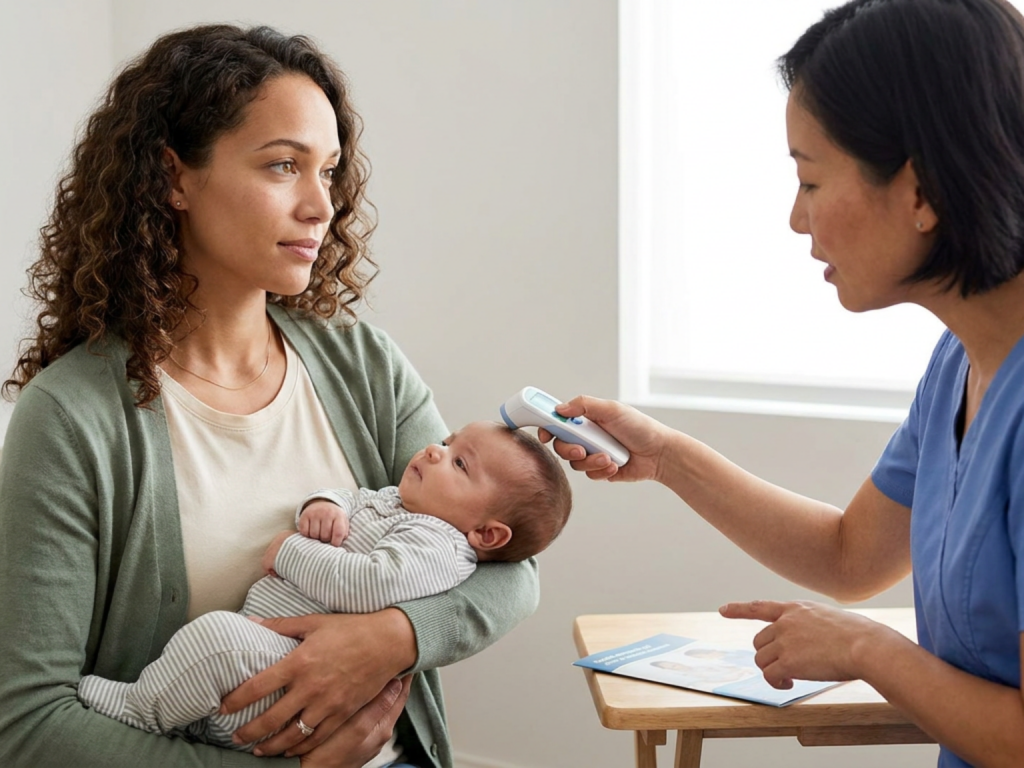
Seeing a fever on the thermometer can make even experienced parents feel alarmed. Fever in a baby is not a diagnosis by itself; it is a physiologic sign, usually reflecting immune activation from an infection, inflammation, vaccination response, overheating, or another stressor. The key question is not only how high the temperature is, but how old the baby is, how the temperature was measured, how the baby looks, and whether there are red flags such as poor feeding, lethargy, respiratory distress, dehydration, or seizure.
This guide explains the practical difference between a low grade and high fever baby scenario, with special attention to infants under 3 months, babies 3 to 6 months, and older infants. It is designed for medically literate caregivers who want clear thresholds while still respecting the limits of home assessment. When in doubt, especially with a young infant, contact a pediatric clinician promptly.
Highlights
A rectal temperature of 100.4°F or higher in a baby under 3 months is treated as urgent and should prompt immediate medical advice.
Low-grade temperature ranges can be monitored at home in some older babies if they are alert, feeding, breathing comfortably, and making wet diapers.
A high fever, persistent fever, or fever with concerning symptoms deserves professional assessment rather than watchful waiting.
The baby’s age, behavior, hydration, breathing, and duration of fever often matter as much as the number on the thermometer.
Fever medicines may improve comfort, but dosing and choice should be discussed with a clinician, especially in young infants.
What counts as a fever in a baby?
For infants and children, many clinicians define fever as a temperature of 100.4°F or higher, especially when measured rectally. Rectal measurement is often considered the most accurate route for young babies, though parents should follow their pediatrician’s instructions and use an age-appropriate thermometer. Axillary, temporal, ear, and oral readings can vary by device and technique, so the measurement method matters when interpreting the number.
Some pediatric resources describe a low-grade fever range as approximately 99.6°F to 100.3°F. This range can represent early illness, normal variation, recent bundling, warm room temperature, crying, or post-vaccine temperature elevation. However, in a very young infant, caregivers should not rely on the phrase “low grade” for reassurance if the baby reaches 100.4°F or higher.
A high fever is commonly described as 103°F or higher, though some pediatric guidance advises contacting a clinician sooner depending on age and symptoms. Connecticut Children’s notes that a fever over 102°F lasting more than two days should prompt medical guidance. The practical takeaway is that fever interpretation is age-specific, context-specific, and symptom-specific.
Low grade vs high fever: the practical difference
A low-grade temperature in an otherwise well-appearing older baby may be observed with careful monitoring. This means the baby is awake or easily aroused, feeding reasonably well, breathing normally, producing wet diapers, and consolable. In that setting, the number alone may be less important than the overall clinical picture.
A high fever baby situation is different because higher temperatures can accompany more significant infections, faster fluid loss, and greater discomfort. High fever also becomes more concerning if it rises quickly, lasts beyond expected time frames, or occurs with neurologic, respiratory, circulatory, or hydration concerns.
- Low-grade range: often around 99.6°F to 100.3°F, depending on the source and measurement method.
- Fever threshold: 100.4°F or higher is especially important in infants under 3 months.
- High fever: commonly 103°F or higher, or lower temperatures with serious symptoms.
- Clinical context: behavior, feeding, hydration, breathing, and age modify the risk.
Parents often ask whether the exact number predicts severity. Not reliably. A baby with a modest fever who is difficult to wake or breathing hard may need urgent evaluation, while an older infant with a higher fever who is playful between fever spikes may be less concerning. Still, high temperatures should never be dismissed, and any uncertainty should be discussed with a healthcare professional.
Why babies under 3 months are different
Infants younger than 3 months have immature immune systems, narrower physiologic reserves, and less reliable outward signs of serious bacterial infection. For this reason, multiple pediatric sources advise immediate medical contact for a rectal temperature of 100.4°F or higher in this age group. This is the classic newborn fever urgent care threshold.
In young infants, clinicians may need to evaluate for infections such as urinary tract infection, bacteremia, meningitis, pneumonia, viral illness, or other conditions. The point is not that every fever is dangerous, but that the risk profile is different enough that home observation alone is not appropriate without medical guidance.
Caregivers should also be cautious about assuming fever is from teething, overdressing, or vaccination in a baby under 3 months. Those possibilities can exist, but they do not replace a clinician’s assessment. If a thermometer reads 100.4°F or higher rectally in this age group, call the pediatrician, nurse line, or local urgent medical service immediately and follow their instructions.
When to call the pediatrician by age
For babies 3 to 6 months old, Texas Children’s Hospital advises seeking medical advice for fever above 102°F, or for any fever accompanied by concerning symptoms. In this age group, the baby’s behavior matters greatly: poor feeding, persistent vomiting, unusual sleepiness, weak cry, inconsolability, breathing difficulty, or fewer wet diapers should lower the threshold for care.
For babies older than 6 months, many fevers can be monitored at home if the child is otherwise stable, drinking fluids, and responsive. Still, high fever, prolonged fever, or a baby who appears ill should prompt a call. OSF HealthCare notes that fever duration matters: fever lasting more than 24 hours in children 3 to 24 months warrants medical guidance, and longer thresholds apply to older children. Because this article focuses on babies, it is safest to contact a pediatric clinician sooner rather than later if fever persists beyond a day, worsens, or is accompanied by symptoms.
- Under 3 months: rectal temperature 100.4°F or higher requires immediate medical advice.
- 3 to 6 months: fever above 102°F, worsening symptoms, or ill appearance should be discussed promptly.
- Over 6 months: monitor comfort and hydration, but call for high fever, persistent fever, or red flags.
- Any age: seek urgent help for seizure, stiff neck, breathing trouble, blue color, dehydration, or unresponsiveness.
Symptoms that matter more than the thermometer
A fever number is only one vital sign. The baby’s neurologic status, perfusion, respiratory effort, hydration, and feeding tolerance often provide more actionable information. A baby who smiles, feeds, has tears, and urinates normally is very different from a baby who is listless, mottled, dry-mouthed, or breathing with retractions.
Watch for dehydration: fewer wet diapers, very dark urine, dry lips, no tears when crying, sunken soft spot, or unusual sleepiness. Infant feeding and diaper output are practical markers because babies cannot describe thirst, dizziness, or body aches. Also watch breathing: fast breathing, grunting, nasal flaring, chest wall retractions, pauses, or a bluish color around lips or face need urgent evaluation.
Neurologic red flags include seizure, stiff neck, persistent inconsolability, limpness, difficult arousal, or a cry that seems weak or abnormal. A new non-blanching rash, purple spots, or a baby who looks toxic should be treated as an emergency. Trust your observation; parents often notice subtle changes before they are obvious to others.
Comfort care at home for an older stable baby
If your baby is old enough for home monitoring and a clinician has not advised urgent evaluation, the goals are comfort, hydration, observation, and avoiding overheating. Offer breast milk, formula, or age-appropriate fluids as advised by your pediatrician. Babies may feed smaller amounts more often during illness, which can be acceptable if diaper output remains reassuring.
Dress the baby lightly and keep the room comfortably cool. Avoid heavy blankets or excessive layers, because bundling can raise temperature and worsen discomfort. Fever and baby sleep clothing should be simple: breathable layers, no overheating, and safe sleep principles. Do not use alcohol rubs, ice baths, or cold baths; these can cause shivering and physiologic stress.
Fever-reducing medicine may be used for comfort in some babies, but age and weight matter. Acetaminophen is commonly used in infants when appropriate dosing is provided by a clinician. Ibuprofen is generally used only in babies old enough for it and when not contraindicated. Aspirin should not be given to children because of the risk of Reye’s syndrome. Medication is not required solely to normalize a number; it is usually aimed at improving comfort and fluid intake.
How to monitor and communicate clearly
When you call a pediatrician or nurse line, concise information helps. Report the baby’s exact age, temperature, route of measurement, time measured, symptoms, feeding pattern, wet diapers, medications given, weight if known, vaccination history if relevant, and exposures such as sick contacts or travel. Mention whether the fever responds to comfort measures or returns quickly.
It can help to keep a simple fever log: time, temperature, route, symptoms, feeds, diapers, and medicine dose if used under guidance. Avoid checking the temperature every few minutes, because that can increase anxiety without improving care. A reasonable interval, combined with watching the baby’s behavior, is usually more useful.
If you feel something is wrong, seek help even if the number is not extremely high. Conversely, if the number is high but the baby appears comfortable, still use age-based thresholds and call when recommended. Fever care is a balance of physiology, risk stratification, and parental judgment supported by clinicians.
Seek urgent help now
- Baby under 3 months with rectal temperature 100.4°F or higher
- Fever with seizure, stiff neck, limpness, or difficult arousal
- Trouble breathing, blue color, grunting, or chest retractions
- Signs of dehydration such as very few wet diapers or dry mouth
- Non-blanching rash, purple spots, or a baby who looks very ill
- High fever that persists, worsens, or is accompanied by poor feeding
Tools & Assistance
- Digital rectal thermometer appropriate for infants
- Pediatrician or after-hours nurse advice line
- Fever and feeding log with diaper counts
- Oral rehydration guidance from a healthcare professional
- Emergency services for severe symptoms or clinician-directed evaluation
FAQ
Is 100.4°F always an emergency in a baby?
In a baby under 3 months, a rectal temperature of 100.4°F or higher requires immediate medical advice. In older babies, urgency depends on age, symptoms, duration, and clinical appearance.
Can teething cause a high fever?
Teething may be associated with mild temperature elevation in some babies, but high fever or a fever in a young infant should not be attributed to teething without medical guidance.
Should I wake my baby to give fever medicine?
Do not give medicine just to treat a number unless a clinician has advised it. If the baby is sleeping comfortably but has red flags, seek medical guidance rather than focusing only on medication timing.
Which temperature method is best for babies?
Rectal temperature is often considered most accurate for young infants, but use the method and device recommended by your pediatrician and report the route when calling for advice.
What if the fever goes down after acetaminophen?
Improvement can be reassuring, but it does not rule out serious illness. Age-based thresholds and warning symptoms still matter, especially in infants under 3 months.
Sources
- Texas Children's Hospital — Fever in Children & Babies: How to Treat
- OSF HealthCare — Fever in Kids: What's Normal and What's Too High
- Connecticut Children's Medical Center — Fever in Children: When to Worry and When to Stay Calm
Disclaimer
This article is for general medical education only and does not diagnose, treat, or replace care from a qualified healthcare professional. Seek prompt medical advice for any fever in a young infant or any concerning symptoms.















Please log in to leave a comment.