
Intro
Natural birth is usually understood as labor and delivery with minimal medical intervention, often with the goal of giving birth vaginally and, when desired, without pharmacological pain relief. For many people, that sounds appealing because it preserves a more physiologic birth experience, but whether it is appropriate is a clinical question, not a test of determination.
The best candidate is someone whose pregnancy, medical history, and fetal evaluation suggest a low enough level of risk that labor can be approached safely with routine prenatal care and a clear plan for escalation if needed.
Highlights
The strongest candidates for natural birth are people with healthy, low-risk pregnancies and no major obstetric complications.
Normal fetal position, reassuring ultrasound findings, and a stable prenatal course all support candidacy.
A prior cesarean, placenta problems, hypertension, or other complications often mean the plan needs to be individualized.
Natural birth should be chosen with medical guidance, because candidacy can change as pregnancy evolves.
What natural birth usually means
In everyday language, natural birth usually refers to labor that unfolds with minimal intervention. That may include avoiding routine induction, limiting invasive monitoring when it is not needed, and choosing labor without pharmacological pain relief. It does not mean refusing all medical support, and it does not mean ignoring warning signs. A truly safe plan still depends on skilled prenatal evaluation, access to urgent care, and willingness to change course if the mother or baby needs it.
Because the phrase is broad, it helps to separate preference from suitability. Many people want a more physiologic birth experience, but the question is whether the pregnancy itself supports that approach. In general, the clearest candidates are people with an otherwise healthy pregnancy, reassuring testing, and no major risk factors that would make labor less predictable. In other words, natural birth is most appropriate when the clinical picture suggests that the body can likely labor safely without needing additional intervention from the start.
Maternal features that make candidacy more likely
Medical sources consistently point to a healthy mother with a low-risk pregnancy as the best candidate for natural birth. That usually means no major maternal complications such as significant hypertension, preeclampsia, or other conditions that could make labor less stable. It also means that prenatal visits have not uncovered concerns about the mother’s overall health that would push the pregnancy into a higher-risk category.
Obstetric history matters as well. A person with no prior cesarean deliveries and no history of difficult deliveries is often a more favorable candidate, because the team can anticipate labor with fewer structural concerns. That said, a past complication does not automatically make natural birth impossible; it simply means the plan needs more individualized judgment. A clinician may look closely at whether a previous labor ended because of fetal distress, arrest of labor, or another pattern that could recur. The broader point is that candidacy is not based on preference alone. It is based on the interaction of current health, past birth history, and the likelihood of a safe vaginal delivery.
For some patients, chronic conditions may be well controlled and still compatible with a low-intervention plan, but that determination belongs in an individualized consultation rather than a blanket rule.
Pregnancy and fetal factors clinicians look at
Fetal assessment is central to deciding whether natural birth is a good fit. Mayo Clinic and the NHS both highlight normal fetal positioning and reassuring ultrasound results as important features of a low-risk pregnancy. A baby who is head-down in the third trimester is generally more favorable for vaginal birth than one in a breech or transverse position, because malpresentation can complicate labor and delivery. Likewise, a normal ultrasound can help confirm growth, anatomy, and placental location, all of which inform the plan.
Placental issues deserve special attention. Placenta previa, abnormal placental implantation, or other placental concerns usually move the pregnancy out of the low-risk category. The same is true when fetal growth, fluid volume, or screening tests raise concerns that the baby may need closer surveillance. The goal is not to create anxiety from every variation; pregnancy rarely follows a perfectly straight line. The goal is to identify whether the baby appears stable enough for labor to begin and progress without unnecessary intervention. When the fetal picture is consistently reassuring, the case for natural birth becomes stronger.
Ongoing prenatal care matters because candidacy is dynamic. A pregnancy can look low risk at one visit and become more complex later, so the decision should be revisited rather than assumed to be final after a single scan or exam.
When natural birth may not be the best fit
There are situations in which natural birth is usually less appropriate, or at least requires much more caution. Significant hypertension, preeclampsia, placenta complications, nonreassuring fetal findings, or a history of problematic deliveries can all change the risk-benefit balance. If a prior birth involved a difficult labor, severe bleeding, or urgent operative delivery, a clinician will want to understand why before endorsing the same approach again.
A prior cesarean deserves special mention. Some patients may still be candidates for vaginal birth after cesarean, but that discussion is more specific than the broad idea of a natural birth plan. The uterine scar, the reason for the earlier surgery, and the current pregnancy all matter. This is a good example of why candidacy cannot be determined by labels alone. What sounds like a simple choice on paper may carry different levels of risk in real life.
It is also important to remember that “not a good candidate right now” is not the same as “failed birth plan.” It simply means the safest path may require more monitoring, a different delivery setting, or a willingness to use medical interventions if labor does not progress as expected. Safety is still the priority, even when the original goal is to keep birth as natural as possible.
How clinicians assess safety during prenatal care
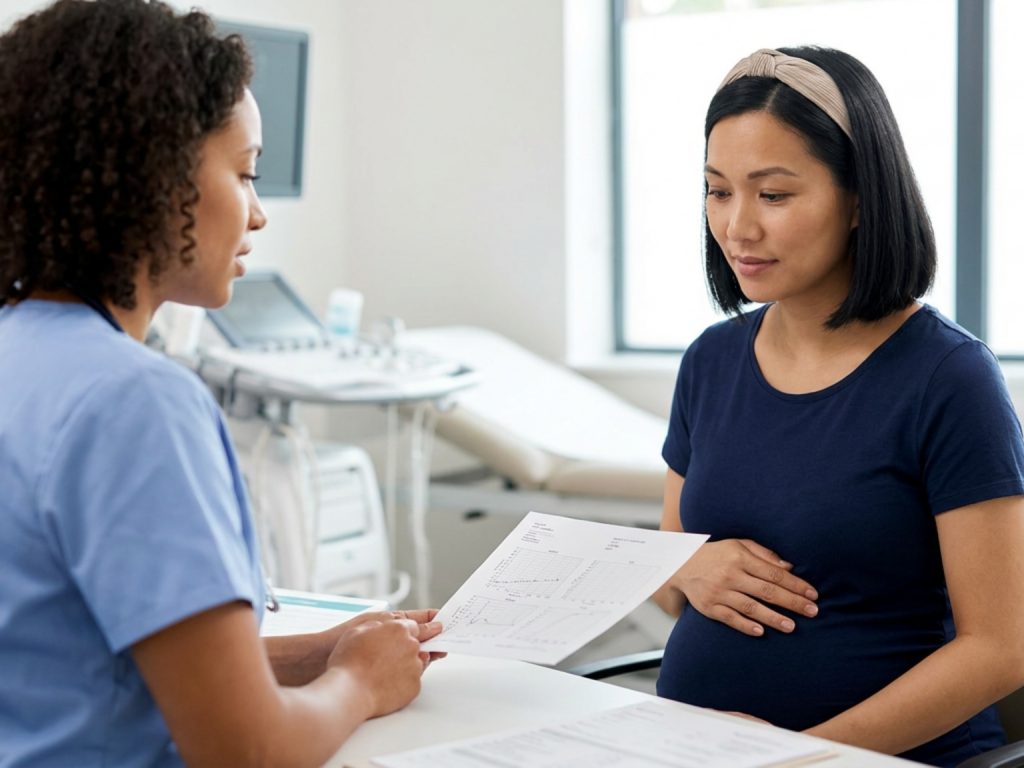
The assessment for natural birth candidacy is usually built over time. Clinicians review maternal medical history, prior deliveries, blood pressure trends, lab results, fetal growth, and ultrasound findings. They also consider whether the pregnancy remains uncomplicated and whether the fetus continues to appear well positioned and well grown. This is why prenatal care is not just routine paperwork; it is the mechanism by which candidacy is confirmed, refined, or reconsidered.
In labor planning, monitoring may be part of the conversation. For some patients, a team may recommend continuous fetal heart rate assessment, while others may be appropriate for more selective observation depending on their risk profile and setting. The point is not that every low-risk patient needs the same intensity of surveillance. The point is that the degree of monitoring should match the clinical situation. A person aiming for physiologic birth can still benefit from thoughtful oversight, especially when it helps the team notice problems early enough to respond safely.
If anything in the prenatal picture changes, the answer can change too. Rising blood pressure, altered fetal movement, abnormal growth, or a new placenta concern may all prompt a revised delivery plan. Good candidacy is therefore a moving target, updated by evidence rather than by hope alone.
Planning for flexibility, support, and safety
Even if you are a strong candidate for natural birth, a good plan is a flexible one. A low-intervention birth plan can express your preferences clearly, but it should also describe what you want if labor becomes longer, more painful, or medically more complex than expected. A birth preferences document is most useful when it communicates both priorities and backup plans in plain language. That may include support for movement, positions, hydration, and coping strategies, while also stating when you would consider additional pain relief or transfer of care.
If your goal is labor without pharmacological pain relief, preparation matters. Comfort measures, partner or doula support, and honest discussion about how you want to handle escalation can make the experience feel more manageable. Just as important, you should know where you will give birth, who will attend, and how emergency care would be accessed if needed. Natural birth is most appropriate when the setting can support both your preferences and rapid response if the clinical picture changes.
For many people, the best outcome is not a perfect script but a healthy parent and baby. If that means adjusting the plan along the way, that is still a successful and thoughtful birth experience.
When to seek urgent clinical review
- New vaginal bleeding, severe abdominal pain, or fluid leakage needs prompt assessment.
- Decreased fetal movement should be reported quickly.
- High blood pressure, severe headache, vision changes, or swelling can signal a serious maternal issue.
- A fetus that is no longer head-down or a new placenta concern may change birth planning.
- Do not assume a low-risk plan remains safe if your pregnancy pattern changes.
Tools & Assistance
- Routine prenatal care with an obstetrician or midwife
- Ultrasound review and blood pressure monitoring
- A written birth preferences document
- Childbirth education focused on coping and decision-making
- A hospital or birth-center plan for urgent transfer if needed
FAQ
Does wanting an unmedicated labor make me a good candidate for natural birth?
Desire matters, but medical suitability matters more. A low-risk pregnancy with reassuring evaluation is the key factor.
Can I be a candidate if I had a previous cesarean?
Sometimes, but it requires individualized assessment. The reason for the cesarean and the current pregnancy details are important.
What if my pregnancy is low risk now but changes later?
Candidacy can change over time. Your clinician may revise the plan if new maternal or fetal concerns appear.
Is natural birth always safer than other birth methods?
Not always. It can be appropriate for many low-risk pregnancies, but safety depends on your specific medical situation and access to backup care.
Sources
- WebMD — Natural Childbirth: Who Is a Good Candidate?
- Mayo Clinic — Natural Childbirth: Benefits, Risks, and Who Should Consider It
- NHS — Natural Birth: Is It Safe for You?
Disclaimer
This article is for general information only and does not replace individual medical advice. Please discuss your birth plan and any risk factors with your obstetric clinician, midwife, or other qualified healthcare professional.















Please log in to leave a comment.