
Intro
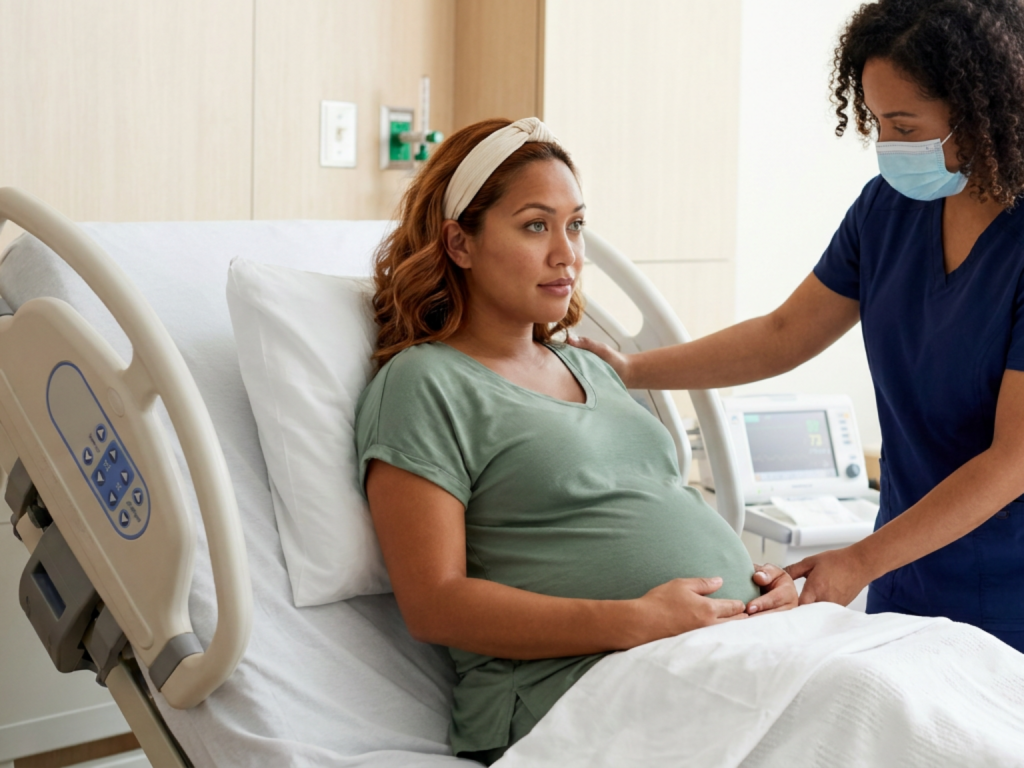
Sitting positions during labor can offer a grounded, supported way to work with contractions and the natural mechanics of birth. For many birthing people, sitting upright on a bed, birth stool, birthing chair, toilet, or birth ball can feel more intuitive than lying flat, especially as the baby descends and the urge to bear down becomes stronger.
Highlights
Sitting positions are upright or semi-upright options that may use gravity to support fetal descent and pelvic opening.
Evidence suggests supported sitting during the pushing phase may shorten the second stage of labor and improve some maternal outcomes.
Sitting can reduce aorto-caval compression compared with flat supine positioning, which may support uteroplacental blood flow.
The safest position is individualized and should account for fetal heart rate, epidural effects, maternal fatigue, pelvic anatomy, and clinical circumstances.
What counts as a sitting position in labor
A sitting position is any labor or pushing posture in which the torso is upright or semi-upright while the pelvis is supported. This may include sitting high in bed with the head elevated, sitting on the edge of the bed with feet supported, using a birth stool or birthing chair, sitting backward on a chair while leaning forward, sitting on a birth ball, or sitting on the toilet. Some people also use a supported reclined sitting position when mobility is limited, such as after epidural analgesia.
The common feature is that the uterus is not positioned exactly as it would be when lying flat on the back. Sitting usually places the body closer to vertical, allowing the pelvic inlet and outlet to respond dynamically to fetal pressure, maternal movement, and uterine contractions. In clinical terms, sitting belongs to the broader group of upright positions during labor, which also includes standing, walking, kneeling, and supported squatting.
It is important to separate “sitting” from “staying still.” A sitting posture can be active. The birthing person may rock the pelvis, lean forward, alternate knees wide and closer together, rest between contractions, or shift from sitting to side-lying if needed. The position can be adjusted continuously in response to pain, fetal heart rate assessment, fatigue, and the guidance of the maternity team.
Gravity, fetal descent, and pelvic mechanics
One of the main physiologic advantages of sitting is the use of gravity. When the torso is upright, the fetal presenting part may apply more direct pressure to the cervix in the first stage and to the pelvic floor in the second stage of labor. This pressure can support fetal descent and may enhance the Ferguson reflex, a neurohormonal feedback loop in which pressure on the cervix and vagina contributes to oxytocin release and stronger uterine contractions.
Pelvic dimensions are not fixed. The sacrum, coccyx, pubic symphysis, and soft tissues all respond to posture. Sitting on a birth stool or toilet can allow the thighs to abduct and the pelvic floor to soften. Leaning slightly forward may also help align the fetal head with the pelvic axis, especially when the baby is rotating through the midpelvis. For some people, this makes pushing feel more coordinated and less like effort against resistance.
Research comparing alternative birth positions with conventional supine positions has found that sitting positions, including birth stool or chair use, are associated with shorter second-stage duration and reduced pain intensity in some studies. The effect is not guaranteed for every birth, but it supports the idea that body position can influence the mechanics of descent rather than serving only as a comfort measure.
Potential benefits during the pushing stage
The pushing stage and delivery can feel powerful, intense, and vulnerable. Sitting may help some birthing people direct bearing-down efforts more effectively because the position feels familiar and stable. The feet can often be planted, the hands can hold bed rails or support people, and the pelvis can remain mobile enough to respond to the baby’s movement.
A study of supported sitting during the second stage of labor found that this nursing intervention shortened the duration of the second stage and was associated with improved maternal outcomes in the studied setting. Shorter pushing is not the only goal of safe birth, but it can matter clinically because prolonged second stage may be associated with maternal exhaustion, higher likelihood of operative vaginal birth in some contexts, and more intensive monitoring.
Sitting may also help the birthing person rest between contractions. Unlike standing or squatting, sitting provides continuous support, which can be valuable when the legs are tired, contractions are frequent, or pushing is taking time. A supported sitting posture can preserve some benefits of upright positioning while reducing the muscular demand of holding the body up.
Clinicians may combine sitting with different pushing approaches. Some people use spontaneous pushing, following the body’s urge to bear down. Others may use coached pushing for specific clinical reasons. In either case, the position should allow adequate maternal breathing, visible perineal assessment when birth is near, and timely response if fetal heart rate patterns become concerning.
Pain, coping, and a sense of control
Pain in labor is multidimensional. It includes uterine contraction pain, pelvic pressure, stretching of tissues, emotional intensity, fatigue, and sometimes fear. Sitting does not remove labor pain, but it may change how sensations are perceived and managed. For some people, being upright reduces pressure on the sacrum; for others, sitting on the toilet or birth stool increases rectal and pelvic pressure in a way that feels productive.
Evidence summaries on birthing positions report that, among people without epidural analgesia, upright positions are associated with lower pain scores, reduced use of vacuum or forceps, and lower episiotomy rates in some analyses. Sitting is one of the more accessible upright options because it can be supported and modified easily. A person can lean forward into pillows, a partner, or the raised back of the bed while keeping the pelvis open.
There is also a psychological benefit. Being able to choose a position may support autonomy, reduce helplessness, and improve satisfaction with care. Many birthing people describe sitting as a posture that lets them participate actively rather than feeling that birth is happening “to” them. This sense of agency matters, especially in a medical environment where monitors, intravenous lines, or unfamiliar routines can make the body feel less private.
Comfort is still individual. Sitting can feel too intense if the fetal head is low or if there is severe back labor. In those moments, hands-and-knees position for back labor, side-lying, or forward-leaning labor positions may be better. The benefit is not in forcing one ideal posture, but in having several safe options available.
Circulation, fetal oxygenation, and avoiding flat supine positioning
Late in pregnancy and during labor, lying flat on the back can contribute to aorto-caval compression. This occurs when the gravid uterus compresses the inferior vena cava and, in some cases, the aorta, potentially reducing venous return, cardiac output, uteroplacental perfusion, and fetal oxygen delivery. Not every person experiences dramatic symptoms, but the physiologic concern is significant enough that many maternity teams avoid prolonged flat supine positioning.
Sitting or semi-sitting can reduce this compression compared with lying completely flat. Upright positioning may improve aortic blood flow and support fetal oxygenation, while also allowing stronger or more efficient uterine contractions in some circumstances. This is one reason sitting is often preferred over a classic lithotomy or flat-on-back posture when clinically feasible.
Reviews of alternative birthing positions have advised avoiding supine positions during the second stage, noting associations with more fetal heart rate abnormalities and lower rates of spontaneous vaginal birth compared with some upright alternatives. However, fetal monitoring findings must always guide care. If the fetal heart rate tracing becomes nonreassuring, the team may recommend a rapid change of position, oxygenation and fluid assessment, reduction of uterine tachysystole if present, or preparation for assisted birth depending on the situation.
The practical message is balanced: sitting can be beneficial for circulation and fetal descent, but it is not a substitute for clinical assessment. Continuous fetal heart rate assessment or intermittent auscultation, depending on risk status and local protocols, helps determine whether the position is working well for both the birthing person and the baby.
Using sitting positions with epidural analgesia or monitoring
Epidural analgesia can change what sitting looks like. Depending on the dose and motor block, the birthing person may have reduced leg strength, altered proprioception, or limited ability to reposition independently. In this context, sitting can still be useful, but it needs careful support from nurses, midwives, doulas, partners, or physicians. Safety comes first: no one with significant leg weakness should sit unsupported on a high surface or birth ball.
Position changes after epidural analgesia may include high Fowler’s position in bed, throne position with the bed adjusted upright, side-lying release between sitting periods, or supported sitting with the knees open and feet stabilized. If pushing is delayed to allow passive fetal descent, sitting upright may sometimes be used during laboring down, provided maternal blood pressure and fetal status remain reassuring.
External fetal monitors, internal monitors, blood pressure cuffs, intravenous lines, and urinary catheters can make movement feel complicated, but they do not always require immobility. Many hospitals can adjust monitor belts, use wireless monitoring if available, or help the person sit at the edge of the bed. The key is communication: before changing position, ask what lines or devices need attention and whether assistance is needed.
For people with dense epidural block, severe hypotension, significant bleeding, nonreassuring fetal status, or a high risk of falls, fully upright sitting may be limited or temporarily inappropriate. In those cases, modified semi-sitting or lateral positioning may offer some physiologic advantages while maintaining safety.
When sitting may not be ideal and how to individualize
Sitting positions are valuable, but they are not universally best. A birth stool, for example, can increase perineal pressure and may be uncomfortable when tissues are stretching rapidly. Some clinicians use it selectively and for limited periods, especially if there is concern about swelling, bleeding, or excessive pressure on the perineum. If the birthing person feels numbness, dizziness, severe pain, or loss of control, the position should be reassessed.
Clinical circumstances may also require another posture. Shoulder dystocia maneuvers, operative vaginal birth, urgent evaluation of bleeding, severe fetal heart rate abnormalities, or the need for rapid cesarean preparation may make sitting impractical. Certain pelvic or hip conditions may limit how widely the knees can open. People with symphysis pubis dysfunction, hip injury, neurologic conditions, or high-risk obstetric complications should discuss positioning options with their healthcare team before labor when possible.
A helpful approach is to think in terms of principles rather than one perfect pose. The goals are to support oxygenation, comfort, pelvic space, fetal descent, maternal stamina, and access for clinical care. Sitting can be alternated with standing, kneeling, side-lying, or hands-and-knees. Even small adjustments, such as tilting the pelvis, placing one foot on a stool, leaning forward, or changing the bed angle, may make a meaningful difference.
Birth is dynamic. A position that works beautifully at 6 centimeters may feel intolerable at full dilation; a posture that seems awkward early in labor may become exactly right during crowning. Supportive care means listening to the birthing person, watching the baby’s response, and adapting without judgment.
When to ask for immediate clinical guidance
- The baby’s heart rate pattern becomes concerning or difficult to monitor.
- The birthing person feels faint, short of breath, numb, or unable to stay safely supported.
- There is heavy bleeding, sudden severe pain, or a major change in maternal condition.
- An epidural causes significant leg weakness, low blood pressure, or loss of balance.
- The care team recommends a different position for urgent obstetric assessment or intervention.
Tools & Assistance
- Discuss preferred labor positions during prenatal visits and include them in the birth plan.
- Ask the hospital or birth center what equipment is available, such as birth balls, stools, squat bars, or adjustable beds.
- Practice supported sitting, forward leaning, and side-lying positions before labor with a partner or doula.
- Request help from the nurse or midwife before changing position if monitoring, epidural, or IV lines are in place.
- Use position changes as a flexible coping tool rather than a fixed rule.
FAQ
Is sitting better than lying down for pushing?
For many people, sitting may support gravity, fetal descent, and comfort better than lying flat. However, the best position depends on maternal stability, fetal heart rate, epidural effects, and clinical needs.
Can I sit upright if I have an epidural?
Often yes, but it must be supported. Epidural strength varies, and reduced leg control can increase fall risk, so ask your care team before sitting on a bed edge, ball, stool, or chair.
Does sitting shorten labor?
Some evidence suggests supported sitting and other upright positions may shorten the second stage of labor. Results vary, and safety and fetal wellbeing remain more important than speed alone.
Can sitting increase tearing?
The relationship between position and perineal trauma is complex. Some upright positions may increase perineal pressure, while others may reduce intervention rates. Your clinician can help adjust timing, support, and pushing technique.
What if sitting feels too intense?
That is common, especially as the baby descends. You can ask to change to side-lying, hands-and-knees, forward leaning, or another supported position that feels safer and more manageable.
Sources
- PubMed Central (National Institutes of Health) — Effect of supported sitting position during second stage of labor on duration and maternal outcomes
- Evidence Based Birth — Evidence on: Birthing Positions
- PubMed Central (National Institutes of Health) — Alternative Birthing Positions Compared to the Conventional Position in the Second Stage of Labor
Disclaimer
This article is for informational purposes only and does not replace medical care. Always discuss labor positions, pushing, epidural safety, and fetal monitoring with your obstetric, midwifery, or nursing team.











Please log in to leave a comment.