
Intro
Social development is the gradual expansion of a child’s ability to connect, communicate, regulate emotions, interpret other people’s behavior, and participate in family, peer, and community life. It begins in the first months with reciprocal gaze, social smiling, and comfort-seeking, then becomes more complex through joint attention, pretend play, cooperation, friendship, and moral reasoning.
Highlights
Social-emotional milestones are best understood as patterns over time, not single pass-or-fail events.
Secure relationships, responsive caregiving, language exposure, play, sleep, and health all shape social growth.
Developmental surveillance and screening can help identify children who may benefit from early support.
Regression, limited social reciprocity, or persistent difficulty engaging with caregivers or peers should be discussed with a pediatric clinician.
What social development means
Social development describes how children learn to participate in relationships. It includes social attention, attachment behavior, emotional expression, imitation, turn-taking, joint attention, empathy, cooperation, boundary awareness, and the ability to adapt behavior to different social contexts. In clinical language, it overlaps with social-emotional development, social communication, adaptive functioning, and early self-regulation.
Milestones are useful because they give families and clinicians a shared language for observation. A milestone such as a social smile, responding to name, showing objects to share interest, or playing cooperatively is not only a charming behavior; it reflects maturing neural networks for perception, memory, language, motor planning, affect regulation, and caregiver-child reciprocity. Still, milestone ages are approximate. Children vary by temperament, culture, family routines, prematurity history, sensory profile, medical conditions, and language environment.
A supportive approach asks two questions at the same time: what is the child able to do now, and how are those abilities changing? A child who is quiet but steadily more responsive may be following a healthy developmental trajectory. A child who loses previously acquired social skills, avoids most reciprocal interaction, or shows marked difficulty communicating needs may need timely developmental evaluation.
Infancy: connection before words
In the first year, social development is built through repeated cycles of attention, comfort, feeding, vocal play, and facial expression. Newborns are already tuned to human voices and faces. Over the first months, many infants begin to calm with familiar caregivers, look toward faces, and develop a social smile. Smiling in response to another person is an early sign of reciprocal interaction, although timing varies.
By mid-infancy, babies often become more expressive. They may laugh, squeal, respond to playful voices, enjoy peekaboo, and show preferences for familiar people. Stranger anxiety and separation distress commonly emerge later in infancy; these behaviors can be developmentally appropriate because the infant is recognizing familiar attachment figures and distinguishing them from unfamiliar people. Around this period, many infants also begin using gaze, gestures, and vocalizations to communicate interest or discomfort.
Joint attention is especially important. This is the ability to coordinate attention between a person and an object or event. Early forms include following a caregiver’s gaze, looking back and forth between a toy and an adult, or reaching to be picked up. These behaviors support later language development because the child is learning that people can share meaning about the same thing.
Caregivers support infancy social growth through responsive interaction: noticing cues, naming emotions, copying sounds, pausing for the baby to respond, and providing predictable comfort. This does not require constant stimulation. Infants also need rest, manageable sensory input, and caregivers who can help them return to a calm state when overwhelmed.
Toddler years: autonomy, imitation, and early peer awareness
Toddlerhood brings rapid change because mobility, receptive language, expressive language, and self-awareness all expand. A toddler may seek a caregiver for reassurance, imitate household actions, bring objects to show, point to request or share interest, and respond to simple social routines. The child is beginning to understand that other people have intentions, preferences, and emotional reactions.
Parallel play in toddlerhood is common. Two toddlers may play near each other with similar toys while interacting only briefly. This is not a failure of social interest; it is often a normal bridge between solitary play and more interactive play. Toddlers may also struggle with sharing because impulse control and perspective-taking are still immature. Hitting, grabbing, or tantrums can reflect limited language and self-regulation rather than intentional cruelty, although adults should respond calmly and consistently to protect everyone involved.
Social communication in children during this period includes gestures, eye contact or gaze shifts, pointing, vocalizations, words, and body movement. Speech and language developmental milestones matter because communication strongly affects social participation. A toddler who cannot easily express needs may appear socially withdrawn, irritable, or aggressive. Hearing concerns, recurrent ear disease, oral-motor issues, bilingual language exposure, neurodevelopmental differences, and psychosocial stress can all influence how social communication appears.
Supportive routines include naming emotions, offering simple choices, practicing turn-taking, and using short phrases such as “my turn” and “your turn.” Caregivers can narrate what other people might feel, but expectations should remain developmentally realistic. A two-year-old can begin to learn gentle hands and waiting briefly; consistent empathy and conflict repair skills usually take much longer.
Preschool: pretend play, empathy, and group rules
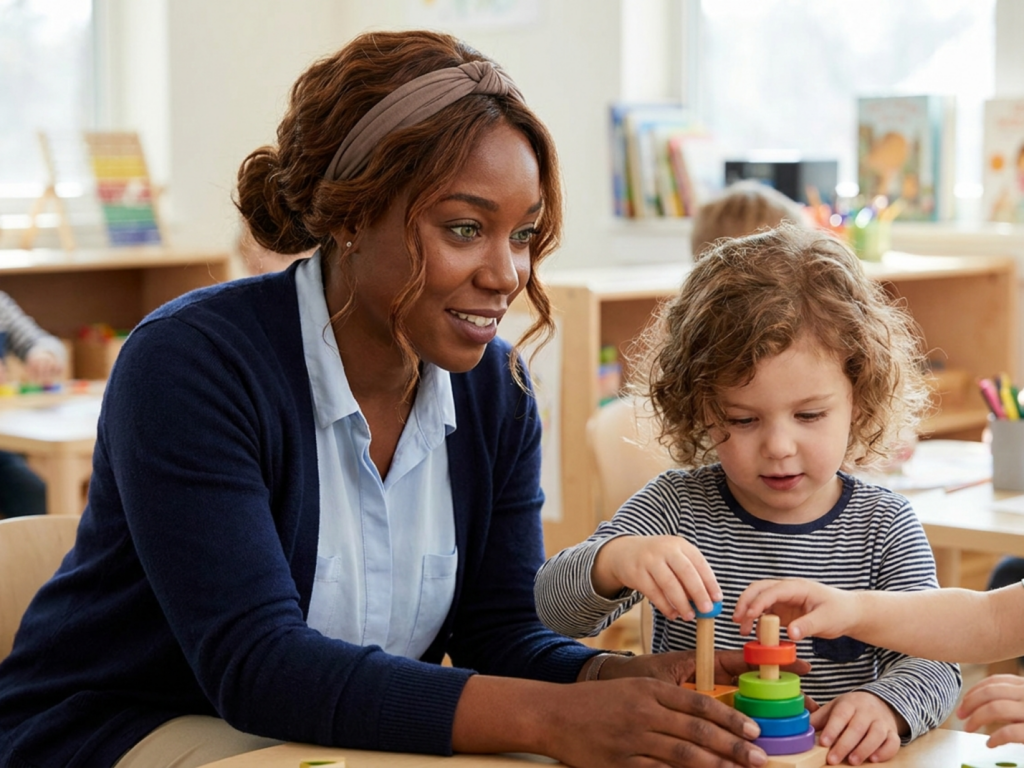
Between ages three and five, social development often becomes more visible outside the home. Children may engage in pretend play, assign roles, negotiate simple scenarios, ask questions about feelings, and begin forming preferences for particular playmates. Cooperative play around age 3 may emerge gradually: some children join group play early, while others observe before participating.
Pretend play is socially and cognitively rich. When a child feeds a doll, builds a pretend clinic, or assigns someone the role of teacher, the child is practicing symbolic thinking, sequencing, emotional themes, and perspective-taking. This overlaps with cognitive development, because children are using mental representation to imagine situations beyond the immediate moment.
Preschoolers also start learning group expectations: waiting in line, following two-step directions, cleaning up, listening during a short activity, and using words to solve conflict. They remain emotionally reactive, especially when tired, hungry, overstimulated, or transitioning between activities. Mature emotional regulation depends on brain development, caregiver co-regulation, sleep, routines, and practice.
Caregivers can help by preparing children for transitions, keeping rules brief, praising specific prosocial behavior, and modeling apologies and repair. Forced sociability is rarely helpful for a shy or cautious child. Gradual exposure for shy children is usually more respectful: arrive early to a playgroup, let the child watch first, offer one familiar peer, and celebrate small steps toward participation.
School age and adolescence: friendships and identity
In school-age children, social development expands from play skills into friendship, teamwork, fairness, loyalty, and reputation. Children begin comparing themselves with peers, understanding more complex rules, and recognizing that people can have mixed emotions. They may learn to resolve disagreements, join clubs or teams, collaborate on school projects, and manage disappointment when friendships shift.
Friendship skills in elementary school include inviting others to play, accepting another child’s ideas, noticing exclusion, repairing after conflict, and tolerating not always being first or best. These skills are influenced by temperament and neurodevelopment, but also by classroom climate, family stress, sleep, bullying exposure, and opportunities for structured and unstructured play.
Adolescence adds identity formation, privacy, romantic interest for some young people, digital communication, moral reasoning, and growing independence from caregivers. Social approval can feel intense because peer belonging becomes neurologically and emotionally salient. At the same time, adolescents still need adult availability, clear boundaries, and help interpreting risk.
Building social skills over time is more useful than expecting a child to become socially fluent on demand. A school-age child may need coaching on reading nonverbal cues, managing teasing, entering a group, or repairing a misunderstanding. An adolescent may need support with online boundaries, consent, conflict, and seeking help when social stress affects sleep, appetite, mood, school attendance, or safety.
Developmental surveillance and screening
Developmental surveillance and screening are complementary. Surveillance is the ongoing process of listening to caregiver concerns, observing the child, reviewing milestones, and considering risk factors at health visits. Screening uses standardized tools at recommended ages or when concerns arise. Neither process should be used to label a child casually; the purpose is to decide whether more evaluation or support may be useful.
Clinicians often consider the whole developmental picture. Social concerns may reflect hearing loss, language delay, sleep problems, anxiety, trauma exposure, autism spectrum features, attention difficulties, intellectual disability, motor limitations, vision problems, seizures, chronic illness, or environmental stress. A medically literate approach avoids assuming one cause from one behavior.
Developmental surveillance for social concerns is especially important when a child does not respond to social bids, rarely shares enjoyment, has limited gestures, shows minimal interest in familiar people, has persistent difficulty with peer interaction, or loses skills. Regression is more concerning than a slow but steady pattern. Any loss of acquired developmental skills, including words, gestures, eye contact, play routines, or social engagement, should be discussed promptly with a pediatric professional.
Evaluation may involve a pediatrician, developmental-behavioral pediatrician, child psychologist, speech-language pathologist, occupational therapist, audiologist, early intervention program, or school-based team. The goal is not only to identify delays but to understand strengths, needs, family priorities, and supports that fit the child’s daily life.
Supporting social growth at home and in community
Children develop socially through repeated, emotionally safe practice. The most helpful strategies are often ordinary but consistent: responsive conversation, shared reading, predictable routines, outdoor play, family meals when possible, turn-taking games, and opportunities to be with children of different ages. Adults can model curiosity, respect, apology, and calm problem-solving.
For infants and toddlers, focus on reciprocal interaction: copy sounds, wait for responses, use gestures, label emotions, and follow the child’s attention. For preschoolers, use role play, pretend scenarios, simple household responsibilities, and supervised peer play. For school-age children and adolescents, talk through social dilemmas without immediately taking over. Ask what happened, what each person may have felt, what options exist, and what repair might look like.
Some children need additional structure. Visual schedules, social stories, smaller groups, predictable transitions, sensory breaks, and explicit teaching of social rules can reduce stress. Children with language, sensory, motor, or attentional differences may participate more successfully when the environment is adjusted rather than when they are expected to simply “try harder.”
Caregivers should also protect time for sleep, nutrition, movement, and unpressured play. Social learning is harder when a child is exhausted, hungry, in pain, overstimulated, or chronically anxious. When families feel worried, asking for help early is a practical step, not an admission of failure.
When to seek guidance
- Loss of previously acquired words, gestures, play skills, or social engagement should be discussed promptly with a clinician.
- Persistent lack of response to name, limited shared enjoyment, or very limited use of gestures warrants developmental review.
- Social withdrawal with sleep, appetite, mood, school, or safety concerns needs professional assessment.
- Concerns about hearing, vision, seizures, pain, or chronic illness can affect social behavior and should not be overlooked.
- If caregivers feel unsure, early developmental evaluation is appropriate even before a definite diagnosis is considered.
Tools & Assistance
- Bring a written list of social, language, play, and behavior observations to pediatric visits.
- Ask about standardized developmental screening and hearing evaluation when communication concerns are present.
- Contact early intervention services for children under three when delays are suspected.
- Request school-based evaluation or support planning for preschool and school-age children with peer or participation difficulties.
- Use brief daily routines such as shared reading, turn-taking games, and emotion labeling to practice social skills.
FAQ
What is the difference between shyness and a social delay?
Shy children may be slow to warm up but often show interest, attachment, shared enjoyment, and gradual engagement when comfortable. A social delay is more concerning when reciprocity, gestures, play, or communication are consistently limited across settings.
Can a child miss one milestone and still be developing typically?
Yes. Single milestones vary, and clinicians look for overall patterns, progress over time, caregiver concerns, and whether other developmental domains are affected.
Are tantrums a social-emotional problem?
Tantrums can be developmentally common in toddlers and preschoolers because self-regulation is immature. Frequent, severe, prolonged, injurious, or worsening tantrums should be discussed with a healthcare professional.
How are social development and speech related?
Language helps children request, share attention, negotiate, and repair conflict. Social concerns sometimes improve when hearing, speech, or receptive language needs are identified and supported.
When should parents ask for an evaluation?
Ask when concerns persist, skills regress, peer participation is very difficult, or social communication seems notably different from age expectations. Early evaluation can clarify needs and open access to support.
Sources
- PubMed Central — Evidence-Informed Milestones for Developmental Surveillance Tools
- PubMed — Developmental milestones 3: social-emotional development
- NCBI Bookshelf — Developmental Stages of Social Emotional Development in Children
Disclaimer
This article is for general medical education and does not diagnose, treat, or replace care from a qualified healthcare professional. If you have concerns about a child’s development, consult a pediatric clinician or developmental specialist.


















Please log in to leave a comment.