
Intro
Sleep in the preschool years can be both precious and unpredictable. A child who seemed settled as a toddler may suddenly call out repeatedly, resist bedtime, wake early, or drop naps before the family feels ready. These patterns are often developmentally normal, but they can still be exhausting and emotionally difficult for caregivers.
Between ages 3 and 5, sleep is closely tied to brain maturation, learning, behavior, immune function, and family wellbeing. This article explains typical sleep needs, sleep cycles, bedtime resistance, night waking, naps, and when to seek professional guidance, while emphasizing practical routines that are realistic for busy households.
Highlights
Most children aged 3 to 5 need about 10 to 13 hours of total sleep in 24 hours, although individual needs vary.
Preschool sleep cycles mature rapidly: around age 3 they may last about 60 minutes, extending toward adult-like 90-minute cycles by age 5.
Bedtime resistance, calling out, and early waking are common and often improve with predictable routines, consistent limits, and a calm sleep environment.
Habitual snoring, labored breathing, persistent daytime sleepiness, or major behavior change should prompt discussion with a healthcare professional.
How much sleep preschoolers usually need
Preschool sleep needs are best understood as a 24-hour total, not just the overnight stretch. Many children aged 3 to 5 need 10 to 13 hours of sleep across night sleep and naps. NHS guidance gives a narrower practical range: a 3-year-old may need about 11 hours 30 minutes to 12 hours at night, with 0 to 45 minutes of daytime sleep, while a 5-year-old may need around 11 hours at night. These figures are not a test a child must pass; they are reference ranges to help families notice patterns.
A child who wakes cheerful, has age-appropriate energy, learns well, and recovers from emotional upsets may be getting adequate sleep even if their schedule differs slightly from a chart. Conversely, a child who sleeps the “right” number of hours but is persistently irritable, hyperactive, sleepy in the car, or difficult to wake may still have insufficient or poor-quality sleep. Preschool emotional development and growth are tightly linked with sleep because executive function, frustration tolerance, and attention are still rapidly developing.
Sleep needs can temporarily increase with illness, intense physical activity, developmental transitions, or starting preschool. They may also appear to decrease when naps are dropped, but an earlier bedtime is often needed to prevent cumulative sleep debt.
What changes between ages 3 and 5
Preschool sleep looks different from toddler sleep because brain maturation changes both sleep architecture and behavior. At about age 3, a sleep cycle may last around 60 minutes. By about age 5, cycles often lengthen toward 90 minutes. At the end of each cycle, children may briefly stir, reposition, vocalize, or partly wake. Calling out after bedtime or during the night can reflect this normal cycling, especially if the child has learned that parental presence is needed to return to sleep.
At the same time, preschoolers are becoming more imaginative and autonomous. They may fear shadows, monsters, separation, or missing out. They also discover negotiation: “one more story,” “one more drink,” or “I need to tell you something.” These behaviors are not necessarily manipulative in a malicious sense. They are a mix of developing cognition, attachment needs, limited impulse control, and genuine fatigue.
Many children also transition away from daytime naps during this period. Some still need a short nap; others do better with quiet time only. A late or long nap can delay melatonin-driven sleep onset at night, but eliminating naps too abruptly may produce overtiredness, which can paradoxically worsen bedtime resistance and early waking.
A sleep environment that supports circadian rhythm
The preschool bedroom does not need to be perfect, but it should reliably signal “sleep happens here.” A calm, cool, dark or dim room supports circadian biology and reduces stimulation. A familiar comfort object can help a child feel secure. White noise may be useful in noisy homes, but it should be kept at a safe volume and placed away from the child’s head.
Light exposure matters. Bright morning light helps anchor the circadian clock, while evening screens can delay sleep onset through both blue-enriched light and cognitive stimulation. Practical guidance commonly recommends avoiding screen time before bed; NHS advice specifically suggests limiting screens for the two hours before bedtime. If two hours is unrealistic at first, families can taper gradually and replace screens with predictable low-arousal activities.
Food and drinks also affect settling. Caffeine should be avoided in young children; this includes cola, some teas, chocolate-containing drinks, and energy drinks. Large meals immediately before bed may be uncomfortable, but a planned small snack can help if hunger is a repeated issue. Families managing a preschool nutrition pattern may find it helpful to place the snack within the routine rather than allowing repeated post-bedtime food requests.
- Keep the room calm, cool, and dim at bedtime.
- Use consistent sleep cues, such as pajamas, toothbrushing, story, cuddle, and lights out.
- Reserve active play, roughhousing, and emotionally intense conversations for earlier in the evening.
- Make morning wake time reasonably consistent, even after a difficult night.
Building a bedtime routine that actually works
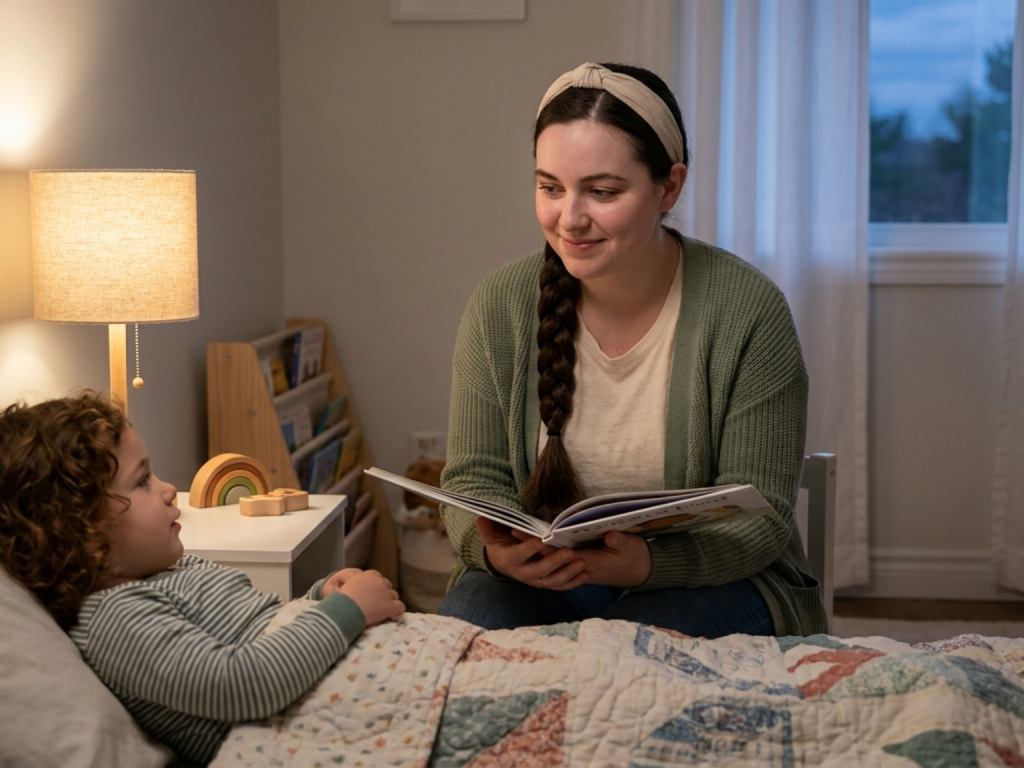
A strong bedtime routine is short enough to repeat every night and predictable enough that the child can internalize it. Thirty to forty-five minutes is often sufficient. The goal is not to force sleep instantly, but to create a reliable sequence that lowers physiologic arousal and reduces decision points.
A typical routine may include toileting, washing, pajamas, toothbrushing, a quiet story, a brief connection ritual, and a clear goodnight phrase. Visual schedules can help preschoolers who struggle with transitions. The schedule should show what happens, in what order, and where the routine ends. For example: bath, pajamas, teeth, two books, cuddle, lights out. When a child asks for extras, caregivers can calmly point to the schedule and say, “The routine is finished. It is sleep time.”
Connection before separation is important. Some children resist bedtime because they are seeking parental attention after a busy day. A few minutes of undistracted, warm interaction can reduce escalation later. This is not permissiveness; it is preventive regulation. After the routine, limits should be kind and consistent. If a child leaves the bedroom, a caregiver can return them with minimal talking, avoiding a long debate that unintentionally rewards staying awake.
For families facing challenging preschool behavior at bedtime, consistency matters more than intensity. Harsh responses may increase anxiety and arousal. On the other hand, changing the rule every few minutes can teach the child to keep negotiating. A calm, repetitive response is usually more effective than a perfect speech.
Bedtime resistance, calling out, and night waking
Bedtime resistance is one of the most common preschool sleep concerns. It may occur because bedtime is too early for the child’s current sleep pressure, too late so the child is overtired, or inconsistent from day to day. One structured approach is bedtime fading. This means temporarily setting bedtime closer to the time the child naturally falls asleep, then gradually moving it earlier once sleep onset becomes easier. This strategy should be used thoughtfully and may be best discussed with a pediatric clinician or sleep professional if problems are severe.
Some children need reassurance that a caregiver is nearby. The chair technique can help: a caregiver sits near the bed while the child falls asleep, then gradually moves the chair farther away over several nights. The aim is to reduce parental involvement step by step while preserving the child’s sense of safety. It requires patience and consistency; moving too quickly can increase distress, while staying indefinitely in one step may maintain dependence.
Repeated requests for water, snacks, toileting, or another hug are easier to manage when predictable needs are addressed during the routine. Offer the drink, toilet visit, and final cuddle before lights out. Then keep responses boring, brief, and consistent. If a child is frightened, validate the feeling without expanding the fear: “You are safe. It is sleep time.”
Night waking becomes more concerning when it is frequent, prolonged, associated with breathing difficulty, pain, vomiting, fever, trauma symptoms, or significant daytime impairment. In those situations, sleep coaching alone may be inappropriate. A medical review can help distinguish behavioral insomnia in children from problems such as sleep-disordered breathing, restless legs symptoms, eczema itch, reflux, medication effects, or anxiety.
Early waking, naps, and quiet time
Early waking is common in preschoolers. A child who wakes at 5:30 a.m. may not be “broken”; their circadian rhythm, bedtime, nap pattern, light exposure, and sleep debt all interact. If bedtime is very early and the child is well rested, early waking may simply reflect enough total sleep. If the child is irritable and exhausted by late morning, the pattern may reflect insufficient sleep or fragmented sleep.
Morning light is a powerful signal. If a child wakes too early, keep the room dark and interactions minimal until the planned wake time, then provide bright light, breakfast, and daytime activity. Some families use an “okay to wake” clock, but it works best when expectations are developmentally realistic and paired with praise for staying quietly in bed or the bedroom.
Naps require individualization. A 3-year-old may still benefit from a short nap, while many 5-year-olds no longer nap regularly. If naps push bedtime too late, consider capping the nap, moving it earlier, or replacing it with quiet time. Quiet time can involve books, puzzles, or calm independent play. It gives the nervous system a midday reset even when sleep does not occur.
A common trap is compensating for early waking with a long late nap, which then delays bedtime and reinforces the cycle. Adjust one variable at a time for several days rather than changing bedtime, nap length, screens, and wake time all at once. A child sleep diary can help families and clinicians see patterns that are hard to detect when everyone is tired.
Parasomnias, fears, and when sleep symptoms need medical attention
Preschoolers may experience parasomnias such as night terrors, confusional arousals, or sleepwalking. Night terrors usually occur from deep non-REM sleep. A child may scream, sweat, appear terrified, and be difficult to comfort, yet have little or no memory the next morning. During an episode, the priority is safety rather than waking the child forcefully. Ensure the environment is safe, gently guide them away from hazards, and discuss recurrent or injurious episodes with a clinician.
Nightmares are different. They tend to occur later in the night during REM sleep, and the child may wake fully and recall frightening content. Comfort is appropriate, but long conversations in the middle of the night may make it harder to return to sleep. Discuss fears during the day, use simple coping scripts, and keep bedtime media calm and age-appropriate.
Medical red flags deserve attention. Habitual snoring, pauses in breathing, gasping, restless sleep with unusual positions, persistent mouth breathing, morning headaches, growth concerns, or marked daytime sleepiness may suggest pediatric sleep-disordered breathing. Leg discomfort relieved by movement, frequent kicking, or family history may warrant discussion of restless legs syndrome in children. Sleep problems and illness symptoms in children should be reviewed in context, especially when there is pain, fever, weight change, regression, or major mood or behavior shift.
Caregivers should not feel they have to solve every sleep problem alone. Pediatricians, health visitors, family nurses, child psychologists, and pediatric sleep services can help tailor strategies to the child’s development, medical history, family structure, and safety needs.
Seek medical advice promptly if
- Your child snores most nights, gasps, pauses breathing, or works hard to breathe during sleep.
- Sleep disruption is accompanied by fever, persistent pain, vomiting, weight loss, regression, or new neurologic symptoms.
- Your child has severe daytime sleepiness, major behavior change, or safety risks such as frequent sleepwalking.
- Bedtime anxiety is intense, persistent, or interfering with daily functioning.
- You are considering supplements, sedating medicines, or major sleep interventions without professional guidance.
Tools & Assistance
- Keep a 1 to 2 week sleep diary recording bedtime, sleep onset, night waking, wake time, naps, screens, caffeine exposure, and daytime behavior.
- Create a simple visual bedtime schedule with the same final step every night.
- Use morning light, daytime activity, and a consistent wake time to support circadian rhythm.
- Discuss persistent snoring, parasomnias, restless legs symptoms, or severe insomnia with a pediatric healthcare professional.
- Ask your health visitor, family nurse, pediatrician, or pediatric sleep clinic for tailored support if routines are not helping.
FAQ
Is it normal for a 4-year-old to stop napping?
Yes. Many preschoolers reduce or stop naps between ages 3 and 5. If your child drops naps, an earlier bedtime or daily quiet time may help prevent overtiredness.
What time should a preschooler go to bed?
There is no single ideal time. Work backward from the needed wake time and the child’s usual sleep requirement, aiming for a consistent schedule that allows roughly 10 to 13 hours of total daily sleep.
Should I stay with my child until they fall asleep?
Some children need temporary reassurance. Gradual methods such as the chair technique may reduce dependence over time. If distress is severe or persistent, seek individualized guidance.
Are night terrors dangerous?
Most night terrors are not dangerous, but safety is important. Recurrent, prolonged, injurious, or atypical episodes should be discussed with a healthcare professional.
Can screens really affect preschool sleep?
Yes. Evening screens can increase arousal and may delay sleep onset. A screen-free wind-down period before bed is commonly recommended, with some guidance suggesting two hours.
Sources
- KidsHealth — Normal Sleep - Preschoolers 3 To 5 Years
- Derbyshire Family Health Service (NHS) — Sleep for 3 - 5 year olds
- Mayo Clinic — Child sleep: Put preschool bedtime problems to rest
Disclaimer
This article is for general educational purposes and is not a diagnosis or treatment plan. Always consult a qualified healthcare professional for concerns about your child’s sleep, breathing, behavior, or health.

















Please log in to leave a comment.