
Intro
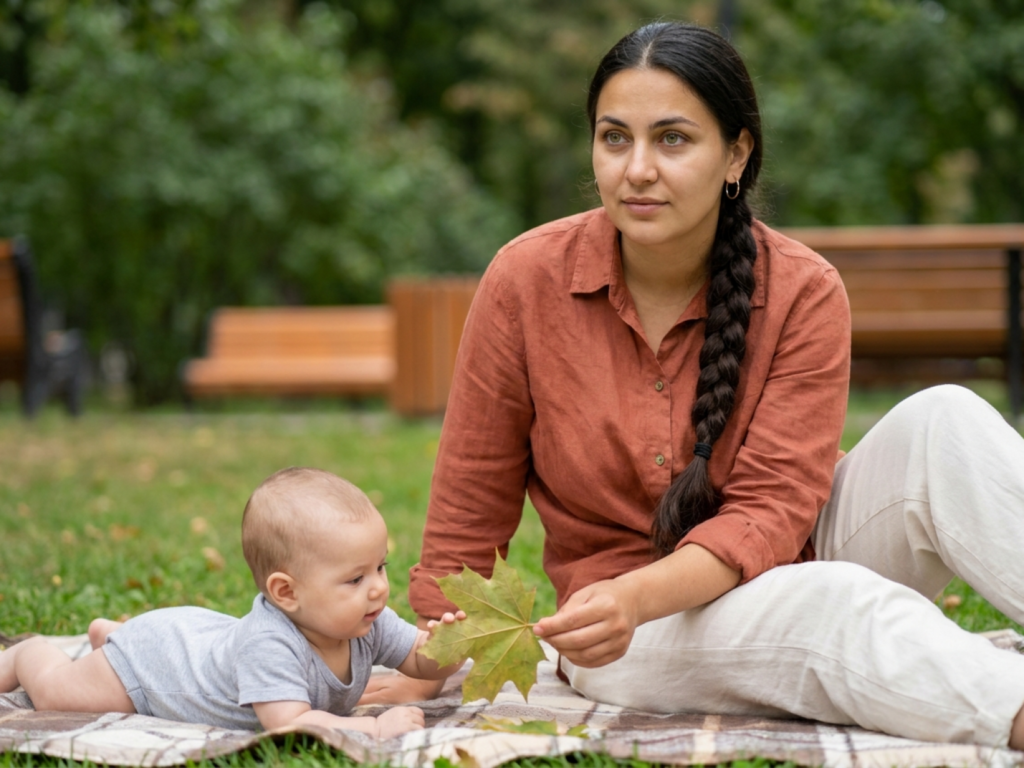
Outdoor sensory play gives babies an opportunity to notice natural textures, sounds, movement, temperature, light, and caregiver interaction in an ordinary environment. Leaves, grass, and wind can provide rich experiences without specialized equipment, while a responsive adult helps the baby remain comfortable, engaged, and physically safe.
For infants, the goal is not a structured lesson or a particular performance. Brief, repeated encounters can support attention, early communication, perceptual-motor exploration, and regulation. The activity should be adapted to the baby's age, mobility, medical needs, weather conditions, and moment-to-moment cues.
Highlights
Leaves offer changing visual, tactile, and auditory experiences, especially when they crinkle, move, or fall.
Grass can introduce a gentle difference in texture, temperature, and resistance during supervised floor play.
Wind supports observation of cause and effect as babies see leaves move, hear rustling, and feel a breeze.
A caregiver's calm narration and close supervision help make outdoor exploration emotionally secure and developmentally meaningful.
Why Natural Sensory Experiences Matter
Babies learn through coordinated sensory and motor activity. They look toward movement, listen for changes in sound, reach toward interesting objects, shift posture, and use their hands and mouths to investigate safe materials. Outdoor play adds naturally variable input: a leaf may be smooth on one side and veined on the other; grass may bend under a hand; wind may change from barely perceptible to visibly moving branches.
This variety can support attention and early learning without requiring the caregiver to create a complicated activity. When an adult says, “The leaf is rustling,” or pauses so the baby can watch it move, the experience also becomes social and linguistic. The baby’s gaze, facial expression, vocalization, or body movement provides information about interest and tolerance. This is one practical example of sensory development through play: the caregiver follows the baby’s signals, offers a manageable experience, and allows time for processing.
Natural play is also accessible. A safe patch of grass, a shaded outdoor area, or a short walk can offer meaningful sensory input at little cost. The purpose is not to maximize stimulation. Babies benefit from predictable, unhurried opportunities to observe and participate, followed by rest when their attention or regulation begins to fade.
Preparing a Safe Outdoor Setting
Choose a location that allows the baby to remain within arm’s reach. A clean blanket, play mat, or caregiver’s lap can provide a stable base. Inspect the area before placing the baby down. Remove sharp sticks, thorns, animal feces, litter, small stones, acorns, seed pods, mushrooms, and unfamiliar berries. Natural materials should be treated as objects for supervised exploration rather than automatically safe toys.
Consider sun exposure, air temperature, wind strength, pollen, insects, and the condition of the ground. Shade is preferable for infants, particularly during warmer parts of the day. Use clothing appropriate for the conditions, but avoid overheating through excessive layers. A hat may provide useful protection, although it should not obscure the caregiver’s view or become loose around the baby’s face.
Before touching the baby or offering a leaf, clean adult hands. After outdoor play, wash the baby’s hands and any items that may go into the mouth. Avoid areas recently treated with pesticides, herbicides, fertilizers, or other chemicals. Do not place a baby directly on wet, very cold, very hot, muddy, or contaminated ground.
Infants who are not yet mobile may enjoy looking and listening from a caregiver’s arms, stroller, or blanket. For babies practicing head and trunk control, short periods of supervised tummy time while awake on a firm, clean surface can be incorporated if the baby is comfortable. Sleep should always occur on an appropriate safe sleep surface, not on an outdoor play mat or in a stroller left unattended.
Exploring Leaves Through Touch and Sound
Use one large, intact leaf from a known, untreated plant. Avoid leaves with sap, spines, irritating hairs, mold, visible insects, or an uncertain identity. Hold it several inches from the baby’s face and allow the baby to look at its shape and movement. Move it slowly within the baby’s visual field, then pause. This gives the infant time to orient rather than requiring rapid tracking.
For a younger baby, the caregiver can gently stroke the leaf against their own hand first and describe it: “It feels smooth,” or “It is cool.” If the baby shows interest, the adult can briefly touch the leaf to the baby’s hand or foot. Do not rub materials over the eyes, nose, mouth, or broken skin. A baby who turns away, stiffens, fusses, or withdraws a hand may be communicating that the sensation is unwelcome.
Older infants who can sit with support or independently may hold a large leaf while the caregiver remains close. They may crumple it, wave it, or drop it. These actions create simple cause-and-effect experiences: squeezing changes the sound, waving changes the movement, and releasing changes the location. Keep the leaf large enough that it cannot fit fully into the baby’s mouth, and remove it if it tears into small pieces.
Caregivers can also make a sound comparison by rustling a leaf near the baby, then becoming quiet and noticing the outdoor background. The contrast between sound and silence encourages listening without turning the activity into a test. The Mississippi State University Extension describes leaves and other natural materials as useful, low-cost resources for outdoor learning environments, provided that adults select and supervise them thoughtfully.
Feeling Grass Safely
Grass offers a different sensory profile from a blanket or clothing. It may feel springy, cool, damp, or uneven, and it gives mild resistance when a hand presses down. Start by sitting with the baby on a clean blanket and exposing only a small area, such as one hand or bare foot, if the weather is comfortable. Let the baby decide whether to continue. Some infants enjoy the novelty immediately; others need several calm exposures before accepting it.
For babies with emerging mobility, place a large, familiar object near the edge of the blanket so they can look, reach, or pivot toward it while remaining supervised. The adult can place a hand on the grass and narrate the action, then invite the baby to imitate. If the baby is crawling, inspect the surface continuously because mobile infants can reach small debris quickly.
Do not assume that all grass is equivalent. Avoid lawns that may have chemical residues, sharp dried clippings, stinging insects, or animal contamination. Stop the activity if the baby develops immediate skin irritation, marked distress, facial swelling, breathing difficulty, vomiting, or another concerning response, and seek urgent medical help for severe or rapidly developing symptoms. A localized minor irritation may still warrant discussion with the child’s healthcare professional, especially if it persists or the baby has known dermatologic or allergic conditions.
Grass play can be paired with social interaction rather than constant touching. Look together at blades bending, listen for nearby sounds, and offer pauses. These quiet intervals help the infant integrate tactile input with visual and auditory information.
Noticing Wind and Movement
Wind is an especially useful sensory experience because it is felt on the skin but seen indirectly through moving leaves, grass, curtains, or branches. Hold the baby securely and face the breeze from a sheltered position. A gentle airflow may be enough. Say, “The air is moving,” then pause to observe the baby’s response. The caregiver can point toward a leaf that moves when the wind arrives and becomes still when it stops.
For a baby who can sit safely, place a lightweight, large leaf on the ground at a distance and watch whether the wind shifts it. Never use plastic bags, ribbons, cords, balloons, or other loose items near an infant’s face or hands. These can create suffocation, strangulation, or choking hazards. Do not deliberately direct strong airflow toward the baby’s face, and avoid windy locations where dust, grit, branches, or debris may blow into the eyes.
Wind activities can also support early communication. The caregiver may use consistent words such as “wind,” “move,” “quiet,” and “again,” while responding to the baby’s gestures and vocalizations. Paths to Literacy highlights activities such as feeling a breeze and collecting leaves for tactile or art-based exploration. With babies, however, collecting should remain an adult-led activity; materials must not be used unsupervised or presented as craft supplies within reach of a mouthing infant.
In cool conditions, monitor the baby’s torso, hands, and overall behavior rather than relying only on the adult’s comfort. In hot conditions, watch for sweating, flushed skin, unusual sleepiness, rapid breathing, or reduced responsiveness. Move indoors and seek medical advice promptly if the baby appears unwell.
Adapting Play to the Baby's Cues
There is no single correct duration for outdoor sensory play. A newborn may participate by being held and hearing leaves rustle for a few minutes. A younger infant may watch moving foliage during a short walk. A sitting or crawling baby may reach for a leaf or press a hand into grass. The adult’s role is to offer one manageable sensory change at a time and observe what follows.
Signs of engagement can include relaxed limbs, steady breathing, focused looking, reaching, smiling, cooing, or returning attention to the material. Signs of overload may include turning the head away, repeatedly yawning, hiccupping, arching, frantic movements, crying, facial grimacing, or becoming unusually quiet. These signs are not diagnostic by themselves, but they are useful communication signals. Reduce the input, provide physical closeness, or end the activity when the baby no longer appears comfortable.
Some babies have sensory differences, fragile skin, respiratory conditions, prematurity-related considerations, or other medical needs that affect outdoor participation. Babies born preterm may need activities considered in relation to corrected age and individual development. If you have concerns about tolerance of touch, movement, temperature, breathing, skin reactions, or motor skills, ask a pediatrician, occupational therapist, or another qualified healthcare professional for individualized guidance. Outdoor sensory play should complement routine care and developmental support, not replace clinical assessment.
Building a Simple Repeated Routine
A predictable routine can make these activities easier for both baby and caregiver. Choose a comfortable time when the baby is neither very hungry nor ready for sleep. Bring a clean blanket, water for the caregiver, weather-appropriate clothing, and a way to clean hands. Begin with a few minutes of looking and listening before introducing a leaf or grass touch.
One session might follow this sequence: settle on the blanket, observe the surroundings, offer one large leaf, pause for the baby’s response, touch grass together, and finish with cuddling or a quiet song. The next session can repeat the same sequence while allowing natural variation in wind, light, and sound. Repetition helps the baby recognize the routine while the environment supplies new details.
NAEYC’s guidance on nature play emphasizes simple invitations to notice natural textures and sounds, including crinkling leaves, feeling grass, and observing wind. These experiences are most effective when adults remain present and curious rather than directing every action. A caregiver can record which textures the baby accepts, what prompts attention, and when breaks are needed, then share relevant observations with a healthcare professional if developmental or sensory concerns arise.
The lasting value is not a finished product or a measurable task. It is the shared experience of the baby noticing the world and the caregiver responding with safety, language, patience, and affection.
Safety Reminders
- Stay within arm's reach and supervise continuously, especially when the baby can crawl, grasp, or mouth objects.
- Avoid unknown plants, treated lawns, mushrooms, berries, sharp materials, mold, insects, and animal-contaminated areas.
- Remove any leaf or natural object that tears, becomes small, or could fit into the baby's mouth.
- Stop and seek urgent help for breathing difficulty, facial swelling, severe lethargy, or rapidly worsening symptoms.
- Protect babies from overheating, cold exposure, direct sun, strong wind, dust, and flying debris.
Tools & Assistance
- Clean outdoor blanket or firm play mat
- Large intact leaf from a known untreated plant
- Hand-cleaning supplies and drinking water
- Weather-appropriate clothing and shade
- Pediatric or occupational therapy guidance when individual adaptation is needed
FAQ
What age can a baby begin outdoor sensory play?
Newborns can experience outdoor sights, sounds, and gentle airflow while being held. As babies mature, they can briefly touch safe leaves or grass under close supervision. Adapt the activity to developmental abilities and healthcare guidance.
Can babies put leaves or grass in their mouths?
Mouthing is common, but leaves and grass should not be treated as safe edible materials. Prevent access when possible, remove objects promptly, and choose only known, untreated environments. Seek advice if a baby swallows an unknown plant or develops concerning symptoms.
How long should outdoor sensory play last?
There is no fixed duration. Begin with a few calm minutes and stop when the baby shows fatigue, distress, cold, heat, or overstimulation. Several brief sessions may be more comfortable than one long outing.
Is wind safe for infants?
A gentle breeze is generally a simple sensory experience when the baby is dressed appropriately and protected from dust and debris. Avoid strong gusts and direct airflow to the face, and move indoors if the baby appears cold, distressed, or unwell.
Sources
- National Association for the Education of Young Children — Engaging Toddlers in Nature Play
- Mississippi State University Extension — Creating an Outdoor Learning Environment on a “Shoestring” Budget
- Paths to Literacy — Sensory Areas: Weather
Disclaimer
This article provides general educational information and is not a diagnosis or a substitute for medical advice. Consult your baby's pediatrician or another qualified healthcare professional for individualized guidance, especially after an adverse reaction or when medical concerns are present.















Please log in to leave a comment.