
Intro
Pregnancy can make everyday food decisions feel more consequential, especially when you are balancing infection prevention with nutrient needs. Meat can be an excellent source of protein, zinc, vitamin B12, and iron, but it only serves that role well when it is cooked to the right temperature and handled carefully afterward.
This article brings those two goals together: how to reach a safe internal temperature for meat, and which iron-rich meat sources are especially useful when pregnancy increases iron requirements. It is meant to support, not replace, individualized advice from your obstetric clinician, midwife, or registered dietitian.
Highlights
Safe meat cooking in pregnancy is about both temperature and handling. A thermometer is more reliable than color or texture.
Animal foods provide heme iron, a form that is generally easier to absorb than non-heme iron from plant foods.
Beef, lamb, pork, poultry, and liver are all useful iron-rich meat sources, but they differ in fat content, taste, and culinary use.
Cooking temperature can change the chemical form of iron in meat, so the goal is safe cooking without unnecessary overcooking.
If you have iron deficiency anemia in pregnancy, food choices are important, but they are only one part of the overall plan.
Why safe cooking matters so much in pregnancy
Pregnancy does not automatically mean every meat dish is unsafe, but it does raise the stakes for foodborne illness. The immune and gastrointestinal changes of pregnancy can make some infections more consequential, and undercooked meat is one of the classic places where avoidable risk can remain. A safe internal temperature for meat is therefore not just a culinary preference; it is a food safety control point.
Equally important is what happens before and after cooking. Even when meat itself reaches the target temperature, cross-contamination from raw meat can spread pathogens to cutting boards, knives, countertops, and ready-to-eat foods. That is why safe cooking and safe handling belong together. In practice, the safest meal is not only fully cooked; it is also cooked on clean surfaces, served promptly, and stored correctly if there are leftovers.
For many pregnant people, this can feel like a lot to remember. The good news is that a short routine works well: separate raw from ready-to-eat foods, use a thermometer, and refrigerate leftovers promptly. Once that pattern becomes automatic, it is easier to protect both peace of mind and nutrition.
USDA minimum internal temperatures you can actually use
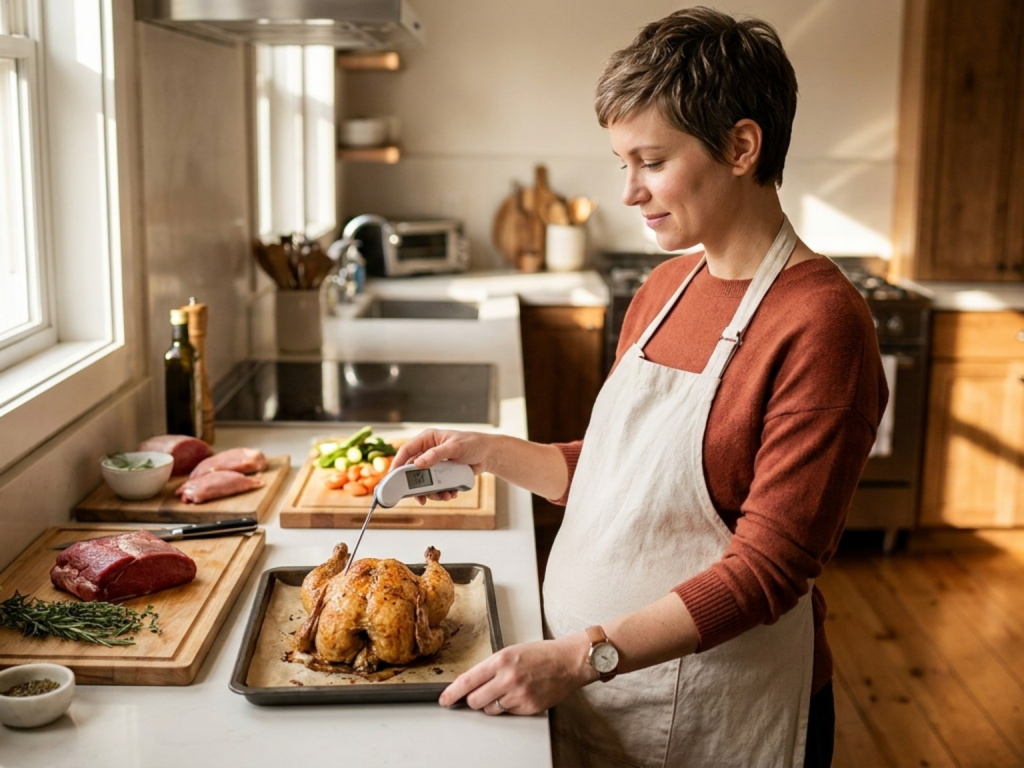
The USDA safe temperature chart is the most practical starting point for everyday cooking. Temperature is measured at the thickest part of the food, away from bone, fat, or the pan surface. For ground meats, check several spots because pathogens can be distributed throughout the mixture rather than only on the outside.
- Whole cuts of beef, pork, lamb, and veal: 145°F (63°C) with a 3-minute rest
- Ground meats: 160°F (71°C)
- All poultry, including chicken and turkey: 165°F (74°C)
- Egg dishes: 160°F (71°C)
- Leftovers and casseroles: 165°F (74°C)
If you cook roast-style meats, remember that resting time matters for some categories because the temperature continues to equilibrate after removal from heat. For leftovers, the simplest rule is to reheat to 165°F and eat promptly, or cool and refrigerate them within the two-hour rule for perishable foods. When in doubt, the thermometer wins over guesswork, and a few extra seconds of checking is worthwhile.
A thermometer also helps in mixed dishes such as casseroles, meat sauces, and stuffed foods, where the center may heat more slowly than the edges. That is especially relevant in pregnancy food safety checklist planning, because a dish that looks done on top may not yet have reached a safe temperature inside.
Iron-rich meat sources that are especially useful in pregnancy
Meat is valuable in pregnancy because it contributes heme iron, a form generally absorbed more efficiently than non-heme iron from plant foods. That makes meat especially useful when iron needs rise and appetite or nausea makes large meals difficult. The practical goal is not simply “more meat,” but the right kinds of meat in portions that fit your overall diet.
Common iron-rich meat sources include beef, lamb, turkey, chicken, pork, liver, and seafood. Among these, beef and lamb are classic heme and non-heme iron sources in the broader dietary conversation because they are rich in heme iron and fit well into many meals. Turkey and chicken can also be useful, especially for people who prefer leaner options or gentler flavors. Pork contributes meaningful iron as well, particularly in cuts and preparations that keep the meal balanced rather than overly fatty. Liver is especially iron-dense, so it is worth discussing as part of your prenatal diet plan with a clinician or dietitian if you are unsure how often it belongs on the menu.
The best source for you depends on what you tolerate, how you cook, and what else you eat in the same day. If nausea limits red meat, a smaller serving of poultry or pork can still contribute useful iron without overwhelming the meal.
How cooking temperature can affect iron quality in meat
Food safety and nutrient preservation do not always point in exactly the same direction, which is why the middle ground matters. Research on cooking temperature shows that heat can change the chemical forms of iron in meat and can influence heme iron availability. In other words, temperature is not only about killing pathogens; it also affects the structure of the food itself.
The practical takeaway is reassuring: the goal is safe cooking, not overcooking. Very high heat or prolonged heating can alter meat proteins and iron chemistry more than necessary, while also making the food drier and less appealing. For that reason, it is sensible to cook to the minimum safe temperature and then stop, rather than letting meat sit on heat well beyond what is needed. This approach supports both food safety and a more enjoyable meal.
That said, the effect of heat on iron is nuanced. Cut, fat content, cooking method, and time all matter, and the scientific literature does not support simplistic rules such as “rare is better for iron.” A safe, well-cooked steak or roast can still be an excellent iron source. The key is consistency: know the target temperature, measure it accurately, and avoid unnecessary overcooking.
Simple meal strategies when iron needs are higher
If your goal is to support iron status during pregnancy, the best strategy is usually a pattern, not a single food. Protein-rich meals built around meat can be paired with other foods that improve overall iron intake and absorption. Many clinicians also discuss vitamin C and iron absorption, because vitamin C can help non-heme iron absorption in the same meal. That matters most when the meal includes plant-based iron sources, but it also makes mixed meals nutritionally efficient.
Examples of balanced combinations include lean beef with roasted peppers, turkey with tomato-based sauce, or pork with citrus or broccoli on the side. These are not prescriptions; they are practical ways to make meals more nutrient dense without making them complicated. If breakfast is the only meal you can tolerate well, even a small amount of iron-rich meat at that meal may be better than aiming for the “perfect” dinner you cannot finish.
If you are already monitoring ferritin or hemoglobin, keep in mind that food cannot always correct deficiency on its own. Iron deficiency anemia in pregnancy may require testing and a broader treatment plan from your obstetric team. A thoughtful diet can still help maintain stores and support recovery, but it should be coordinated with your clinician rather than used as a stand-alone fix.
A pregnancy food safety checklist for meat meals
A simple routine can make meat safer without adding stress. Think of it as a pregnancy food safety checklist you repeat until it becomes automatic. The steps are straightforward, and they reduce the most common preventable errors.
- Wash hands before and after handling raw meat.
- Use separate boards, knives, and plates for raw and cooked foods.
- Cook to the correct internal temperature, using a thermometer rather than color alone.
- Refrigerate cooked meat, gravies, and other perishables within the two-hour rule for perishable foods.
- Reheat leftovers to 165°F (74°C) before eating.
If you prepare meals in batches, label containers with the date and plan portions ahead of time. That helps reduce waste and lowers the chance that something sits in the refrigerator too long. If you are eating outside the home, the same principles still apply: choose meat that is visibly steaming hot when served, and do not hesitate to ask how a dish is cooked if you are uncertain.
In a pregnancy food safety routine, the combination of clean hands, clean tools, correct temperature, and timely refrigeration does most of the work. You do not need perfection; you need a reliable system.
When to slow down and get individualized advice
- Do not judge meat doneness by color, firmness, or juices alone.
- Do not assume carryover heat makes poultry or ground meat safe.
- Do not leave cooked meat out for long periods; use the two-hour rule for perishable foods.
- Do not ignore symptoms or labs that suggest iron deficiency anemia in pregnancy.
- If you have a history of foodborne illness, ask for tailored guidance from your obstetric clinician.
Tools & Assistance
- An instant-read digital food thermometer
- The USDA safe temperature chart for quick reference
- A separate cutting board system for raw and cooked foods
- Your obstetric clinic or midwife for pregnancy-specific nutrition and lab review
FAQ
Can I tell if meat is safe just by looking at it?
No. Color and texture are unreliable, especially for ground meat and poultry. A thermometer is the best way to confirm the safe internal temperature for meat.
Are all beef dishes required to reach 165°F?
No. Whole cuts of beef, pork, lamb, and veal have a lower USDA minimum than poultry and ground meats, but they still need a thermometer and the recommended rest time.
Is liver a good iron-rich choice in pregnancy?
Liver is very iron-rich, but it should still fit your overall prenatal nutrition plan. Discuss frequency and portion size with your obstetric clinician or dietitian.
What if I eat safely cooked meat but still feel very tired?
Fatigue can have many causes. If it persists, ask your clinician about iron deficiency anemia in pregnancy and whether blood tests such as hemoglobin or ferritin are appropriate.
Sources
- USDA Food Safety and Inspection Service — Safe Minimum Internal Temperature Chart
- PubMed — Cooking temperature effects on the forms of iron and the hemeiron availability of meat products
- American Red Cross — Iron-Rich Food | List of Meats And Vegetables
Disclaimer
This article is for educational purposes only and does not replace individualized medical advice. Please discuss food safety and iron needs in pregnancy with your obstetric clinician or registered dietitian.














Please log in to leave a comment.