
Intro
Yes, you can eat meat during pregnancy, and for many people it is a valuable source of high-quality protein, iron, zinc, vitamin B12, selenium, and other nutrients that support maternal blood volume expansion and fetal growth. The key issue is not meat itself, but whether it has been handled, stored, and cooked safely.
Pregnancy changes the risk calculation for foodborne infections. A gastrointestinal infection that might be brief but unpleasant outside pregnancy can sometimes lead to dehydration, fever, systemic illness, or fetal complications. This is why most pregnancy food-safety guidance recommends avoiding raw or undercooked meat and taking extra care with ready-to-eat meats, cross-contamination, and refrigeration.
Highlights
Fully cooked meat is generally safe in pregnancy when it is prepared with good food hygiene and eaten before its use-by date.
Raw or undercooked meat can carry pathogens such as Salmonella, Campylobacter, Listeria, and E. coli; some infections may be more consequential in pregnancy.
Color alone is not a reliable safety test. A food thermometer is the most accurate way to confirm that meat has reached a safe internal temperature.
Deli meats, pâtés, cured meats, and leftovers need extra caution because refrigeration does not eliminate all pathogens and some foods can be contaminated after cooking.
Can you eat meat during pregnancy?
In most pregnancies, meat can be part of a balanced diet. Lean beef, pork, lamb, chicken, turkey, and thoroughly cooked game can provide heme iron, which is often better absorbed than non-heme iron from plant foods. Meat also supplies vitamin B12, an essential nutrient for red blood cell formation and neurologic development.
The safest approach is to eat meat that is cooked all the way through, served hot when appropriate, stored promptly, and kept separate from foods that will not be cooked, such as salad leaves, fruit, bread, and ready-to-eat dishes. The concern is greatest with raw meat, undercooked meat, and foods that may have been contaminated during processing or storage.
If you follow a vegetarian or vegan diet, you do not need to start eating meat solely because you are pregnant, but you may need careful attention to iron, B12, iodine, omega-3 fats, and protein. If you eat meat but have strong meat aversions, nausea, or cravings, your clinician or dietitian can help you meet nutrient needs safely.
Why undercooked meat is a pregnancy-specific concern
Raw and undercooked meat can contain harmful microorganisms. The NSW Food Authority lists bacteria such as Salmonella, Listeria, Campylobacter, and E. coli as potential hazards in raw meat. Cooking to adequate temperatures kills many pathogens, while partial cooking may leave organisms alive in the center of the food or in juices.
Pregnancy involves changes in immune function and gastrointestinal physiology. These changes are normal and protective in many ways, but they can make some infections more severe or more likely to spread beyond the gut. Fever, vomiting, diarrhea, and dehydration can also be harder to tolerate during pregnancy, particularly if you already have hyperemesis, anemia, kidney disease, diabetes, or other medical conditions.
The fetal concern depends on the pathogen. Some organisms mainly cause maternal gastroenteritis, while others, especially Listeria monocytogenes, can cross the placenta and cause serious pregnancy complications. This does not mean every exposure causes harm; most exposures do not lead to severe outcomes. But it does mean prevention is worth taking seriously.
Pathogens linked to raw or undercooked meat
The main risks from undercooked meat are foodborne infections rather than toxins intrinsic to meat. The exact organism depends on the animal, processing conditions, storage temperature, and kitchen hygiene.
- Salmonella: Often associated with poultry, eggs, and cross-contaminated foods. It may cause diarrhea, fever, abdominal cramps, vomiting, and dehydration.
- Campylobacter: Commonly linked to raw or undercooked poultry and contaminated juices. It can cause diarrhea, abdominal pain, fever, and sometimes bloody stools.
- Shiga toxin-producing E. coli: More often associated with undercooked ground beef and contaminated produce. Some strains can cause severe bloody diarrhea and, rarely, kidney complications.
- Listeria monocytogenes: Can be found in some refrigerated ready-to-eat foods and occasionally meat products. Listeriosis may be mild or flu-like in the pregnant person but can be dangerous for the fetus.
- Toxoplasma gondii: A parasite sometimes associated with undercooked meat, especially lamb, pork, and venison, as well as soil and cat feces. Primary infection in pregnancy can have fetal implications, depending on timing.
If you develop symptoms after eating questionable meat, avoid trying to identify the pathogen yourself based only on symptoms. Different infections overlap clinically, and testing or treatment decisions depend on timing, severity, pregnancy stage, local epidemiology, and individual risk factors.
How well should meat be cooked?
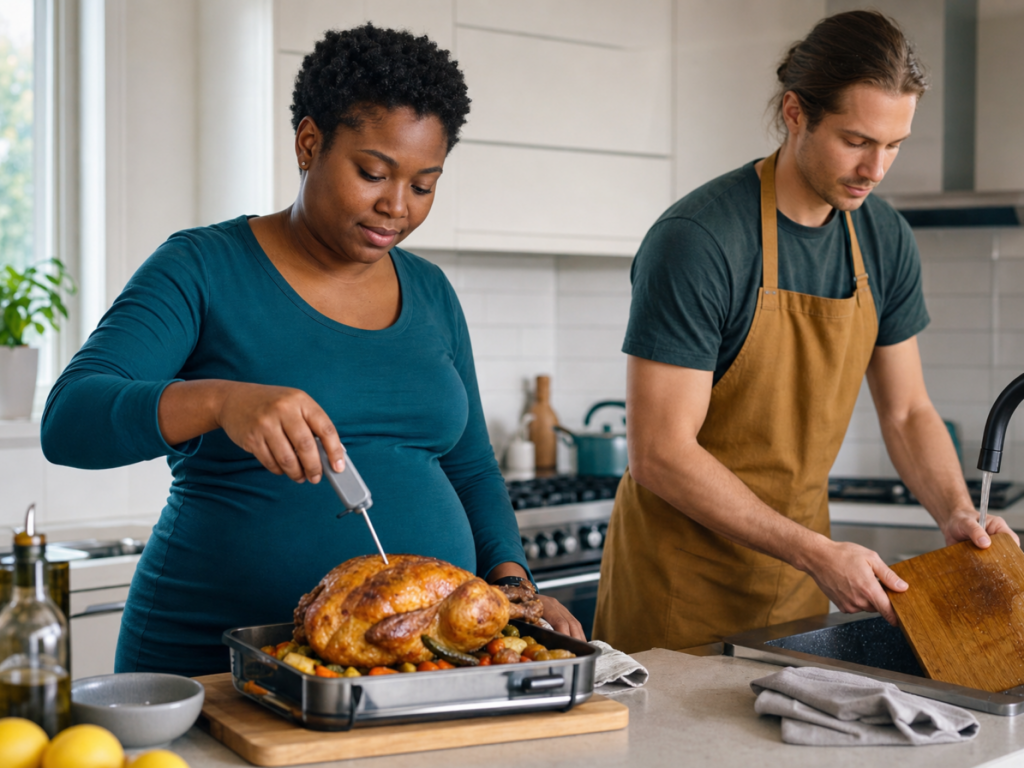
Meat should be cooked until it reaches a safe internal temperature, not merely until the outside looks browned. A digital food thermometer placed in the thickest part of the meat is more reliable than judging by color, firmness, or juice clarity.
General food-safety guidance commonly recommends cooking poultry thoroughly, cooking ground meats well because bacteria can be mixed throughout during grinding, and ensuring whole cuts reach temperatures sufficient to destroy pathogens. Healthline summarizes typical internal-temperature guidance and emphasizes that proper cooking destroys pathogens that may survive in raw meat. Local food-safety agencies may provide country-specific temperature charts, so it is reasonable to follow the guidance used in your region.
Practical cooking principles include:
- Cook chicken, turkey, and other poultry until there is no pink meat and juices run clear, and use a thermometer when possible.
- Cook burgers, sausages, meatballs, and other ground or minced meats thoroughly throughout.
- Avoid rare or medium-rare steak, lamb, or venison in pregnancy unless your healthcare professional and local food-safety guidance indicate a safe approach; many pregnancy resources advise choosing well-cooked meat.
- Reheat leftovers until steaming hot throughout, especially if they contain meat, gravy, rice, or mixed dishes.
- Do not partially cook meat and finish it much later unless you can maintain safe temperatures continuously.
What about deli meats, cured meats, pâté, and leftovers?
Not all meat-related risk comes from visibly raw food. Some products are ready to eat and may be contaminated after cooking or during slicing, packaging, or storage. Listeria is particularly important because it can grow at refrigerator temperatures, although refrigeration slows its growth.
Deli meats and cold cooked meats may be safer if heated until steaming hot immediately before eating, depending on the product and local guidance. Avoid eating meat past its use-by date, and do not rely on smell or appearance to judge safety. Pathogens can be present without obvious spoilage.
Pâté is often treated as higher risk in pregnancy because it may support Listeria growth and is commonly refrigerated and ready to eat. Cured or fermented meats, such as salami, chorizo, prosciutto, or some air-dried products, vary by manufacturing method and country-specific recommendations. If guidance is unclear, cooking cured meat thoroughly in a dish, such as heating chorizo until piping hot, is a lower-risk option than eating it cold.
Leftovers should be cooled promptly, refrigerated within a safe time window, stored in clean covered containers, and reheated thoroughly. If you are unsure how long a meat dish has been sitting out, especially at a buffet, picnic, barbecue, or party, it is safest to avoid it.
Preventing cross-contamination at home
Many infections are not caused by the piece of meat that is eventually cooked, but by raw juices contaminating hands, knives, cutting boards, plates, refrigerator shelves, or foods eaten raw. This is especially relevant in pregnancy because the safety margin is narrower.
- Store raw meat sealed and below ready-to-eat foods in the refrigerator so juices cannot drip onto other items.
- Keep raw meat refrigerated and avoid leaving it at room temperature for prolonged periods.
- Use separate cutting boards for raw meat and ready-to-eat foods, or wash boards thoroughly with hot soapy water between uses.
- Wash hands after touching raw meat, packaging, marinades, or utensils.
- Never put cooked meat back onto the unwashed plate that held raw meat.
- Discard marinades that touched raw meat unless they are boiled thoroughly before use as a sauce.
At barbecues, take extra care because meat may char on the outside while remaining undercooked inside. Use a clean plate for cooked food, keep salads away from raw meat prep areas, and avoid guessing doneness by grill marks.
If you ate undercooked meat before realizing the risk
First, try not to panic. Accidental exposures are common, and many do not result in infection. The next step is to monitor for symptoms and contact your maternity care provider if you are concerned, especially if the meat was raw, visibly undercooked, high-risk, or part of a known outbreak.
Symptoms that may suggest foodborne illness include fever, chills, muscle aches, nausea, vomiting, diarrhea, abdominal cramps, headache, or feeling unusually unwell. Some infections appear within hours, while others can take days or longer. Listeriosis can have a longer incubation period and may present with flu-like symptoms rather than prominent diarrhea.
Seek medical advice promptly if you have fever, persistent vomiting, signs of dehydration, bloody diarrhea, severe abdominal pain, reduced fetal movements if you are far enough along to track them, contractions, or any symptom that feels worrying. Do not start anti-diarrheal medicines, antibiotics, or supplements for a suspected infection without professional advice, as management depends on the cause and your pregnancy context.
Balancing nutrition and safety
It is understandable if food rules feel overwhelming. The goal is not to make eating feel frightening; it is to make a few consistent choices that meaningfully lower risk. You can still have satisfying meals: well-cooked roast chicken, thoroughly cooked burgers, hot stews, casseroles, stir-fries, soups, meat sauces, and reheated leftovers can all fit into pregnancy nutrition.
If you are avoiding certain meats, consider alternative nutrient sources. Iron can come from beans, lentils, tofu, fortified cereals, nuts, seeds, and leafy greens, especially when eaten with vitamin C-rich foods. Vitamin B12 is found in animal foods and fortified products, and supplementation may be needed for some diets. If anemia, low ferritin, or severe aversions are present, discuss individualized nutrition planning with your clinician.
For broader food-safety planning, it can help to review foods to avoid and high-risk foods during pregnancy, food safety rules and listeria risk foods during pregnancy, and infections during pregnancy overview with your healthcare team or a trusted evidence-based resource.
Call your healthcare professional urgently if
- You have fever, chills, or flu-like symptoms after eating raw or undercooked meat.
- You develop persistent vomiting, dehydration, bloody diarrhea, or severe abdominal pain.
- You are aware of a Listeria, Salmonella, E. coli, or Campylobacter outbreak linked to food you ate.
- You notice reduced fetal movements, contractions, fluid leakage, or vaginal bleeding.
- You have a high-risk pregnancy or immune compromise and are worried about a possible exposure.
Tools & Assistance
- Use a digital food thermometer for meat, poultry, burgers, and reheated leftovers.
- Keep a separate cutting board for raw meat and ready-to-eat foods.
- Check local pregnancy food-safety guidance for country-specific temperature recommendations.
- Contact your midwife, obstetrician, family doctor, or maternity triage service after concerning symptoms.
- Track what you ate, when you ate it, and when symptoms began before calling for advice.
FAQ
Can I eat steak during pregnancy?
Yes, if it is cooked safely. Many pregnancy food-safety resources recommend avoiding rare or undercooked steak and choosing meat cooked thoroughly, ideally verified with a food thermometer.
Are burgers riskier than whole cuts of meat?
Ground or minced meat can be riskier if undercooked because bacteria from the surface may be mixed throughout the meat. Burgers, meatballs, and sausages should be cooked thoroughly all the way through.
Can I eat cold deli meat while pregnant?
Cold deli meats can carry contamination risk, including Listeria. Depending on local guidance, heating deli meat until steaming hot immediately before eating is often considered a safer option.
What should I do if I accidentally ate undercooked chicken?
Do not panic, but monitor for symptoms such as fever, vomiting, diarrhea, abdominal pain, or feeling very unwell. Contact your healthcare professional promptly if symptoms occur or if you are worried.
Does freezing meat make it safe to eat raw?
Freezing can reduce some parasites in certain foods, but it does not reliably eliminate all bacteria or make raw meat safe for pregnancy. Proper cooking remains the key safety step.
Sources
- NSW Food Authority — Raw meat safe eating
- Healthline — Eating Raw Meat: Is It Safe?
- NHS — Pregnancy and food safety
Disclaimer
This article is for general information only and does not replace medical advice. If you are pregnant and concerned about food exposure or symptoms, contact your healthcare professional.














Please log in to leave a comment.