
Intro
Pregnancy places extraordinary demands on the body’s nutrient stores. Two micronutrients receive particular attention because they support both maternal physiology and fetal development: folic acid, the synthetic supplemental form of folate, and iron. Both are involved in blood formation, cellular growth, and oxygen delivery, and both can be difficult to obtain in sufficient amounts from diet alone during pregnancy.
For many pregnant people, supplement advice can feel confusing: one organization may mention 400 micrograms of folic acid, another 600 micrograms of total daily folate intake, and iron recommendations may vary depending on anemia risk, diet, side effects, and local public health guidance. This article explains the core requirements, why they matter, how food and supplements fit together, and when individualized medical advice is especially important.
Highlights
Folic acid is most critical very early in pregnancy, often before a person knows they are pregnant, because the neural tube closes in the first weeks after conception.
Iron requirements rise substantially because pregnancy expands maternal blood volume and supports the placenta and fetus.
Common guidance includes 400 micrograms of folic acid in a prenatal vitamin, while total folate needs in pregnancy are often described as 600 micrograms daily.
Daily iron targets commonly include 27 mg per day in routine pregnancy nutrition guidance, while WHO recommends 30–60 mg elemental iron plus 400 micrograms folic acid daily in antenatal supplementation programs.
Higher-dose folic acid or additional iron may be appropriate for some people, but this should be guided by a clinician rather than self-prescribed.
Why folic acid matters before and during pregnancy
Folate is a B vitamin needed for DNA synthesis, cell division, and red blood cell production. In pregnancy, these functions become especially important because the embryo, placenta, uterus, and maternal blood volume are all growing rapidly. Folic acid is the synthetic form used in most supplements and fortified foods; it is well absorbed and has been studied extensively in relation to neural tube defect prevention.
The neural tube develops into the brain and spinal cord. It closes very early, typically within the first month after conception, which is why folic acid is ideally started before pregnancy. The World Health Organization notes that folic acid should ideally begin before conception to reduce the risk of neural tube defects. ACOG similarly recommends starting a prenatal vitamin with at least 400 micrograms of folic acid at least one month before pregnancy when possible and continuing through the first 12 weeks.
This timing can be emotionally difficult for people with unplanned pregnancies, irregular cycles, fertility treatment uncertainty, or limited access to preconception care. If supplementation was not started before conception, it is still worth discussing folic acid and prenatal vitamins promptly with a healthcare professional. Starting late is not a reason for guilt; it is a reason for supportive, practical care.
Folic acid requirements: routine and higher-risk situations
For routine pregnancy nutrition, ACOG states that pregnant people need 600 micrograms of folic acid daily and recommends a prenatal vitamin containing at least 400 micrograms. The NHS recommends a daily 400 microgram folic acid supplement from before conception until 12 weeks of pregnancy. WHO recommends 400 micrograms of folic acid daily as part of daily antenatal iron and folic acid supplementation.
These numbers can appear inconsistent, but they are usually addressing related yet slightly different concepts: supplemental folic acid, total folate intake from food plus supplements, and public health supplementation protocols. In practice, many prenatal vitamins provide at least 400 micrograms of folic acid, while diet contributes additional folate from foods such as leafy greens, legumes, citrus fruits, asparagus, avocado, and fortified grains.
Some people are advised to take higher-dose folic acid, particularly if they have an increased risk of neural tube defects. The NHS notes that higher-dose folic acid may be recommended for people at increased risk. Examples can include a previous pregnancy affected by a neural tube defect, certain antiseizure medications, diabetes, malabsorption conditions, or other clinical factors. Because higher-dose folic acid can interact with broader medical assessment, including vitamin B12 status and medication review, it should be taken under clinician guidance.
Why iron needs rise in pregnancy
Iron is essential for hemoglobin, the oxygen-carrying protein in red blood cells, and for many enzymes involved in cellular metabolism. Pregnancy increases iron requirements for several overlapping reasons: maternal red cell mass expands, the placenta requires iron-containing proteins, the fetus accumulates iron stores for early infancy, and blood loss at delivery must be physiologically anticipated.
When intake or stores are insufficient, iron deficiency can develop, sometimes progressing to iron-deficiency anemia. Anemia can contribute to fatigue, reduced exercise tolerance, dizziness, palpitations, shortness of breath with exertion, restless legs, impaired concentration, and, in more severe cases, clinically significant maternal or fetal risk. However, these symptoms are not specific to iron deficiency; pregnancy itself, thyroid disease, infection, cardiopulmonary issues, vitamin B12 deficiency, folate deficiency, and other conditions can overlap. Testing and interpretation by a healthcare professional are important.
WHO’s recommendation for daily iron and folic acid supplementation in pregnancy is intended to help prevent maternal anemia, puerperal sepsis, low birth weight, and preterm birth. ACOG states that pregnant women need 27 mg of iron per day. In some settings or for some individuals, clinicians may recommend more intensive iron replacement, but the dose, formulation, and monitoring should be individualized.
Iron requirements and supplement dosing in context
Iron supplement labels can be confusing because they may list either the salt form, such as ferrous sulfate, ferrous fumarate, or ferrous gluconate, or the amount of elemental iron. Elemental iron is the amount that matters physiologically. WHO recommends 30 to 60 mg of elemental iron plus 400 micrograms of folic acid daily for pregnant women in antenatal supplementation programs. ACOG’s dietary requirement figure is 27 mg of iron per day.
Many prenatal vitamins contain iron, often near the 27 mg range, but formulations vary. Some gummy prenatal vitamins contain little or no iron. People who follow vegetarian or vegan diets, have heavy menstrual bleeding before pregnancy, carry multiples, have closely spaced pregnancies, have inflammatory bowel disease or bariatric surgery history, or enter pregnancy with low ferritin may need closer assessment.
Too much iron can cause nausea, constipation, abdominal pain, dark stools, and, in excessive amounts, toxicity. It can also complicate some medical conditions, such as iron overload disorders. For that reason, it is sensible to avoid stacking multiple iron-containing products unless a clinician has recommended it. A prenatal vitamin, an additional iron tablet, fortified foods, and other supplements can add up quickly.
Food sources: building a folate- and iron-supportive diet
Supplements are often recommended because requirements are high and timing is critical, but food remains a meaningful part of pregnancy nutrition. Folate-rich foods include dark leafy greens, broccoli, Brussels sprouts, beans, lentils, peas, oranges, fortified cereals, and enriched grain products. These foods also contribute fiber and other micronutrients, which may help with constipation and overall dietary quality.
Iron comes in two main dietary forms. Heme iron, found in animal foods, is generally more efficiently absorbed. Sources include lean red meat, poultry, and fish that are safe in pregnancy according to local guidance. Non-heme iron is found in beans, lentils, tofu, spinach, nuts, seeds, fortified cereals, and whole grains. Non-heme iron absorption varies more and is influenced by the rest of the meal.
- Pair plant-based iron foods with vitamin C-rich foods such as citrus, strawberries, kiwi, tomatoes, bell peppers, or potatoes to improve absorption.
- Avoid taking iron supplements at the same time as calcium supplements, high-calcium meals, tea, or coffee if your clinician advises separation, because these can reduce absorption.
- If iron causes nausea, ask about timing, formulation, dose adjustment, or alternate strategies rather than stopping without advice.
- Maintain a broader dietary pattern that includes adequate protein, energy, and other micronutrients; iron and folate do not work in isolation.
Side effects, tolerability, and practical strategies
Folic acid at routine doses is usually well tolerated. Iron is more likely to cause gastrointestinal side effects. Constipation, nausea, metallic taste, abdominal discomfort, and dark stools are common reasons people struggle with adherence. This is not a personal failure; it is a predictable pharmacologic issue, and clinicians have several ways to help.
Practical approaches may include taking iron with a small amount of food if nausea is problematic, using a stool-softening or constipation plan recommended by a clinician, changing the iron salt formulation, adjusting timing, or assessing whether the current dose is necessary. Some people require laboratory monitoring with hemoglobin, hematocrit, mean corpuscular volume, ferritin, or other studies depending on the clinical picture.
Do not assume that more iron is always better. If fatigue is severe or anemia is suspected, the safest next step is medical evaluation rather than simply increasing supplements. The same principle applies to folic acid: routine supplementation is widely recommended, but higher-dose regimens should be targeted to specific risk factors.
Individualized care: when standard prenatal vitamins may not be enough
Standard prenatal vitamins are designed for broad coverage, not for every possible medical circumstance. Some people need specialized planning before conception or early in pregnancy. This may include people taking antiseizure medications, people with diabetes, prior neural tube defect-affected pregnancy, malabsorption syndromes, bariatric surgery history, severe nausea and vomiting, eating disorders, restrictive diets, multifetal gestation, chronic kidney disease, hemoglobinopathies, or documented iron deficiency.
A careful review of medications and supplements is especially important because some drugs can affect folate metabolism, while some supplements can duplicate nutrients. Prenatal nutrition also intersects with screening: early pregnancy blood tests often include a complete blood count, and additional testing may be ordered based on history, diet, symptoms, or prior anemia.
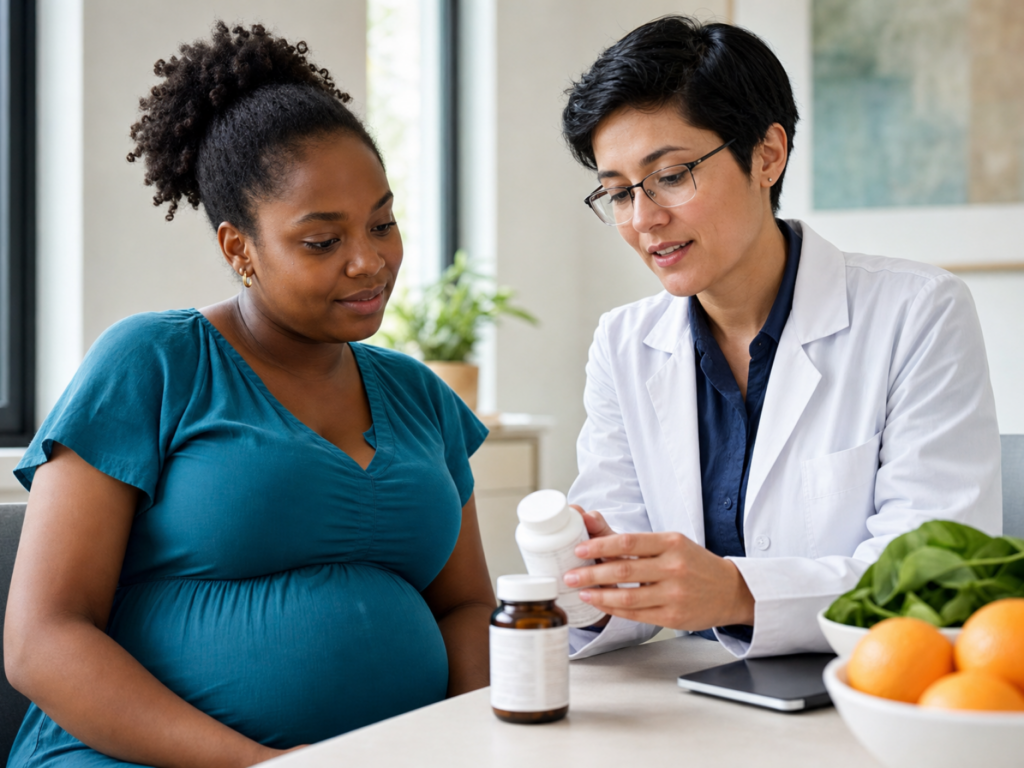
If you are planning pregnancy, preconception counseling can be very helpful. If you are already pregnant, bring all supplement bottles to an antenatal visit or send photos of the labels to your clinician if that is acceptable in your care system. The goal is not perfection; it is clear, individualized, compassionate care.
When to seek medical advice promptly
- Severe fatigue, fainting, chest pain, shortness of breath at rest, or palpitations should be assessed urgently.
- Do not take high-dose folic acid unless a healthcare professional has recommended it for your risk profile.
- Avoid combining multiple iron supplements without checking the total elemental iron dose with a clinician.
- Persistent vomiting, inability to keep supplements down, or significant weight loss needs medical review.
- Black stools can occur with iron, but tarry stools with weakness, pain, or bleeding symptoms should be evaluated.
Tools & Assistance
- Prenatal visit with supplement label review
- Complete blood count and ferritin testing when clinically indicated
- Registered dietitian consultation for vegetarian, vegan, or restricted diets
- Pharmacist guidance on prenatal vitamin and iron formulation options
- Preconception counseling for folic acid planning before pregnancy
FAQ
Should I take folic acid before pregnancy?
Yes, when possible. Folic acid is ideally started before conception because neural tube development occurs very early. Many guidelines recommend 400 micrograms daily before pregnancy and through at least the first 12 weeks.
Is 400 micrograms or 600 micrograms of folic acid the right amount?
Both figures appear in reputable guidance. A prenatal vitamin often contains at least 400 micrograms of folic acid, while total daily folate needs in pregnancy are commonly described as 600 micrograms. Your clinician can help interpret your supplement and diet together.
How much iron do pregnant people need?
ACOG states that pregnant women need 27 mg of iron per day. WHO recommends daily antenatal supplementation with 30–60 mg elemental iron plus 400 micrograms folic acid in its public health guidance.
Can I rely on food instead of an iron supplement?
Some people meet needs with diet and a prenatal vitamin, but pregnancy requirements are high and anemia risk varies. Ask your healthcare professional whether your blood tests, diet, and prenatal vitamin provide enough iron.
What if iron supplements make me constipated or nauseated?
Tell your clinician. Options may include changing timing, formulation, constipation management, or reassessing the dose. Do not stop a recommended supplement without discussing alternatives.
Sources
- World Health Organization (WHO) — Daily iron and folic acid supplementation during pregnancy
- American College of Obstetricians and Gynecologists (ACOG) — Healthy Eating During Pregnancy
- National Health Service (NHS) — Vitamins, supplements and nutrition in pregnancy
Disclaimer
This article is for general educational information and is not a diagnosis or personal medical prescription. Always consult your obstetrician, midwife, or qualified healthcare professional about supplements, anemia testing, and pregnancy-specific care.
















Please log in to leave a comment.