
Intro
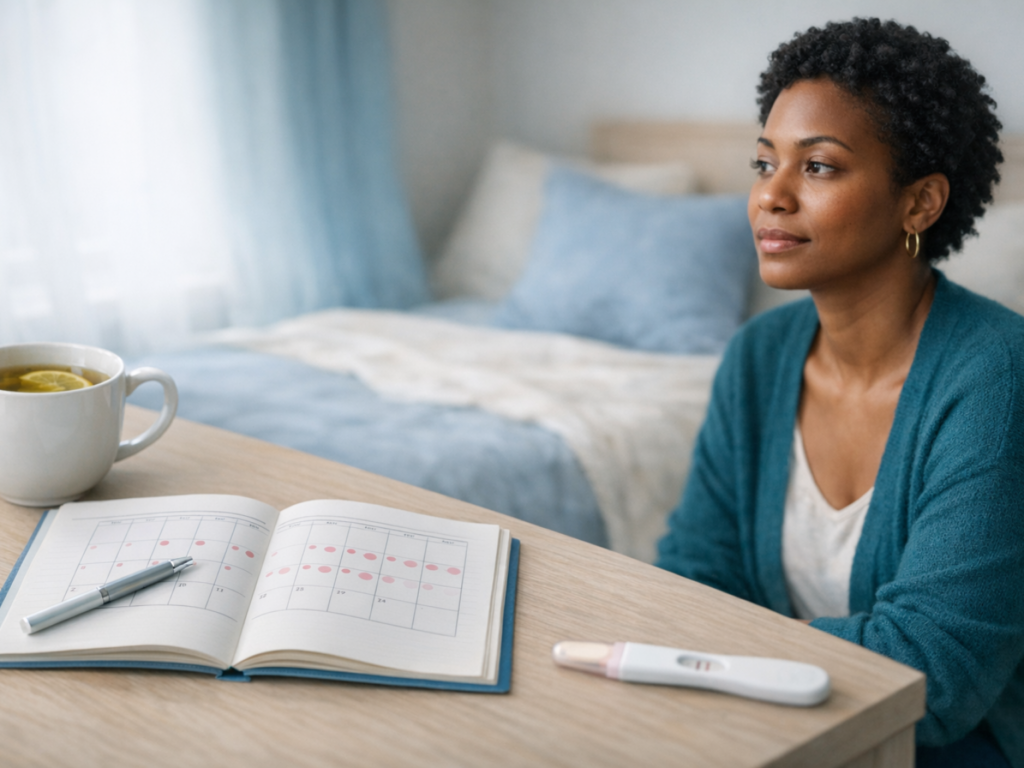
Trying to conceive often brings together biology, timing, intimacy, hope, and uncertainty. When pregnancy does not happen immediately, many people begin to scrutinize every symptom, every day of the cycle, every sexual encounter, and every lifestyle choice. This overthinking is understandable; conception is meaningful, and waiting can feel emotionally high-stakes.
At the same time, stress is often discussed in oversimplified ways, as if anxiety alone can “block” pregnancy. The medical reality is more nuanced. Psychological stress may influence sexual function, cycle regularity, sleep, inflammation, health behaviors, and treatment decisions, but it is rarely the sole explanation for infertility. A compassionate, evidence-informed approach recognizes both truths: emotional distress deserves care, and fertility concerns deserve appropriate medical evaluation.
Highlights
Stress can affect conception indirectly through ovulation timing, libido, erectile or ejaculatory function, sleep, and health behaviors, but stress alone is not usually considered the only cause of infertility.
Overthinking while trying to conceive is common and does not mean someone is “doing it wrong.” It is often a response to uncertainty, repeated disappointment, or pressure around timing.
The relationship between stress and fertility is bidirectional: difficulty conceiving can create anxiety and grief, while distress may make the process harder to tolerate.
Medical evaluation is important when conception is delayed, especially with irregular cycles, age-related concerns, known reproductive conditions, or a history of pregnancy loss.
Emotional support, realistic cycle tracking, couple communication, and professional mental health care can improve coping even when they do not directly guarantee pregnancy.
The biology of stress and reproduction
The body’s stress response is coordinated mainly through the hypothalamic-pituitary-adrenal axis, often called the HPA axis. When the brain perceives threat or sustained pressure, it can increase production of stress mediators such as corticotropin-releasing hormone, adrenocorticotropic hormone, cortisol, and catecholamines. These hormones are adaptive in the short term, helping the body respond to challenge.
Reproduction is regulated by a different but closely communicating hormonal network: the hypothalamic-pituitary-gonadal axis. This system controls pulsatile gonadotropin-releasing hormone, luteinizing hormone, follicle-stimulating hormone, ovarian follicle development, ovulation, progesterone production, and testicular sperm production. Severe or prolonged physiological stress may disrupt this coordination in some people, particularly when stress is accompanied by undernutrition, intense exercise, sleep deprivation, illness, or significant weight change.
For someone trying to conceive, the most visible effect may be a delayed ovulation, a longer-than-usual cycle, or occasionally an anovulatory cycle. However, stress responses vary widely. Some people maintain regular cycles under substantial pressure, while others notice clear menstrual changes during emotionally or physically demanding periods. Because cycle variation can also reflect polycystic ovary syndrome, thyroid disease, hyperprolactinemia, diminished ovarian reserve, perimenopause, or other medical issues, persistent irregularity should not be attributed to stress without clinical assessment.
Does stress directly reduce the chance of getting pregnant?
The evidence is complex. Research has found associations between psychological stress and fertility outcomes in some settings, but association does not prove causation. Stress may be a contributor, a consequence of difficulty conceiving, or a marker for other factors such as sleep disruption, reduced intercourse frequency, depression, financial strain, relationship conflict, or underlying illness.
Major medical sources emphasize caution: stress can affect behaviors and experiences that matter for conception, but it is not usually the sole cause of infertility. This distinction matters because many people blame themselves for not being “relaxed enough.” That blame is not medically justified and can deepen distress.
Stress may influence conception through several indirect pathways:
- Sexual frequency and timing: fatigue, pressure, anxiety, or conflict may reduce intercourse during the fertile window.
- Sexual function: stress can contribute to low libido, vaginal dryness, pain with sex, erectile dysfunction, or delayed ejaculation.
- Cycle variability: ovulation may shift later in a cycle, making calendar-based timing less reliable.
- Sleep and circadian rhythm: poor sleep can affect metabolic and endocrine regulation.
- Health behaviors: emotional strain may increase smoking, alcohol use, disordered eating, sedentary behavior, or inconsistent medication routines.
- Treatment persistence: during fertility evaluation or assisted reproduction, distress may influence decisions about continuing, pausing, or stopping care.
A helpful framing is this: reducing stress is worthwhile for quality of life, sexual wellbeing, and resilience, but it should not be presented as a fertility treatment by itself.
Overthinking, cycle tracking, and the two-week wait
Overthinking often intensifies once a person begins tracking ovulation, cervical mucus, basal body temperature, luteinizing hormone tests, apps, implantation timing, and early pregnancy symptoms. These tools can be useful, especially when cycles are irregular or intercourse timing is difficult. But they can also create a feeling that every decision must be perfect.
The fertile window is broader than many people realize. Sperm can survive in the reproductive tract for several days under favorable cervical mucus conditions, and conception can occur from intercourse in the days before ovulation as well as around ovulation itself. This means that trying to identify one “perfect” moment can add pressure without always improving the odds.
The two-week wait can be particularly emotionally charged. Progesterone in the luteal phase can cause breast tenderness, bloating, fatigue, mood changes, and mild cramping; these symptoms overlap with both premenstrual symptoms and early pregnancy symptoms. Repeated checking, testing very early, or interpreting every sensation can increase anxiety. For some people, a structured plan helps: decide in advance when to test, how often to use ovulation predictor kits, and when to step away from online symptom searches.
Cycle awareness is not the problem; compulsive monitoring that erodes sleep, intimacy, or emotional stability may be. If tracking feels necessary but overwhelming, a clinician can help choose the simplest effective method for the person’s menstrual pattern and medical context.
Emotional impact when conception takes longer than expected
Delayed conception can affect a person’s sense of identity, body trust, partnership, sexuality, and future plans. Many people feel sadness, frustration, envy, guilt, shame, anger, or fear, sometimes all in the same week. These reactions are not signs of weakness; they are common responses to uncertainty and repeated loss of anticipated outcomes.
The emotional burden can be intensified by social comparison. Pregnancy announcements, family questions, baby showers, and comments such as “just relax” may feel painful even when well-intentioned. People may also grieve privately because early fertility struggles are often invisible to others.
Relationship strain is also common. Partners may cope differently: one person may want to talk, research, and plan, while the other may withdraw or avoid the topic. Differences in sexual desire, timing pressure, financial concerns, or decisions about testing and treatment can create conflict. It can help to separate “fertility logistics” from “relationship time,” so sex and affection are not reduced only to reproductive tasks.
Infertility-related distress can resemble other forms of chronic stress, with intrusive thoughts, sleep disturbance, difficulty concentrating, irritability, and avoidance of social situations. If sadness, anxiety, panic symptoms, or hopelessness become persistent or impair daily functioning, mental health support is appropriate and can be an important part of reproductive care.
Stress, ovulation, and menstrual irregularity
Stress may shift ovulation timing in some cycles, but it is only one possible explanation for irregular periods. Ovulation is sensitive to energy availability, thyroid function, prolactin levels, ovarian reserve, androgen excess, inflammatory conditions, medication effects, and major changes in routine. Travel, illness, sleep disruption, and strenuous training can also alter cycle timing.
When ovulation happens later than expected, a period will usually arrive later as well, because the luteal phase is relatively more consistent than the follicular phase for many people. This can lead to confusion: a late period may raise hope for pregnancy, while the actual cause may be delayed ovulation. Ovulation predictor kits, cervical mucus patterns, basal body temperature charts, or mid-luteal progesterone testing may help clarify whether ovulation is occurring, but each method has limitations.
Patterns that deserve medical discussion include cycles consistently shorter than 21 days, longer than 35 to 40 days, absent periods, very heavy bleeding, significant pelvic pain, signs of androgen excess such as new facial hair or severe acne, galactorrhea, or symptoms of thyroid dysfunction. These findings may coexist with stress, but they should not be dismissed as stress alone.
Male-factor fertility and emotional stress
Conception depends on both egg and sperm factors, as well as tubal anatomy, uterine environment, timing, and general health. Stress can affect male fertility indirectly through sleep, alcohol use, smoking, anabolic steroid use, heat exposure, diet, and sexual function. Anxiety around timed intercourse can also contribute to erectile dysfunction or difficulty ejaculating, especially when sex begins to feel like a performance test.
It is important not to frame fertility as only a female responsibility. Semen analysis is a standard, relatively accessible part of fertility evaluation and can identify issues with sperm concentration, motility, morphology, or volume. Because sperm production takes roughly several months, lifestyle and medical factors may take time to show measurable changes.
Couples often feel relief when evaluation is shared rather than focused on one partner. A collaborative approach reduces blame and helps guide appropriate next steps, whether the issue is ovulatory, tubal, sperm-related, age-related, unexplained, or multifactorial.
What may help emotionally while trying to conceive
Supportive strategies should be realistic and nonjudgmental. The goal is not to eliminate all stress, which is impossible, but to reduce the intensity of distress and protect daily functioning.
- Set boundaries around tracking: use only the tools that provide actionable information. More data is not always more helpful.
- Create a testing plan: decide when pregnancy testing will happen to avoid repeated early testing that increases emotional swings.
- Protect intimacy: schedule non-fertility-focused affection and avoid discussing ovulation during every sexual encounter.
- Use evidence-based coping: mindfulness-based stress reduction, cognitive behavioral therapy, acceptance and commitment therapy, and supportive counseling may help manage intrusive thoughts and uncertainty.
- Share the load: if partnered, divide practical tasks such as appointments, insurance calls, supplements, and calendar planning.
- Limit harmful advice: reduce exposure to forums or social media accounts that trigger comparison, fear, or unrealistic promises.
Healthy routines can also support reproductive wellbeing: adequate sleep, balanced nutrition, regular moderate movement, avoidance of tobacco, and moderation or avoidance of alcohol while trying to conceive. These are not guarantees of pregnancy, but they can improve general health and may support fertility-related physiology.
When to seek medical guidance
Many couples conceive within several months, and not becoming pregnant immediately can still be normal. However, timely evaluation can prevent prolonged uncertainty and identify treatable factors. In general, many clinicians advise seeking fertility evaluation after 12 months of regular unprotected intercourse if the person trying to conceive is under 35, and after 6 months if age 35 or older. Earlier consultation is reasonable with irregular or absent periods, known endometriosis, prior pelvic inflammatory disease, recurrent pregnancy loss, previous chemotherapy or pelvic surgery, known sperm concerns, or other significant medical conditions.
Medical care may include review of menstrual history, ovulation assessment, thyroid and prolactin testing when indicated, ovarian reserve testing, pelvic ultrasound, tubal evaluation, and semen analysis. The exact plan depends on age, history, cycle pattern, and individual goals.
Emotional care can be sought at any stage, not only after a diagnosis of infertility. A reproductive mental health professional, psychologist, psychiatrist, counselor, or support group can help with anxiety, grief, decision fatigue, and relationship stress. If medication for anxiety or depression is being considered while trying to conceive, decisions should be individualized with a qualified clinician who can discuss risks, benefits, and alternatives.
When stress needs prompt attention
- Seek urgent help if you have thoughts of self-harm, feeling unsafe, or inability to function.
- Do not assume absent or very irregular periods are caused only by stress; medical evaluation is important.
- Severe pelvic pain, very heavy bleeding, or recurrent pregnancy loss should be discussed with a healthcare professional.
- Avoid unproven fertility supplements or extreme lifestyle changes without clinical guidance.
- If trying to conceive is causing persistent panic, depression, or relationship crisis, mental health support is appropriate.
Tools & Assistance
- Schedule a preconception or fertility consultation with an OB-GYN, reproductive endocrinologist, or qualified clinician.
- Use a simple ovulation tracking method, such as cycle history plus ovulation predictor kits, if it reduces rather than increases distress.
- Consider reproductive mental health counseling or a fertility support group.
- Create a shared conception plan with your partner that includes medical next steps and emotional boundaries.
- Review medications, supplements, alcohol, tobacco, sleep, and exercise habits with a healthcare professional.
FAQ
Can stress alone stop me from getting pregnant?
Stress alone is not usually considered the sole cause of infertility. It may affect conception indirectly through ovulation timing, sexual function, sleep, and health behaviors, but delayed conception should be evaluated medically when appropriate.
Will relaxing improve my fertility?
Relaxation can improve wellbeing, coping, intimacy, and sleep, which are valuable. However, it should not be treated as a guaranteed fertility treatment or used to blame someone for not conceiving.
Can overthinking delay ovulation?
Psychological and physical stress may contribute to delayed ovulation in some cycles, but irregular cycles can also reflect medical conditions such as PCOS, thyroid disorders, or elevated prolactin. Persistent irregularity warrants professional assessment.
How can I make the two-week wait less stressful?
Choose a specific date for pregnancy testing, limit symptom searching, plan supportive activities, and reduce repeated early testing if it worsens anxiety. If distress feels unmanageable, consider counseling or a support group.
When should we seek fertility help?
Many clinicians recommend evaluation after 12 months of trying if under 35, or after 6 months if 35 or older. Seek earlier advice for irregular periods, known reproductive conditions, sperm concerns, recurrent pregnancy loss, or significant medical history.
Sources
- March of Dimes — Stress and Fertility: Does Stress Affect the Chances of Getting Pregnant?
- Eunice Kennedy Shriver National Institute of Child Health and Human Development — Psychological stress and fertility
- Eunice Kennedy Shriver National Institute of Child Health and Human Development — The emotional impact of infertility
Disclaimer
This article is for informational purposes only and does not replace medical advice, diagnosis, or treatment. Consult a qualified healthcare professional for personal fertility, mental health, or pregnancy-related concerns.

















Please log in to leave a comment.