
Intro
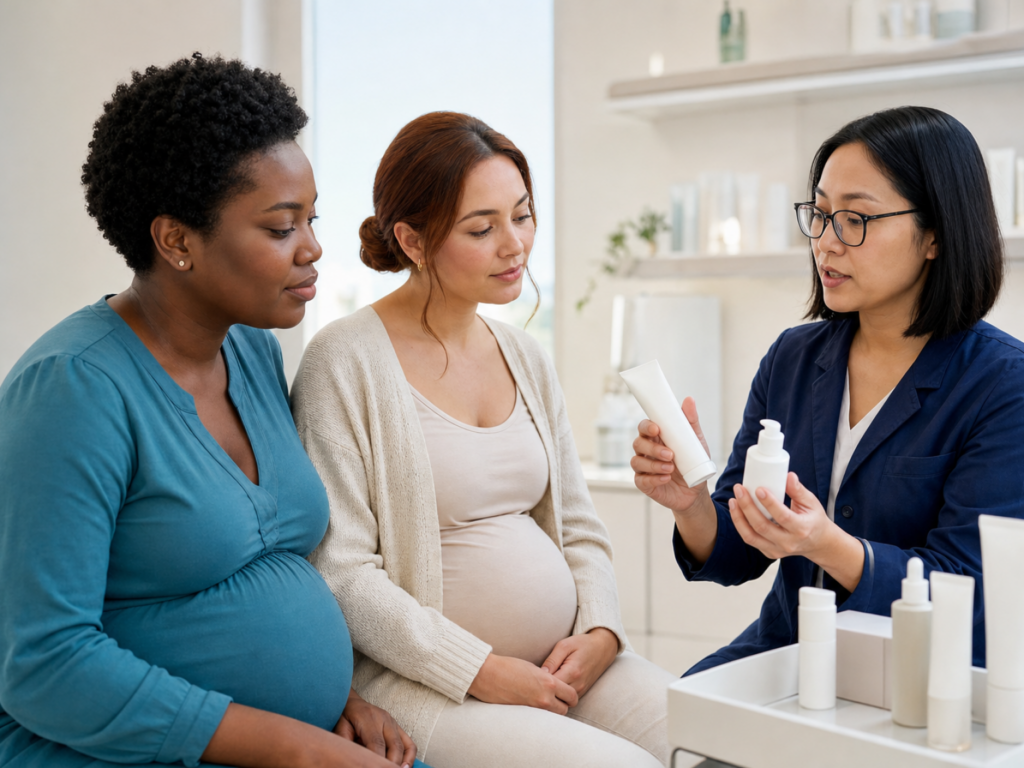
Pregnancy often changes the skin in visible, sometimes emotionally loaded ways. Acne may flare after years of clear skin; nipples, scars, or the midline of the abdomen may darken; and brown patches known as melasma may appear on the face. These changes are common and usually reflect the profound hormonal, vascular, immune, and metabolic adaptations that support pregnancy.
Still, “common” does not always mean “ignore.” Some rashes, severe itching, painful lesions, or rapidly evolving pigmentation deserve prompt medical assessment. This article explains typical pregnancy-related skin changes, acne, and pigmentation with practical self-care principles, while emphasizing when to consult an obstetric clinician, dermatologist, midwife, or other qualified healthcare professional.
Highlights
Many skin changes in pregnancy are hormonally driven and benign, including increased pigmentation, melasma, stretch marks, spider veins, and acne flares.
Pregnancy acne care usually starts with gentle cleansing, non-comedogenic products, and avoiding harsh irritation; medication choices should be reviewed with a clinician.
Melasma and other pigmentary changes can deepen with ultraviolet exposure, so sun protection is a key preventive and supportive measure.
New rash, severe itching, blistering, jaundice, pain, fever, or skin infection signs should be discussed promptly with a healthcare professional.
Why the skin changes in pregnancy
The skin is highly responsive to pregnancy physiology. Rising estrogen, progesterone, human placental lactogen, and other endocrine signals alter sebaceous gland activity, melanocyte stimulation, blood vessel tone, connective tissue remodeling, and immune responses. These effects overlap with mechanical stretching as the uterus, breasts, abdomen, and hips enlarge.
In medically precise terms, pregnancy can increase melanogenesis, modify cutaneous vascular reactivity, and shift immune regulation. For the person experiencing it, this may look like darker areolas, a line down the abdomen, facial brown patches, oilier or drier skin, visible veins, flushing, or itch. The timing varies: some changes begin in the first trimester, while others appear later as hormones and skin stretching intensify.
Skin changes may be physically uncomfortable and emotionally distressing. It is understandable to feel frustrated if acne, pigment patches, or stretch marks affect your sense of identity at a time when your body is already changing rapidly. Supportive care, realistic expectations, and professional guidance can make this period easier to navigate.
Pregnancy acne: why it happens and how to care for it
Acne in pregnancy is common, particularly in people with a prior tendency toward acne. Hormonal changes may increase sebum production, creating an environment in which follicles clog more easily. Lesions may include comedones, inflammatory papules, pustules, or deeper nodules, often on the face, chest, back, or jawline.
Basic care generally emphasizes barrier protection and avoidance of irritation:
- Wash affected skin gently with a mild cleanser, usually no more than twice daily and after heavy sweating.
- Avoid aggressive scrubbing, abrasive exfoliants, and frequent product switching, which can worsen inflammation.
- Choose non-comedogenic, oil-free, fragrance-light products when possible.
- Do not squeeze or pick lesions, as this increases the risk of scarring and post-inflammatory hyperpigmentation.
- Use sunscreen daily, because inflamed acne lesions can leave darker marks more readily in sun-exposed skin.
Medication decisions in pregnancy require caution. Some topical or oral acne treatments may be considered in selected circumstances, while others should be avoided. Retinoids, especially oral isotretinoin, are contraindicated because of fetal risk, and many clinicians advise avoiding topical retinoids as well. If acne is painful, cystic, scarring, or significantly affecting mood, ask your obstetric clinician or dermatologist about pregnancy-compatible options rather than self-prescribing over-the-counter or leftover medications.
Pigmentation: linea nigra, areolar darkening, and melasma
Increased pigmentation is one of the most characteristic skin findings of pregnancy. Estrogen, progesterone, and melanocyte-stimulating influences can make melanocytes produce more pigment. Areas that are already naturally darker often deepen first, including the areolae, nipples, genital skin, inner thighs, and existing freckles or scars.
The linea nigra is a vertical dark line that may appear from the pubic area toward the navel or higher along the midline of the abdomen. It is typically benign and often fades gradually after delivery, although the degree of fading varies.
Melasma, sometimes called the “mask of pregnancy,” causes tan to brown or gray-brown patches, usually on the cheeks, forehead, upper lip, chin, or nose. It is more common in people with darker skin tones or a personal or family tendency to pigment easily, and ultraviolet and visible light exposure can intensify it.
Supportive steps for pigmentation focus on photoprotection:
- Use broad-spectrum sunscreen daily, ideally SPF 30 or higher, and reapply when outdoors.
- Wear a wide-brimmed hat, sunglasses, and shade-protective clothing when possible.
- Avoid intentional tanning and prolonged midday sun exposure.
- Discuss pigment-lightening products with a clinician before use, because not all ingredients are appropriate in pregnancy or lactation.
Melasma may improve postpartum, but it can persist or recur, especially with sun exposure or hormonal contraception. A dermatologist can help plan treatment after pregnancy if pigmentation remains bothersome.
Stretch marks, texture shifts, and connective tissue changes
Stretch marks, medically called striae gravidarum, appear when the skin stretches faster than the dermal connective tissue can accommodate. They often begin as pink, red, purple, or brown streaks on the abdomen, breasts, hips, thighs, or buttocks, depending on skin tone. Over time, they commonly fade to lighter, flatter lines, but they may not disappear completely.
Genetics, degree and speed of weight gain, fetal growth, breast enlargement, and connective tissue characteristics all influence whether stretch marks develop. Moisturizers can reduce dryness and improve comfort, but no cream has been proven to reliably prevent stretch marks for everyone. If a product causes burning, rash, or itching, stop using it and seek advice.
Some people also notice changes in skin texture: dryness, sensitivity, oiliness, or increased reactivity to products that were previously tolerated. A simplified routine is often helpful: mild cleanser, moisturizer, sunscreen, and only targeted treatments approved by a healthcare professional. Pregnancy is usually not the best time to experiment with multiple active ingredients, peels, or aggressive cosmetic procedures.
Vascular changes: spider veins, redness, and swelling-related effects
Pregnancy increases blood volume and alters vascular tone. As a result, some people notice spider angiomas, palmar erythema, facial flushing, or more visible superficial veins. Varicose veins may appear or worsen, particularly in the legs, vulvar area, or around the rectum as hemorrhoids. These are often related to increased venous pressure and hormonal effects on vessel walls.
Skin over swollen areas may feel tight, shiny, or itchy, especially in the lower legs and feet. General measures such as changing position, elevating the legs, gentle movement, hydration, and properly fitted compression garments may be recommended by clinicians for pregnancy-related edema or venous symptoms. However, sudden one-sided leg swelling, redness, warmth, or pain should be assessed urgently because blood clots require prompt evaluation.
Vascular skin changes often improve after delivery, although varicose veins can persist. If they are painful, bleeding, or associated with significant swelling, discuss evaluation and management with your healthcare team.
Itching and rashes: what is common and what needs attention
Mild itching can occur as the skin stretches and becomes drier, especially over the abdomen and breasts. Fragrance-free moisturizers, lukewarm showers, breathable clothing, and avoiding harsh soaps may help. However, itching in pregnancy has a broad differential diagnosis, and some causes require medical testing.
Contact dermatitis, eczema flares, fungal infections, hives, and heat rash can occur at any time. Pregnancy-specific dermatoses also exist, including polymorphic eruption of pregnancy and pemphigoid gestationis. Intrahepatic cholestasis of pregnancy classically causes intense itching, often on the palms and soles, sometimes without a visible rash; it requires prompt medical evaluation because it can have implications for fetal monitoring and timing of birth.
Seek medical advice for intense generalized itching, itching of the palms or soles, blisters, widespread rash, fever, skin pain, pus, rapidly spreading redness, jaundice, dark urine, or pale stools. Photographs and a timeline of symptoms can help your clinician assess the pattern.
Emotional impact and body image
Skin changes are visible, and visibility can make them feel especially personal. Acne, melasma, stretch marks, and swelling-related changes may affect confidence, intimacy, work life, or social interactions. These reactions are valid. Pregnancy is often described as joyful, but it can also involve grief for a changing body, frustration with loss of control, and anxiety about whether changes will be permanent.
If skin symptoms are affecting sleep, mood, eating patterns, or willingness to leave home, mention this to your healthcare team. Emotional wellbeing is part of medical care, not a cosmetic extra. Some people benefit from dermatology referral, counseling, peer support, or discussing broader hormonal changes in early pregnancy and mood swings and emotional changes in pregnancy with trusted clinicians.
Practical skin-care principles in pregnancy
A pregnancy-conscious skin routine does not need to be elaborate. In fact, simpler is often safer and easier to tolerate. The goal is to support the skin barrier, reduce inflammation, limit ultraviolet-triggered pigmentation, and avoid ingredients or procedures with uncertain safety.
- Cleanse gently and avoid over-washing, especially if acne is inflamed.
- Moisturize dry or itchy areas with fragrance-free products.
- Use daily broad-spectrum sunscreen and physical sun protection for melasma prevention and post-acne marks.
- Check acne, pigment, and anti-aging products for retinoids or other ingredients that should be reviewed in pregnancy.
- Ask before using prescription creams, oral medications, chemical peels, laser treatments, or high-strength exfoliating acids.
- Bring a full list of skin products and supplements to prenatal or dermatology appointments.
Because safety depends on dose, route, trimester, medical history, and coexisting conditions, individualized advice is essential. What was appropriate before pregnancy may not be appropriate now, and what is safe for one person may not be right for another.
When to seek medical advice promptly
- Severe itching, especially on the palms or soles, even if there is no visible rash.
- Blistering, painful rash, fever, pus, or rapidly spreading redness.
- Yellowing of the skin or eyes, dark urine, pale stools, or persistent right upper abdominal discomfort.
- Sudden one-sided leg swelling, warmth, redness, or pain.
- Cystic, scarring, or emotionally distressing acne before using prescription or high-strength treatments.
- Any new or changing mole, bleeding lesion, or irregular pigmented spot.
Tools & Assistance
- Keep a dated photo log of new rashes, acne flares, or pigmentation changes to show your clinician.
- Bring all skin-care products, prescriptions, and supplements to a prenatal or dermatology appointment for safety review.
- Use a daily broad-spectrum sunscreen and sun-protective clothing, especially if melasma is developing.
- Ask your obstetric clinician for referral to a dermatologist if symptoms are painful, persistent, scarring, or diagnostically unclear.
FAQ
Will pregnancy acne go away after birth?
It may improve as hormones shift postpartum, but timing varies. Some people flare during breastfeeding or with sleep deprivation and stress. If acne is painful, scarring, or distressing, ask a clinician about safe options.
Is melasma dangerous?
Melasma itself is usually benign, but it can be persistent and emotionally upsetting. New, irregular, bleeding, or rapidly changing pigmented lesions should be evaluated to rule out other conditions.
Can I use retinol or isotretinoin for acne in pregnancy?
Oral isotretinoin is contraindicated in pregnancy, and retinoid products should not be used unless a qualified clinician specifically advises otherwise. Review acne medications with your obstetric clinician or dermatologist.
Do stretch mark creams prevent stretch marks?
Moisturizers can reduce dryness and itching, but no topical product reliably prevents stretch marks for everyone. Genetics, skin structure, and the degree of stretching play major roles.
Is itching always normal in pregnancy?
Mild localized itching from stretching or dryness can be common, but intense itching, itching on the palms or soles, jaundice, rash, blisters, or systemic symptoms should be assessed promptly.
Sources
- American College of Obstetricians and Gynecologists (ACOG) — Skin Conditions During Pregnancy
- Mayo Clinic — Pregnancy acne: What's the best treatment?
- PubMed Central / NIH — Pregnancy and Skin
Disclaimer
This article is for general educational purposes only and does not replace medical advice, diagnosis, or treatment. Consult your obstetric clinician, dermatologist, midwife, or other qualified healthcare professional about skin symptoms or medication safety in pregnancy.


















Please log in to leave a comment.