
Intro
Pregnancy can make everyday food decisions feel unusually high-stakes. Many people are already balancing nausea, cravings, cultural foods, work schedules, and nutrition advice; adding food safety rules can feel like one more checklist. The goal is not to create fear around eating, but to reduce exposure to specific foodborne pathogens that can be more consequential in pregnancy.
Listeria monocytogenes is one of the key organisms discussed in prenatal food safety because it can grow at refrigerator temperatures and can contaminate ready-to-eat foods. Listeriosis is uncommon, but pregnancy increases susceptibility, and fetal or newborn complications can be severe. With a few practical habits, most risk can be lowered substantially while still allowing a varied, nourishing pregnancy diet.
Highlights
Listeria is unusual among foodborne bacteria because it can multiply in cold, refrigerated environments, especially in chilled ready-to-eat foods kept for too long.
Pregnant people are advised to avoid unpasteurized dairy products, refrigerated pâtés, refrigerated smoked seafood, and high-risk chilled ready-to-eat foods unless handled or cooked safely.
Deli meats and hot dogs are not automatically forbidden in all guidance, but they should be reheated until steaming hot before eating during pregnancy.
Time and temperature control matter: keep refrigerators cold, respect use-by dates, and do not leave perishable foods at room temperature for more than two hours.
If you develop fever, flu-like illness, gastrointestinal symptoms, or feel unwell after eating a high-risk food, contact your maternity care clinician promptly rather than trying to self-diagnose.
Why Listeria matters in pregnancy
Listeria monocytogenes is a bacterium found in soil, water, animals, and food-processing environments. Unlike many foodborne pathogens, it can survive and grow at refrigerator temperatures. This makes it especially relevant to refrigerated ready-to-eat foods that are stored for days, handled after cooking, or eaten without further heating.
Pregnancy involves complex immune adaptations that support fetal tolerance but can also increase vulnerability to certain infections. Listeriosis in the pregnant person may cause mild fever, muscle aches, nausea, vomiting, diarrhea, or a flu-like illness; in some cases symptoms are subtle. The concern is that the organism can cross the placenta and cause fetal or neonatal infection. Reported complications include miscarriage, stillbirth, preterm birth, and serious newborn infection.
This does not mean that every exposure causes illness. Listeriosis remains relatively rare. However, because the potential consequences can be serious and prevention is practical, food safety recommendations during pregnancy are intentionally cautious.
Core food safety rules to use every day
Food safety in pregnancy is built on a few principles: keep cold foods cold, hot foods hot, avoid prolonged room-temperature storage, prevent cross-contamination, and heat higher-risk foods thoroughly when appropriate.
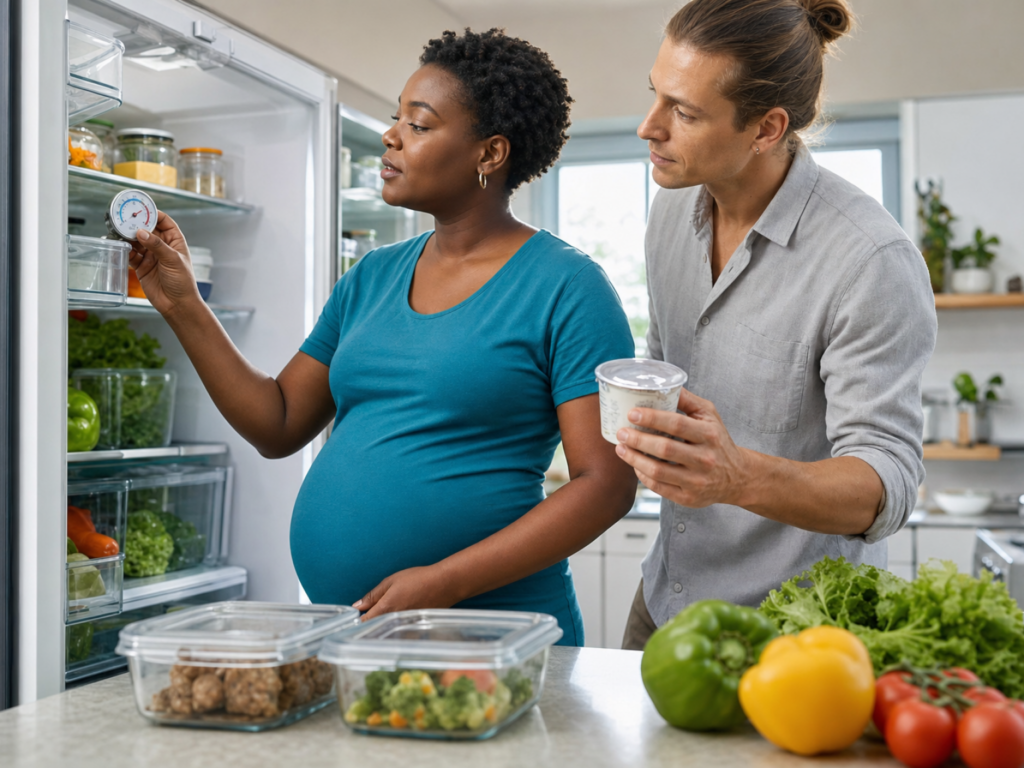
- Keep the refrigerator cold. Aim for a refrigerator temperature at or below 4–5°C, depending on local guidance, and use a refrigerator thermometer if possible.
- Follow the two-hour rule. Perishable foods should not sit at room temperature for more than two hours. In hot conditions, such as outdoor meals or warm kitchens, a shorter window may be safer.
- Use food by the use-by date. Use-by dates are particularly important for chilled ready-to-eat foods because Listeria risk increases with time, even under refrigeration.
- Reheat selected ready-to-eat meats until steaming hot. Deli meats, cold cuts, and hot dogs should be reheated until steaming hot before eating during pregnancy.
- Separate raw and ready-to-eat foods. Use separate cutting boards or wash them thoroughly between raw meat, poultry, seafood, unwashed produce, and foods that will be eaten without cooking.
- Wash hands and surfaces. Handwashing after handling raw foods, wiping refrigerator spills promptly, and cleaning knives, boards, and counters reduce transfer of bacteria.
These steps also reduce risk from other pathogens, such as Salmonella, Campylobacter, and certain strains of E. coli, which are also relevant in pregnancy.
Listeria risk foods to avoid or handle with special care
Many Listeria-related recommendations focus on foods that are refrigerated, ready to eat, moist, and stored for a period of time. Risk varies by country, production standards, and product handling, so local public health advice and your clinician’s guidance matter.
- Unpasteurized milk and foods made from unpasteurized milk. Avoid raw milk and cheeses or dairy products made with unpasteurized milk. Pasteurization is a heat process designed to kill harmful microorganisms.
- Soft cheeses made from unpasteurized milk. The key issue is pasteurization status. Check labels carefully; if you cannot confirm pasteurization, choose another option.
- Refrigerated pâtés and meat spreads. These are considered higher risk because they are chilled, ready to eat, and may support Listeria growth. Shelf-stable canned versions are generally treated differently until opened.
- Refrigerated smoked seafood. Products such as refrigerated smoked salmon, trout, whitefish, cod, tuna, or mackerel may carry risk if eaten cold. Smoked seafood may be safer when cooked in a dish until thoroughly hot.
- Deli meats, cold cuts, and hot dogs. These can become contaminated after processing. If eaten during pregnancy, reheat until steaming hot immediately before eating.
- Chilled ready-to-eat foods. Pre-prepared sandwiches, salads, cooked sliced meats, and some packaged convenience foods require careful attention to refrigeration, use-by dates, and storage time.
For a broader prenatal nutrition perspective, related guidance on foods to avoid and high-risk foods during pregnancy can help place Listeria precautions alongside mercury, alcohol, undercooked foods, and other exposures.
Safer swaps that still support good nutrition
Avoidance advice can feel limiting, especially if many of your usual foods are quick refrigerated options. The aim is to substitute rather than simply remove. Pregnancy still requires adequate protein, iron, iodine, calcium, choline, omega-3 fats, fiber, and energy intake.
- Instead of cold deli meat sandwiches: choose freshly cooked poultry, meat, eggs cooked until firm, roasted vegetables, hummus from a reputable source and eaten within date, or deli meat heated until steaming and eaten promptly.
- Instead of refrigerated smoked fish eaten cold: choose cooked fish in a hot meal, such as baked salmon, fish cakes cooked thoroughly, or cooked seafood soups and stews. Fish can be an important source of omega-3 fatty acids, so the goal is safe selection and preparation, not unnecessary avoidance of all fish.
- Instead of unpasteurized cheeses: choose clearly labeled pasteurized dairy products, pasteurized hard cheeses, yogurt, or milk alternatives that provide appropriate calcium and vitamin D where needed.
- Instead of refrigerated pâté: choose freshly cooked lean meats, beans, lentils, nut butters, or other protein-rich spreads that are stored safely and eaten within recommended time frames.
- Instead of long-stored leftovers: portion cooked food into shallow containers, refrigerate promptly, and reheat until steaming hot before eating.
If food aversions or nausea make these swaps difficult, ask your midwife, obstetrician, dietitian, or primary care clinician for individualized options. Food safety should support nutrition, not make eating feel impossible.
Eating out, takeout, buffets, and shared meals
Restaurants, cafeterias, workplace refrigerators, potlucks, and family gatherings can be harder to control than your own kitchen. A few practical choices can reduce risk without requiring social isolation.
- Prefer foods cooked to order and served hot. Hot meals are generally lower risk than cold ready-to-eat items that may have been held for long periods.
- Be cautious with buffets and salad bars. Foods may sit at uncertain temperatures and be exposed to repeated handling. If you do choose buffet foods, select items that are visibly hot and freshly replenished.
- Ask about pasteurization. For cheeses, dairy-based desserts, smoothies, and juices, it is reasonable to ask whether ingredients are pasteurized.
- Transport food safely. Use an insulated bag with ice packs for chilled foods, especially when commuting or traveling.
- Do not rely on smell or appearance. Food contaminated with Listeria may look, smell, and taste normal.
For takeout, refrigerate leftovers promptly and reheat them thoroughly. If food has been sitting out during a long meeting, party, or car ride, it is safer to discard it than to gamble.
What to do after a possible exposure
It is very common to realize after eating that a food may have been on a pregnancy caution list. Try not to panic. A single exposure does not mean infection has occurred. The next step depends on the type of food, whether there is a known recall or outbreak, and whether you have symptoms.
Contact your maternity care clinician promptly if you develop fever, chills, muscle aches, diarrhea, vomiting, severe headache, stiff neck, confusion, reduced fetal movements, contractions, or any symptom that worries you. Also contact a healthcare professional if you ate a food later recalled for Listeria contamination or if public health authorities identify an outbreak linked to a product you consumed.
Do not start antibiotics, induce vomiting, or attempt home testing on your own. Clinicians may consider your gestational age, symptoms, exposure history, vital signs, and local public health information when advising next steps. Listeriosis is a medical condition requiring professional evaluation.
Building a calm, realistic food safety routine
Food safety works best when it becomes routine rather than a source of constant anxiety. Consider keeping a refrigerator thermometer visible, labeling leftovers with dates, cleaning the refrigerator weekly, and planning quick safe meals for days when fatigue or nausea makes cooking difficult.
It can also help to share the rules with partners, relatives, housemates, or anyone preparing food for you. Clear requests such as “please heat the deli meat until it is steaming” or “please check that the cheese is pasteurized” are reasonable prenatal safety measures, not overreactions.
If you have additional risk factors, such as immunosuppressive therapy, transplant history, inflammatory bowel disease medications, diabetes, kidney disease, or a prior complicated pregnancy, ask your clinician whether any extra precautions apply. General food safety rules are useful, but personal medical context matters.
When to seek medical advice urgently
- Fever or flu-like illness after eating a recalled or high-risk food warrants prompt clinical advice.
- Reduced fetal movements, contractions, vaginal bleeding, or severe abdominal pain should be assessed urgently.
- Do not assume mild maternal symptoms mean low fetal risk; discuss concerning exposures with your maternity care team.
- Avoid unpasteurized dairy products and refrigerated pâtés during pregnancy unless your clinician or local guidance says otherwise.
- Discard perishable foods left at room temperature for more than two hours, or sooner in hot conditions.
Tools & Assistance
- Use a refrigerator thermometer and keep chilled foods at or below the recommended safe temperature.
- Create a visible leftovers label system with dates and discard times.
- Check public food recall alerts from your national or local food safety authority.
- Ask your obstetrician, midwife, or dietitian for individualized guidance if your diet is restricted.
- Carry an insulated lunch bag with ice packs for work, travel, or prenatal appointments.
FAQ
Can I eat deli meat during pregnancy?
Many authorities advise that deli meats, cold cuts, and hot dogs should be reheated until steaming hot before eating. Avoid eating them cold from the package or counter.
Is all cheese unsafe in pregnancy?
No. The main concern is unpasteurized milk and cheeses made from unpasteurized milk. Many pasteurized cheeses are acceptable when stored safely and eaten within date; check labels and local guidance.
Can Listeria grow in the refrigerator?
Yes. Listeria can grow at refrigeration temperatures, which is why refrigerator temperature, use-by dates, and avoiding long storage of ready-to-eat foods are important.
What if I accidentally ate a high-risk food but feel well?
A single exposure does not mean you will become ill. Monitor for symptoms, check whether the food has been recalled, and contact your maternity care clinician if you are worried or if symptoms develop.
Is smoked salmon safe during pregnancy?
Refrigerated smoked seafood eaten cold is commonly listed as a Listeria-risk food. It may be safer when cooked in a dish until thoroughly hot; ask your clinician about local recommendations.
Sources
- U.S. Food and Drug Administration — Listeria (Food Safety for Moms-to-Be)
- Food Standards Agency — Listeria
- March of Dimes — Listeriosis and pregnancy
Disclaimer
This article is for general medical information only and does not replace care from a qualified healthcare professional. If you are pregnant and feel unwell or are concerned about a food exposure, contact your obstetrician, midwife, or local health service.












Please log in to leave a comment.