
Intro
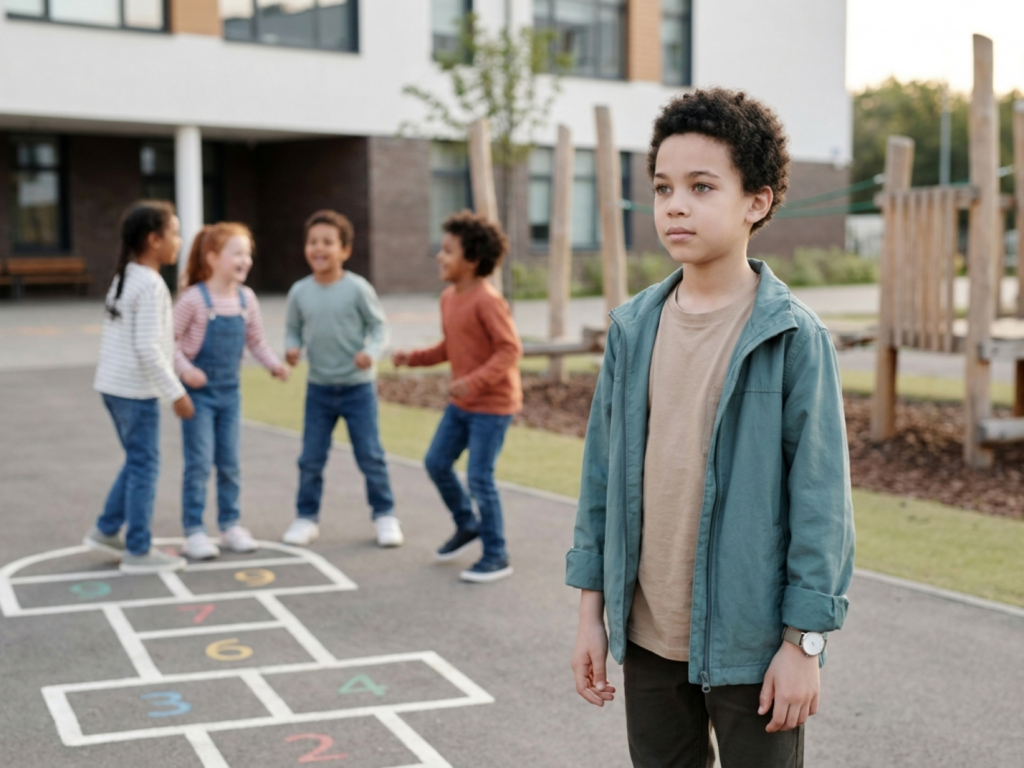
When a child says they have no friends or that everyone leaves them out, it can land heavily on a parent or caregiver. The words may describe a temporary social setback, but they can also signal persistent loneliness, peer rejection, bullying, social anxiety, neurodevelopmental differences, or low mood.
This article explains how to respond with warmth and clinical caution: validate the child’s experience, look for patterns, involve school when needed, and seek professional support if loneliness is affecting mood, sleep, learning, safety, or daily functioning.
Highlights
A child’s loneliness should be taken seriously, even when adults cannot immediately see the problem.
Feeling left out can be related to peer rejection, bullying, social communication differences, anxiety, depression, or normal developmental transitions.
Support works best when it combines emotional validation, practical friendship skills, school collaboration, and attention to mental health.
Parents do not need to diagnose the cause; they need to observe patterns, reduce shame, and connect the child with appropriate support.
Take the feeling seriously
A child who says they have no friends is not simply being dramatic. Loneliness in childhood can be measured reliably, and research has found that peer-rejected children tend to report more loneliness than other children. That does not mean every lonely child is being rejected by peers, but it does mean the feeling deserves careful attention rather than quick reassurance.
Start by accepting the child’s words at face value. A response such as, “That sounds really painful. I want to understand what school feels like for you,” is more useful than, “Of course you have friends.” Even if the parent has seen the child playing with classmates, the child may still feel peripheral, unwanted, or easily replaced.
Try to learn the pattern. Is the child alone at recess, excluded from group chats, not invited to birthdays, teased during games, or losing one close friendship? Does the distress happen after school, on Sunday nights, during transitions, or after social media use? These details help distinguish a painful but short-lived friendship wobble from persistent peer exclusion and school dissatisfaction.
Why a child may seem friendless
There are many possible explanations, and more than one can be true at the same time. Some children are socially interested but unsure how to join play. Others have temperament-based shyness, which means they need more time to warm up and may avoid busy peer situations even when they want connection. Some children are active, impulsive, or intense, and classmates may misread their enthusiasm as bossiness or intrusion.
Developmental and clinical factors can also matter. Difficulties with pragmatic communication skills, such as taking turns in conversation, reading facial expressions, staying on topic, or noticing when a peer wants space, can make friendships harder. Attention regulation, sensory sensitivities, language delays, autism spectrum traits, learning difficulties, or hearing problems may affect peer interactions. These possibilities are not labels to apply at home; they are reasons to observe carefully and consult professionals if concerns persist.
Social anxiety in children can look like disinterest, silence, irritability, stomachaches, or refusal to attend activities. A child may desperately want friends but freeze when invited to speak, join a game, or enter a group. Low mood can also reduce energy for social contact, creating a cycle in which isolation worsens sadness and sadness makes connection feel impossible.
Separate loneliness from bullying
Feeling left out can happen without bullying, but adults should actively check for bullying because children often underreport it. Bullying involves a power imbalance and repeated harm, such as name-calling, threats, humiliation, physical aggression, exclusion used as punishment, spreading rumors, or coercive online behavior. A child who says “nobody likes me” may be describing a general feeling, or they may be trying to communicate a specific unsafe situation.
Ask calm, concrete questions: “Who do you sit with at lunch?” “What happens when you try to join a game?” “Has anyone told others not to play with you?” “Do you feel safe at school?” Avoid sounding as if the child is being interrogated or expected to prove the problem. Children may protect adults from distress, fear retaliation, or feel ashamed.
If bullying is suspected, document dates, names, locations, screenshots if relevant, and the child’s emotional and physical symptoms. Contact the school through its safeguarding or anti-bullying process. Ask for a plan that includes supervision, teacher observations of peer interactions, clear follow-up dates, and support for the child’s sense of safety. Do not advise a child to simply ignore repeated harm if they are frightened or targeted.
Respond at home without increasing shame
Parents often want to fix loneliness quickly, but too much coaching can feel like criticism. A child may hear, “You are doing friendship wrong.” Begin with connection before strategy. Reflect the feeling, name the difficulty, and make it clear that being left out is not a character flaw.
Helpful home responses include:
- Use open questions: “What part of the day feels most lonely?” or “Who feels easiest to be around?”
- Notice strengths: kindness, humor, persistence, creativity, fairness, or curiosity.
- Practice one small social step at a time, such as greeting one classmate or asking one joining question.
- Role-play difficult moments briefly, then stop before the child feels examined.
- Protect recovery time after school, especially for children who are masking anxiety all day.
It is also useful to help the child build a wider social network. This may include cousins, neighbors, clubs, sports, music, faith groups, gaming communities with safe supervision, or structured interest-based activities. The goal is not to make the child popular. The goal is to give the child repeated experiences of belonging with peers who share an activity and where adults can support social entry.
Use structured opportunities to build connection
Many children do better with structured peer practice than with open-ended social settings. Recess, lunch, and large parties require fast social processing and confidence. A smaller, predictable activity can reduce cognitive load and make friendship more likely.
Consider one-on-one structured playdates with a child who seems kind or shares an interest. Keep the first meeting short, plan a cooperative activity, and end before fatigue or conflict builds. For older children, this might be a shared project, sport, board game, coding club, art class, or study session. The adult role is to scaffold, not hover. Set up the conditions, then allow the children space.
Teach specific scripts without making them sound robotic. Examples include, “Can I play the next round?” “What are the rules?” “Do you want to work together?” and “I need a turn choosing.” Children who struggle socially often need explicit language for entry, repair, and boundaries. Social competence coaching can be provided by parents, teachers, counselors, speech and language therapists, occupational therapists, or psychologists depending on the child’s needs.
Work with school as a partner
School staff see social patterns that parents cannot observe directly. A child may appear fine in class but be isolated at lunch. Another child may have friends in structured lessons but struggle during transitions. Ask the teacher for specific observations rather than general reassurance. Useful questions include: Who does the child choose to sit near? Who chooses the child? What happens during group work? Are there conflicts, avoidance, or signs of withdrawal?
If difficulties are persistent, request a coordinated plan. This might include a trusted adult check-in, supported lunch club, buddy systems, seating changes, supervised group activities, conflict repair after friendship problems, or referral to pastoral care or the school counselor. For children with suspected learning, language, neurodevelopmental, or mental health needs, school-based support may need to connect with pediatric, psychological, or special educational assessment pathways.
Keep the child involved at a developmentally appropriate level. Some children fear that adult intervention will make them look different. Explain what will be shared and why. The message should be: “Adults are going to make the environment safer and easier to manage,” not “You are the problem.”
When loneliness affects mental health
Social isolation is associated with anxiety and depression in children and adolescents, and persistent loneliness can affect sleep, concentration, appetite, self-esteem, school attendance, and somatic symptoms such as headaches or abdominal pain. Association does not prove that isolation is the only cause, but it is enough reason to watch carefully.
Seek professional advice if the child has persistent sadness in children, marked irritability, panic symptoms, school refusal, withdrawal from previously enjoyed activities, frequent tearfulness, self-critical statements, changes in eating or sleeping, unexplained physical complaints, or any talk of self-harm or not wanting to be alive. Contact a pediatrician, family doctor, child psychologist, school counselor, or local child and adolescent mental health service. If there is immediate danger, use emergency services or a crisis line in your area.
Professional support may focus on assessment, emotional regulation, anxiety management, communication skills, family support, or school accommodations. The aim is not to pathologize loneliness. The aim is to understand whether the child’s social pain is part of a broader clinical picture and to reduce risk while rebuilding connection.
Seek urgent support if
- The child talks about self-harm, suicide, or not wanting to be alive.
- There is suspected bullying, threats, coercion, or physical harm.
- The child refuses school or has severe distress before social situations.
- Sleep, appetite, concentration, or daily functioning changes significantly.
- Loneliness is accompanied by persistent low mood, panic, or marked withdrawal.
Tools & Assistance
- A calm daily check-in that asks about one hard moment and one tolerable moment
- Teacher or school counselor meeting with specific questions about peer interactions
- Short structured peer activities based on the child’s interests
- Pediatrician or family doctor appointment if mood, anxiety, sleep, or functioning is affected
- Local child and adolescent mental health service or crisis service when risk is urgent
FAQ
Should I tell my child to just be more confident?
Usually no. Confidence grows from repeated safe experiences, not pressure. Validate the feeling first, then practice one small social step at a time.
What if my child says they have no friends but the teacher says they seem fine?
Ask for specific observations from lunch, recess, transitions, and group work. Some children mask distress in class or have contact with peers without feeling included.
Could this be social anxiety?
It could be one possibility, especially if the child wants friends but avoids speaking, joining, or attending activities. A clinician can assess anxiety and related factors.
Are online friendships enough?
Online connection can be meaningful, especially for older children, but it should be safe, age-appropriate, and balanced with supported offline relationships when possible.
When should I seek professional help?
Seek help if loneliness persists, affects school or daily functioning, is linked with bullying, or appears alongside low mood, anxiety, sleep changes, self-harm talk, or major withdrawal.
Sources
- PubMed / National Library of Medicine — Loneliness and peer relations in young children
- PubMed Central / National Library of Medicine — Social isolation and its impact on child and adolescent development: a systematic review
- Hampshire and Isle of Wight CAMHS — Friendships and loneliness
Disclaimer
This article is for informational purposes only and does not replace medical, psychological, or safeguarding advice. Consult a qualified healthcare professional or emergency service if you are concerned about a child’s safety or mental health.
















Please log in to leave a comment.