
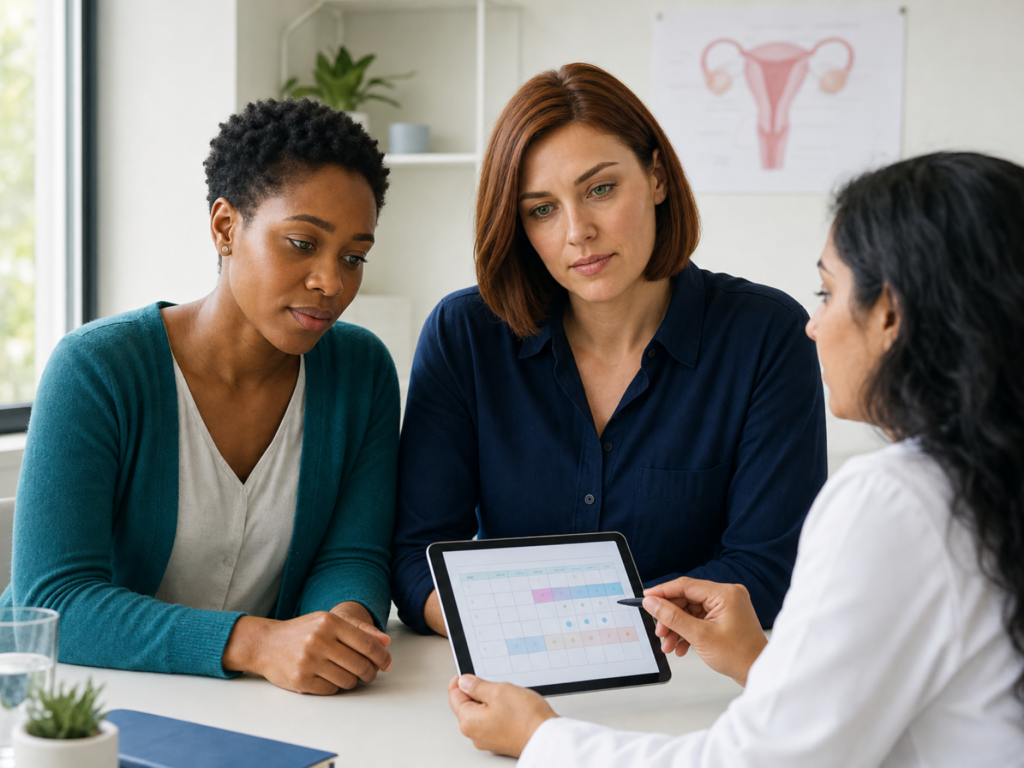
Intro
Week 3 after ovulation can be an emotionally intense time, especially if you are trying to conceive or monitoring every physical sensation. By this point, if fertilization occurred, the embryo has usually already completed the earliest stages of cell division, reached the uterus, and either implanted or begun producing enough pregnancy hormone to be detectable soon afterward.
It is important to clarify timing: “week 3 after ovulation” means approximately 15 to 21 days past ovulation, which corresponds to about 4 to 5 weeks of pregnancy when counted by the standard obstetric method from the first day of the last menstrual period. In this window, the embryo is microscopic, but its biologic activity is profound: implantation-related signaling, early placental formation, and the first organization of embryonic tissue are underway.
Highlights
By the third week after ovulation, implantation has usually already occurred if conception happened, although exact timing can vary.
The embryo is still extremely small, but the trophoblast is becoming biologically active and contributes to early placental structures.
Human chorionic gonadotropin, or hCG, is typically rising during this period and is the hormone detected by most pregnancy tests.
Early pregnancy symptoms may appear, but they are nonspecific and can overlap with premenstrual symptoms or progesterone effects.
Understanding the timing: ovulation days versus pregnancy weeks
Pregnancy timing can be confusing because clinicians usually date pregnancy from the first day of the last menstrual period, not from ovulation or fertilization. In a typical 28-day cycle, ovulation occurs around day 14. That means 3 weeks after ovulation is roughly 5 weeks pregnant by obstetric dating, though this can shift if ovulation occurred earlier or later.
When people say “week 3 after ovulation,” they are usually referring to approximately 15 to 21 days past ovulation. This is not the same as the “third week of pregnancy” in medical dating, which often includes ovulation and fertilization. In practical terms, week 3 after ovulation is usually a time when a missed period may already have occurred and a home pregnancy test may be positive if implantation was successful.
This distinction matters because the embryo’s biologic age is younger than the pregnancy week number suggests. Around this period, the embryo may be only about 3 weeks post-fertilization, yet the pregnancy may be documented clinically as 4 to 5 weeks gestational age.
What happened earlier: fertilization and the first cell divisions
To understand week 3 after ovulation, it helps to look briefly at what happened in the preceding days. After ovulation, the egg is released from the ovary and enters the fallopian tube. Fertilization typically occurs in the fallopian tube if sperm are present and capable of penetrating the egg. Once a sperm successfully fertilizes the egg, the combined genetic material forms a zygote.
The zygote begins cleavage divisions as it travels toward the uterus. These divisions increase the number of cells without a major increase in overall size. The embryo progresses through early stages often described as the two-cell, four-cell, and morula stages. Around day 5 or 6 after fertilization, it typically becomes a blastocyst, a fluid-filled structure with two major cell populations: the inner cell mass, which will contribute to the embryo, and the trophoblast, which will contribute to the placenta and membranes.
This journey from fertilization to the uterus is highly coordinated. The embryo must arrive at the uterine cavity at the right developmental stage, while the endometrium must be hormonally prepared for implantation.
Implantation: usually completed before week 3 after ovulation
Implantation is the process by which the blastocyst attaches to and invades the uterine lining. It generally begins several days after fertilization, often around 6 to 10 days post-ovulation, although the exact range varies. By the time someone reaches 15 to 21 days past ovulation, implantation has usually already occurred if the pregnancy is continuing.
During implantation, the trophoblast differentiates into specialized layers. The cytotrophoblast serves as a cellular layer, while the syncytiotrophoblast invades the endometrium and helps establish early contact with maternal blood supply. This is not yet a mature placenta, but it is the beginning of placental development.
Some people notice light spotting around implantation, but many do not. Spotting alone cannot confirm implantation, and heavier bleeding, significant pain, dizziness, or shoulder pain should be discussed urgently with a healthcare professional because several conditions can cause early bleeding or pain.
Embryo development during week 3 after ovulation
During the third week after ovulation, the embryo is undergoing rapid and highly organized changes. The inner cell mass is differentiating into early embryonic layers and supporting structures. Around this broad developmental window, the bilaminar embryonic disc forms, consisting of the epiblast and hypoblast. These structures are foundational for later gastrulation, when the three primary germ layers will eventually give rise to organs and tissues.
At the same time, extraembryonic structures are developing. The amniotic cavity begins to form, and the yolk sac contributes to early nutritional and developmental functions before the placenta becomes more established. Chorionic structures related to the trophoblast also continue developing, supporting the early maternal-embryonic interface.
Although this stage is biologically complex, the embryo remains far too small to be felt. There are no fetal movements, and ultrasound may not yet show much depending on timing, equipment, and individual variation. In early clinical assessment, providers may use serial hCG measurements or ultrasound at an appropriate gestational age rather than relying on symptoms alone.
Hormonal changes: hCG, progesterone, and early signaling
One of the defining events after implantation is the production of human chorionic gonadotropin, commonly called hCG. This hormone helps maintain the corpus luteum, which produces progesterone in early pregnancy. Progesterone supports the endometrium and helps create a uterine environment suitable for the developing pregnancy.
By 15 to 21 days after ovulation, hCG is often high enough to be detected by many home pregnancy tests, especially if the test is taken after a missed period and with concentrated urine. However, test sensitivity, ovulation timing, implantation timing, and urine dilution can all affect the result.
A negative test at this stage makes pregnancy less likely if ovulation timing is accurate, but it does not answer every situation. If periods are irregular, ovulation may have occurred later than expected. If there is uncertainty, repeating a test or consulting a clinician can be more informative than trying to interpret symptoms in isolation.
Possible symptoms in week 3 after ovulation
Some people experience noticeable symptoms during this period, while others feel no different. Both patterns can be normal. Early pregnancy symptoms are largely influenced by progesterone and rising hCG, but progesterone also rises after ovulation in cycles where pregnancy does not occur. This is why symptoms alone are not a reliable diagnostic tool.
Commonly reported sensations may include:
- Breast tenderness, fullness, or nipple sensitivity.
- Mild pelvic heaviness or uterine cramping.
- Fatigue or increased need for sleep.
- Nausea, food aversions, or heightened smell sensitivity.
- More frequent urination.
- Mood changes, bloating, or constipation.
These symptoms can overlap with premenstrual syndrome, luteal phase hormonal effects, stress, gastrointestinal changes, or medication effects. A pregnancy test and, when needed, medical evaluation are more reliable than symptom tracking alone.
Testing, missed periods, and when to contact a clinician
Many home pregnancy tests are more accurate around the time of a missed period, often about 12 to 14 days after ovulation. By week 3 after ovulation, a correctly used test is commonly positive if pregnancy is established. For best accuracy, follow the test instructions carefully and consider testing with first-morning urine.
If the test is positive, contacting a healthcare professional can help you plan next steps. This may include confirming pregnancy, reviewing medications and supplements, discussing folic acid or prenatal vitamins, and determining when an ultrasound is appropriate. People with prior ectopic pregnancy, recurrent pregnancy loss, fertility treatment, significant medical conditions, or concerning symptoms may need earlier individualized guidance.
If the test is negative but your period remains absent, consider repeating the test in a few days or seeking medical advice. Irregular cycles, delayed ovulation, stress, thyroid disease, polycystic ovary syndrome, intense exercise, weight changes, and other factors can affect menstrual timing.
Emotional reality of the third week after ovulation
This waiting period can feel surprisingly heavy. You may be balancing hope, anxiety, body awareness, and uncertainty all at once. It is understandable to check symptoms frequently or feel unsettled by every cramp, temperature shift, or test line.
Try to remember that early embryo development is mostly invisible from the outside. A lack of symptoms does not automatically mean something is wrong, and intense symptoms do not guarantee a pregnancy is progressing normally. If you are navigating infertility, pregnancy after loss, or medical treatment such as ovulation induction or IVF, the emotional load may be even greater. Support from a clinician, counselor, partner, or trusted community can be valuable.
When to seek medical advice promptly
- Severe one-sided pelvic pain, shoulder pain, fainting, or dizziness may require urgent evaluation.
- Heavy bleeding, passing large clots, or bleeding with significant pain should be discussed with a clinician.
- A positive pregnancy test after prior ectopic pregnancy warrants early professional guidance.
- Fever, severe vomiting, dehydration, or inability to keep fluids down should be assessed medically.
- Do not stop or start prescription medicines after a positive test without consulting a healthcare professional.
Tools & Assistance
- Use a home pregnancy test according to the instructions, preferably after a missed period.
- Track ovulation dates, period dates, bleeding, pain, and test results to share with a clinician.
- Schedule early prenatal care after a positive pregnancy test.
- Ask a pharmacist or healthcare professional to review medications and supplements for pregnancy safety.
- Seek urgent care for severe pain, heavy bleeding, fainting, or symptoms of possible ectopic pregnancy.
FAQ
Is week 3 after ovulation too early for a positive pregnancy test?
Usually no. If ovulation timing is accurate, many tests can detect pregnancy by 15 to 21 days past ovulation. A negative result may still occur if ovulation happened later than expected or the urine sample was diluted.
Has implantation already happened by week 3 after ovulation?
In most continuing pregnancies, implantation has already occurred by this point. Implantation more commonly begins about a week after fertilization, not three weeks later.
Can I feel the embryo developing at this stage?
No. The embryo is microscopic and cannot be felt. Cramping, bloating, fatigue, and breast tenderness are hormonal or uterine sensations, not direct sensations of the embryo.
Are no symptoms a bad sign?
Not necessarily. Some people have very few symptoms in early pregnancy. Symptom intensity varies widely and is not a dependable measure of embryo health.
When should I have an ultrasound?
Timing depends on your situation. Many early ultrasounds are more informative after a gestational sac or heartbeat is expected, but people with pain, bleeding, fertility treatment, or ectopic pregnancy risk may need earlier evaluation.
Sources
- Cleveland Clinic — How Pregnancy (Conception) Occurs
- NCBI Bookshelf — The blastocyst and implantation
- Brevard Health Alliance — Early Signs of Pregnancy After Ovulation
Disclaimer
This article is for informational purposes only and does not replace medical advice, diagnosis, or treatment. Consult a qualified healthcare professional for personal guidance, especially with pain, bleeding, medical conditions, or pregnancy concerns.












Please log in to leave a comment.