
Intro
Feeding a baby away from home can feel deceptively complicated, especially when you are balancing hunger cues, bottle cleanliness, temperature, timing, and your own energy. The good news is that formula feeding on the go can be safe and manageable with a simple plan, whether you are running errands, traveling for the day, or navigating a longer trip.
This article focuses on practical, evidence-informed ways to prepare, carry, and offer formula outside the home while keeping infection prevention and responsive feeding in mind. It is written for a medically literate reader and uses clinical terms where useful, while staying grounded in everyday decision-making.
Highlights
A practical travel plan reduces stress and helps you respond to hunger cues before a baby becomes distressed.
Safe formula feeding away from home depends on hygiene, temperature control, and correct preparation.
Responsive feeding still matters on the road; the schedule may flex, but infant cues should guide you.
Your safest option often depends on the type of formula you use, the length of time away, and access to clean water and refrigeration.
Why formula feeding on the go needs a plan
Feeding away from home is mostly about reducing avoidable friction: a hungry infant, a missing bottle, a forgotten nipple, or uncertainty about water safety can quickly turn a routine outing into a stressful one. A small amount of preparation can prevent many of these problems.
Because infants have limited reserve and can escalate from calm to inconsolable quickly, it helps to think ahead about when your baby is likely to feed, where you will be, and what feeding method will be easiest to use safely. Some families use ready-to-feed formula for convenience when out, while others rely on pre-measured powder and water if they have a reliable way to prepare bottles hygienically.
Whatever your approach, the core principles stay the same: protect the formula from contamination, avoid unsafe mixing practices, and try to preserve the baby’s usual feeding rhythm as much as the day allows.
What to pack before leaving the house
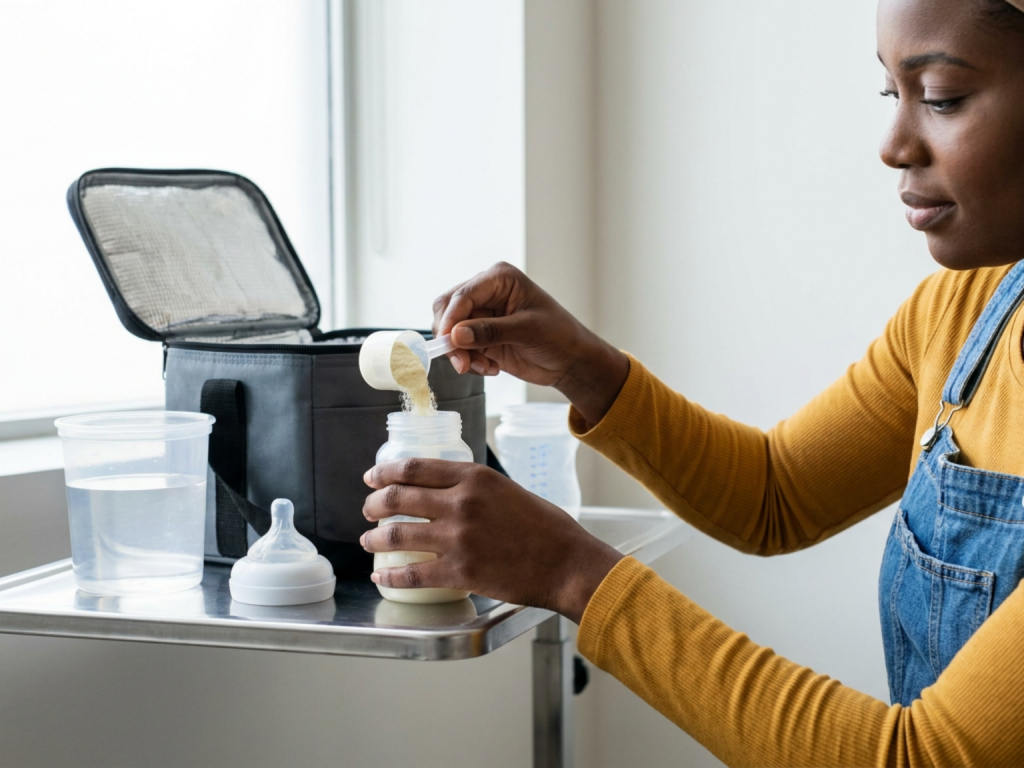
A useful travel kit is simple, not elaborate. The aim is to have everything needed for one or more complete feeds, plus a margin for spills or delays.
- Clean bottles with caps and nipples
- Formula in the form you plan to use: powder, concentrated liquid, or ready-to-feed
- Safe water if you will mix formula away from home
- A clean insulated bag or cooler with ice packs if refrigeration is needed
- Burp cloths, wipes, and a small trash bag
- Hand sanitizer for adults when soap and water are not available
If your baby usually takes feeds at predictable intervals, packing one extra bottle or an extra serving is often wise. Travel delays, traffic, or a longer-than-expected appointment are common reasons babies end up waiting too long for a feed.
Safe preparation outside the home
The safest preparation method depends on your circumstances and the type of formula you are using. Public health guidance emphasizes careful hygiene, correct mixing, and attention to the safety of the water used for preparation.
Before preparing a bottle, wash your hands if possible. If you are using powder, make sure the scoop and container stay clean and dry. If water is needed, use a source that is considered safe for infant feeding according to local guidance. Avoid guessing at proportions; formula should be made exactly as directed by the manufacturer unless a clinician gives you different instructions.
If you are traveling somewhere without easy access to clean prep space, ready-to-feed formula may reduce handling steps and lower the chance of error. That convenience can be particularly helpful in airports, cars, parks, or during visits where sink access is limited.
Storage, temperature, and timing matter
Once formula is prepared, time and temperature become important. Bacterial growth is the main concern when milk sits too long in the warm range. If a bottle has been prepared in advance, keep it cold until it is needed and use an insulated cooler or refrigerator when available.
Do not leave prepared formula in a hot car or in direct sunlight. If you are moving through a full day of errands, it may be better to pack smaller amounts more frequently than to carry a large batch for many hours. When in doubt, treat the bottle conservatively and follow local public-health and product-label guidance for how long prepared formula can safely remain unused.
Similarly, once a baby has started feeding from a bottle, hygiene standards become stricter because saliva introduces contamination. If a bottle is only partially consumed, many parents choose to discard the remainder rather than keep it for later; if you are unsure what is safe in your situation, ask your pediatric clinician or local health service.
Feeding responsively in public
Formula feeding on the go works best when it still follows responsive feeding principles. That means watching for early hunger cues such as rooting, hand-to-mouth movements, alertness, or fussing, rather than waiting until the baby is fully distressed. A calm feed is often easier for both baby and caregiver.
Responsive feeding also means allowing the baby to regulate pace and intake as much as practical. Hold the bottle so the flow feels steady but not forceful, pause for burping when needed, and watch for cues of satiety such as turning away, slowing down, or losing interest. This approach supports comfort and may reduce overfeeding pressure.
Some families worry that public settings require rigid scheduling. In reality, many babies eat more or less than usual on a given day, especially during travel, growth spurts, or changes in routine. The feeding plan should remain flexible enough to follow the baby’s cues while still preserving safety and sanity.
Different feeding setups for different outings
Short outings, all-day trips, and longer travel each call for a slightly different strategy. For a quick appointment, one prepared bottle may be enough. For a day away, it is often better to bring a complete backup feed and a way to keep supplies clean and cool. For travel by plane, train, or long car ride, think through the entire route rather than only the destination.
Parents who prefer powder often find it helpful to pre-measure servings into clean containers so the bottle can be assembled quickly. Families who use ready-to-feed bottles may value speed and reduced contamination risk. There is no single best method for every family; the right choice is the one that matches your baby’s needs, the length of the outing, and the practical limits of the environment.
If your baby has medical complexity, prematurity history, feeding intolerance, or special formula requirements, it is especially important to confirm the plan with a healthcare professional before relying on a travel routine.
Common mistakes to avoid
Many travel feeding problems are preventable. The most common errors involve rushing, improvising with cleanliness, or assuming that a bottle will be fine because the outing is short.
- Mixing formula without checking the correct ratio
- Using water of uncertain safety when local guidance recommends caution
- Leaving prepared formula unrefrigerated for too long
- Reusing a bottle or nipple that has not been cleaned properly
- Waiting until the baby is overtired or highly distressed before feeding
A little structure helps. A written checklist on your phone or in the diaper bag can prevent missed supplies and reduce decision fatigue when you are away from home.
When to be extra cautious
- Use local guidance on safe water if you are mixing formula away from home.
- Do not assume a warm bottle is safe just because it was prepared recently.
- If your baby is premature, medically fragile, or immunocompromised, ask for individualized advice.
- Seek urgent care if your baby shows signs of dehydration, persistent vomiting, lethargy, or poor feeding.
Tools & Assistance
- Your pediatrician or family doctor
- Local public-health guidance on infant formula safety
- A travel bottle kit with pre-measured formula and clean bottles
- An insulated cooler with ice packs for prepared feeds
- The formula manufacturer’s preparation instructions
FAQ
Is ready-to-feed formula better for travel?
It can be, because it reduces mixing steps and may lower contamination risk. It is often especially convenient when you do not have reliable access to clean prep space.
Can I prepare bottles ahead of time for a day out?
Sometimes, but storage time and temperature matter. Keep prepared formula cold and follow product and public-health guidance on how long it can be safely stored.
How do I know when my baby is hungry while we are out?
Look for early cues such as rooting, hand-to-mouth movement, alertness, and fussing. Responsive feeding means offering a feed before the baby becomes highly upset.
What if my baby does not finish the bottle?
Partially consumed formula has a higher contamination risk because saliva enters the bottle. Many caregivers discard leftovers, but if you are unsure, ask your clinician what is appropriate for your situation.
Sources
- Centers for Disease Control and Prevention — Tips for Infant Formula Feeding | Infant and Toddler Nutrition
- Public Health Scotland — Formula feeding: How to feed your baby safely
- Happy Baby Organics — Formula feeding: on Demand or Schedule
Disclaimer
This article is for general educational purposes only and is not a substitute for personalized medical advice. If you have concerns about formula preparation, feeding tolerance, or your baby’s health, consult a qualified healthcare professional.















Please log in to leave a comment.