
Intro
A baby’s skin barrier is still maturing throughout the first year of life, so the goal of care is protection, not deep cleansing. Gentle routines reduce dryness, friction, and irritation while supporting comfort during a period when the skin is thinner, more permeable, and more reactive than adult skin.
This guide focuses on practical, evidence-based habits for everyday care: bathing, diaper-area cleansing, product selection, sun protection, and the small safety details that matter. It is one part of baby medical care first year, and it is also a good reminder that if something looks severe, persistent, or simply unusual to you, a pediatric clinician should help interpret it.
Highlights
Most babies do best with short, lukewarm baths and gentle cleansing rather than frequent, long washing.
Fragrance-free, mild products are usually better tolerated than soaps, scrubs, or heavily scented lotions.
The diaper area benefits from prompt changes, soft cleaning, and a barrier such as zinc oxide when irritation appears.
Sun protection matters from the beginning, but sunscreen use is handled more cautiously in infants under six months.
A rash that is spreading, blistering, painful, or not improving deserves medical review rather than guesswork.
Why infant skin needs a gentler routine
Newborn and infant skin has a less mature barrier function than older children’s skin, so water loss, friction, and chemical irritation can show up quickly. That is one reason many infants seem to do better with simple routines: fewer ingredients, less scrubbing, and less time in the water.
It can be tempting to treat every dry patch or minor redness as something that needs a product, but in the first year, restraint is often the most helpful strategy. Clean the areas that truly need it, protect the skin from unnecessary irritation, and let the skin’s barrier recover between exposures.
Bathing from the newborn period through 12 months
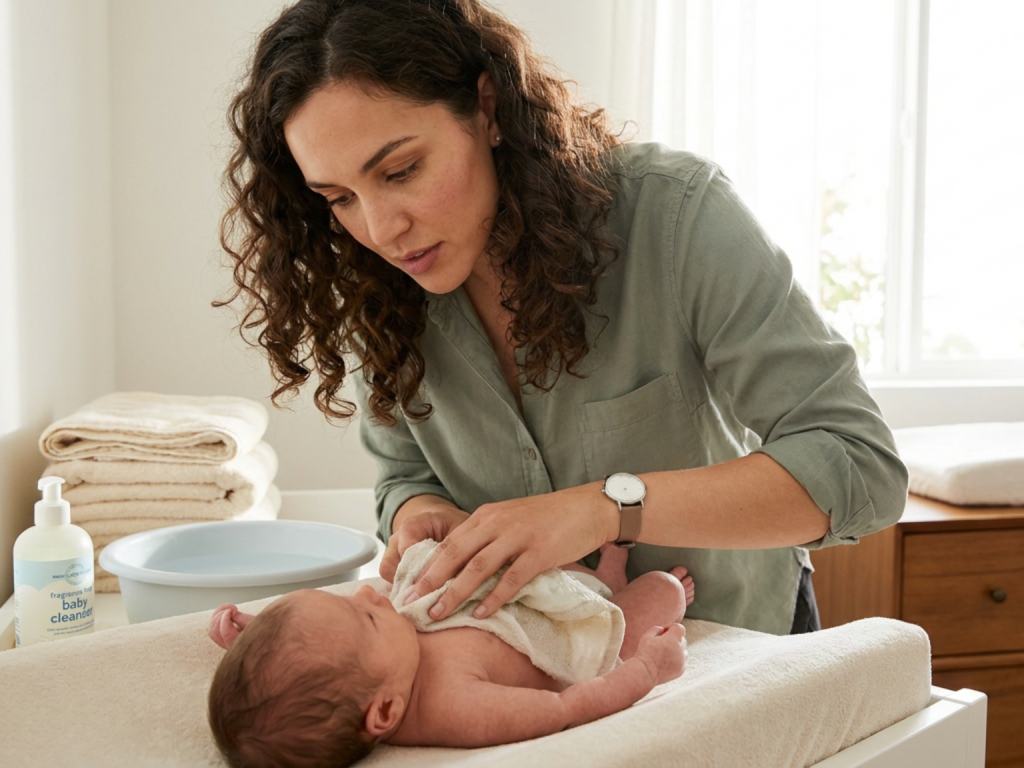
During the earliest weeks, a sponge bath is often enough, especially while caregivers are still learning how to handle a tiny, slippery baby safely. Hospital-based guidance emphasizes gentle cleansing, safe water temperature, and avoiding unnecessary scrubbing. A quick bath is usually preferable to a long soak, and lukewarm water is the safest default.
As babies grow, bathing can become part of the routine, but it does not need to be daily for every child. Many families find that a few baths each week, with targeted cleaning of the face, neck folds, hands, and diaper area as needed, keeps skin comfortable without over-drying it. Mild, fragrance-free cleansers are the best starting point if any cleanser is used at all, and a soft towel or washcloth is kinder than rough rubbing.
- Use lukewarm water rather than hot water.
- Keep baths short and calm.
- Avoid strong soaps, scrubs, and heavily perfumed products.
- Never leave a baby unattended in the bath, even briefly.
Diaper care: the most common friction point
The diaper area is exposed to moisture, friction, and stool enzymes, which makes it one of the most common sites of irritation in infancy. The best prevention is simple and consistent: change diapers promptly, clean the skin gently, and let the area dry before putting on a fresh diaper.
If redness or irritation begins, a barrier product can help protect the skin from ongoing contact. Dermatology guidance commonly recommends zinc oxide for diaper rash because it forms a protective layer on the skin surface. Apply it to clean, dry skin rather than rubbing aggressively, and use enough to create a visible barrier. If the rash is severe, bleeds, blisters, or does not improve, that is not a situation for trial-and-error treatment at home.
It is also worth remembering that wipe technique matters. Patting is usually better than scrubbing, and fragrance-free wipes or plain water can be easier on sensitive skin. The goal is to remove stool and urine without adding more irritation.
Hair, nails, and everyday handling
Skin care in the first year is not only about baths and creams. Hair, nails, and the way a baby is handled all influence skin integrity. Nails can scratch delicate facial skin, so trimming them carefully or filing them smooth helps prevent accidental injury. Bathing guidance from pediatric sources also discourages harsh products, hot hair dryers, and powder use, all of which can create avoidable risk or irritation.
For most babies, hair needs only minimal cleansing with a gentle product when truly needed. The scalp should be washed lightly rather than scrubbed, and any residue should be rinsed thoroughly. Across all of these tasks, the principle is the same: support the skin barrier, avoid heat and friction, and keep the process calm enough that baby and caregiver both stay relaxed.
Sun protection and outdoor time
Infant skin is especially vulnerable to ultraviolet exposure, so protection should start early. Shade, stroller canopies, hats, and lightweight protective clothing are usually the first line of defense. These measures reduce direct sun exposure without relying on the skin to tolerate more product than it needs.
For infants under six months, dermatologist guidance recommends limiting sunscreen use when possible and emphasizing physical protection instead. When sunscreen is being considered, it is wise to ask the pediatric clinician for age-appropriate guidance rather than making assumptions based on older-child advice. The practical message is simple: keep young babies out of direct sun as much as you can, and use a layered protection strategy when you cannot.
Outdoor care is also about timing. A short walk in shade is easier to manage than extended exposure during peak sunlight, and a baby who is comfortable and cool is less likely to become fussy from heat and irritation. Sun care should feel protective, not complicated.
When to call the pediatrician
Most mild dryness or brief redness can be watched while you simplify the routine, but there are limits to home care. Contact a pediatric clinician if a rash is spreading, painful, blistering, oozing, or accompanied by swelling, fever, or a baby who seems unwell. Also seek advice if the skin is cracking, bleeding, or not improving after a few days of gentle care.
It can help to bring skin questions to a routine checkup if the issue is mild but persistent. That lets a clinician assess whether the pattern fits simple irritation, a product sensitivity, or something that needs a different plan. In other words, skin care questions are normal, and asking for help is part of good first-year care, not a sign that you have done something wrong.
Try to avoid starting stronger treatments on your own, especially if the rash is extensive or the baby is very young. A careful look from a professional is better than layering on multiple products and hoping for the best.
A simple first-year routine that usually works
If you want a practical mental checklist, keep it very basic: clean only what needs cleaning, use lukewarm water, choose mild fragrance-free products, protect the diaper area, and think about sun protection before you think about sunscreen. That kind of routine is usually enough for most babies, and it is gentle enough to adapt as the child grows over the first year.
The best skin care plan is often the least dramatic one. When caregivers stay observant, avoid over-washing, and know which warning signs deserve medical review, they protect the skin barrier while also protecting their own confidence. That combination matters just as much as any cream or cleanser.
Call for medical advice sooner if you notice
- Blistering, swelling, or rapidly spreading redness.
- Fever, lethargy, or a baby who seems generally unwell.
- Skin that is cracked, bleeding, oozing, or very painful.
- A diaper rash or other rash that does not improve with gentle care.
- Any rash in a very young infant that worries you, even if it looks mild.
Tools & Assistance
- Pediatrician or family doctor for rash review and routine guidance
- Fragrance-free baby cleanser and moisturizer
- Soft washcloth, lukewarm water, and a clean towel
- Barrier cream containing zinc oxide for diaper-area protection
- Shade, stroller canopy, hat, and protective clothing for outdoor time
FAQ
How often should I bathe my baby in the first year?
Many babies do well with a few short baths per week rather than daily full baths, especially early on. Clean the face, neck folds, hands, and diaper area as needed between baths.
Do I need special baby soap or lotion?
Not usually. Mild, fragrance-free products are the safest default, and many babies need very little product at all.
What is the best first step for diaper rash?
Change diapers promptly, clean gently, and use a barrier such as zinc oxide on dry skin. If the rash is severe or persistent, ask a clinician to evaluate it.
Can my baby wear sunscreen before six months?
Physical protection such as shade and clothing is preferred for young infants. If sunscreen is being considered for an infant under six months, ask the pediatric clinician for guidance first.
Sources
- American Academy of Dermatology — How to care for your baby's skin, hair, and nails
- HealthyChildren.org / American Academy of Pediatrics — Bathing & Skin Care
- Stanford Children's Health — Bathing and Skin Care for the Newborn
Disclaimer
This article is for general education only and does not diagnose or treat skin conditions. Please consult a pediatric clinician for any persistent, severe, or concerning rash or skin change.


















Please log in to leave a comment.