
Intro
Emergencies are unsettling for any family, and children often experience them through both physical risk and emotional uncertainty. Preparedness does not mean expecting the worst; it means giving children and caregivers a clear, practiced structure so that fear does not have to make every decision in the moment.
Highlights
Children cope better when emergency plans are simple, repeated, and developmentally appropriate.
Preparedness includes medical information, supplies, communication plans, evacuation options, and emotional support.
Practice should be calm and realistic, not frightening; the goal is confidence, not alarm.
Children with chronic conditions, disabilities, allergies, or developmental differences may need individualized planning with healthcare and school teams.
Why children need specific emergency planning
Children are not simply smaller adults in emergencies. Their physiology, communication skills, dependence on caregivers, and emotional regulation all shape how they respond to disasters, accidents, evacuation, power outages, severe weather, fires, or community crises. Infants and young children cannot reliably describe pain, thirst, fear, medication needs, or exposure risks. School-age children may understand danger but misinterpret cause and responsibility. Adolescents may appear calm while suppressing distress or taking unsafe risks to help others.
Preparedness for children therefore has two parallel goals: reducing physical harm and preserving psychological safety. A good plan helps adults know what to do, while helping children know what to expect. Children tend to regulate themselves partly by watching trusted adults. When caregivers model calm, use familiar language, and follow a rehearsed plan, children are more likely to feel contained even when circumstances are difficult.
It is also important to acknowledge vulnerability without creating helplessness. A child does not need exhaustive information about every possible disaster. They do need repeated, concrete messages such as, “Adults have a plan,” “Your job is to follow the practiced steps,” and “You are not responsible for what happened.” This reassurance is especially important after disasters, when children may show fear, crying, sleep disturbance, irritability, separation anxiety, somatic complaints, or constant worry.
Build a family plan children can actually use
A family emergency plan should be short enough to remember and specific enough to act on. Begin with the most likely local risks: fire, extreme heat or cold, severe storms, earthquakes, flooding, evacuation orders, transportation disruption, or loss of communication. Then translate the plan into child-friendly steps.
Every child who is old enough should know their full name, caregiver names, home address when developmentally appropriate, and how to call emergency services. Because children may be separated from a parent during school, childcare, sports, or shared custody, include emergency contacts outside the household. Choose one local contact and, if possible, one out-of-area contact who may be easier to reach if local phone networks are overloaded.
A practical home plan includes:
- Where to meet inside the home for shelter-in-place situations.
- Where to meet outside the home after evacuation, such as a safe landmark away from traffic and smoke.
- Who collects infants, toddlers, pets, medications, and assistive devices if time allows.
- How children will be reunited with caregivers if they are at school or childcare.
- What to do if phones are unavailable, batteries die, or internet service fails.
For fire safety for children, discuss smoke alarms, crawling low under smoke, not hiding from firefighters, and having two exits from every room when possible. For earthquakes, teach and practice “Drop, Cover, and Hold On.” Keep drills brief and calm. Tell children that practice helps the brain remember what to do, the same way practice helps with swimming, sports, or crossing streets safely.
Create child-focused emergency kits
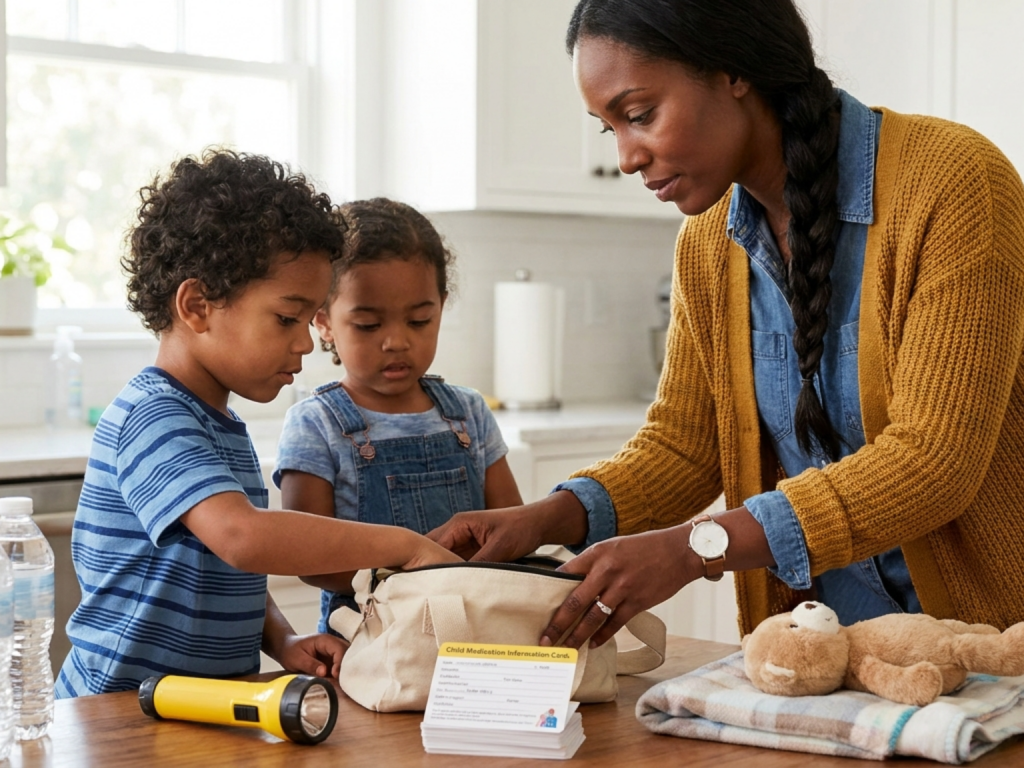
Emergency supplies should be accessible, portable, and reviewed regularly. Families often build one home kit and smaller grab-and-go bags for evacuation, car travel, school, or childcare. Involving children in assembling supplies can reduce fear because it turns preparedness into a shared, constructive activity.
Core supplies usually include safe drinking water, nonperishable food, a flashlight, extra batteries or charging banks, a battery-powered or hand-crank radio, basic first-aid materials, hygiene supplies, copies of critical documents, cash in small denominations, and weather-appropriate clothing. For children, add diapers, wipes, formula or feeding supplies, age-appropriate snacks, comfort items, spare glasses, hearing aid batteries, communication cards, and quiet activities such as a small book or toy.
Medical information belongs in every kit. Include each child’s name, date of birth, weight if relevant for emergency dosing by clinicians, medical conditions, allergies, medications, immunization information if available, healthcare professionals’ contact information, insurance details, and caregiver authorization forms when appropriate. Do not rely only on a phone; power loss or device damage can make digital records inaccessible.
Families who spend time outdoors may also benefit from an outdoor first-aid kit for children. This can include bandages, antiseptic wipes, tweezers, blister care, gloves, a cold pack, and any child-specific emergency medications prescribed by a clinician. Check expiration dates at least twice a year, and replace food, water, batteries, and medications as needed. If your child has complex medical needs, ask their healthcare team what backup supplies are medically necessary during prolonged power failure or evacuation.
Prepare for medical conditions, allergies, and medications
Children with chronic medical conditions need individualized emergency planning. Asthma, diabetes, epilepsy, congenital heart disease, adrenal insufficiency, severe allergies, feeding-tube dependence, mobility limitations, immunocompromise, and neurodevelopmental conditions can all change what “prepared” means. Planning should be developed with the child’s pediatrician, relevant specialists, school nurse, and caregivers.
Medication planning is particularly important. Keep an updated list of prescriptions, doses, timing, and pharmacy information. Ask the child’s clinician how to manage missed doses, refrigeration needs, travel, supply interruptions, and emergency refills. Families should not change doses, substitute medications, or use expired emergency medicines without professional guidance unless a clinician has given a specific action plan for that situation.
For children with severe allergies, caregivers should maintain a written allergy action plan and ensure that responsible adults know how and when to use prescribed epinephrine auto-injectors. Training should include recognizing airway, breathing, or circulatory involvement, activating emergency services, and understanding that symptoms may recur after initial improvement. Schools, childcare programs, relatives, coaches, and babysitters should have clear instructions, not vague reassurance that “someone knows what to do.”
Some children also require sensory or communication accommodations. A child with autism, anxiety, hearing impairment, limited speech, or intellectual disability may need visual schedules, noise-reducing equipment, identification cards, familiar comfort objects, or a practiced script. If evacuation shelters may be overwhelming, identify quieter options when possible. The best plan respects the child’s medical reality and developmental needs rather than expecting them to adapt instantly under stress.
Teach skills without increasing anxiety
Preparedness conversations should be honest, brief, and repeated. Children can sense when adults are evasive, but they can also become overwhelmed by too much detail. Use clear statements: “Sometimes storms make the power go out. We have flashlights, water, and a plan.” Avoid graphic descriptions and avoid leaving distressing news footage running in the background, especially after a disaster.
For preschoolers, focus on simple actions: come to the caregiver, hold hands, stay low under smoke, or sit in the safe spot. For school-age children, add reasons and routines: where to meet, how to call for help, and how to identify trusted adults. For adolescents, include more responsibility while maintaining adult leadership: carrying a phone charger, knowing emergency contacts, helping younger siblings only if safe, and understanding when to leave rather than retrieve belongings.
Practice should be predictable. Tell children when a drill is happening, what sound they may hear, and what success looks like. Praise specific behaviors: “You came to the meeting place quickly,” or “You remembered to stay away from the window.” If a child becomes distressed, pause and return later with smaller steps. For some children, especially those with trauma histories or anxiety disorders, a mental health professional or pediatric clinician can help shape a gradual approach.
Children also benefit from learning pediatric emergency warning signs in an age-appropriate way. They do not need to diagnose illness, but older children can learn to tell an adult immediately about severe breathing difficulty, chest pain, fainting, uncontrolled bleeding, possible poisoning, a serious head injury, or a first seizure. The message should be simple: “Tell an adult right away; you are not in trouble.”
Coordinate with schools, childcare, and other caregivers
Many emergencies occur when children are away from home. Ask schools and childcare programs about their emergency plans, evacuation sites, reunification procedures, communication methods, lockdown policies, and medication access. Confirm who is authorized to pick up your child and keep that list current. During a real event, strict identification rules may slow reunification, but they are designed to protect children.
Share essential medical information with caregivers who have responsibility for your child. This includes allergies, emergency medications, mobility needs, communication supports, behavioral de-escalation strategies, and clinician-approved action plans. If your child has an individualized education program, 504 plan, or healthcare plan, make sure emergency procedures are consistent with those documents.
Co-parenting families, extended relatives, babysitters, and neighbors should understand the same core plan. A laminated card in a backpack can be useful for younger children, but it should avoid unnecessary private details. For adolescents, discuss privacy and safety together so they understand why certain information may need to be accessible in an emergency.
Transportation is another common gap. Identify who can pick up the child if roads are closed, public transit is disrupted, or one caregiver is unreachable. If your child uses a car seat, wheelchair, oxygen, feeding equipment, or other assistive devices, consider how those needs will be handled during evacuation. Written plans reduce confusion when emotions are high.
Support children during and after the emergency
During an emergency, children need proximity, calm instructions, and reassurance. Whenever safely possible, keep children with a familiar adult. Use short phrases: “Stay with me,” “We are going to the meeting place,” “The firefighters are helping,” or “We are safe right now.” Too much explanation during acute stress can be difficult for a child to process.
Afterward, recovery is not only logistical. Children may replay events, ask the same question repeatedly, regress in toileting or sleep, become clingy, complain of headaches or stomachaches, or appear unusually quiet. These responses can occur after frightening events and often improve with safety, routine, and supportive listening. Reassure children that the disaster was not their fault. Encourage them to talk, draw, play, or ask questions, but do not force a detailed retelling.
Restoring routine is therapeutic. Regular meals, sleep times, school connection, play, and caregiver presence help signal that life is becoming predictable again. Limit exposure to repeated images or adult conversations that may intensify fear. Children may think each replay on the news is a new event.
Seek professional support if distress is persistent, worsening, or impairing daily function; if the child expresses self-harm thoughts; if there are severe sleep disturbances, panic symptoms, dissociation, aggressive behavior, or marked developmental regression; or if caregivers feel unable to support the child safely. Pediatricians, school counselors, child psychologists, and trauma-informed mental health professionals can help families recover.
Seek urgent help when needed
- Call emergency services for severe breathing difficulty, unresponsiveness, major bleeding, suspected poisoning, drowning or submersion, or a serious head injury.
- Use prescribed emergency medications only as directed by the child’s clinician or written action plan.
- Do not delay evacuation to collect belongings if authorities, smoke, fire, flooding, or structural danger make leaving urgent.
- After a disaster, persistent fear, withdrawal, self-harm talk, or functional decline warrants prompt professional support.
- For children with complex medical needs, ask healthcare professionals in advance how to manage power loss, equipment failure, or medication disruption.
Tools & Assistance
- Create and print a family emergency contact card for each child.
- Review school, childcare, and after-school reunification procedures twice a year.
- Schedule calm practice drills for fire, evacuation, shelter-in-place, and local hazards.
- Ask your pediatrician or specialist to review emergency plans for chronic conditions or medications.
- Refresh emergency kits when clocks change, at the start of storm season, or before major travel.
FAQ
How often should families practice emergency plans?
Brief practice every few months is reasonable for many families, with extra review before local high-risk seasons. Keep drills calm, predictable, and age-appropriate.
Should children help pack emergency kits?
Yes, when appropriate. Letting children choose a comfort item or help check supplies can reduce fear and make preparedness feel practical rather than frightening.
What if emergency discussions make my child anxious?
Use shorter conversations, emphasize adult protection, and practice one skill at a time. If anxiety is intense or persistent, consult a pediatrician or child mental health professional.
What medical information should be available during evacuation?
Carry the child’s conditions, allergies, medications, doses, clinician contacts, insurance information, emergency action plans, and caregiver contacts in both paper and digital forms when possible.
How can I help my child after a disaster?
Offer reassurance, maintain routines, limit repeated distressing media, encourage questions, and seek professional help if distress persists or interferes with sleep, school, relationships, or safety.
Sources
- American Red Cross — How Families Can Prepare for Emerngencies
- NYC Emergency Management — Get Prepared | Emergency Preparedness Tips - Kids
- Save The Children — Family Emergency Preparedness Plan
Disclaimer
This article is for general educational purposes and is not a substitute for medical care, emergency services, or individualized advice from a qualified healthcare professional.


















Please log in to leave a comment.