
Intro
Bath time can be a lovely bonding ritual, but it is also a moment when small temperature errors can matter. Babies have thinner skin, less mature thermoregulation, and limited ability to move away from water that feels too hot or too cold. A calm, repeatable approach can help you protect your baby while still making bathing feel gentle and reassuring.
This article focuses on baby bath water temperature, scald prevention, and practical safety steps. It is intended for medically literate caregivers who want clear parameters while recognizing that premature infants, babies with medical complexity, and infants with skin conditions may need individualized guidance from a pediatric clinician.
Highlights
For most babies, bath water should feel warm, not hot, and should generally stay around 37°C to 38°C, or about 98.6°F to 100.4°F.
Water heater settings matter: keeping the household water heater at no more than 120°F, or 49°C, reduces the risk of accidental scald burns.
Temperature safety is not only about a thermometer. Mixing the water well, testing with a sensitive area of skin, and using continuous supervision all work together.
Newborns lose body heat quickly, so the room, towel readiness, and bath duration are part of safe temperature management.
Why bath temperature safety matters for babies
Bath temperature safety for a baby is a small detail with large protective value. Infant skin is structurally and functionally different from adult skin: the epidermal barrier is still maturing, the skin is relatively delicate, and heat transfer can occur rapidly. A water temperature that feels merely warm to an adult hand may be uncomfortably hot for a baby, especially if the adult tests it only with fingertips, which are less reliable for detecting subtle warmth.
Babies also have immature infant thermoregulation. They have a higher surface-area-to-body-mass ratio than adults, limited ability to shiver effectively, and cannot tell you that the water is too hot or too cold. Newborns and young infants may become chilled during undressing, bathing, or drying, particularly if the room is cool or the bath lasts too long. On the other hand, overly hot water can injure fragile skin and cause systemic distress.
Temperature safety must be considered alongside drowning prevention. A baby can slip, turn, or become submerged in very little water, even when the water temperature is perfect. This is why touch supervision in the bath is a core safety principle: an adult should remain within arm’s reach, attentive, and ideally keeping one hand on the baby throughout the bath. Temperature checks reduce thermal injury, but supervision prevents multiple hazards at once.
The safest temperature range for baby bath water
Most medical and safety guidance places safe bath temperature near normal body temperature. A practical target is about 37°C to 38°C, or 98.6°F to 100.4°F. Some guidance recommends staying no higher than 100°F, about 38°C, because a slightly cooler warm bath is safer than one that approaches hot. Consumer safety recommendations often describe a comfortable range of approximately 95°F to 100°F. In everyday terms, the water should feel comfortably warm, never hot.
For newborns, especially in the first weeks, many caregivers aim closer to 98.6°F, or 37°C. This is warm enough to avoid chilling for most well babies while minimizing risk from excessive heat. If your baby was premature, has low birth weight, has a cardiac, neurologic, endocrine, or dermatologic condition, or has recently been unwell, ask your pediatrician whether standard bathing advice needs adjustment.
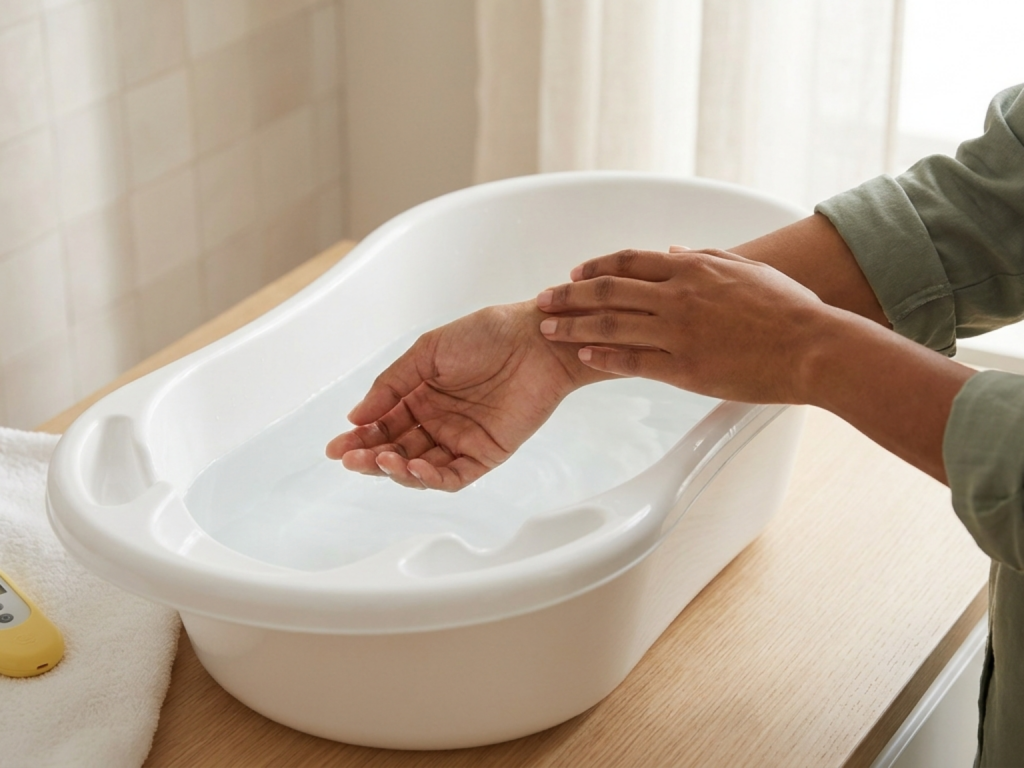
A bath thermometer can be helpful, especially for new parents or anyone caring for a medically vulnerable infant. Choose a device designed for bath use and follow the manufacturer’s instructions. Still, do not rely on the thermometer alone. Hot and cool areas can exist in the bath if the water is not mixed thoroughly. Swirl the water well before placing your baby in it, then recheck the temperature. If the water feels hot to your elbow or inner wrist, it is too hot for your baby.
How to test bath water reliably
A simple testing routine can prevent many problems. Fill the tub or basin with cool water first, then add warm water, mixing continuously. Avoid placing the baby under running water because tap temperature can fluctuate suddenly. Once the bath is filled to a shallow level, turn off the tap, swirl the water thoroughly, and test before the baby’s body touches the water.
The elbow test for bath water is useful because the elbow and inner wrist are more heat-sensitive than the fingertips. Dip your elbow or inner wrist into the water and pause for several seconds. The water should feel neutral-warm and comfortable, not hot, prickly, or startling. If you use a bath thermometer, compare its reading with your skin test so you learn what the safe range feels like in practice.
- Use two checks: thermometer reading plus elbow or inner-wrist sensation.
- Mix first: temperature can vary across the basin, especially after adding warm water.
- Check again if delayed: if you prepare supplies and several minutes pass, recheck before placing the baby in.
- Do not add hot water with the baby in the tub: remove the baby first if the water needs adjustment.
Supplies should be within reach before bathing begins: towel, washcloth, mild cleanser if needed, clean diaper, clothing, and any medically recommended skin products. This prevents the common unsafe temptation to step away “just for a second.” Bath preparation is part of baby bath safety basics, not an optional extra.
Preventing scalds at the tap and in the tub
Scald prevention begins before bath time. Set the household water heater to no more than 120°F, or 49°C, when possible. This setting reduces the chance that dangerously hot water will come from the tap, although it does not replace active supervision or testing. In homes with complex plumbing, older fixtures, or shared water systems, tap temperature may still vary, so caregivers should remain cautious.
Young children can be burned quickly by hot water. Babies are especially vulnerable because they cannot pull away effectively and may not cry immediately in a way that clearly identifies the problem. A safe routine is to run the water, stop the flow, mix, test, and only then bring the baby to the bath. Keep the baby away from the faucet, handles, and hot metal fixtures. If your baby is old enough to reach, position them so they cannot turn taps or bump controls.
Bath seats, rings, or supports do not eliminate risk. They may help positioning when used exactly as directed, but they can create false reassurance. A baby can slide, tip, or become trapped, and a caregiver may be tempted to look away. Keep one hand on the baby whenever possible and maintain full attention. If the phone rings, someone comes to the door, or another child needs help, lift the baby out, wrap them in a towel, and take the baby with you.
After the bath, drain the tub right away. This prevents an older infant or toddler from returning to standing water and reduces household risk for siblings. Scald prevention and drowning prevention are linked: both depend on removing hazards quickly and keeping the environment predictable.
Newborns, sponge baths, and staying warm
Newborn bathing often begins with sponge baths until the umbilical cord stump falls off and the area is healing as expected. This is not only cord care; it can also make temperature control easier. Newborn sponge bath safety means washing one area at a time while the rest of the baby remains wrapped and warm. Use a warm room, a stable surface, and a basin of comfortably warm water that you recheck as it cools.
Room temperature matters because babies can lose heat quickly when wet. A comfortably warm room, commonly around 75°F or 24°C if feasible, can reduce chilling. Have a dry towel ready before you start, and dry the baby promptly, paying attention to skin folds where moisture can linger. Keep the bath brief, especially for young newborns. A bath does not need to be long to be effective.
If your baby has eczema, very dry skin, diaper dermatitis, or a medically diagnosed skin condition, ask the clinician about bath frequency, cleanser use, and emollient timing. Warm water is usually preferable to hot water because heat can worsen dryness and irritation. Use mild, fragrance-free products when recommended, and avoid vigorous rubbing.
Watch your baby’s cues during and after bathing. Persistent crying, mottling, bluish discoloration around the lips, unusual lethargy, marked flushing, or seeming difficult to settle may indicate discomfort, chilling, overheating, or another concern. These signs do not diagnose a specific problem, but they are reasons to stop the bath, warm or cool the baby appropriately, and contact a healthcare professional if symptoms persist or worry you.
Building a calm, repeatable bath routine
A safe newborn bathing routine is easier when it is consistent. Choose a time when you are not rushed, hungry, or exhausted if possible. Place supplies within reach, check the water heater setting periodically, prepare the room, fill and test the bath, then bring the baby to the water. Repetition lowers cognitive load, which is valuable for caregivers who may be sleep-deprived or anxious.
Use shallow water. For many babies, only a few inches are needed; the goal is washing and comfort, not immersion depth. Support the head and neck, keep the face clear of water, and use slow movements because wet babies are slippery. If using an infant tub, place it on a stable surface according to the manufacturer’s directions. Avoid makeshift elevated locations where the tub could shift or fall.
Caregivers often feel pressure to make bath time perfect, but safety does not require a spa-like routine. Some babies dislike baths at first. It is acceptable to shorten the bath, return to sponge bathing for a few days, or try again later. What matters most is that the water is warm rather than hot, the baby is continuously supervised, and the environment is controlled.
When multiple caregivers bathe the baby, agree on the same temperature target and testing method. Grandparents, babysitters, and older siblings helping nearby should know that the baby is never left alone, even in a bath seat, and that hot water is never added while the baby is in the tub. Shared expectations make safety more dependable.
Stop and seek help when needed
- Never leave a baby unattended in or near bath water, even briefly.
- Do not place a baby into water that feels hot to your elbow or inner wrist.
- Seek urgent medical care for any suspected burn, blistering, or skin whitening after hot-water exposure.
- Contact a clinician if your baby seems persistently lethargic, unusually cold, overheated, or difficult to arouse after bathing.
- Ask your pediatrician for individualized guidance if your baby was premature or has a significant medical or skin condition.
Tools & Assistance
- Baby bath thermometer designed for water use
- Elbow or inner-wrist temperature check before every bath
- Household water heater set no higher than 120°F or 49°C when feasible
- Towel, diaper, clothing, and cleanser prepared within arm’s reach
- Pediatrician or child health nurse for individualized bathing advice
FAQ
What bath temperature is safest for a baby?
A common target is 37°C to 38°C, or about 98.6°F to 100.4°F. Many caregivers aim for no higher than 100°F because warm, not hot, water is safest.
Can I test baby bath water with my hand?
The inner wrist or elbow is better than fingertips because these areas are more temperature-sensitive. A bath thermometer adds another useful safety check.
Is it safe to add hot water while my baby is in the tub?
No. Remove the baby first, adjust and mix the water thoroughly, then retest before putting the baby back in.
How warm should the bathroom be for a newborn bath?
A comfortably warm room helps prevent heat loss. Around 75°F or 24°C is often suggested when feasible, but the key is avoiding drafts and drying the baby promptly.
Do bath seats make bathing safer?
Bath seats may assist positioning but do not replace adult supervision. Keep your baby within arm’s reach and maintain touch supervision throughout the bath.
Sources
- Cleveland Clinic — Baby's Bath Temperature and Other Safety Tips
- Medical News Today — Baby bath temperature: What's the ideal, tips, and safety
- Consumer Reports — Baby Bath Safety: What Parents Should Know
Disclaimer
This article is for general educational purposes and does not replace medical advice. Consult a pediatric healthcare professional for concerns about burns, temperature instability, prematurity, skin disease, or your baby’s individual needs.












Please log in to leave a comment.