
Intro
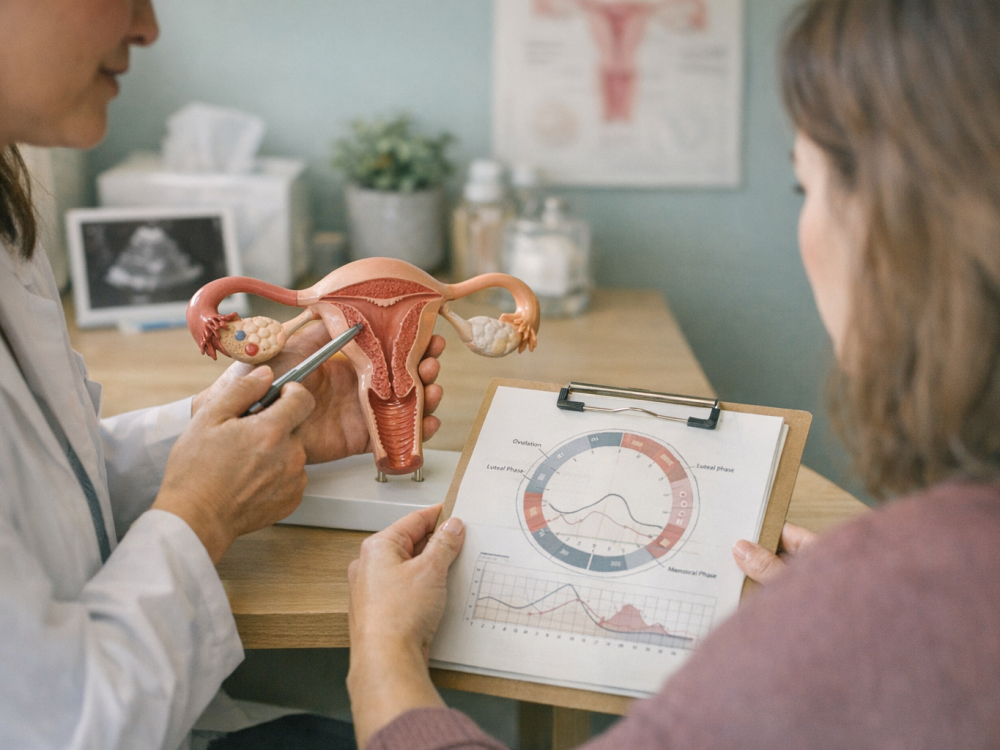
After ovulation, the body enters a precisely timed biological sequence. A mature egg has been released from the ovary, the fallopian tube is actively involved in capturing and transporting it, and the hormonal environment begins shifting toward the luteal phase. For anyone trying to conceive, this period can feel emotionally charged: hopeful, confusing, and sometimes frustrating because the egg’s ability to be fertilized is brief.
The key point is both simple and biologically nuanced: the egg usually remains viable for about 12 to 24 hours after ovulation, but the fertile window is longer because sperm can already be present in the reproductive tract before the egg is released. Understanding this distinction can help make timing feel less like a single perfect moment and more like a short, planned window.
Highlights
The egg’s fertilization potential is short, commonly described as 12 to 24 hours after ovulation and less than 24 hours in many clinical summaries.
The fertile window is longer than the egg’s lifespan because sperm may survive in fertile cervical mucus and the upper reproductive tract for several days.
Fertilization usually needs to occur in the fallopian tube, often near the ampulla, before the egg loses viability.
After ovulation, progesterone rises and supports the uterine lining while the body waits to see whether fertilization and implantation occur.
Cycle tracking can improve timing, but irregular cycles, medical conditions, age, and partner factors can make professional guidance important.
The first hours after ovulation
is the release of a mature oocyte, commonly called an egg, from a dominant ovarian follicle. Once released, the egg does not simply drift randomly through the pelvis. The fimbriae, finger-like projections at the end of the fallopian tube, help sweep the egg toward the tubal opening. Ciliary movement, tubal muscular contractions, and fluid dynamics then help guide the egg into the fallopian tube.
This timing is coordinated with hormonal changes. The , or LH, surge triggers the final maturation of the egg and . After the follicle releases the egg, the remaining follicular structure becomes the corpus luteum, which begins producing . stabilizes and matures the endometrium, the uterine lining, in preparation for a possible pregnancy.
For a medically literate reader, it helps to think of not as an isolated event but as a transition point. Before , estrogen-dominant physiology promotes and sperm transport. After ovulation, -dominant physiology supports endometrial receptivity and usually makes thicker and less favorable to new sperm entry.
Egg lifespan: why the fertilization window is short
After ]], the egg’s ability to be fertilized is limited. Clinical guidance commonly states that the egg lives for 12 to 24 hours after , and MedlinePlus summarizes that a released egg lives for less than 24 hours. This does not mean conception must occur at the exact instant of , but it does mean the egg has a narrow period during which fertilization is biologically possible.
The egg is a highly specialized cell with a finite period of post-ovulatory competence. As time passes after release, changes occur in the egg and surrounding structures that reduce the likelihood of normal fertilization. If fertilization does not occur within its viable period, the egg degenerates and is eventually reabsorbed or passes through the reproductive tract without producing pregnancy.
This brief lifespan is one reason ovulation timing can feel so important. However, it is also why timing intercourse only after a suspected ovulation event can sometimes be less effective than having sperm present before ovulation. The egg’s clock starts when it is released; sperm that are already in position may have the best opportunity to meet it promptly.
Fertilization limits and where conception usually occurs
Fertilization usually occurs in the fallopian tube, particularly in the ampullary region, which is the wider outer portion of the tube. After , the egg is transported through the tube in a coordinated way. Research on human oviduct transport has described retention of the ovum in the ampulla followed by later movement through the isthmus, the narrower segment closer to the uterus. This anatomic timing matters because must occur while the egg is still viable and in a location where sperm can reach it.
Sperm also undergo time-dependent changes. After ejaculation, sperm must pass through the cervix, uterus, and into the fallopian tubes. They also undergo capacitation, a physiologic maturation process within the female reproductive tract that enables them to fertilize an egg. Even when sperm are present, is not guaranteed; sperm quality, tubal function, , egg quality, and timing all influence probability.
The biological limit is therefore not just egg lifespan in isolation. It is the overlap between a viable egg, functionally competent sperm, and a reproductive tract environment that permits sperm transport, , and early development. This is why is probabilistic rather than fully controllable, even with well-timed .
Why the fertile window lasts longer than the egg
The extends beyond the egg’s short lifespan because sperm can survive for several days in favorable conditions, especially when has produced slippery, stretchy, . MedlinePlus notes that the highest pregnancy rates occur when sperm and egg meet within several days around ]], reflecting the fact that sperm may already be waiting when ]] occurs.
In practical terms, the are generally the and the day of . Intercourse one to two is often biologically well timed because sperm may reach the fallopian tube before the egg is released. Intercourse only after may still result in pregnancy if it occurs soon enough, but the available time is much shorter because the egg loses viability quickly.
This distinction can be reassuring. Trying to conceive does not usually require identifying the exact hour of ovulation. Instead, many clinicians advise focusing on the broader . If cycles are reasonably predictable, every one to two days during the several days leading up to expected ovulation can help ensure sperm are present without creating pressure around a single moment.
Hormonal timing after ovulation
Once ovulation has occurred, the cycle enters the luteal phase. The corpus luteum produces progesterone and some estrogen. Progesterone increases basal body temperature slightly, changes , and transforms the endometrium into a secretory lining capable of supporting implantation if an embryo forms.
If fertilization occurs, the early embryo continues moving toward the uterus while dividing. Implantation typically occurs days later, not immediately after fertilization. Only after implantation does human chorionic gonadotropin, or hCG, begin rising enough to sustain the corpus luteum and eventually be detected by pregnancy tests. This is why pregnancy tests are usually unreliable immediately after ovulation or immediately after intercourse.
If fertilization does not occur, or if an embryo does not implant, the corpus luteum eventually regresses. Progesterone and estrogen levels fall, the endometrium sheds, and menstruation begins. The luteal phase is often relatively consistent for an individual, commonly around two weeks, though there is normal variation. Very short luteal phases, frequent spotting, or highly irregular cycles are reasons to discuss cycle patterns with a clinician rather than self-diagnosing.
What happens if the egg is not fertilized
If sperm do not fertilize the egg within the viable post-ovulatory period, the egg degenerates. It does not remain available for fertilization later in the cycle. A later act of intercourse cannot fertilize that same egg once viability has passed. The body then continues through the luteal phase under progesterone influence until either pregnancy signaling occurs or hormone levels fall and menstruation begins.
This can be emotionally difficult when trying to conceive, especially if tracking suggests timing was close. It is important to remember that even well-timed intercourse does not guarantee pregnancy in any single cycle. Human fecundability per cycle is limited, and probability is affected by age, ovarian reserve, sperm parameters, tubal patency, endometriosis, polycystic ovary syndrome, thyroid disease, metabolic health, medications, and other factors.
If pregnancy does not occur, it does not automatically mean something is wrong. However, repeated difficulty conceiving may deserve evaluation. Many guidelines suggest seeking fertility assessment after 12 months of trying if under age 35, after 6 months if age 35 or older, or sooner with known conditions, irregular or absent periods, prior pelvic infection, recurrent pregnancy loss, or concerns about male-factor fertility.
Timing strategies without making the process feel impossible
Because the egg’s lifespan is short, timing matters; because sperm can survive before , timing does not need to be perfect to the hour. A practical approach is to identify the likely using history, , urinary LH tests, or basal body temperature patterns. Each method has limitations. LH tests predict the hormonal surge but do not prove the egg was released. Basal body temperature confirms a post-ovulatory effect but usually rises after the have already passed.
For many people with regular cycles, during the five days before expected ovulation and on the day of ovulation is a reasonable timing pattern. For people with irregular cycles, ovulation may be harder to predict, and professional guidance can be especially helpful. Conditions such as PCOS, thyroid dysfunction, hyperprolactinemia, hypothalamic amenorrhea, and perimenopausal changes can alter ovulation timing or make ovulation inconsistent.
It is also worth protecting emotional wellbeing. Ovulation tracking can be empowering, but it can also become stressful. If timing intercourse is creating distress, pain, relationship strain, or obsessive testing, consider discussing alternative strategies with a healthcare professional. Fertility care can include education, cycle assessment, semen analysis, ovulation confirmation, and individualized next steps when appropriate.
When to seek medical advice
- Seek urgent care for severe one-sided pelvic pain, fainting, shoulder pain, or heavy bleeding, especially if pregnancy is possible.
- Consult a clinician if periods are absent, very irregular, or consistently shorter than 21 days or longer than 35–40 days.
- Consider fertility evaluation after 12 months of trying, or after 6 months if age 35 or older.
- Ask for earlier guidance if you have endometriosis, PCOS, prior pelvic inflammatory disease, known tubal disease, or recurrent pregnancy loss.
- Do not use ovulation symptoms alone to rule in or rule out pregnancy or a medical condition.
Tools & Assistance
- Menstrual cycle calendar or fertility tracking app
- Urinary LH ovulation predictor kits
- Cervical mucus observation and symptom notes
- Basal body temperature charting for retrospective ovulation patterns
- Appointment with an OB-GYN, reproductive endocrinologist, or fertility clinic if timing or conception concerns persist
FAQ
How long after ovulation can the egg be fertilized?
The egg is generally viable for about 12 to 24 hours after ovulation, and many clinical resources describe its lifespan as less than 24 hours.
Can pregnancy happen from sex before ovulation?
Yes. This is often ideal timing because sperm can survive for several days in fertile cervical mucus and may already be in the reproductive tract when the egg is released.
Can pregnancy happen two days after ovulation?
It is less likely if ovulation truly occurred two days earlier because the egg’s viable period is usually over. However, ovulation estimates can be wrong, so pregnancy may still be possible if ovulation happened later than expected.
Does ovulation pain mean the egg has already been released?
Not necessarily. Midcycle pain can occur before, during, or after ovulation and is not precise enough to identify the exact fertile hours.
When can a pregnancy test detect conception after ovulation?
Pregnancy tests detect hCG after implantation, not fertilization itself. Testing is usually more reliable around the expected period or later, depending on the test and cycle timing.
Sources
- MedlinePlus — Pregnancy - identifying fertile days
- The Royal Women's Hospital — Ovulation and conception
- PubMed — Studies on the duration of egg transport by the human oviduct. II. Functional aspects of ovum transport in the human
Disclaimer
This article is for general medical information only and does not replace individualized advice from a qualified healthcare professional. Consult a clinician for personal fertility, cycle, pain, bleeding, or pregnancy concerns.













Please log in to leave a comment.