
Intro
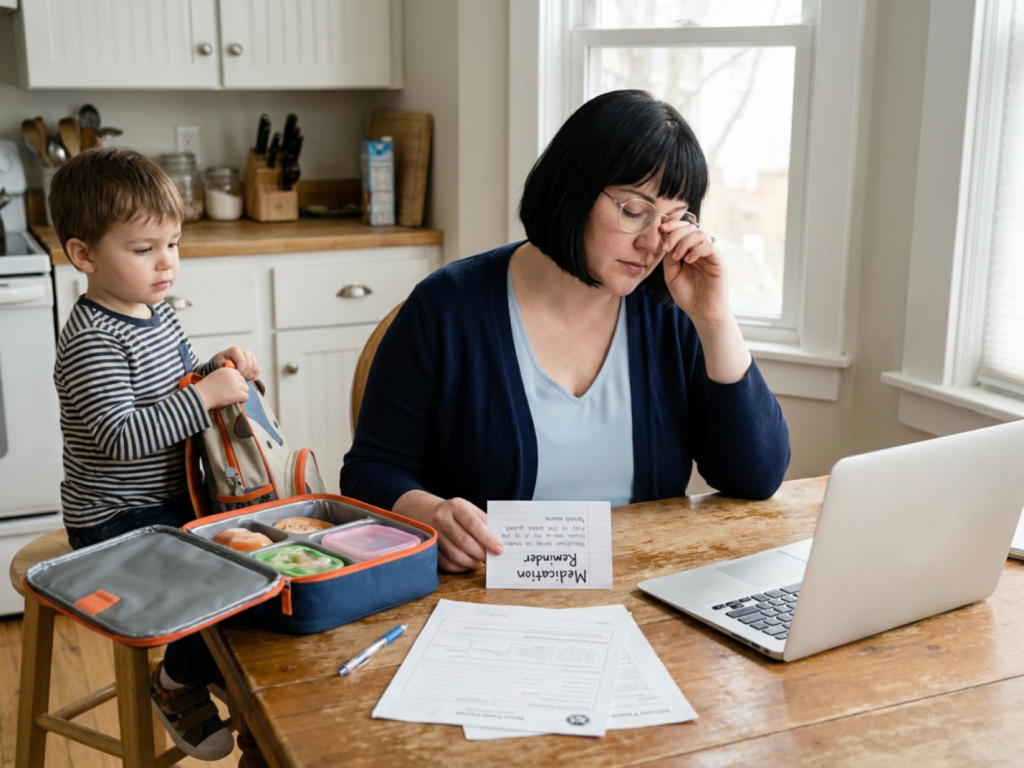
Everyday parenting is often described in warm terms: love, growth, milestones, and connection. It can also be physically tiring, emotionally demanding, and cognitively relentless. A parent may move from packing lunches to managing a tantrum, answering work messages, monitoring a fever, negotiating screen time, and trying to protect bedtime, all before having a quiet moment to think.
This article looks at common daily parenting challenges through a medically informed, compassionate lens. The goal is not to label ordinary family stress as pathology, but to help parents understand why the load feels heavy, when extra support is appropriate, and how small, realistic adjustments can protect both parent well-being and child development.
Highlights
Parenting stress is often cumulative: sleep disruption, time scarcity, financial pressure, and work-family conflict can compound over time.
Children’s behavior is influenced by development, temperament, sleep, hunger, sensory load, illness, and the emotional climate around them.
Supportive routines, co-regulation, social support, and timely professional guidance can reduce everyday strain.
Parents do not need perfect consistency; they need enough predictability, repair after conflict, and access to help when stress becomes overwhelming.
Why ordinary parenting can feel so hard
Parenting stress is the distress that arises when the demands of caregiving feel greater than a parent’s perceived resources. This does not mean a parent is failing. It means the nervous system is responding to sustained responsibility, frequent interruption, and limited recovery time. Modern caregivers often manage child safety, emotional development, school communication, nutrition, digital exposure, medical appointments, household work, employment, and finances at the same time.
Research on parental stress and well-being consistently points to everyday pressures such as sleep deprivation, time scarcity, financial strain, marital or partner conflict, lack of social support, and work-life imbalance. These factors are not dramatic on their own, but they can become biologically significant when repeated. Chronic stress may affect mood, attention, patience, immune function, and the capacity for calm problem-solving.
Many parents also carry an invisible mental load: remembering vaccination schedules, noticing behavior changes, planning meals, tracking clothing sizes, anticipating school events, and organizing backup care. This form of cognitive labor can be exhausting because it is continuous and often unrecognized. A supportive approach begins by naming the load accurately rather than minimizing it.
Daily routines, transitions, and power struggles
Much of family stress occurs during predictable transition points: waking up, leaving the house, mealtimes, bathing, homework, bedtime, and screen shutdown. Child routine challenges can feel irrational to adults, but they often reflect immature executive function, limited impulse control, fatigue, hunger, or difficulty shifting attention. A young child may know the rule and still be unable to execute it reliably under stress.
Preschool problems parents face often include refusal, bargaining, tantrums, separation distress, and conflicts over autonomy. Toddlers and preschoolers are developing prefrontal cortical skills such as inhibition, working memory, and flexible thinking. These skills mature gradually. In practical terms, a child may need fewer verbal instructions, more visual cues, and more adult co-regulation than a parent expects.
Helpful routine design is usually simple rather than elaborate. Parents can try a short sequence repeated most days, such as snack, pajamas, toothbrushing, two books, lights dim. Predictability reduces decision fatigue for the child and the adult. When routines collapse, the goal is not to prove authority through escalation. The goal is to return to the next workable step.
- Use brief instructions: one step at a time is easier for an overloaded child.
- Give transition warnings: “Five minutes, then shoes” can reduce abruptness.
- Offer limited choices: “Blue cup or green cup?” preserves autonomy without opening the whole routine to negotiation.
- Practice skills during calm periods, not only during conflict.
Sleep, fatigue, and emotional regulation
Sleep is one of the strongest everyday influences on family functioning. Infant night waking, toddler bedtime resistance, early school start times, parental insomnia, and shift work can all reduce emotional bandwidth. Sleep deprivation affects attention, reaction time, frustration tolerance, appetite regulation, and mood. A tired parent is more likely to interpret behavior as intentional defiance; a tired child is more likely to be impulsive, tearful, or hyperactive.
Bedtime is especially sensitive because it brings separation, darkness, reduced stimulation, and the end of parental availability. Some children resist sleep because they are overtired; others are anxious, overstimulated, or accustomed to needing parental presence to fall asleep. There is no single correct bedtime method for every family, and parents should be cautious with rigid advice that ignores temperament, neurodevelopmental differences, trauma history, or medical issues such as reflux, pain, eczema, asthma, snoring, or restless sleep.
A medically cautious approach is to observe patterns. Does the child snore loudly, pause breathing, wake with headaches, sweat heavily, or seem excessively sleepy during the day? Is bedtime resistance new after a stressful event? Is the parent experiencing persistent insomnia, panic symptoms, or depressive symptoms? These situations deserve discussion with a pediatrician, family physician, or qualified mental health professional.
Behavior is communication, not a simple character test
Daily behavioral challenges are among the most emotionally charged parts of parenting. Aggression, whining, defiance, lying, food refusal, clinginess, sibling conflict, and public meltdowns can trigger shame and anger in adults. A useful clinical frame is that behavior has antecedents and functions. Something happens before the behavior, the child responds, and the response produces an outcome such as attention, escape, sensory relief, or access to a preferred activity.
This does not mean parents should ignore limits. Children need boundaries for safety and social learning. However, boundaries work best when paired with connection and skill-building. A child who hits may need immediate safety intervention, but also repeated coaching in replacement behaviors: asking for space, using words, squeezing a pillow, or getting adult help. A child who refuses homework may need assessment of fatigue, learning difficulty, anxiety, or task overwhelm, not only consequences.
Parents can ask three practical questions: What skill is my child missing? What stressor might be increasing this behavior? What response from me is likely to teach, not merely punish? Over time, this approach can reduce coercive cycles in which child escalation and adult escalation reinforce each other. If behavior is severe, persistent, dangerous, or associated with developmental regression, professional evaluation is appropriate.
Parent mental health and the family stress loop
Parent and child well-being are interconnected. Systematic reviews have found associations between parenting stress, parental depression, lower social support, and child behavioral or developmental outcomes. These findings should not be used to blame parents. Instead, they highlight that supporting the caregiver is part of supporting the child.
Parental depression and anxiety can make everyday tasks feel heavier. Symptoms may include persistent low mood, irritability, loss of pleasure, excessive worry, sleep disturbance, appetite change, guilt, concentration problems, or feeling emotionally numb. Some parents experience intrusive thoughts that are frightening or inconsistent with their values. Any parent with thoughts of self-harm, harming a child, or being unable to stay safe should seek urgent help immediately through local emergency services or crisis resources.
Social support is not a luxury; it is a protective factor. Support may come from a partner, relative, friend, parent group, childcare provider, clinician, school counselor, community nurse, faith community, or workplace policy. Even brief practical help, such as a meal, school pickup, or an hour of uninterrupted sleep, can shift the stress physiology of a household.
Work, money, and the pressure to be endlessly available
Financial strain and work-family conflict are major contributors to daily parenting stress. Parents may be expected to perform as though they have no caregiving responsibilities and parent as though they have no work responsibilities. This impossible standard can create chronic guilt. Unpredictable schedules, lack of paid leave, childcare costs, medical bills, and school closures add further pressure.
Because these stressors are structural as well as personal, solutions should not rely only on individual resilience. Families may benefit from discussing flexible scheduling, predictable childcare backup, employee assistance programs, public benefits, school meal programs, or community resources. Healthcare professionals can sometimes connect families with social workers, care coordinators, developmental services, or family support organizations.
Within the home, parents can reduce overload by distinguishing essential care from ideal care. Essential care includes safety, food, sleep opportunity, medical attention, emotional responsiveness, and basic hygiene. Ideal care may include enrichment activities, homemade meals, perfectly organized rooms, or constant educational stimulation. During high-stress periods, it is reasonable to protect essentials and let some ideals wait.
Practical ways to lower the daily load
Small changes can help when they are realistic and repeatable. The most effective family strategies usually reduce decisions, reduce conflict points, or increase recovery time. Parents may need to experiment rather than search for a perfect system.
- Create a minimum viable routine. Choose the few steps that matter most and repeat them consistently enough to be familiar.
- Use environmental design. Put shoes by the door, keep snacks accessible, prepare school items the night before, and reduce visual clutter during difficult transitions.
- Build in co-regulation. A calm voice, lowered body posture, slow breathing, and fewer words can help a dysregulated child borrow the adult’s nervous system stability.
- Schedule parental recovery. Ten minutes alone, a walk, a shower, or quiet breathing is not selfish; it is nervous system maintenance.
- Repair after conflict. A simple statement such as “I was too loud. I’m sorry. Let’s try again” teaches accountability and emotional safety.
It is also useful to track patterns without over-monitoring. A brief note about sleep, meals, illness, screen time, school stress, and behavior can reveal triggers. If concerns persist, this information can help a pediatrician, therapist, or educator understand the broader context.
When to seek professional support
Every family has difficult days. Professional support becomes important when stress is persistent, escalating, impairing function, or associated with safety concerns. A pediatrician can assess sleep, growth, pain, hearing, vision, constipation, medication effects, neurodevelopmental concerns, and other medical contributors to behavior. A mental health professional can support parent coping, child anxiety, trauma-related symptoms, family conflict, or behavior plans.
Parents should consider seeking help if a child’s behavior is dangerous, if school or childcare placement is at risk, if there is regression in toileting or language, if sleep disruption is severe, or if the parent feels chronically hopeless, enraged, detached, or unable to cope. Help is not a sign that the family is broken. It is an evidence-informed step toward reducing load and increasing safety.
Parenting challenges in everyday life are real, and they deserve practical support rather than judgment. Children benefit from caregivers who are “good enough” over time: responsive, boundaried, willing to repair, and supported by a wider network. Parents benefit from remembering that their needs are not separate from their child’s needs. Caring for the caregiver is part of pediatric care.
Seek urgent or professional help if
- A parent has thoughts of self-harm, harming a child, or feeling unable to keep anyone safe.
- A child’s behavior is dangerous, escalating, or includes serious aggression, running away, or self-injury.
- There is sudden developmental regression, severe sleep disturbance, unexplained pain, or major appetite or weight change.
- Parental low mood, anxiety, rage, or emotional numbness persists or interferes with daily functioning.
- Family conflict includes violence, coercive control, or fear of a partner or household member.
Tools & Assistance
- Schedule a pediatric visit to review sleep, behavior, growth, pain, and developmental concerns.
- Ask a primary care clinician for screening and referral if parental depression, anxiety, or burnout is suspected.
- Use a simple family routine chart for mornings, meals, homework, and bedtime.
- Contact school counselors, childcare staff, or early childhood services for coordinated support.
- Identify one emergency backup person or service for moments when caregiver stress becomes unsafe.
FAQ
Is it normal to feel overwhelmed by everyday parenting?
Yes. Many parents feel overwhelmed at times, especially with sleep loss, financial pressure, work demands, or limited support. Persistent distress deserves support, not shame.
Does parenting stress harm children?
Occasional stress is part of family life. Chronic, unsupported stress can affect parent-child interactions and is associated with child behavioral outcomes, so reducing caregiver load is protective.
When is a tantrum more than a normal tantrum?
Seek guidance if tantrums are very frequent, prolonged, dangerous, associated with regression, or impair childcare, school, sleep, or family safety.
What is the first step if routines are failing every day?
Simplify. Choose one high-stress routine, reduce the number of steps, use visual or verbal cues, and practice during calm moments. If problems persist, consult a pediatric or behavioral professional.
Sources
- National Center for Biotechnology Information (NIH) — The Current State of Parental Stress & Well-Being
- PubMed — Parenting stress and child health and development: a systematic review
- PubMed Central — Parental Stress and Well-Being: A Meta-analysis
Disclaimer
This article is for general educational purposes only and does not diagnose or treat medical, developmental, or mental health conditions. Consult a qualified healthcare professional for personal concerns or urgent safety issues.


















Please log in to leave a comment.