
Intro
Many parents focus on bedtime routines, but the sleep environment itself can strongly influence how easily a child falls asleep, how often they wake, and how rested they feel in the morning. In practice, the sleep environment includes the bedroom, the sleep surface, noise and light levels, room temperature, and even the broader home setting around the child.
This matters because children’s sleep is shaped by both biology and context. A supportive bedroom can reduce sensory stimulation, help the nervous system downshift, and make healthy sleep habits easier to sustain. A difficult environment can have the opposite effect, even when a child seems tired enough for bed.
Highlights
A child’s sleep environment is more than a bedroom; it includes the immediate sleep space and the wider home context.
Cool, quiet, and dark conditions, plus comfortable bedding, are consistently linked with better sleep habits.
Room sharing, bed sharing, screens, clutter, and excess noise can all affect sleep continuity and sleep quality.
A practical sleep environment can be assessed and improved step by step, without aiming for perfection.
If sleep problems persist or safety concerns arise, professional guidance from a pediatric clinician is appropriate.
What the sleep environment includes
When clinicians or researchers talk about the sleep environment, they are not only referring to a child’s bed or mattress. They are also considering the physical and social setting around sleep: lighting, temperature, sound, bedding comfort, the presence of electronic devices, household routines, and whether other people are sleeping in the same room. The evidence base suggests that these factors are not trivial. They can shape sleep duration, sleep efficiency, and the child’s ability to settle independently.
A useful way to think about this is to separate the immediate sleep space from the wider home environment. The immediate sleep space is the bed, crib, cot, or mattress area itself. The wider home environment includes noise from other rooms, household schedules, parental work patterns, siblings, and whether the child’s room is used for play, homework, or screen time. The more the sleep space behaves like a calm, predictable cue for rest, the easier it is for many children to transition into sleep.
Why environmental factors matter for sleep biology
Sleep is regulated by circadian timing, homeostatic sleep pressure, and arousal systems in the brain. The environment can either support or disrupt those mechanisms. Bright light in the evening may delay the onset of melatonin secretion and make it harder for a child to feel sleepy at the expected time. Noise can trigger micro-awakenings or lighter sleep stages, even when the child does not fully awaken. An overheated or uncomfortable room can increase restlessness and fragment sleep continuity.
Research on children’s physical home environment has repeatedly identified room sharing with an adult, bed sharing, and the quality of the child’s sleep space as relevant predictors of sleep duration and sleep quality. A separate scale developed to assess children’s and adolescents’ sleep environments highlights that sleep environment is measurable in a structured way, which reinforces the idea that these are concrete, clinically meaningful variables rather than vague lifestyle concerns. In other words, the bedroom can act like a sleep-promoting context or a source of chronic low-grade stimulation.
The core features of a sleep-promoting bedroom
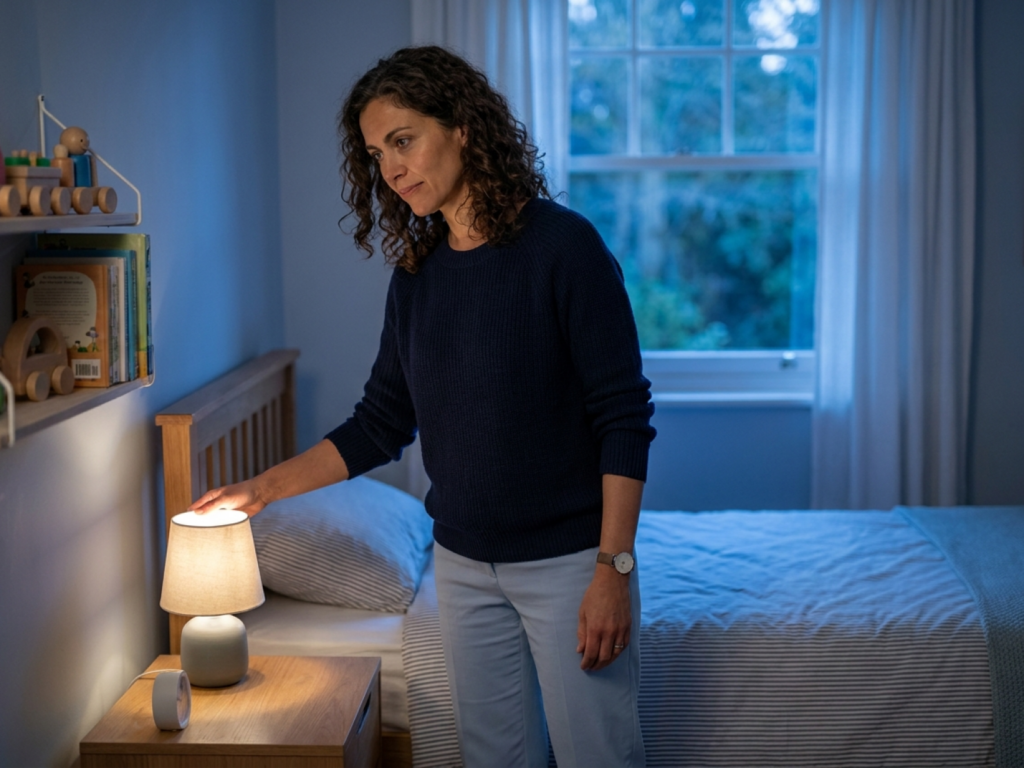
Mayo Clinic guidance for children’s sleep habits emphasizes a room that is cool, quiet, and dark, with comfortable bedding and minimal distractions. Those are simple words, but they capture several important mechanisms. A cooler room can reduce thermal discomfort. Lower noise levels reduce sleep disruption. Darkness strengthens the brain’s association between evening and sleep. Comfortable bedding reduces physical irritation that can otherwise keep a child alert.
Many families also benefit from treating the bedroom as a sleep-only or sleep-primary space, especially for younger children. That means limiting strong stimulation in the hour before bed and avoiding the bedroom as a place for active play, loud entertainment, or prolonged screen use. Common practical adjustments include:
- removing televisions, tablets, cellphones, and computers from the room when possible;
- reducing visual clutter and excess toys near the bed;
- using a dim light source if the child needs one for comfort;
- keeping bedding appropriate for the child’s age and comfort needs;
- reducing abrupt sound changes from the hallway or adjacent rooms.
The goal is not a clinically perfect room. It is a predictable setting that tells the body, “this is where sleep happens.”
Room sharing, bed sharing, and family sleeping arrangements
Family sleeping arrangements deserve careful, nonjudgmental attention because they are often driven by culture, space, finances, anxiety, or a child’s developmental stage. The literature on the physical home environment and sleep suggests that room sharing with an adult and bed sharing can influence sleep quality and sleep duration. Sometimes these arrangements are temporary and adaptive. At other times, they may make it harder for a child to consolidate sleep or may increase awakenings from movement, noise, or parental reassurance cycles.
It is important to distinguish comfort from safety and to avoid assuming that one arrangement is always best for every child. For infants and young children, safe sleep guidance should be individualized and reviewed with a pediatric clinician, because age and developmental stage matter. For older children, a shared room may still work well if each child has enough personal space, consistent routines, and low nighttime disruption. If your family is weighing room sharing or bed sharing, it can help to ask three questions: Is everyone sleeping more peacefully, is the arrangement safe, and is it sustainable for the household?
Age and development change what a good setup looks like
A preschool sleep environment is not identical to the needs of a school-age child or adolescent. Younger children often respond strongly to predictable cues, familiar objects, and repeated routines. Preschoolers may sleep best in a room that is simple, visually calm, and closely linked to a stable bedtime routine. School-age children may need more support around screen boundaries, homework timing, and independent settling. Older children and adolescents often benefit from stronger light control and a more intentional separation between schoolwork and sleep space.
Development also affects what is realistic. A preschooler may need a night light or a transitional object, while an older child may do better with a darker room and fewer bedtime distractions. The point is not to force every child into the same model. The point is to align the room with the child’s developmental stage. When the environment fits the child, the bedtime routine usually has less friction and sleep tends to become more consistent.
How to assess and improve the sleep environment without perfectionism
One helpful approach is to treat the sleep environment as something you can assess, not something you have to guess about. A valid and reliable sleep-environment scale for children and adolescents has been developed in the research literature, which reflects a broader clinical principle: specific factors can be observed, discussed, and adjusted. Families can borrow that mindset at home by doing a simple bedroom audit.
Try looking at the room in three categories: sensory load, safety, and consistency. Sensory load includes light, noise, and screen exposure. Safety includes cords, furniture stability, and anything the child might reach or climb. Consistency includes whether the room feels like a stable cue for sleep rather than an all-purpose activity zone. It often helps to make one change at a time and observe the effect for one to two weeks. Common first steps include screen removal, reducing toys near the bed, lowering evening light, and keeping bedtime cues steady. Small changes can be surprisingly effective when they reduce overall stimulation.
If sleep does not improve, the issue may not be the environment alone. Behavioral insomnia, anxiety, restless sleep, allergic symptoms, or sleep-disordered breathing can all complicate the picture and deserve professional review.
When a sleep problem needs medical attention
Not every bedtime struggle is an environmental problem, and not every environmental concern can be solved at home. Clinical evaluation is especially important if a child snores persistently, gasps during sleep, has breathing pauses, wakes frequently in distress, seems excessively sleepy during the day, or has signs of pain or discomfort that interfere with sleep. These may point to issues that require pediatric assessment rather than more bedroom changes.
You should also seek advice if sleep suddenly worsens after illness, if the child has major anxiety around sleep, or if the family is unsure whether the current sleep arrangement is safe for the child’s age and developmental stage. A pediatrician, family physician, or pediatric sleep specialist can help sort out whether the main issue is environmental, behavioral, medical, or a combination. That kind of support can be a relief. It shifts the focus from blame to problem-solving.
When to be cautious
- Persistent snoring, gasping, or breathing pauses during sleep should be medically assessed.
- If the bedroom setup raises safety concerns about falls, entrapment, or suffocation, seek age-appropriate guidance promptly.
- Sudden sleep changes with fever, pain, vomiting, seizures, or marked daytime sleepiness need clinical review.
- Do not assume every night waking is behavioral; medical and developmental causes can coexist.
- For infants and young children, always confirm sleep-safety advice with a qualified clinician.
Tools & Assistance
- Pediatrician or family doctor visit for sleep concerns
- Pediatric sleep clinic referral when symptoms are persistent or complex
- Home bedroom audit for light, noise, temperature, and clutter
- Sleep diary to track bedtime, awakenings, and morning mood
- Developmentally appropriate safe-sleep guidance from a health professional
FAQ
What is the most important part of a child’s sleep environment?
Usually it is the combination of a calm, predictable setting and a sleep space that is cool, quiet, dark, and free of unnecessary stimulation.
Do screens in the bedroom really matter?
Yes. Screens can add light, stimulation, and habit cues that make sleep onset harder, especially if they are used close to bedtime.
Is room sharing always a problem?
No. Room sharing can work well for some families, but it may also affect sleep quality depending on age, safety, and how disruptive the setup is.
How can I improve my child’s sleep space without making major purchases?
Start with low-cost changes such as reducing noise, dimming lights, removing screens, and making the room less cluttered and more predictable.
When should I ask a doctor about sleep?
Ask if your child snores, has breathing pauses, seems very sleepy in the day, or continues to have significant sleep difficulty despite reasonable environmental changes.
Sources
- NIH / PubMed Central — The physical home environment and sleep
- PubMed — The development of a scale to assess children's and adolescents' sleep environments
- Mayo Clinic — Establish good sleep habits in your child
Disclaimer
This article is for general educational purposes only and does not replace assessment by a pediatric clinician. Please seek professional advice for persistent sleep problems, safety concerns, or breathing-related symptoms.
















Please log in to leave a comment.