
Intro
Traveling with a baby can be rewarding, but emergencies away from home can feel especially frightening because routines, familiar clinicians, and usual supplies may not be available. A calm, prepared plan can reduce panic and help you act quickly while still seeking appropriate professional care.
This article focuses on practical emergency readiness for babies during domestic or international travel, including medical warning signs, lost documents, severe weather, political instability, and communication with local services. It is not a substitute for individualized advice from your child’s healthcare professional.
Highlights
Preparation matters before departure: check destination advisories, pack essential medical information, and know how to reach emergency services locally.
For babies, respiratory distress, altered responsiveness, seizures, dehydration, significant trauma, and suspected poisoning warrant urgent evaluation.
During disruptions such as evacuation, theft, or natural disaster, prioritize the baby’s airway, temperature regulation, feeding access, and caregiver safety.
Families traveling internationally should identify hospitals, embassy or consular support, insurance contacts, and medical evacuation procedures before they are needed.
Start with a baby-specific emergency plan
A useful travel emergency plan begins before you leave. Review official travel advisories for the destination, including health crises, civil unrest, natural disasters, crime risk, terrorism alerts, and transportation disruptions. For international trips, identify the nearest reputable pediatric-capable hospital, local emergency number, embassy or consulate contact, and your travel insurance emergency line. Keep these details both on your phone and on paper in case the phone is lost, damaged, or without service.
For a baby, the plan should include concise medical information: full name, date of birth, weight, allergies, chronic conditions, immunization status, usual medications, recent illnesses, and clinician contact details. If your baby has a condition such as prematurity-related lung disease, congenital heart disease, epilepsy, diabetes, immune compromise, or severe allergy, ask the treating clinician what destination-specific precautions or documents are appropriate. A written feeding and medication log can be very helpful if care is transferred to another adult or clinician during a stressful event.
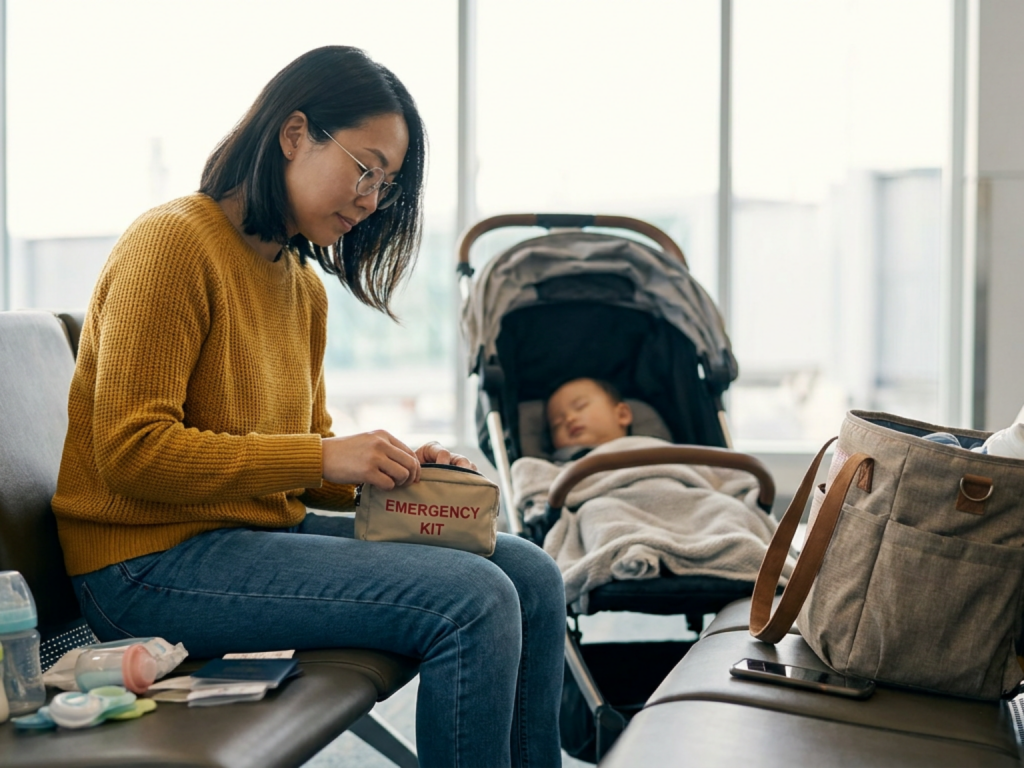
Pack emergency supplies in carry-on or day-bag form, not only checked luggage. Include diapers, wipes, oral rehydration solution if recommended by your clinician, feeding supplies, formula or expressed milk storage equipment as relevant, a thermometer, prescribed medicines in original packaging, copies of prescriptions, and comfort items. Avoid assuming pharmacies abroad will carry identical brands, concentrations, or formulations.
Recognizing medical emergencies in babies while away from home
Babies can deteriorate quickly, and they cannot describe chest tightness, severe pain, dizziness, or confusion. If your baby appears seriously unwell, it is appropriate to seek urgent local medical help rather than waiting for reassurance from home. When to call emergency services is especially important during travel, because delays may be longer and navigation unfamiliar.
Urgent warning signs include severe respiratory distress in infants, such as grunting, persistent flaring nostrils, marked chest retractions, blue or gray color around lips, pauses in breathing, or inability to feed due to breathlessness. Other red flags include unresponsiveness, a seizure, sudden limpness, persistent inconsolable crying with a concerning appearance, signs of shock after injury, a bulging fontanelle with fever or lethargy, or a temperature concern in a very young infant according to your clinician’s prior guidance.
Seek urgent evaluation for significant dehydration: very few wet diapers, sunken eyes, dry mouth, unusual sleepiness, poor feeding, or persistent vomiting or diarrhea. Suspected poisoning in an infant, medication dosing error, exposure to recreational drugs, or ingestion of cleaning products also requires immediate poison control or emergency guidance. After head injury, medical advice is important if there is loss of consciousness, repeated vomiting, abnormal behavior, seizure, scalp swelling in a young infant, or a high-force mechanism such as a vehicle crash.
Allergic reactions, infections, and heat or cold stress
Travel increases exposure to new foods, insect stings, environmental allergens, infections, and climate extremes. A mild rash alone may not be an emergency, but suspected infant anaphylaxis is time-critical. Concerning features include breathing difficulty, repetitive vomiting after allergen exposure, swelling of the lips or tongue, widespread hives with lethargy, pallor, sudden floppy behavior, or collapse. Families with a prescribed epinephrine autoinjector should follow their clinician’s emergency plan and still seek urgent medical assessment afterward, because symptoms can recur.
Fever during travel should be interpreted in context: age, vaccination status, immune status, destination exposures, and appearance matter. A baby who is difficult to wake, has a stiff or unusually irritable posture, poor perfusion, respiratory distress, signs of dehydration, or a non-blanching rash needs urgent care. If your trip involves malaria, dengue, measles exposure, or other destination-specific infections, contact a healthcare professional promptly for fever or concerning symptoms.
Temperature regulation can become an emergency. Babies are vulnerable to overheating in hot cars, crowded transit, poorly ventilated carriers, and direct sun. Baby carrier overheating risk increases when layers trap heat or the infant’s face is covered; the airway should remain clear and visible. In cold environments, wet clothing, wind, and prolonged exposure can cause hypothermia. Move to a safer environment, remove wet layers, warm or cool gradually as appropriate, and seek medical help if the baby is lethargic, feeding poorly, breathing abnormally, or has altered color.
Transportation emergencies and evacuation with a baby
Transportation problems can range from missed connections to vehicle collisions, emergency landings, ferry delays, road closures, and evacuation orders. In any sudden event, first check the baby’s airway, breathing, circulation, temperature, and level of responsiveness. If there has been a crash or fall, avoid unnecessary movement if spinal or major injury is possible, unless remaining in place is unsafe. Follow emergency dispatcher instructions for caregivers and local responders.
Safe transport for infants remains essential during crisis. Use an age- and size-appropriate car seat whenever available, even for short rides or taxis. If evacuation requires public transport or walking, keep the baby secured and close, but monitor breathing position carefully. Baby carrier safety rules are not just comfort advice in emergencies: the chin should remain off the chest, the nose and mouth must be unobstructed, and the caregiver should be able to see the baby’s face.
During evacuation, bring the baby’s emergency kit, documents, medications, feeding supplies, and at least one change of clothing if time permits, but do not delay departure when authorities instruct immediate evacuation. If separated from luggage, prioritize hydration, feeding access, warmth, and medical identification. Take photos of passports and prescriptions before travel and store copies securely with a trusted contact. If documents are lost abroad, contact the nearest embassy or consulate as soon as feasible.
Natural disasters, unrest, crime, and security alerts
Earthquakes, floods, wildfires, hurricanes, severe storms, political demonstrations, terrorism alerts, and sudden public disorder require quick decisions. Official advisories and local alerts can help determine whether to shelter in place, move to a safer district, contact your embassy, or leave the area. If you receive a government or hotel emergency alert, follow local instructions unless doing so clearly places you in immediate danger.
For sheltering in place with a baby, choose an interior area away from windows if there is severe weather or unrest outside. Keep feeding supplies, diapers, medications, a charged phone, power bank, water, and identification within reach. If air quality is poor from wildfire smoke or pollution, keep the baby indoors as much as possible and seek medical advice promptly for breathing difficulty, cyanosis, wheeze, poor feeding, or unusual sleepiness.
Theft or assault can create both safety and medical concerns. Move to a secure public place, contact local authorities when safe, and inform your embassy or insurer if passports, money, or essential medicines are stolen. Do not chase a thief while carrying a baby. If medication is lost, contact a clinician, pharmacist, travel insurer, or embassy-linked assistance service for help identifying safe replacement options. Medication names and concentrations vary by country, so avoid substituting without professional guidance.
Keeping essential care going during disruption
Emergencies are harder when feeding, sleep, and hygiene collapse at the same time. Adjusting care routines while traveling is often necessary, but during a crisis the goal is not perfection; it is physiologic stability and safety. Keep feeds frequent enough to maintain hydration, watch wet diapers, and ask for medical guidance if intake drops significantly or vomiting persists. If using formula, prepare it with safe water according to local public health advice; after disasters, tap water may be unsafe even if it was safe earlier.
Safe sleep during travel can be difficult in airports, shelters, hotels, or relatives’ homes. Use the safest available flat, firm surface without loose bedding whenever possible. Avoid placing a baby to sleep on couches, soft adult beds, or improvised padded surfaces, especially when caregivers are exhausted. If no ideal option exists, reduce risk as much as possible and seek assistance from shelter staff, hotel staff, or local services.
Infection exposure during baby outings may rise in crowded terminals, clinics, shelters, or buses. Use hand hygiene before feeding, after diaper changes, and after contact with high-touch surfaces. Keep sick contacts away from young infants when possible. If your baby is medically fragile, ask your clinician before travel about masks for caregivers, vaccination of household members, and destination-specific infection precautions. How to care for baby during outings becomes especially important when public spaces become temporary waiting rooms during delays or emergencies.
Communicating with clinicians, insurers, and local authorities
When an emergency occurs, clear communication can shorten delays. State the baby’s age in months or weeks, current weight if known, symptoms, timing, relevant exposures, medications, allergies, and any underlying conditions. If there is a language barrier, use professional interpretation services when available rather than relying on guesswork for medication instructions, discharge precautions, or consent discussions.
Travel insurance and medical assistance services may help identify hospitals, coordinate payment, arrange transport, or discuss medical evacuation. Medical evacuation is complex and should be guided by professionals; it may be unsafe or unnecessary in some situations and essential in others. Keep receipts, medical reports, medication labels, and discharge summaries for follow-up care after returning home.
After any urgent event, arrange follow-up with your baby’s regular healthcare professional. Even when the immediate crisis resolves, a clinician may need to review hydration, weight, respiratory status, wound care, medication changes, vaccine implications, or psychological stress for the family. Caregivers also deserve support: it is normal to feel shaken after managing a baby’s emergency away from home.
Seek urgent help without delay
- Call local emergency services for unresponsiveness, seizure, severe breathing difficulty, blue or gray color, or major trauma.
- Treat suspected infant anaphylaxis as an emergency and follow the prescribed emergency plan while seeking urgent care.
- Do not give unfamiliar medications, adult formulations, or substituted doses without professional guidance.
- Do not delay evacuation to collect nonessential belongings when authorities advise immediate departure.
- For very young infants with fever or poor feeding, contact a healthcare professional urgently according to age-specific guidance.
Tools & Assistance
- Save local emergency numbers, hospital addresses, embassy or consulate contacts, and insurer assistance numbers offline.
- Carry paper and digital copies of passports, prescriptions, immunization records, and the baby’s medical summary.
- Enroll in relevant government travel alert programs when available for international trips.
- Use professional medical interpretation services when discussing treatment in another language.
- Keep a compact baby emergency kit in carry-on or day-bag form at all times.
FAQ
Should I go to an emergency department abroad for a baby’s fever?
It depends on age, appearance, medical history, and destination risks. A very young infant, a baby who is lethargic or feeding poorly, or any baby with breathing difficulty, dehydration, or a concerning rash should be assessed urgently.
What if my baby’s medication is lost during travel?
Contact a healthcare professional, pharmacist, travel insurer, or embassy-linked assistance service. Avoid substituting products on your own because names, concentrations, and formulations vary between countries.
Is it safe to shelter in place with a baby during unrest or a storm?
Often it is safer than moving through danger, but follow local emergency instructions. Choose a protected interior area, keep essential supplies close, and seek help if the baby shows medical warning signs.
What should I tell emergency responders about my baby?
Give age, weight if known, symptoms, timing, allergies, medications, medical conditions, recent travel exposures, and what happened immediately before the emergency.
How can I prepare for travel if my baby has a chronic condition?
Discuss the itinerary with your baby’s clinician before departure. Ask about documents, medication quantities, emergency action plans, destination risks, and whether travel should be modified or postponed.
Sources
- U.S. Department of State — Travel Advisories
- Penn State Global — Travel Safety Tips
- Temple University — Emergency Preparedness for International Travel
Disclaimer
This article is for general medical education and travel preparedness only. It does not diagnose, treat, or replace care from a qualified healthcare professional or local emergency services.
















Please log in to leave a comment.