
Intro
Taking a baby out of the home can feel both freeing and intimidating. Even a short walk, clinic visit, grocery stop, or family gathering asks you to think about feeding, sleep, temperature, infection exposure, safe transport, diapering, and your own energy level at the same time. If you are feeling cautious, that is not overreacting; infants have immature thermoregulation, developing immune systems, small fluid reserves, and limited ways to communicate distress.
The goal is not to create a perfect outing. It is to make the outing predictable enough that you can respond calmly when the baby needs feeding, a diaper change, rest, warmth, shade, or simply a break from stimulation. The guidance below combines practical planning with medical safety principles, while recognizing that every baby’s needs, gestational history, feeding pattern, and health status are different.
Highlights
Plan outings around your baby’s usual feeding and sleep rhythm when possible, but bring supplies for delays because infant needs can change quickly.
Use a properly installed rear-facing car seat for vehicle travel, and avoid using car seats, strollers, swings, or carriers as unsupervised sleep spaces.
Protect babies from overheating, smoke exposure, choking hazards, and close contact with sick people, especially during early infancy.
Watch for feeding, hydration, breathing, temperature, and behavior changes during and after outings; contact a healthcare professional when concerns arise.
A successful outing may be short, flexible, and imperfect. Leaving early is a valid safety decision, not a failure.
Start with a flexible plan
For many families, the first few outings work best when they are short, low-pressure, and close to home. A walk around the block, a quick visit to a calm relative, or a brief errand can help you learn how your baby responds outside the usual environment. Newborns and young infants often feed frequently, become overstimulated quickly, and may need diaper changes at inconvenient moments.
If possible, leave soon after a feeding and diaper change, but do not assume this guarantees a full window of calm. Growth spurts, cluster feeding, reflux-like spit-up, gas, and normal infant fussiness can all alter the plan. UCLA Health’s newborn guidance emphasizes planning outings between feedings, bringing extra diapers and milk or formula, and preparing for delays. That approach is practical because the main variable during outings is not distance; it is time.
It can also help to think of activity transitions for babies as part of the outing. Moving from home to car seat, car seat to stroller, stroller to feeding, and public space back to home may all require pauses. Use a calm voice, predictable handling, and a few extra minutes rather than rushing through each change. Babies often regulate better when caregivers slow down, even when the schedule feels tight.
Pack for feeding, diapering, and delays
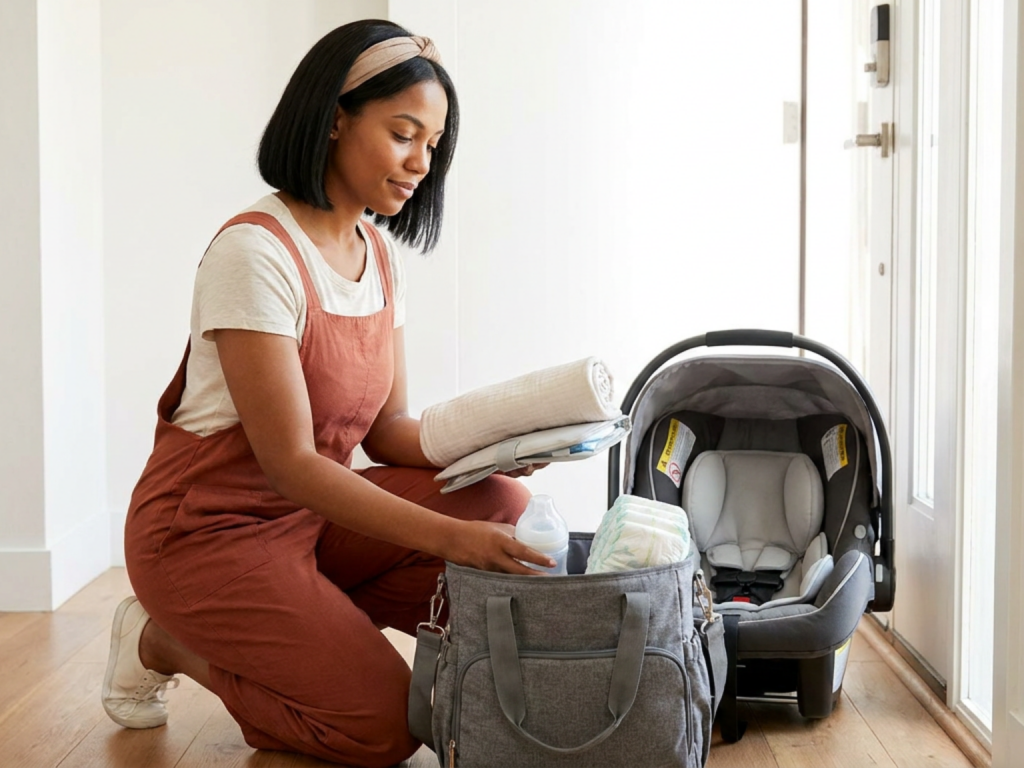
A well-packed bag is not about bringing everything you own; it is about covering the most likely needs and a few realistic surprises. Pack more diapers than you expect to use, wipes, a portable changing pad, disposal bags, a change of clothes for the baby, and if possible a spare top for the caregiver. A small spit-up cloth or muslin blanket can serve multiple roles: burp cloth, light cover, or clean surface.
For feeding, bring what your baby already uses safely. If breastfeeding, consider where you might sit comfortably and whether you want a cover, though a cover is not medically required. If bottle-feeding expressed milk or formula, follow safe preparation and storage guidance from your pediatric or public health team. Bring enough for delays, and avoid improvising formula concentration, because incorrect dilution can affect hydration and electrolytes.
- Diapers, wipes, changing pad, disposal bags, and barrier cream if routinely used
- Milk, formula, bottles, nipples, or breastfeeding supplies appropriate for your feeding method
- Weather-appropriate layers, sun protection, and a backup outfit
- Pacifier, clean teether, or comfort item if your baby uses one safely
- Hand sanitizer for caregivers, while still using soap and water when available
During longer outings, keep an eye on infant feeding and hydration concerns. Fewer wet diapers than usual, persistent refusal to feed, dry mouth, unusual sleepiness, or repeated vomiting should prompt you to seek medical guidance, especially in newborns or babies with medical complexity.
Use safe transport every time
Vehicle travel requires a properly installed, rear-facing car seat that matches the baby’s size and is used according to the manufacturer’s instructions. Harness straps should be snug, the chest clip positioned as directed, and bulky coats should not be placed under the harness because they can compress during a crash. If you are unsure about installation, a certified child passenger safety technician or local inspection program can help.
Car seats are designed for crash protection during travel, not for routine sleep outside the car. If your baby falls asleep in the car seat, supervise closely during travel and move the baby to a firm, flat, safe sleep surface when you arrive and it is practical to do so. The same caution applies to strollers, swings, bouncers, and carriers: they can be useful tools, but they should not replace a safe sleep environment.
In strollers, use the harness and follow weight and recline recommendations. Young infants need adequate head and neck support and an airway position that keeps the chin from falling tightly toward the chest. In soft carriers or slings, keep the baby’s face visible, nose and mouth unobstructed, and body close enough to kiss. Babywearing can be wonderfully calming and convenient, but positioning matters because very young infants have limited airway protective responses.
Manage temperature, sun, and environment
Infants have a higher surface-area-to-body-mass ratio than adults and less mature sweating and vasomotor responses, so they can become too hot or too cold more easily. Dress in light layers that can be added or removed. Check the back of the neck or chest rather than hands and feet alone, because infant extremities may feel cool even when core temperature is comfortable.
Avoid covering a stroller with a thick blanket in warm weather, because airflow can decrease and heat can build inside the stroller. Choose shade, breathable fabrics, and frequent checks. For young infants, especially those under 6 months, discuss sun protection with your pediatrician; shade and protective clothing are usually central strategies. In cold weather, warm the baby with layers and blankets over the harness after buckling, not bulky clothing beneath car seat straps.
Public environments also bring hazards that are easy to overlook. Keep hot drinks away from the baby, including when the baby is in a carrier. Avoid cigarette smoke, vaping aerosols, and crowded indoor settings where respiratory infections are spreading. Keep small objects, coins, button batteries, food pieces, and older children’s toys out of reach, because choking and ingestion risks increase as babies begin grabbing and mouthing objects.
Protect against infection without isolating completely
Outings do not have to mean complete avoidance of the world, but infection risk deserves respect. Young infants, premature babies, and babies with heart, lung, immune, or neurologic conditions may need more individualized precautions. Ask your baby’s clinician what level of exposure is appropriate, especially before large gatherings, travel, or visits during respiratory virus season.
Practical steps include asking sick visitors to wait, washing hands before holding the baby, avoiding kisses on the baby’s face and hands, and keeping the baby away from tobacco smoke. The CDC also emphasizes vaccination as a key part of infant health. Keeping the baby’s routine immunizations on schedule, and ensuring close contacts are appropriately vaccinated when recommended, helps reduce risk in public and family settings.
If you are attending a medical appointment, bring feeding supplies and expect possible waiting. If you are attending a social event, decide in advance what you will say if someone wants to hold the baby and you are not comfortable. A simple phrase such as, “We are being careful about germs right now,” is enough. You do not need to justify every protective choice.
Read your baby’s cues during the outing
Babies communicate through behavior, color, tone, breathing pattern, feeding behavior, and state regulation. Early hunger cues can include stirring, rooting, hand-to-mouth movements, and increased alertness; crying is often a later cue. Sleep cues may include staring away, yawning, fussing, red eyebrows or eyelids, and reduced engagement. Responding early often prevents a difficult escalation.
Outings can increase sensory load: light, sound, motion, handling, smells, temperature changes, and social attention all arrive at once. Overstimulation cues in babies may include turning away, finger splaying, arching, hiccupping, frantic crying, or shutting down into unusually deep sleep. When you notice these signs, reduce input: step outside, dim stimulation, hold the baby close, feed if hungry, or head home.
Balancing sleep feeding and play is harder away from home because cues may be masked by novelty. Try not to stretch wake windows dramatically just because the outing is going well. A baby who seems cheerful in a busy place may still become overtired later. Building in quiet pauses protects both the baby’s nervous system and the caregiver’s patience.
Know when to pause, leave, or seek help
There is no prize for finishing an errand when your baby is struggling. If feeding is not going well, the baby is too hot or cold, the environment feels unsafe, or you are becoming overwhelmed, it is reasonable to pause or leave. Caregivers make better decisions when they are not trapped by the idea that plans must be completed.
Some situations require medical advice rather than simple adjustment. Newborn fever warning signs are especially important because fever in very young infants can be clinically significant. Ask your baby’s clinician what temperature threshold and measurement method should prompt urgent contact, particularly for babies under 3 months. Also seek prompt advice for breathing difficulty, blue or gray color around lips, poor feeding with lethargy, signs of dehydration, persistent vomiting, or a caregiver’s concern that the baby is not acting normally.
If your baby has a known condition, such as prematurity, congenital heart disease, chronic lung disease, immune compromise, feeding difficulties, or a history of apnea, create an outing plan with your healthcare team. That plan may include travel distance limits, feeding equipment, medication timing, emergency contacts, or when to use an after-hours pediatric triage line.
Care for yourself as part of baby care
Outings often reveal how much invisible work caregivers are doing. You may be recovering physically, sleep-deprived, managing feeding pain, navigating postpartum mood changes, or worrying about public judgment. Your well-being affects safety: fatigue can make driving, feeding decisions, and remembering supplies harder.
Before leaving, check your own basics: water, snack, phone, keys, payment method, and any medications you need. If another adult is available, assign roles before the outing, such as who drives, who handles the diaper bag, and who makes the decision to leave. If you are going alone, choose a destination with accessible bathrooms, seating, and an easy exit.
Confidence grows through repetition, not through flawless performance. A short, successful outing may simply mean the baby was fed, transported safely, protected from obvious hazards, and brought home when needed. That is enough.
When to get medical advice urgently
- Fever in a young infant, especially under 3 months, should be discussed promptly with a healthcare professional according to your clinician’s instructions.
- Breathing difficulty in infants, pauses in breathing, grunting, severe retractions, or blue or gray color around the lips needs urgent medical attention.
- Poor feeding with unusual sleepiness, fewer wet diapers, dry mouth, or persistent vomiting can signal dehydration or illness.
- A baby who is excessively hot, very cold, limp, difficult to wake, or not acting like themselves should be assessed urgently.
- After any fall, vehicle crash, or suspected choking or ingestion event, seek appropriate emergency or pediatric guidance.
Tools & Assistance
- Certified child passenger safety technician or local car seat inspection program
- After-hours pediatric triage line for urgent questions that are not clearly emergencies
- A stocked outing bag kept near the door and checked after each trip
- Weather and air-quality alerts before outdoor outings
- A written emergency contact and medication list for babies with medical conditions
FAQ
When can I take my newborn outside?
Many healthy newborns can go outside for brief, low-risk outings when caregivers are ready, but timing should be individualized. Ask your pediatric clinician if your baby was premature, medically fragile, recently ill, or not yet feeding well.
How long should the first outing be?
Short is often best. A brief walk or quick errand lets you practice feeding, diapering, transport, and soothing outside the home without becoming stranded far from supplies or rest.
Is it safe for my baby to sleep in the stroller or car seat during an outing?
Brief supervised sleep during travel may happen, but car seats and strollers are not substitutes for a firm, flat safe sleep surface. Move the baby to a safe sleep space when you arrive and it is practical.
What should I do if strangers want to touch or hold my baby?
It is reasonable to set boundaries. You can say that you are limiting close contact to reduce infection exposure, especially during early infancy or respiratory virus season.
How do I know if my baby is overstimulated?
Signs may include turning away, arching, frantic crying, finger splaying, hiccupping, or becoming unusually shut down. Reduce noise, light, handling, and movement, and consider feeding, holding, or going home.
Sources
- UCLA Health — The Newborn Manual: A Practical Guide for New Parents
- Centers for Disease Control and Prevention — Positive Parenting Tips: Infants (0–1 years)
- Children's Wisconsin — Tips for your first outing with a baby
Disclaimer
This article is for general educational purposes only and does not replace medical care. Always consult your baby’s pediatrician or another qualified healthcare professional for individualized advice, urgent symptoms, or safety concerns.














Please log in to leave a comment.