
Intro
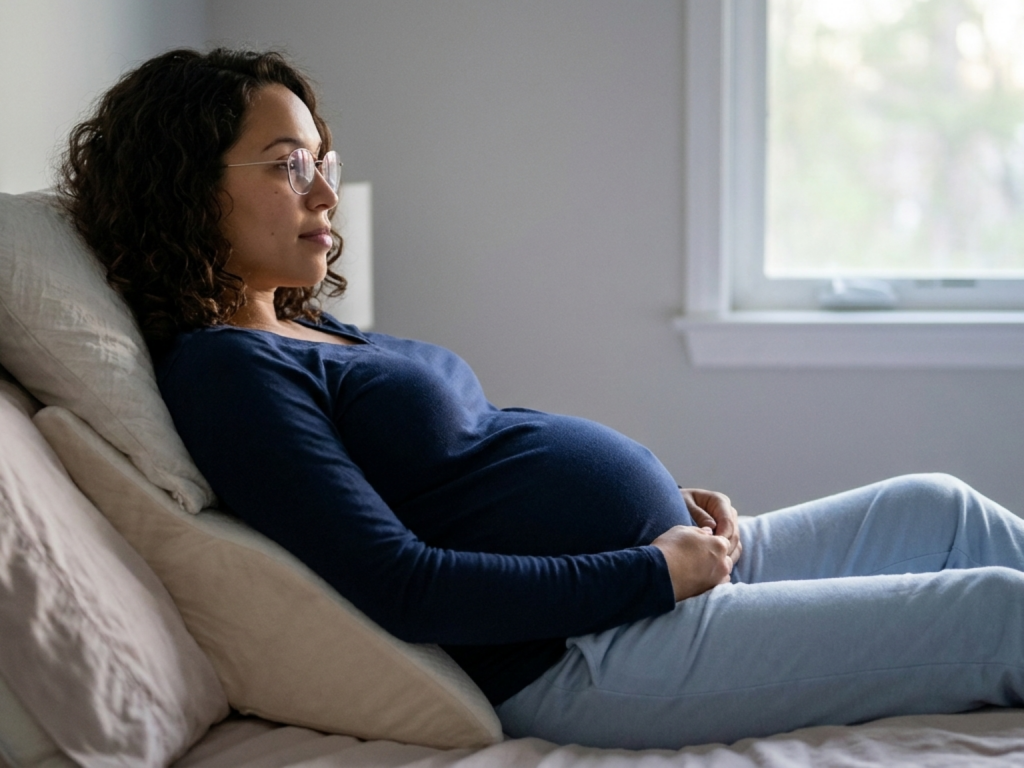
For many pregnant people, the question is not just whether right-side sleeping is allowed, but whether it is comfortable, reassuring, and physiologically reasonable as the pregnancy progresses. The short answer is that sleeping on the right side is generally considered safe for most pregnancies, especially if it helps you rest. Sleep position in pregnancy is often about balancing comfort, reflux, breathing, and circulation rather than following a single rigid rule.
That said, the answer is not identical for every person or every trimester. Right-side sleeping can be perfectly acceptable for some, while others notice more heartburn, reflux, or pressure symptoms on that side. If you have a complicating condition such as significant GERD, certain cardiac symptoms, or a high-risk pregnancy, your clinician may give more individualized guidance.
Highlights
Right-side sleeping is generally safe in pregnancy for many people, especially when it helps you sleep better.
The main downsides are often symptom-related, such as reflux or heartburn, rather than direct harm to the pregnancy.
If lying on the right side feels comfortable, you usually do not need to panic or constantly correct yourself at night.
Late pregnancy sleep position can matter more because pressure, reflux, and circulation changes become more noticeable.
Persistent discomfort, shortness of breath, or severe reflux are reasons to ask your obstetric clinician for tailored advice.
What “safe” means when you are pregnant
When people ask whether right-side sleeping is safe, they are usually asking two different questions: could it harm the baby, and could it make the pregnant person feel worse? Those are related but not identical concerns. In most uncomplicated pregnancies, right-side sleeping is not considered dangerous in itself. The more practical issue is whether the position triggers symptoms such as heartburn, reflux, shoulder pain, hip pain, or breathlessness.
Pregnancy changes abdominal pressure, gastric emptying, and the way the diaphragm and large vessels are loaded. Because of that, a sleep posture that felt neutral before pregnancy may feel very different later on. The most important principle is that sleep should be sustainable. If you sleep better on the right side and you are not having a symptom flare, that is often a reasonable choice. If the position consistently makes you miserable, then it is worth adjusting the setup rather than forcing yourself to stay in one posture all night.
This is also why many clinicians focus less on perfection and more on patterns. A brief turn onto the right side is not the same as staying flat in a position that clearly worsens symptoms for hours. In that sense, the question is less about a universal rule and more about your own physiology, comfort, and any pregnancy-specific risk factors.
Why side sleeping is commonly recommended in pregnancy
Side sleeping is generally a practical default in pregnancy because it can reduce the discomfort that comes with lying flat on the back, particularly in later pregnancy. When the uterus enlarges, supine positioning can increase pressure on the abdomen and major vessels, and some people notice lightheadedness, nausea, or a sense of being unwell. That is one reason many clinicians steer people toward sleeping on their side rather than on the back for long stretches.
Within the category of sleeping on your side, both left and right are often acceptable, and the better side is sometimes simply the one that lets you fall asleep and stay asleep. Mayo Clinic notes that side sleeping is a generally good option, and in real-world practice comfort often matters as much as theory. If you are tossing and turning between positions, the best position may be the one that gives you the most continuous rest.
That said, pregnancy sleep positioning is often individualized. Some people find the left side easier on reflux, while others prefer the right side because of hip pain, shoulder strain, or simple habit. The key point is that side sleeping is not meant to be punitive. It is meant to support rest while minimizing avoidable discomfort.
How the right side can affect reflux, heartburn, and circulation
The most common reason right-side sleeping gets singled out is reflux. Johns Hopkins Medicine notes that right-side sleeping can worsen heartburn and GERD symptoms, including in pregnancy. Anatomically, the stomach’s position and the angle between the esophagus and stomach can make reflux easier when lying on the right side for some people. If you already have pregnancy heartburn, you may notice that right-side positioning brings acid symptoms higher into the chest or throat.
That does not mean the right side is unsafe; it means it may be a poor fit if reflux is part of your pregnancy experience. In contrast, some people with cardiac conditions or specific symptom patterns may actually prefer one side over the other. AARP notes that sleeping position can change how the heart feels and that right-side sleeping is not universally harmful. The practical takeaway is that side choice can matter, but the “best” side depends on the symptom you are trying to reduce.
Circulation is another reason sleep position gets attention in pregnancy. Later in pregnancy, avoiding prolonged pressure on major vessels is often discussed in terms of uteroplacental perfusion and overall maternal comfort. This is one reason clinicians often emphasize avoiding long periods flat on the back rather than obsessing about whether the side is left or right. If you are on your right side, breathing comfortably and feeling well, that is usually more important than trying to achieve a theoretically perfect posture.
When right-side sleeping is usually fine, and when to change it
For many pregnant people, right-side sleeping is perfectly fine if it feels natural and does not trigger symptoms. This is especially true if you drift onto that side briefly during the night and then reposition yourself. Sleep is fragmented enough in pregnancy without adding unnecessary anxiety about every turn. A brief position change is not the same as spending the whole night in a posture that makes you feel worse.
It may be worth modifying right-side sleeping if you notice a consistent pattern of worsening heartburn, coughing, choking sensation, nausea, or chest discomfort. The same is true if you feel dizzy, short of breath, unusually pressured, or generally unwell in one posture. In the third trimester, these sensations can become more prominent because the uterus occupies more abdominal space and the overall mechanical load is greater. That is where a simple adjustment, such as a pillow behind the back or a semi-reclined sleep position, may be more helpful than trying to force one strict side.
There is also no need to interpret right-side sleeping as a sign that you are doing pregnancy “wrong.” For many people, the issue is not danger but symptom control. If your right side is comfortable, your reflux is controlled, and your clinician has not given you a specific restriction, you can usually treat it as an acceptable option rather than a problem to solve.
Practical ways to make side sleeping more comfortable
If you want to keep sleeping on your side but make the position easier on your body, a few small changes can help. A pregnancy pillow for side sleeping can support the belly, hips, and knees so that your spine stays more neutral. A firm pillow between the knees can reduce pelvic torsion, while a smaller pillow behind the back can keep you from rolling flat without forcing you into one rigid posture. These are comfort tools, not mandatory equipment.
If reflux is your main complaint, meal timing and sleep elevation may matter as much as the side itself. Many people do better when they avoid heavy meals close to bedtime and when the upper body is slightly elevated. If you find that right-side sleeping still causes burning or regurgitation, trying the left side or a more semi-reclined setup may be worth discussing with your clinician. Sleep position and reflux management often work best together rather than in isolation.
It can also help to think of sleep as a dynamic process rather than a fixed pose. You may start the night on your left side, drift to the right side, and then reposition again when you wake. That flexibility is normal. The goal is not to “hold” a perfect position all night; the goal is to improve overall sleep quality while reducing the symptoms that matter most to you.
When to ask your obstetric clinician for individual advice
Most pregnant people do not need emergency-level concern about sleeping on the right side, but there are situations where individualized medical advice is appropriate. If you have significant reflux, known heart disease, sleep apnea symptoms in pregnancy, recurrent dizziness, or a high-risk obstetric history, your clinician may want to tailor sleep guidance to your situation. Likewise, if you are waking repeatedly because you cannot breathe comfortably in any position, that deserves attention.
It is also reasonable to ask about left versus right side sleeping if you receive conflicting advice online or from family members. Online discussions can make sleep position sound more rigid than it is. In reality, clinicians usually care most about avoiding prolonged supine positioning when relevant, reducing reflux, and helping you get restorative sleep. If right-side sleeping is your most comfortable option, bring that up directly rather than assuming it is off-limits.
If you are anxious about whether your sleep posture is affecting the baby, that anxiety itself can erode sleep quality. A brief conversation with your obstetric team can clarify what matters for your pregnancy and what does not. That reassurance is often more valuable than trying to memorize a universal rule that does not fit your body.
Get medical advice promptly if you notice:
- Severe or persistent shortness of breath when lying on either side
- Reflux with chest pain, vomiting, or trouble swallowing
- Dizziness, faintness, or a marked sense of unwellness in one sleep position
- Sleep apnea symptoms in pregnancy, such as loud snoring with gasping or pauses in breathing
- Any pregnancy symptom that feels new, intense, or concerning to you
Tools & Assistance
- Ask your obstetrician or midwife which sleep position is best for your pregnancy and symptom profile.
- Try a pregnancy pillow or a pillow between the knees to improve alignment and reduce pressure.
- Review reflux management strategies with your prenatal care team if heartburn is frequent at night.
- Use a bedside note or phone reminder to track which sleep positions feel best across several nights.
FAQ
Is sleeping on the right side safe during pregnancy?
For most pregnancies, yes. Right-side sleeping is generally safe, but it may worsen heartburn or reflux in some people.
Is the left side better than the right side?
Left-side sleeping is often recommended because it may be easier on reflux for some people, but the right side is not automatically unsafe.
Should I worry if I wake up on my right side?
Usually no. Briefly changing positions during sleep is normal. You can simply turn to a more comfortable side when you notice it.
What if right-side sleeping gives me heartburn?
If it reliably worsens reflux, try another side or a more elevated posture and discuss symptom control with your prenatal clinician.
When should I ask for medical advice about sleep position?
Ask if you have persistent breathlessness, dizziness, severe reflux, sleep apnea symptoms, or any pregnancy-specific risk factors.
Sources
- Johns Hopkins Medicine — Choosing the Best Sleep Position
- Mayo Clinic — Mayo Clinic Minute: What is the best sleeping position?
- AARP — What's the Best Sleeping Position for Your Health?
Disclaimer
This article is for general educational purposes only and does not replace individualized medical advice. If you are pregnant and have symptoms or concerns about sleep position, please consult your obstetric clinician.
















Please log in to leave a comment.