
Intro
Pregnancy often makes people look at their home environment in a new way, and that reaction is reasonable. Many household products are safe when used correctly, but some chemicals can add avoidable risk, especially when exposure is repeated, concentrated, or happens during sensitive windows of fetal development.
The goal is not to create fear or perfectionism. It is to recognize the most relevant sources, reduce the exposures that are easiest to change, and involve your obstetric clinician or midwife when something feels uncertain or potentially high-risk.
Highlights
Pregnancy is a time of increased vulnerability to some chemicals because the placenta allows transfer of many substances and the fetus is developing rapidly.
Not every household product is dangerous, but repeated exposure to cleaners, pesticides, solvents, dust, and certain plastics can add up.
Risk depends on dose, timing, duration, and mixture; even so, simple steps can reduce exposure without turning the home upside down.
If there is a spill, inhalation event, or renovation concern, your obstetric team and Poison Control can help you decide what matters most.
Why household toxins matter more during pregnancy
Pregnancy changes physiology in ways that can alter exposure and susceptibility. Minute ventilation increases, blood volume expands, and the placenta becomes a critical interface between maternal and fetal circulation. The placenta is protective, but it is not a complete barrier, and many compounds can cross it to some extent.
That matters because the fetal period is one of rapid cell division, organ formation, and endocrine signaling. Small changes in hormone signaling or nutrient delivery can have outsized effects during narrow developmental windows. The review literature on cumulative chemical exposures describes placental transfer and fetal accumulation for several persistent compounds, including flame retardants, PCBs, perfluorinated compounds, and organochlorines.
The practical takeaway is reassuring: you do not need to eliminate every trace of exposure. Public-health and obstetric guidance generally emphasizes reducing avoidable, modifiable sources first. That approach is especially useful for people who feel overwhelmed, because it focuses on the exposures most likely to occur at home and the steps most likely to help.
Common household sources and how exposure happens
Household toxins are not a single category. They include products and by-products that may be inhaled, absorbed through the skin, or swallowed in tiny amounts after they settle into dust. In daily life, the biggest sources are often the ones that seem routine: cleaning sprays, disinfectants, air fresheners, pesticides, paint fumes, solvents, and contaminated dust in older or recently renovated spaces.
Cleaning products deserve special attention because concentrated liquids and sprays can irritate the respiratory tract and eyes, and mixing certain products can create dangerous gases. Fragrance mixtures can also be a problem for some people with asthma or migraine. In homes with older furnishings or renovation work, dust may contain lead, flame retardants, or other persistent chemicals that are easily transferred from hands to mouth.
Plastic additives are another common concern. BPA and phthalate exposure can occur through food packaging, some consumer products, and heated plastics. These compounds are studied because they may interfere with hormone signaling, which is why pregnancy guidance often encourages reducing unnecessary contact when practical. The same general principle applies to solvents, adhesives, and strong fumes from hobby materials or repair products.
Some persistent chemicals can remain in indoor dust for long periods. That is one reason why routine cleaning and ventilation matter: they do not remove every hazard, but they can lower the amount that reaches the body day after day.
What the research suggests about pregnancy and child-health effects
ACOG notes that some toxic chemicals may affect fertility and pregnancy and have been linked in observational research to miscarriage, birth defects, early birth, and later learning problems. The evidence does not mean that every exposure causes harm, and it does not allow anyone to predict an individual outcome from a single event. It does, however, support caution around repeated or high-level exposures.
The scientific literature on cumulative exposure during pregnancy and early development is especially important because people are rarely exposed to one chemical at a time. Mixtures may interact, and the fetus may be exposed during different developmental stages, each with its own vulnerabilities. Some studies have associated certain exposures with altered cognitive, behavioral, endocrine, and growth outcomes. That includes associations, not certainty, but it is enough to justify exposure reduction when the steps are simple and low-risk.
Timing matters as much as dose. Early organogenesis is a sensitive period for structural development, while later pregnancy is a key period for growth, brain maturation, and endocrine regulation. This is one reason clinicians often frame prevention broadly: even if one exposure seems small, repeated contact across weeks or months can be more meaningful than it first appears. The goal is not to create blame. The goal is to reduce cumulative burden where you can.
Practical ways to lower exposure at home
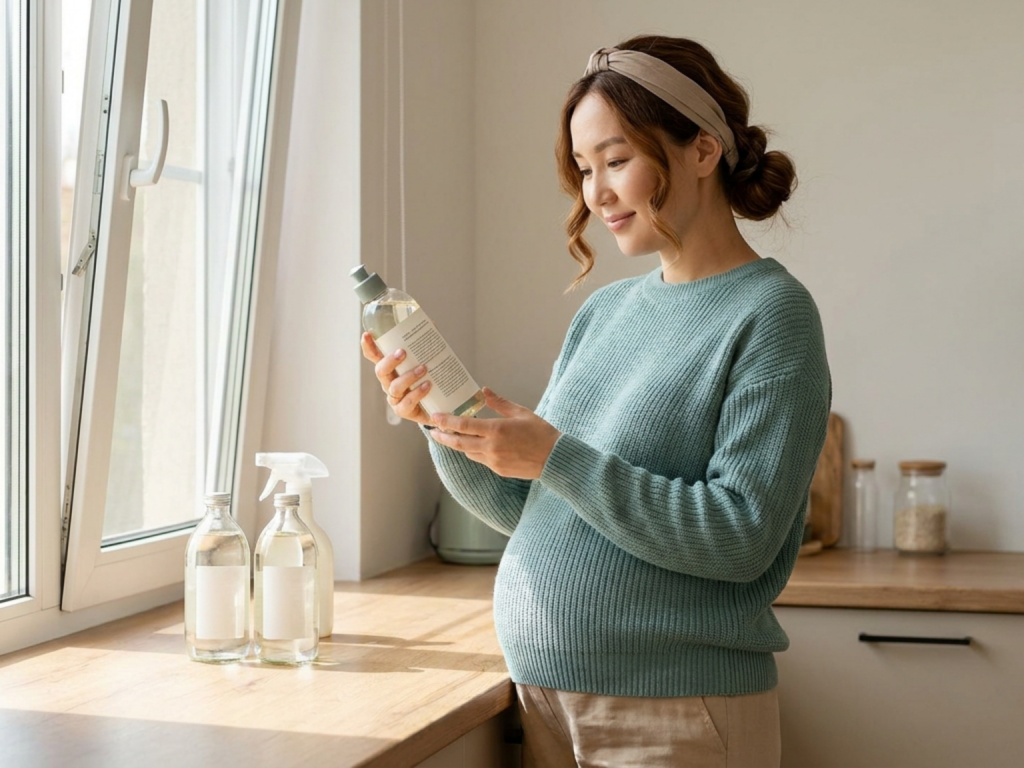
If you want to reduce household exposure without overhauling your life, start with the places where chemicals are easiest to avoid. For day-to-day cleaning, pregnancy-safe cleaning strategies usually begin with ventilation, label reading, and using the least aggressive product that gets the job done. Open windows when possible, use exhaust fans, and avoid mixing products, especially bleach with ammonia or other cleaners.
Choosing fragrance-free household products can also help because it reduces exposure to added scent chemicals and makes it easier to notice when a product is irritating. Wet-dusting and vacuuming with a HEPA filter can reduce contaminated dust, especially if you live in an older home or near renovation activity. Washing hands before eating and after cleaning, gardening, or handling pesticides is a small step with outsized value.
For food storage and reheating, reduce unnecessary contact with heated plastics when practical. Use glass or stainless steel for hot foods and drinks if that is convenient for you. Avoid putting worn, scratched, or heat-softened plastic containers in the microwave. If you use pest control products, follow label instructions carefully and keep them out of reach of children and pets.
These steps are intentionally realistic. The best plan is one you can keep doing, not a perfect plan that leaves you anxious and exhausted.
Situations that deserve extra caution
Some home situations raise the exposure level enough that extra attention is worthwhile. Renovation is a major example. If your home was built before modern lead restrictions or you are sanding, scraping, or drilling painted surfaces, lead dust during home renovation can become airborne and settle on floors, counters, and clothing. Even short-term projects can create dust that is easy to spread from room to room.
Another hidden hazard is carbon monoxide exposure in pregnancy. Carbon monoxide is odorless, colorless, and potentially serious because it reduces oxygen delivery. Faulty furnaces, blocked vents, indoor generators, attached-garage exhaust, and poorly maintained fuel-burning appliances are common sources. If a detector alarms or you develop headache, dizziness, nausea, or confusion in a setting where carbon monoxide is possible, that needs urgent attention.
Pest control also deserves a thoughtful approach. household pesticide safety in pregnancy means more than just reading a label; it may involve timing treatments when you are away, increasing ventilation, and choosing nonchemical or targeted methods when appropriate. If you must use a stronger product, ask the applicator or your clinician about the safest way to proceed.
Finally, if a renovation, hobby, or repair product involves solvents or fumes, step back and ask whether you need professional help. In many cases, avoiding the strongest exposure is much easier than trying to clean it up later.
When to call your clinician or Poison Control
Reach out promptly if you had a significant spill, inhaled a strong chemical odor, splashed a product in your eyes, swallowed something unintended, or developed breathing symptoms after exposure. Headache, dizziness, cough, chest tightness, vomiting, confusion, or persistent eye and throat irritation after a household exposure deserve advice rather than guesswork. If the situation is urgent, seek emergency care.
Your obstetric clinician can help you think through timing, dose, and whether monitoring is needed. Poison Control can also be extremely helpful for acute exposures because they can identify the product, estimate risk, and advise on next steps. If you are planning a future pregnancy, preconception exposure reduction is worth discussing as part of routine planning, especially if you have a job or home environment with recurring chemical contact.
It is understandable to feel guilty after an exposure, but most brief low-level events do not lead to a bad outcome. The useful step is to document what happened, stop the exposure if possible, and get informed guidance. That is often enough to turn a frightening moment into a manageable one.
Do not ignore these warning signs
- Never mix bleach with ammonia or other cleaners; dangerous gases can form.
- Leave the area and get help if you have shortness of breath, fainting, confusion, or severe dizziness after exposure.
- Treat carbon monoxide alarms as urgent, even if nobody feels very sick yet.
- Call Poison Control quickly for ingestion, eye splashes, or strong inhalation exposures.
- Ask for medical advice if renovation dust, old paint, or pest treatments are recurring in your home.
Tools & Assistance
- Your obstetrician, midwife, or family physician
- Poison Control in the United States: 1-800-222-1222
- Local public health department or environmental health office
- Product Safety Data Sheet or label information for the exact household product
- A trusted contractor or inspector for lead-safe renovation questions
FAQ
Do I need to stop using every household cleaner during pregnancy?
Usually not. The better approach is to reduce high-risk exposures, ventilate well, avoid mixing products, and choose simpler or fragrance-free products when possible.
Are fragrance-free household products actually safer?
Often they reduce unnecessary exposure to added scent chemicals, although labels vary. They are a reasonable option if you notice irritation, asthma symptoms, or headaches around scented products.
Should I be worried about plastic containers and food storage?
The main practical goal is to reduce heating food in plastic and avoid worn or damaged containers when possible. Small changes can lower exposure to additives such as BPA and phthalates.
What if I already had a chemical exposure before I knew I was pregnant?
Try not to panic. Many brief, low-level exposures do not cause harm. Tell your clinician what happened and contact Poison Control if the exposure was significant or involved a spill, inhalation, or ingestion.
Sources
- American College of Obstetricians and Gynecologists — Reducing Prenatal Exposure to Toxic Environmental Agents
- National Library of Medicine / PubMed Central — Cumulative Chemical Exposures During Pregnancy and Early Development
- American College of Obstetricians and Gynecologists — Toxic Chemicals: Steps to Stay Safer Before and During Pregnancy
Disclaimer
This article is for educational purposes only and does not replace personalized medical advice. If you are concerned about an exposure, contact your obstetric clinician, midwife, or Poison Control promptly.
















Please log in to leave a comment.