
Intro
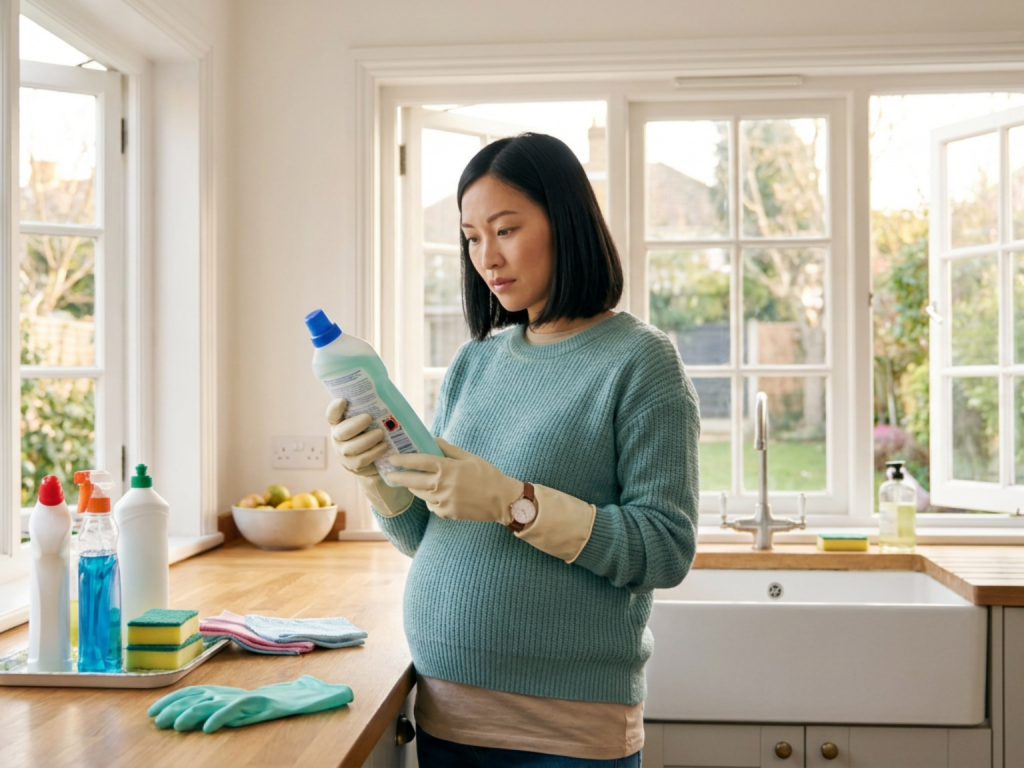
Pregnancy often brings a heightened awareness of the home environment. It is understandable to wonder whether everyday cleaning sprays, disinfectants, drain openers, air fresheners, or laundry products could affect your breathing, skin, nausea, or your developing baby. Most routine household cleaning can be done safely during pregnancy when products are used as directed, but some exposures deserve extra caution because they can irritate the eyes, throat, lungs, and skin, or create toxic gases if mixed.
This article focuses on practical, risk-reducing steps rather than fear. The goal is to help you identify higher-risk household products, avoid dangerous chemical combinations, improve ventilation, and know when to call a healthcare professional or poison control service. If you have asthma, significant nausea, occupational chemical exposure, or a recent accidental exposure, individualized medical advice is especially important.
Highlights
Many household cleaners can irritate the eyes, throat, and lungs, and pregnancy-related nausea or asthma may make these effects feel more intense.
Never mix bleach with ammonia, vinegar, drain cleaner, toilet cleaner, or other cleaning products; toxic gases can form quickly.
Ventilation, label-reading, gloves, and lower-VOC or fragrance-free products are simple steps that can meaningfully reduce exposure.
Air fresheners, strong fragrances, aerosol sprays, oven cleaners, drain cleaners, and pesticide products deserve particular caution during pregnancy.
Seek urgent help for breathing difficulty, chest tightness, persistent coughing, chemical burns, faintness, or any significant ingestion or splash exposure.
Why chemical exposure deserves extra care in pregnancy
Pregnancy does not make every cleaning product automatically dangerous, but it can change how exposures are experienced. Increased blood volume, changes in respiratory physiology, nasal congestion, reflux, and pregnancy-related nausea can make strong odors and airborne irritants feel more intense. People with asthma, allergic rhinitis, migraine, hyperemesis, or occupational exposure may be more vulnerable to symptoms.
Many common cleaners release volatile organic compounds, often called VOCs, or contain irritants that can affect the eyes, nose, throat, and lungs. The American Lung Association notes that cleaning supplies and household chemicals can contribute to indoor air pollution and may trigger respiratory symptoms, particularly in poorly ventilated spaces. During pregnancy, minimizing avoidable inhalation exposure is a sensible precaution, especially when safer methods can do the job.
The key concept is dose and route of exposure. Brief use of a labeled product in a well-ventilated area is different from prolonged scrubbing in a closed bathroom, using aerosolized sprays repeatedly, or accidentally mixing incompatible chemicals. Ingestion, eye splashes, skin burns, and inhalation of toxic gases are more urgent situations and should not be managed casually at home.
Household products that commonly cause concern
Some household products are more likely to irritate or injure because they are caustic, strongly fragranced, aerosolized, or chemically reactive. Examples include bleach, ammonia-based cleaners, drain openers, oven cleaners, toilet bowl cleaners, carpet cleaners, mold and mildew removers, disinfectant sprays, air fresheners, pesticides, paint strippers, solvents, and some laundry additives.
- Bleach products: Effective disinfectants, but they can irritate the respiratory tract and become dangerous when mixed with acids or ammonia.
- Ammonia-containing cleaners: Often found in glass or multipurpose products; mixing with bleach can form chloramine gases that irritate the lungs.
- Drain and oven cleaners: These may be highly caustic and can cause chemical burns to skin, eyes, mouth, or airway.
- Aerosol sprays and air fresheners: These can disperse fine particles and fragrance chemicals into indoor air, increasing inhalation exposure.
- Carpet cleaners and solvents: Some release strong odors and VOCs; ventilation and limited exposure time are important.
- Pesticides and insect foggers: These should be approached cautiously, with careful label adherence and professional advice when needed.
Not every product in these categories is equally hazardous, and labels matter. Signal words such as caution, warning, danger, poison, corrosive, flammable, or use only in a well-ventilated area should be taken seriously. If you are unsure whether a product is appropriate to use while pregnant, ask your obstetric clinician, midwife, pharmacist, occupational medicine clinician, or poison control service.
Dangerous chemical combinations to avoid
The most urgent household chemical risks often come from accidental mixing. Products that are individually familiar can produce toxic fumes when combined. This can happen when one cleaner is sprayed over residue from another, when toilet bowl products are layered, or when bleach is added to a bucket that previously held a different cleaner.
- Bleach plus ammonia: Can produce chloramine gases, which may cause coughing, chest tightness, burning eyes, throat irritation, wheezing, and shortness of breath.
- Bleach plus vinegar or other acids: Can release chlorine gas, a toxic inhalation hazard.
- Bleach plus toilet bowl cleaner: Many toilet cleaners are acidic; this combination may release dangerous fumes.
- Bleach plus drain cleaner: Drain cleaners may contain strong acids or bases and can react unpredictably, producing heat, splashing, or fumes.
- Multiple drain cleaners together: Mixing different drain products can create violent reactions and caustic splashes.
A safe habit is to use one product at a time, rinse surfaces if needed, and never combine cleaners in a bottle, bucket, toilet, sink, or drain. If a mixture accidentally produces fumes, leave the area immediately, get to fresh air, avoid trying to neutralize the chemicals, and call poison control or emergency services if symptoms occur.
Safer cleaning strategies during pregnancy
Safer cleaning is usually less about eliminating all products and more about reducing unnecessary exposure. Simple changes can lower inhaled, dermal, and mucosal contact while keeping your home hygienic.
- Ventilate before, during, and after cleaning: Open windows and doors when possible, run an exhaust fan, and take breaks away from the cleaned area.
- Read the label every time: Follow dilution instructions, contact times, protective equipment guidance, and warnings about incompatible products.
- Choose lower-irritant options: Consider fragrance-free, unscented, non-aerosol, or lower-VOC products when they meet your cleaning needs.
- Use physical cleaning first: Soap, water, microfiber cloths, and scrubbing remove many soils without heavy chemical use.
- Avoid spraying into the air: Apply product to a cloth when appropriate rather than misting a surface near your breathing zone.
- Wear gloves: Nitrile or other chemical-resistant gloves can reduce skin contact, especially with disinfectants or degreasers.
- Do not clean in closed small spaces: Bathrooms, shower stalls, and utility rooms can concentrate fumes quickly.
- Ask for help with high-exposure tasks: Deep-cleaning ovens, unclogging drains, removing mold, using pesticides, or handling solvents may be better delegated.
If disinfecting is necessary, more is not better. Use the correct amount, allow the product to work for the labeled contact time, and avoid repeated applications that increase fumes without improving safety. For many routine tasks, cleaning with detergent and water is enough; disinfectants are most useful for specific high-touch or contamination-prone surfaces.
Air quality, fragrances, and ventilation
Indoor air quality is particularly relevant because inhalation is a major exposure route for cleaning chemicals. Fragranced products, plug-in air fresheners, scented candles, aerosol deodorants, and room sprays may create a perception of cleanliness, but they can add irritants or VOCs to indoor air. The American Lung Association recommends avoiding air fresheners and choosing products with fewer VOCs when possible.
If odors trigger nausea, headache, cough, or throat burning, it is reasonable to reduce fragranced products and prioritize fresh air, source control, and cleaning visible soil. A clean home does not need to smell strongly of bleach, lemon fragrance, or disinfectant. In fact, a strong chemical smell is often a sign that ventilation should be improved and exposure time reduced.
Ventilation is not just opening a window after cleaning. Ideally, increase airflow before using a product, keep it moving while the product is in use, and allow the area to air out before spending prolonged time there. Exhaust fans should vent outdoors when possible. If outdoor air quality is poor, such as during wildfire smoke events, consider delaying high-odor cleaning tasks and using the least volatile method available.
Skin, eye, and ingestion safety
Pregnancy can make skin more sensitive, but chemical burns and irritation can happen to anyone. Caustic products such as drain cleaners, oven cleaners, rust removers, and some toilet bowl cleaners can injure tissue rapidly. Gloves, eye protection for splash-prone tasks, and careful pouring technique are practical safeguards.
Store chemicals in their original containers with labels intact. Do not transfer cleaners into drink bottles, food containers, or unmarked spray bottles. This is especially important in homes with children, visitors, or anyone who may mistake a product for something harmless. Keep products closed, upright, and out of reach of children and pets.
If a chemical gets on skin, remove contaminated clothing and rinse the skin with running water. If it gets in the eyes, rinse with clean running water and seek urgent guidance. If a product is swallowed, do not induce vomiting unless a poison control professional specifically instructs you to do so. Product labels may provide first-aid steps, but poison control or emergency services should guide significant exposures.
When to call for help after an exposure
After inhaling fumes, move to fresh air immediately. Mild transient irritation may improve once you are away from the source, but pregnancy is a good reason to be cautious. Call poison control, your maternity care team, or emergency services if symptoms are significant, persistent, or worsening.
Urgent evaluation is appropriate for difficulty breathing, wheezing, chest tightness, severe coughing, fainting, confusion, chemical burns, persistent eye pain, vision changes, repeated vomiting, or ingestion of any potentially poisonous product. If you have asthma or another lung condition, lower-level exposures may still provoke bronchospasm and deserve prompt medical advice.
When seeking help, provide the product name, ingredients if available, the amount involved, how the exposure occurred, timing, symptoms, gestational age, and any underlying medical conditions. If safe, bring the product container or a photo of the label to medical care. Do not return to a fume-filled area to retrieve it.
A balanced approach to household hygiene
It is normal to want a spotless, germ-free home before a baby arrives, but perfection is not the goal. A balanced approach reduces infection risk without increasing chemical burden. Focus on hand hygiene, safe food handling, regular laundering, cleaning visible soil, and disinfecting targeted high-touch surfaces when needed.
If mold, pests, sewage contamination, or major renovation dust is present, the issue may require professional assessment. Pregnant people should generally avoid direct involvement in tasks that aerosolize mold, use strong pesticides, or generate solvent fumes. Occupational or repeated exposures should be discussed with a healthcare professional, because workplace safety planning may involve ventilation controls, substitution of safer products, schedule adjustments, or personal protective equipment.
Support matters. If cleaning has become physically difficult or chemically uncomfortable, delegating tasks is not overreacting. Asking a partner, family member, friend, building manager, or professional service to handle high-odor or high-risk jobs can be a practical pregnancy safety measure.
Situations that need immediate caution
- Do not mix bleach with ammonia, vinegar, toilet cleaner, drain cleaner, or any unknown product.
- Leave the area immediately if a cleaner produces strong fumes, burning eyes, coughing, wheezing, or chest tightness.
- Seek urgent help for chemical splashes to the eyes, chemical burns, ingestion, or breathing difficulty.
- Avoid using drain cleaners, oven cleaners, pesticides, or solvents in small unventilated spaces.
- Keep all household chemicals in original labeled containers and out of reach of children and pets.
Tools & Assistance
- Call your local poison control center for immediate exposure guidance
- Discuss recurrent symptoms or workplace exposures with your obstetric clinician or midwife
- Use product Safety Data Sheets when available for ingredient and hazard details
- Improve ventilation with outdoor airflow or exhaust fans before starting cleaning tasks
- Ask a pharmacist or healthcare professional about lower-irritant product choices
FAQ
Can I use bleach while pregnant?
Bleach can often be used safely if diluted and used exactly as labeled, with good ventilation and gloves. Never mix it with ammonia, vinegar, toilet cleaner, or other products.
Are natural cleaners always safer in pregnancy?
Not necessarily. Vinegar, essential oils, and plant-derived products can still irritate skin or airways, and vinegar mixed with bleach can create dangerous chlorine gas.
Should I avoid all disinfectants?
No. Disinfectants can be useful for specific situations, but they should be used selectively, according to the label, and in ventilated spaces. Routine soap-and-water cleaning is often sufficient for visible dirt.
What should I do if I accidentally inhaled cleaning fumes?
Move to fresh air immediately. If you have coughing, wheezing, chest tightness, shortness of breath, dizziness, or symptoms that do not quickly improve, contact poison control or seek medical care.
Are air fresheners safe during pregnancy?
Air fresheners are not usually necessary and may add fragrances or VOCs to indoor air. If they trigger nausea, headache, or breathing irritation, avoid them and improve ventilation instead.
Sources
- American Lung Association — Cleaning Supplies and Household Chemicals
- Village of Skokie, Illinois Fire Department — Dangers of Mixing Household Chemical Cleaners
- WebMD — Poisonous Products in Your Home: How to Stay Safe
Disclaimer
This article is for informational purposes only and does not replace medical advice. If you are pregnant and have had a chemical exposure or concerning symptoms, contact your healthcare professional, poison control, or emergency services.















Please log in to leave a comment.