
Intro
Severe preeclampsia is one of the most serious hypertensive disorders of pregnancy. It can evolve quickly, sometimes with only subtle warning signs, and it requires urgent medical assessment because it may affect the brain, liver, kidneys, blood-clotting system, placenta, and baby. Eclampsia, defined by seizures in a person with preeclampsia, is a life-threatening emergency.
If you are reading about this because you or someone you love has high blood pressure, abnormal labs, headache, visual changes, pain under the ribs, swelling, bleeding, or reduced fetal movement, it is understandable to feel frightened. Prompt care can make a major difference. This article explains the main complications and treatment principles so that medically literate readers can better understand what clinicians are monitoring and why decisions may need to happen rapidly.
Highlights
Severe preeclampsia can involve multiple organs, including the brain, liver, kidneys, lungs, coagulation system, and placenta.
Eclampsia is the occurrence of seizures in the context of preeclampsia and is an obstetric emergency requiring immediate medical treatment.
HELLP syndrome, stroke, pulmonary edema, placental abruption, fetal growth restriction, and preterm birth are among the major complications.
Treatment decisions balance maternal stabilization with fetal maturity; delivery is often the definitive treatment, but timing depends on gestational age and clinical severity.
Warning signs such as severe headache, visual disturbance, right upper abdominal pain, shortness of breath, seizures, heavy bleeding, or decreased fetal movement should be treated as urgent.
Understanding severe preeclampsia
Preeclampsia is a pregnancy-related hypertensive disorder that typically develops after 20 weeks of gestation and is associated with new-onset hypertension plus evidence of maternal organ involvement, placental dysfunction, or proteinuria. Severe preeclampsia refers to a more dangerous clinical state, often characterized by very high blood pressure, significant laboratory abnormalities, neurological symptoms, liver involvement, kidney impairment, pulmonary edema, low platelets, or signs that the placenta and fetus are under stress.
The underlying biology is complex. Abnormal placental development and maternal vascular dysfunction are thought to contribute to widespread endothelial injury, vasospasm, inflammation, and activation of coagulation pathways. This helps explain why severe preeclampsia is not simply “high blood pressure,” but a systemic disease that can rapidly affect several organs at once.
People at higher risk include those with a prior history of preeclampsia, chronic hypertension, kidney disease, diabetes, autoimmune disease, multifetal pregnancy, and some other medical or obstetric risk factors. Anyone with risk factors should discuss individualized prevention and monitoring with an obstetric clinician, maternal-fetal medicine specialist, or other qualified professional.
Eclampsia: seizures in the setting of preeclampsia
Eclampsia is the onset of generalized seizures in a person with preeclampsia when another neurological cause is not more likely. It may occur before birth, during labor, or postpartum. Although it is uncommon in settings with good prenatal surveillance, it is a major cause of maternal and perinatal morbidity worldwide.
The precise mechanism is not fully understood, but severe hypertension, cerebral vasospasm, endothelial dysfunction, blood-brain barrier disruption, and brain edema may contribute. Eclampsia can occur even when blood pressure is not at its highest recorded value, which is one reason clinicians pay close attention to neurological symptoms such as persistent severe headache, visual changes, confusion, hyperreflexia, or new-onset altered mental status.
In a hospital, management focuses on immediate maternal safety: protecting the airway, preventing injury, controlling seizures, treating severe hypertension, evaluating maternal and fetal status, and planning delivery when appropriate. Magnesium sulfate is widely used for seizure prevention and treatment in severe preeclampsia and eclampsia, while antihypertensive medications may be used to reduce dangerous blood pressure levels. These treatments require professional monitoring because dosing, contraindications, kidney function, reflexes, respiratory status, and urine output matter.
Brain, cardiovascular, and lung complications
Severe preeclampsia can place significant strain on the brain and cardiovascular system. One feared complication is stroke, which may be ischemic or hemorrhagic and is more likely when severe hypertension is not controlled. Warning signs may include sudden severe headache, weakness on one side, facial droop, trouble speaking, confusion, vision loss, or seizure. These symptoms require emergency care.
Another serious complication is posterior reversible encephalopathy syndrome, often called PRES, a neurological condition associated with headache, visual symptoms, seizures, and characteristic brain imaging findings. Although the name includes “reversible,” it can still be dangerous and requires urgent specialist care.
Pulmonary edema, or fluid accumulation in the lungs, can occur because of endothelial leak, cardiac strain, fluid shifts, kidney dysfunction, or treatment-related fluid balance challenges. Symptoms may include shortness of breath, chest tightness, low oxygen levels, coughing, or difficulty lying flat. Clinicians may monitor oxygen saturation, fluid intake and output, chest imaging, cardiac status, and kidney function when pulmonary involvement is suspected.
HELLP syndrome, liver injury, and clotting problems
HELLP syndrome is a severe variant or complication of preeclampsia. The acronym refers to hemolysis, elevated liver enzymes, and low platelets. It can develop before delivery or postpartum and may progress quickly. Symptoms can include pain in the right upper abdomen or epigastric area, nausea, vomiting, malaise, headache, and sometimes bleeding or bruising.
Liver involvement may range from elevated liver enzymes to rare but catastrophic complications such as liver hematoma or rupture. Low platelets and coagulation abnormalities increase the risk of bleeding, especially around delivery or surgery. In severe cases, disseminated intravascular coagulation may occur, where the clotting system becomes pathologically activated and then depleted.
Peer-reviewed research on severe preeclampsia highlights the seriousness of maternal complications such as coagulopathy and placental abruption. In practice, clinicians often monitor complete blood count, platelet count, liver enzymes, kidney function, urine output, coagulation studies when indicated, and clinical symptoms repeatedly rather than relying on a single result.
Kidney injury and fluid balance
The kidneys are particularly vulnerable in severe preeclampsia. Reduced kidney perfusion and endothelial injury can cause proteinuria, rising creatinine, reduced urine output, and, in severe cases, acute kidney injury. Kidney involvement affects decisions about medication choice, magnesium sulfate monitoring, fluid administration, and timing of delivery.
Fluid management can be delicate. Too little intravascular volume may worsen kidney perfusion, but excessive fluid can contribute to pulmonary edema. This is why hospitalized patients with severe disease often have careful measurement of urine output, blood pressure, oxygen status, laboratory trends, and sometimes continuous fetal monitoring depending on gestational age and circumstances.
Most pregnancy-related kidney changes improve after delivery, but not always immediately. Persistent hypertension, proteinuria, or abnormal kidney function postpartum should be followed carefully. Preeclampsia is also associated with higher long-term cardiovascular and kidney risk, so postpartum care should include transition to primary care or cardiology/nephrology follow-up when appropriate.
Placental and fetal complications
Because preeclampsia is closely linked to placental dysfunction, the baby may be affected even when the pregnant person’s symptoms appear manageable. Reduced placental blood flow can contribute to fetal growth restriction, low amniotic fluid, abnormal Doppler studies, nonreassuring fetal testing, and stillbirth in the most severe cases. Monitoring may include ultrasound assessment of fetal growth, amniotic fluid evaluation, umbilical artery Doppler studies, nonstress testing, or biophysical profiles, depending on gestational age and local practice.
Placental abruption is another major complication. This occurs when the placenta separates from the uterine wall before birth, which can cause abdominal pain, uterine tenderness, contractions, vaginal bleeding, fetal distress, and maternal hemorrhage. Not all abruptions cause obvious bleeding, so severe abdominal pain or a sudden change in fetal movement deserves urgent assessment.
Preterm birth is common in severe preeclampsia because delivery may be needed to protect the pregnant person, the baby, or both. When time allows and gestational age is early enough, corticosteroids may be used to support fetal lung maturity. In some cases, neonatal intensive care planning becomes part of the birth plan, including counseling about prematurity-related risks.
Treatment principles: stabilization, monitoring, and delivery planning
Management is individualized and should be directed by qualified obstetric and medical professionals. The central priorities are maternal stabilization, prevention of seizures and stroke, assessment of fetal status, and deciding when delivery is safer than continuing the pregnancy. Delivery is the definitive treatment for preeclampsia, but the disease may worsen before it improves and can continue or first appear postpartum.
Common elements of hospital management may include:
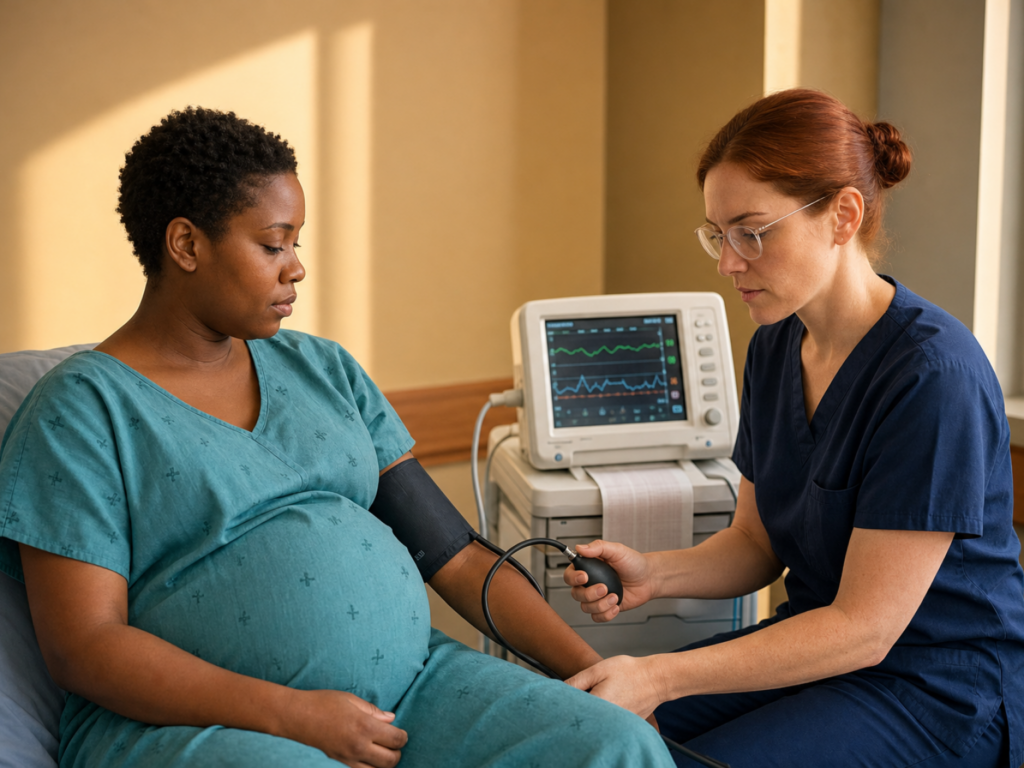
- Frequent blood pressure measurement and treatment of severe-range pressures.
- Magnesium sulfate for seizure prevention or treatment when clinically indicated.
- Laboratory monitoring of platelets, liver enzymes, kidney function, and sometimes coagulation parameters.
- Assessment for symptoms such as headache, visual changes, chest pain, shortness of breath, abdominal pain, and reduced urine output.
- Fetal surveillance appropriate to gestational age and clinical status.
- Corticosteroids for fetal lung maturation when preterm delivery is likely and time permits.
- Planning for induction of labor or cesarean birth based on maternal-fetal condition, gestational age, cervical status, and obstetric factors.
Some patients with preeclampsia without severe features may be monitored closely as outpatients or in hospital, but severe preeclampsia generally requires a higher level of observation. Decisions about expectant management at very preterm gestations are complex and depend on maternal stability, fetal condition, available neonatal care, and the ability to intervene rapidly if deterioration occurs.
Postpartum risk and recovery
Preeclampsia and eclampsia do not necessarily end at birth. Blood pressure can peak several days postpartum, and seizures, stroke, pulmonary edema, HELLP syndrome, or worsening labs can occur after delivery. Anyone discharged after preeclampsia should receive clear instructions about blood pressure follow-up, medications if prescribed, warning signs, and when to seek emergency help.
Postpartum symptoms that deserve urgent evaluation include severe headache, visual changes, shortness of breath, chest pain, right upper abdominal pain, sudden swelling, fainting, neurological symptoms, heavy bleeding, or seizure. Home blood pressure monitoring may be recommended for some people, but it should complement, not replace, professional care.
Emotionally, a severe preeclampsia or eclampsia experience can be traumatic. It may involve unexpected hospitalization, emergency delivery, neonatal intensive care, or fear for survival. Support from clinicians, mental health professionals, family, peer groups, and postpartum follow-up can be as important as laboratory recovery.
Seek urgent care immediately for
- A seizure, fainting episode, confusion, or sudden neurological change
- Severe or persistent headache, especially with visual disturbance
- Blood pressure readings in a severe range if you have been instructed to monitor at home
- Chest pain, shortness of breath, coughing pink frothy fluid, or difficulty lying flat
- Right upper abdominal or epigastric pain, heavy bleeding, or symptoms of placental abruption
- Reduced fetal movement, severe abdominal pain, or any concern that the baby is not well
Tools & Assistance
- Call emergency services for seizures, stroke-like symptoms, severe shortness of breath, or collapse
- Contact your obstetric triage unit or maternity assessment unit for urgent pregnancy-related warning signs
- Use a validated upper-arm blood pressure monitor if your clinician recommends home monitoring
- Keep a written list of blood pressure readings, medications, symptoms, gestational age, and hospital contact numbers
- Arrange postpartum blood pressure and medical follow-up before leaving the hospital
FAQ
Can eclampsia happen without obvious warning signs?
Yes. Many people have warning symptoms such as headache or visual changes, but eclampsia can sometimes occur unexpectedly. This is why severe preeclampsia is monitored closely and why neurological symptoms are taken seriously.
Is delivery always required in severe preeclampsia?
Delivery is the definitive treatment, but timing depends on gestational age, maternal stability, fetal condition, and available resources. Some carefully selected preterm cases may be monitored briefly in hospital, while others need urgent delivery.
Does magnesium sulfate lower blood pressure?
Magnesium sulfate is primarily used to prevent or treat seizures in severe preeclampsia and eclampsia. Severe hypertension is usually treated with antihypertensive medications selected and monitored by clinicians.
Can severe preeclampsia occur after the baby is born?
Yes. Preeclampsia, severe hypertension, HELLP syndrome, and eclampsia can occur or worsen postpartum, especially in the first days after delivery. New severe headache, visual symptoms, chest pain, shortness of breath, or seizure after birth is urgent.
Will having severe preeclampsia affect future health?
A history of preeclampsia is associated with higher future risk of hypertension, cardiovascular disease, and kidney disease. Long-term follow-up with a healthcare professional can help monitor and reduce risk.
Sources
- World Health Organization — Pre-eclampsia
- Mayo Clinic — Preeclampsia - Symptoms & causes
- PubMed Central — Maternal Complications Associated with Severe Preeclampsia
Disclaimer
This article is for general medical information only and does not diagnose, treat, or replace care from a qualified healthcare professional. Seek urgent medical help for symptoms suggestive of severe preeclampsia or eclampsia.


















Please log in to leave a comment.