
Intro
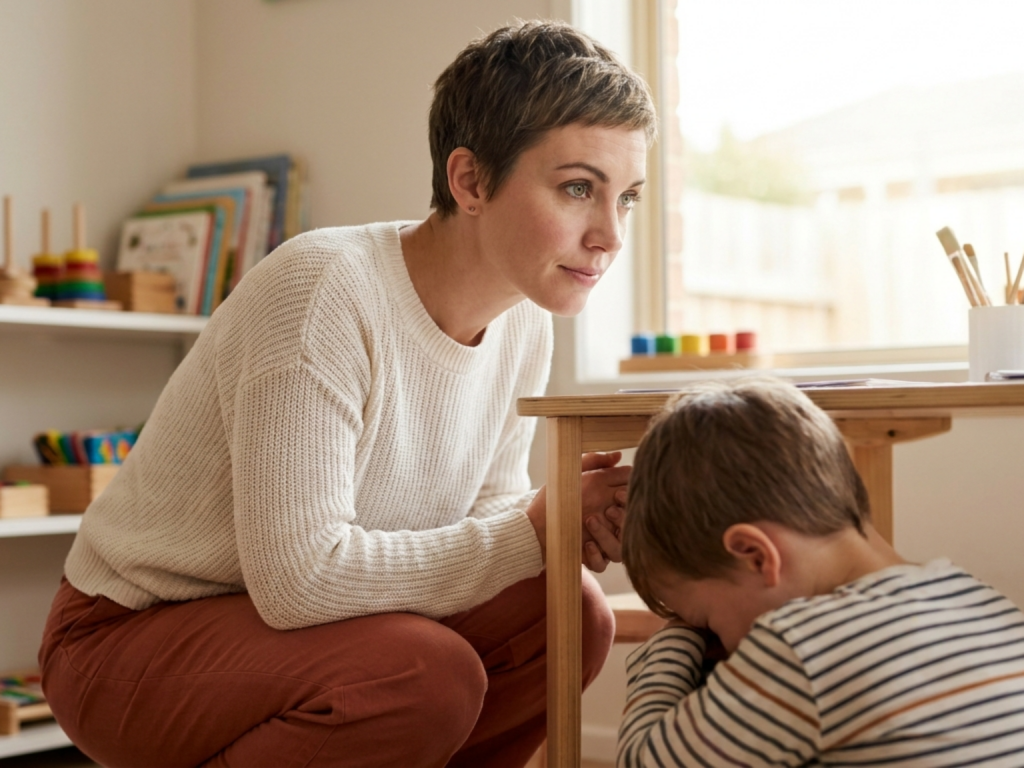
Preschool emotional outbursts can feel overwhelming for families and educators, especially when a child screams, hits, refuses transitions, or withdraws from peers in ways that seem larger than the situation. At ages 3 to 5, children are rapidly developing language, executive function, self-awareness, and social understanding, so big emotions often arrive before the skills needed to manage them.
Most outbursts are not signs of a serious disorder by themselves. However, patterns over time can provide useful information about a child’s regulation, learning environment, sleep, stress, sensory needs, communication skills, and relationships. A supportive, observation-based approach can reduce shame and help adults decide when routine guidance is enough and when professional input is warranted.
Highlights
Emotional outbursts in preschoolers are often linked to immature self-regulation, limited language, fatigue, transitions, and social frustration.
Social-emotional learning in preschool can strengthen self-awareness, self-management, and prosocial behavior, which may reduce emotional and behavioral difficulties.
Frequent, intense, or impairing outbursts deserve careful observation and may justify consultation with a pediatrician, early childhood mental health clinician, or developmental specialist.
Adult responses are most effective when they are calm, predictable, and focused on safety, connection, and skill-building rather than punishment alone.
Why preschool emotions can be so intense
Preschoolers are expected to share, wait, switch activities, follow group routines, tolerate disappointment, and use words during conflict. Yet the neural systems that support inhibition, flexible thinking, working memory, and emotional modulation are still developing. This gap between social expectations and neurodevelopmental capacity is one reason emotional outbursts in preschoolers can look sudden and dramatic.
A child may appear oppositional when the underlying problem is overload. The limbic system may escalate quickly during frustration, while prefrontal regulatory circuits are not yet efficient enough to pause, evaluate, and choose a socially acceptable response. Language also matters: a child who cannot explain fear, embarrassment, hunger, sensory discomfort, or peer rejection may communicate through crying, yelling, running away, or aggression.
Social-emotional competence includes skills such as recognizing feelings, understanding others’ perspectives, managing impulses, and choosing prosocial behaviors. Research in preschool populations has found that stronger social-emotional competence, particularly self-awareness and self-management, is associated with fewer emotional difficulties and more prosocial behavior. This does not mean that a child should be expected to regulate like an older child; it means that these skills can be taught gradually and compassionately.
Common patterns: tantrums, aggression, withdrawal, and peer conflict
Preschool emotional outbursts and social challenges may show up in several ways. Some children externalize distress: they scream, throw toys, hit, bite, kick, run, or refuse instructions. Others internalize distress: they freeze, hide, cry quietly, avoid group play, or become somatically distressed with stomachaches or headaches around school. Many children do both, depending on the context.
Peer difficulties are often closely tied to regulation. A child who grabs toys may not yet understand turn-taking, may have poor impulse control, or may lack the language to ask to join play. A child who repeatedly disrupts a game may be seeking connection but missing social cues. A child who becomes tearful when corrected may be experiencing shame or rejection sensitivity rather than simple defiance.
Patterns matter more than isolated events. A single public tantrum after a missed nap is usually less concerning than daily episodes that are prolonged, dangerous, or impair participation in preschool. Similarly, occasional pushing during conflict is different from persistent aggression that injures others or prevents the child from maintaining any peer relationships. Observing frequency, intensity, duration, triggers, recovery time, and functional impact gives a more medically useful picture than labeling the child as “bad” or “manipulative.”
Triggers that often sit beneath the behavior
Outbursts usually have antecedents, even when they are not obvious. Common tantrum triggers in preschool children include hunger, fatigue, illness, overstimulation, transitions, denied requests, waiting, unexpected changes, separation from caregivers, and peer conflict. Children may also escalate when environments are noisy, crowded, rushed, or unpredictable.
Communication delays can intensify behavior. A child with limited expressive language may understand more than they can say, creating frustration when adults expect verbal negotiation. Receptive language difficulties can also look like noncompliance if the child does not fully understand multi-step directions. Hearing problems, sleep-disordered breathing, constipation, chronic pain, and medication effects can also affect emotional regulation.
Sensory processing differences can contribute to both outbursts and social avoidance. Some children are distressed by sound, touch, clothing textures, bright lights, or crowded play. Others seek intense movement or pressure and may crash into peers without intending harm. These patterns do not automatically indicate a specific diagnosis, but they are clinically relevant observations to share with a pediatrician, occupational therapist, or developmental professional when concerns persist.
Family stress, changes in caregiving, parental mental health strain, trauma exposure, and inconsistent routines can also influence regulation. This is not about blame. Young children borrow regulation from the adults and environments around them, so reducing chaos and increasing predictability can be therapeutic.
What helps during an outburst
During a major outburst, the immediate goals are safety, reduced stimulation, and co-regulation. Teaching and reasoning are usually least effective at the peak of distress because the child’s capacity for language, problem-solving, and perspective-taking is temporarily reduced. A calm adult nervous system can help the child’s nervous system settle.
Useful in-the-moment strategies include short phrases, a low voice, and simple choices. For example: “You are very angry. I will keep everyone safe.” Or: “You can sit with me or sit on the mat.” If the child is hitting, block gently and remove dangerous objects. If the child is running, reduce access to unsafe spaces. Avoid long lectures, sarcasm, threats, or repeated questions such as “Why are you doing this?” when the child is dysregulated.
Some children want proximity; others need space. The adult can remain emotionally available without forcing eye contact or physical touch. Once the child begins to recover, repair becomes possible: naming the emotion, identifying the problem, practicing an alternative, and reconnecting. Repair might sound like, “You wanted the truck. You hit when you were mad. Next time we can say, ‘Can I have a turn?’ Let’s check on your friend.”
Consequences, when used, should be brief, related, and instructional. A child who throws blocks may need to help put them away or play with softer toys for a while. The purpose is not humiliation; it is helping the child link behavior with safety and learn a replacement behavior.
Prevention: building regulation before the crisis
Prevention is often more powerful than intervention after escalation begins. Preschoolers benefit from predictable routines, visual schedules, warnings before transitions, adequate sleep, regular meals, outdoor movement, and realistic expectations for waiting and sharing. A child who melts down at pickup may need a snack and quiet transition rather than immediate questions about the day.
Social-emotional learning in preschool can be highly relevant. Structured programs that teach feelings vocabulary, coping strategies, friendship skills, and problem-solving have been shown to reduce both outwardly disruptive and inwardly withdrawn problem behaviors in young children. These programs work best when the classroom and home use consistent language, such as “stop, breathe, name the feeling, choose a safe action.”
Adults can also coach social skills proactively. Before a playdate or center time, rehearse scripts: “Can I play?” “Can I have a turn when you’re done?” “I don’t like that.” Practice is most effective when the child is calm, playful, and not already in conflict. Books, puppets, drawings, and role-play can help children understand emotions without feeling criticized.
Positive attention is another preventive tool. Many children receive the most adult energy when they are dysregulated. Deliberately noticing small moments of flexibility, gentle hands, waiting, or asking for help strengthens the behaviors adults want to see. Specific feedback works better than broad praise: “You were frustrated and used words. That was hard work.”
When to seek professional guidance
It is appropriate to ask for help when outbursts are frequent, prolonged, escalating, dangerous, or interfering with preschool participation, family life, sleep, eating, or peer relationships. Consultation is also important if a child loses previously acquired skills, seems persistently sad or fearful, shows self-injury, has severe separation distress, or is expelled or repeatedly sent home from preschool because of behavior.
Professional assessment does not mean rushing to a diagnosis. A pediatrician may screen for hearing, vision, sleep, pain, constipation, developmental delays, neurodevelopmental conditions, anxiety, trauma-related stress, or family stressors. A developmental-behavioral pediatrician, child psychologist, speech-language pathologist, occupational therapist, or early childhood mental health clinician may be helpful depending on the pattern.
Recent research suggests that difficulty regulating emotions in the preschool years can be associated with later ADHD symptoms, conduct concerns, and internalizing symptoms such as sadness. This association does not mean that every preschooler with tantrums will develop a mental health condition. It does mean that persistent regulation difficulty deserves monitoring and early support, especially when it affects functioning across settings.
If preschool staff report concerns, request concrete examples rather than global judgments. Ask what happens before the behavior, what the child does, how adults respond, how long recovery takes, and whether certain settings are harder. A shared observation plan can reduce blame and guide effective support.
Supporting the child’s social world
Social challenges are painful for children and caregivers. A preschooler who is not invited to play, repeatedly corrected, or seen as “the aggressive one” may become more defensive, avoidant, or explosive. Protecting the child’s dignity is part of treatment-informed care.
Adults can help by arranging small, structured peer interactions with clear roles and short duration. Cooperative activities, such as building a tower together or washing toy dishes side by side, may be easier than open-ended pretend play for a child who struggles with negotiation. Teachers can pair the child with a patient peer, preview rules, and intervene early before conflict becomes overwhelming.
After social conflict, focus on repair rather than forced apologies. A scripted apology may be less meaningful than checking whether the other child is okay, helping rebuild the block structure, or practicing the words to use next time. Over time, these repeated experiences teach accountability without defining the child by the worst moment of the day.
Caregivers also need support. Recurrent preschool behavior problems can create exhaustion, embarrassment, and worry. Parents may benefit from evidence-based parent coaching, early childhood mental health consultation, or coordinated preschool behavior support plan development. With consistent, compassionate intervention, many children show meaningful gains in regulation, peer engagement, and confidence.
Seek urgent or prompt help if
- A child is repeatedly injuring themselves, other children, adults, or animals.
- Outbursts include loss of consciousness, seizure-like activity, severe head-banging, or possible ingestion of unsafe substances.
- There is developmental regression, persistent sadness, extreme anxiety, or concerning changes in sleep, appetite, or play.
- Behavior leads to repeated preschool exclusion, family crisis, or inability to participate in daily routines.
- Caregivers feel unable to keep the child or others safe during episodes.
Tools & Assistance
- A simple antecedent-behavior-consequence log for two weeks
- Pediatrician visit for developmental, sleep, hearing, vision, and medical review
- Speech-language or occupational therapy evaluation when communication or sensory concerns are present
- Early childhood mental health consultation or evidence-based parent coaching
- A shared home-preschool support plan with visual routines and consistent calming language
FAQ
Are preschool tantrums normal?
Yes, tantrums can be developmentally common. Concern increases when they are very frequent, prolonged, dangerous, occur across settings, or significantly impair learning, sleep, family life, or peer relationships.
Should I ignore every outburst?
No. Minor attention-seeking behaviors may sometimes be ignored if safe, but intense dysregulation requires calm supervision, safety, and co-regulation. The child can learn replacement skills after they are calm.
Can social-emotional learning really help?
Evidence suggests that structured early childhood social-emotional programs can reduce problem behaviors and improve regulation, coping, and peer skills, especially when adults use consistent strategies.
Do outbursts mean my child has ADHD or another condition?
Not necessarily. Many preschoolers have intense emotions. Persistent regulation problems can be associated with later attention, behavior, or mood concerns, so monitoring and professional guidance may be helpful.
What should I tell the preschool teacher?
Share known triggers, calming strategies, sleep or medical issues, and words your child uses for feelings. Ask for specific observations and collaborate on a consistent behavior support plan.
Sources
- Frontiers in Psychology — Social Emotional Competence, Learning Outcomes, and Emotional and Behavioral Problems in Preschool Children
- National Institutes of Health via PubMed Central — Enhancing social-emotional skills in early childhood
- Neuroscience News — Emotional Struggles and Tantrums in Preschoolers Linked to ADHD and Mental Health Challenges
Disclaimer
This article is for informational purposes only and does not diagnose or treat any child. Consult a qualified healthcare professional for concerns about behavior, development, safety, or mental health.















Please log in to leave a comment.