
Intro
Preschool tantrums can be intense, public, and emotionally draining for families. They are also common in early childhood, when language, impulse control, frustration tolerance, and flexible thinking are still developing. A tantrum is not usually a sign of deliberate misbehavior; it is often a visible stress response from a child whose nervous system has exceeded its current coping capacity.
At the same time, some patterns deserve careful attention. Very frequent, prolonged, violent, self-injurious, or developmentally unexpected outbursts can signal that a child needs more support. This article explains what is typical, what may be concerning, and how caregivers can respond in a calm, structured, medically cautious way.
Highlights
Tantrums are common in preschoolers because emotional regulation, language, and executive function are still immature.
Common triggers include fatigue, hunger, transitions, frustration, overstimulation, and difficulty communicating needs.
Supportive responses focus on safety, emotional labeling, predictable limits, and caregiver modeling rather than punishment during peak distress.
Professional guidance is important when tantrums are prolonged, violent, self-injurious, destructive, very frequent, or continue beyond the expected age range.
Why preschool tantrums happen
Preschool children are learning to manage strong emotions with a brain that is still under construction. The limbic system, which rapidly detects threat, frustration, disappointment, and excitement, can become highly activated before the prefrontal cortex can organize a measured response. Executive functions such as inhibitory control, cognitive flexibility, planning, and waiting are emerging, but they are not yet reliable under stress.
This developmental imbalance explains why a child may seem capable of calm conversation in one moment and then become unable to hear, reason, or comply during an emotional surge. The child is not simply refusing logic; during peak arousal, access to language and problem-solving can narrow. Crying, screaming, dropping to the floor, running away, hitting, or refusing to move may be the behavioral expression of physiologic overwhelm.
Preschool tantrums also occur because young children are still developing symbolic thinking in preschool children and emotional vocabulary. A child may know that something feels unbearable but not yet be able to say, “I am disappointed because the blue cup is unavailable” or “I am anxious because we are leaving the playground.” When language cannot carry the emotional load, behavior often does.
Temperament matters as well. Some children have stronger sensory reactivity, slower adaptability, more intense emotional responses, or lower frustration tolerance. These traits are not defects, but they can increase tantrum frequency when the environment is unpredictable, overstimulating, or demanding. Sleep disruption, illness, hunger, constipation, pain, and changes in routine can further reduce coping capacity.
Common triggers and what they mean
Tantrums often cluster around predictable stress points. Fatigue and hunger are among the most common because they lower the threshold for emotional dysregulation. A child who can handle disappointment after breakfast and sleep may melt down over the same disappointment before dinner or after a missed nap. Frustration is another major trigger, especially when a child wants independence but lacks the motor, language, or planning skills to complete a task.
Transitions are especially difficult in the preschool years. Moving from play to dressing, from home to school, or from screen time to dinner requires shifting attention, tolerating loss of a preferred activity, and organizing the next action. These are executive function demands. Preparing children for transitions with brief warnings, visual routines, or simple choices can reduce the abruptness that often triggers outbursts.
Other triggers include sensory overload, crowded settings, loud noise, pain or illness, sibling conflict, inconsistent limits, and being asked to do something that feels too hard. Some children tantrum when they cannot communicate clearly. In that situation, speech and language development should be considered, especially if tantrums are paired with limited expressive language, poor comprehension, or frustration around being understood.
A useful way to interpret triggers is to ask what skill or need is missing. The answer may be sleep, food, predictability, sensory regulation, communication, autonomy, or help with a task. This does not mean every demand should be removed. It means the adult response can target the underlying vulnerability while still maintaining appropriate boundaries.
Responding during an outburst
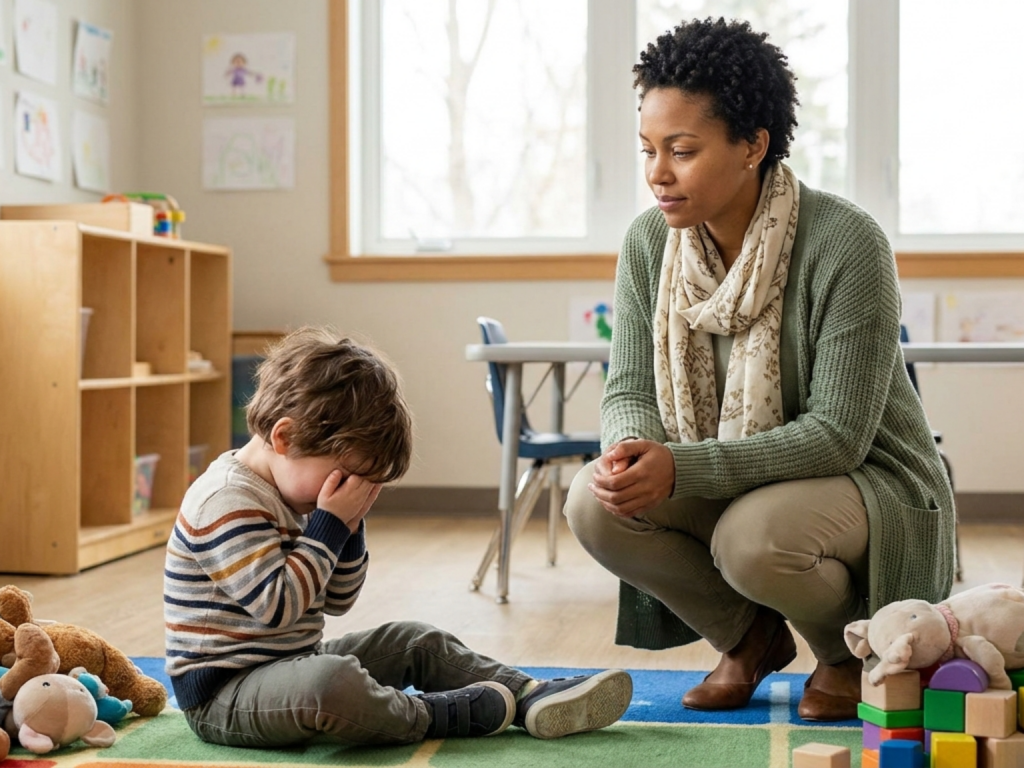
During the peak of a tantrum, the immediate goal is safety and de-escalation. Long explanations, lectures, threats, and rapid questioning usually add cognitive load when the child is least able to process it. A calm, brief response works better: name the feeling, state the limit, and keep the environment safe. For example: “You are very angry. I will not let you hit. I am moving the truck away.”
The C.A.L.M. approach described in clinical guidance can be practical: communicate clearly, ask what the child needs when they can respond, listen to the underlying emotion, and model calm behavior. Modeling is not passive. It means the adult uses a steady voice, simple words, relaxed posture when possible, and consistent boundaries. Children borrow regulation from regulated adults before they can fully generate it themselves.
If the child is in danger of injury, gently block unsafe actions, move hazardous objects, or relocate the child to a safer space. If the child is screaming but safe, staying nearby without adding stimulation may be enough. Some children want proximity; others become more distressed if touched. Caregivers can learn the child’s pattern and offer limited options: “I can sit here, or I can sit by the door.”
After the tantrum, when the child’s breathing, tone, and attention have settled, teaching can begin. This is the time for emotional labeling, repair, and problem-solving. A short sequence may help: “You were angry when playtime ended. Hitting hurt your brother. Next time you can stomp your feet or ask for help. Let’s check on him.” The goal is not shame; it is learning.
Consequences, when needed, should be related, brief, and predictable. If a toy was thrown, the toy can be put away for a short period. If a child ran from a caregiver in a parking lot, the next transition may require holding hands or being carried. Discipline works best when it teaches safety and skills rather than trying to overpower an overwhelmed nervous system.
Prevention through routines and skill-building
Prevention is not about eliminating all frustration. Children need manageable frustration to build resilience. The aim is to reduce preventable overload and teach skills before the emotional storm. Predictable sleep, regular meals and snacks, movement, and calm transition rituals are foundational. A child who is physiologically regulated has more bandwidth for disappointment.
Visual schedules, first-then statements, timers, and transition warnings can help. For example: “First shoes, then playground” is easier for many preschoolers than a long explanation about leaving on time. Offering two acceptable choices also supports autonomy without handing over adult responsibility: “Red shirt or green shirt?” is clearer than “What do you want to wear?” when time is limited.
Emotion coaching is another preventive tool. Caregivers can label emotions during ordinary moments: “You look proud,” “That was frustrating,” or “You were surprised when the tower fell.” This builds emotional vocabulary before distress is severe. Books, pretend play, drawing faces, and role-play can help children connect body sensations, feelings, and coping actions.
Children also benefit from practicing replacement behaviors. A child who hits when angry needs a rehearsed alternative, such as pushing hands against a wall, squeezing a soft object, asking for space, or using a simple phrase like “I need help.” These skills should be practiced when the child is calm, not introduced for the first time during a meltdown.
Caregiver consistency matters. If a tantrum sometimes results in extra screen time, candy, or avoidance of a non-negotiable routine, the behavior may become more persistent because the outcome is unpredictable and occasionally rewarding. Consistency does not require harshness. It means the child can trust that the boundary and the adult’s emotional tone will remain stable.
When tantrums may signal a concern
Most preschool tantrums decrease as children gain language, self-regulation, and social problem-solving skills. However, certain patterns warrant professional discussion. Medical sources advise contacting a healthcare provider when tantrums persist beyond age 4, last longer than about 15 minutes, occur very frequently, involve violence, cause physical injury, or include significant property destruction. Caregiver exhaustion, fear of the child’s behavior, or disruption of preschool participation are also valid reasons to seek help.
Self-directed aggression deserves particular attention. Behaviors such as head-banging, biting oneself, or other self-injurious actions can occur transiently in some young children, but research suggests that self-directed aggression during severe preschool tantrums may be especially associated with later emotional or behavioral difficulties, including depressive symptoms and oppositional patterns. This does not mean a parent should assume a diagnosis. It means the pattern should be taken seriously and discussed with a pediatrician, developmental pediatrician, child psychologist, or other qualified clinician.
Aggression toward others or objects also needs context. Occasional swatting during frustration is different from repeated intense aggression that injures people, damages property, or cannot be interrupted safely. Clinicians may ask about frequency, duration, triggers, recovery time, sleep, development, family stress, trauma exposure, sensory sensitivities, communication, preschool reports, and medical symptoms.
Developmental surveillance and screening may be appropriate when tantrums occur alongside language delay, loss of skills, poor social reciprocity, rigid repetitive behaviors, motor concerns, sensory distress, or difficulty functioning across settings. Hearing and vision problems, sleep disorders, gastrointestinal discomfort, seizures, medication effects, and pain can also contribute to behavioral dysregulation and should not be overlooked.
Seeking help is not an admission of failure. It is a way to understand the child’s nervous system, family context, and developmental profile more accurately. Early support can reduce distress for the child and family and can identify treatable contributors before patterns become entrenched.
Supporting the whole family
Frequent emotional outbursts affect everyone in the household. Parents may feel embarrassed, angry, helpless, or worried that they are being judged. Siblings may feel frightened or resentful. Preschool teachers may see different patterns than caregivers see at home. A coordinated approach works best when adults share observations without blame and agree on a few consistent strategies.
Caregivers also need realistic expectations for themselves. Staying calm does not mean feeling calm. It means choosing a response that reduces danger and teaches the child over time. If a caregiver feels close to yelling, shaking, or using physical punishment, the safest step is to place the child in a safe location and step away briefly if possible, or call another trusted adult for help. Physical punishment can escalate fear and aggression and does not teach emotional regulation.
It can help to keep a simple tantrum log for one to two weeks: time of day, duration, trigger, sleep, food, setting, adult response, and recovery. Patterns often become clearer on paper. The log can also make healthcare visits more productive because it replaces vague worry with concrete behavioral data.
Finally, repair matters. After a difficult episode, a caregiver can reconnect without erasing the boundary: “That was hard. I love you. We are going to try again.” This teaches that big feelings do not break relationships. Over months and years, repeated cycles of limit, calm presence, teaching, and repair help children internalize emotional regulation during adolescence and beyond.
Seek professional advice promptly if
- Tantrums regularly last longer than 15 minutes or are very frequent.
- Outbursts continue after age 4 or worsen rather than gradually improving.
- The child injures themselves, injures others, or destroys property.
- Tantrums include head-banging, self-biting, or other self-directed aggression.
- Outbursts occur with developmental regression, language concerns, seizures, severe sleep problems, or suspected pain.
Tools & Assistance
- A one- to two-week tantrum log noting triggers, duration, safety concerns, sleep, meals, and recovery
- A pediatrician visit to discuss frequency, injury risk, development, sleep, pain, hearing, and vision
- Developmental screening or referral to a developmental pediatrician when concerns are persistent or complex
- Parent-child behavioral therapy or evidence-based parent coaching when tantrums are severe or disruptive
- Preschool communication plan with shared language for transitions, limits, and calming strategies
FAQ
Are preschool tantrums normal?
Yes, many preschoolers have tantrums because emotional regulation and impulse control are still developing. The pattern is more concerning when episodes are prolonged, violent, self-injurious, very frequent, or persist beyond the expected age range.
Should I ignore a tantrum?
Ignoring may be appropriate for minor attention-seeking behavior when the child is safe, but safety and connection still matter. Stay nearby if needed, block dangerous behavior, use few words, and teach skills after the child calms.
Can tantrums mean a developmental problem?
Sometimes. Tantrums can be more frequent when a child has communication difficulties, sensory sensitivities, sleep problems, pain, or broader developmental concerns. A healthcare professional can help decide whether developmental surveillance and screening are needed.
What should I do after my child calms down?
Keep it brief and constructive. Name the feeling, restate the limit, repair any harm, and practice one alternative behavior the child can use next time.
Sources
- Development and Psychopathology — Developmental pathways from preschool temper tantrums to later psychopathology
- NCBI Bookshelf — Temper Tantrums - StatPearls - NCBI Bookshelf
- Cleveland Clinic — Temper Tantrums Explained
Disclaimer
This article is for informational purposes only and does not replace medical, developmental, or mental health evaluation. Consult a qualified healthcare professional for concerns about a child’s behavior, safety, development, or wellbeing.















Please log in to leave a comment.